
BuddhistCatholicContemplativeEvangelicalGeneral ChristianHinduJewishLatter-day SaintMuslimNew VisionsProgressive Christian
Beliefs
- Buddhist
- Catholic
- Contemplative
- Evangelical
- General Christian
- Hindu
- Jewish
- Latter-day Saint
- More Voices
- Muslim
- New Visions
- Pagan
- Progressive Christian
Topics
- Religion News
- Food and Religion
- Sports and Religion
- Religious Art
- Religious Music and Entertainment
- Religious Events
- History and Religion
- Style and Religion
- Politics and Religion
- Women in Religion
- Recreation Outdoors and Religion
- Business Finance and Religion
- Careers Workplace and Religion
- Education and Religion
- Family Parenting and Religion
- Health Fitness and Religion
- Home and Religion
- Relationships and Religion
- Technology and Religion
- Travel and Religion
Columnists
- Buddhist Columnists
- Business Finance and Religion Columnists
- Careers Workplace and Religion Columnists
- Catholic Columnists
- Contemplative Columnists
- Education and Religion Columnists
- Evangelists Columnists
- Family Parenting and Religion Columnists
- General Christian Columnists
- Health Fitness and Religion Columnists
- Hindu Columnists
- History and Religion Columnists
- Home and Religion Columnists
- Jewish Columnists
- More Voices Columnists
- Latter Day Columnists
- Muslim Columnists
- New Visions Columnists
- Nonreligious Columnists
- Pagan Columnists
- Politics and Religion Columnists
- Progressive Columnists
- Recreation Outdoors and Religion Columnists
- Relationships and Religion Columnists
- Religion News Columnists
- Religious Art Columnists
- Religious Events Columnists
- Religious Music and Entertainment Columnists
- Sports and Religion Columnists
- Style and Religion Columnists
- Technology and Religion Columnists
- Travel and Religion Columnists
- Women in Religion Columnists
Resource Library
- 2026 Calendar
- Library of World Religions
- The 100 Most Holy Places on Earth
- Patheos Answers
- Podcasts
- Videos
- Faith Leaders Database
- Anglican Episcopalian
- Bahai
- Baptist
- Buddhism
- Christianity
- Confucianism
- Eastern Orthodoxy
- Hinduism
- Holiness and Pentecostal
- ISKCON
- Islam
- Judaism
- Lutheran
- Methodist
- The Church of Jesus Christ of Latter-day Saints
- New Age
- Paganism
- Presbytarian and Reformed
- Protestantism
- Religion Behind the Scenes
- Roman Catholic
- Scientology
- Shia Islam
- Sikhism
- Sufism
- Sunni Islam
- Taoism
- Zen
- See all religions
Research Tools
 Ad-Free & Subscriber Log-In Subscription Support
Ad-Free & Subscriber Log-In Subscription Support
Follow Patheos 

- Trending:
- Forgiveness
- |
- Marriage
- |
- Consciousness
- |
- Death Penalty
- |
- Election
- |
- Halloween
 Unsystematic Theology
- Home
- Progressive Christian
- To Better Understand the Destructive Myth of White Supremacy, Read this Book
To Better Understand the Destructive Myth of White Supremacy, Read this Book
Last updated on: June 7, 2020 at 12:37 pm by Kyle Roberts
To Better Understand the Destructive Myth of White Supremacy, Read this Book 2020-06-07T12:37:20-05:00 Kyle Roberts
Patheos Explore the world's faith through different perspectives on religion and spirituality! Patheos has the views of the prevalent religions and spiritualities of the world.
There is an excellent and concise overview of the historical foundations of and development of white supremacy in the book, Stand Your Ground: Black Bodies and the Justice of God, by Kelly Brown Douglas.
The opening chapter lays out the history of the “Anglo-Saxon myth” as it took shape in the founding of America. The 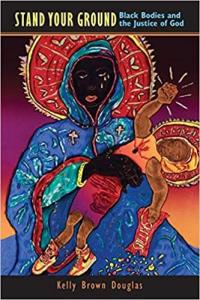 Anglo-Saxon myth says that Anglo-Saxons are an exceptional and superior race of people. This myth began with the idea that Anglo-Saxon institutions are exceptional, and morphed into the notion that Anglo-Saxon blood and Anglo-Saxon language are exceptional – superior to that of people of color.
Even though Anglo-Saxons on American soil were immigrants, they were considered a special kind of immigrant; a “chosen” people on a chosen land that they somehow owned (never mind those who occupied that land prior to their arrival).
Anglo-Saxons were considered to be “purely white people” (Benjamin Franklin’s assertion) and as such to have special claim to the land and to represent the exceptionalism of a America and its identity. Indeed, this “construction of whiteness,” as Douglas describes it, was based in a theological claim–it is a religious narrative: “Not only did the early American Angl0-Saxons believe their mission to be one of erecting God’s “city on a hill” but they also came to believe that they essentially had divinity running through their veins” (pg. 42).
To be white is to be close to God. To be dark-skinned is to be alienated from God.
“Moreover, within this narrative of Anglo-Saxon exceptionalism, that which whiteness most opposes is also that which God most opposes–that is, blackness.” (pg. 43). Follow the logic further – as they did – and the claim results not just in whiteness as pure, chosen, and superior, but blackness as impure, alienated, and as sin. And the conclusion of the logic: God is white–not just God’s chosen people.
Douglas’ book is a remarkable book; it was written after the death of to understand the death of Trayvon Martin and the application of the “Stand Your Ground” law. Who has the right to “stand your ground”? That depends on your “blood,” your race, your heritage, the color of your skin. It depends on who has the right to the ground. And then: who has the right to their own bodies as they walk (or run) on that land.
This brief and powerful history of white supremacy is, tragically enough, no less relevant today in the immediate wake of George Floyd’s murder, under the knee of police.
It is impossible to fully grasp police violence against black bodies, the injustice and inequities in the criminal system, the glaring and desperate need for systemic transformation, without grasping first the history of American exceptionalism and its intricate link to the construction of “whiteness” and to the flawed and destructive myth of white supremacy.
It’s also important to realize the role that Christian religion and Christian theology played in the perpetuation of this myth of American exceptionalism, and the accompanying de-humanizing of black and brown bodies. This due in part to to the construction of theology and the interpretation of the Bible through the lens of white supremacy, the grasping for power, and the construction of whiteness itself. This construction was biologically faulty, theologically perverse, and persistently destructive and evil.
As Douglas puts it toward the end of this chapter: “The narrative of exceptionalism simply has not gone away. It is stubborn. It continues to enact itself through the stand-your-ground culture it produced to reinforce its shield, whiteness” (pg. 45).
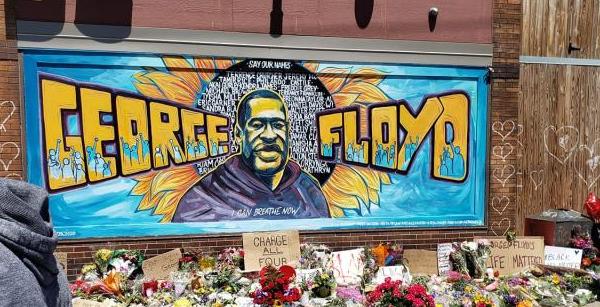
Photo courtesy of Justin Sabia-Tanis
Next Post

November 25, 2020 Book Talk: How Millennials Can Lead Us Out of the Mess We're In
Browse Our Archives
Select a Category Uncategorized
Select a Month December 2020 November 2020 June 2020 May 2020 April 2020 December 2018 July 2018 March 2018 February 2018 January 2018 December 2017 November 2017 October 2017 September 2017 August 2017 July 2017 June 2017 April 2017 March 2017 February 2017 January 2017 December 2016 November 2016 October 2016 September 2016 August 2016 July 2016 June 2016 May 2016 April 2016 March 2016 February 2016 January 2016 December 2015 November 2015 October 2015 September 2015 August 2015 July 2015 June 2015 May 2015 April 2015 March 2015 February 2015 January 2015 December 2014
Follow Us!
TAKE THE
Religious Wisdom Quiz
My reign brought prosperity until pride led me to burn incense in the temple, resulting in leprosy. Who am I?
Select your answer to see how you score.
Josiah Hezekiah Asa Uzziah
Books by This Author Books by Kyle Roberts
Related posts from Unsystematic Theology
Recommendation: A Christmas Book for Progressive Christians

The Task of Theology in Our Time?
Book Talk: How Millennials Can Lead Us Out...

The Breath of God Was in His Body:...
TRENDING AT PATHEOS Progressive Christian

What Being a Modern-Day Apostle Means to Me
In my last column, I discussed the ins and outs of modern-day...

Did Ancient China Once Worship the God of...
Across human history, a common thread weaves through the origins of the...

Love Your Neighbor – Including Earth-Kin: Lev. 19,...
God’s command to love your neighbor means acting in an ethical and...

Lead a Church Study of “Jesus and Lao...
Guest writer Jack Thomas (The Irreverent Reverend) reflects on leading his church...

Pastoral Wisdom for Responding to Sermon Pushback
Getting sermon pushback on your social justice sermon? Learn practical, Proverbs-based strategies...

Principles for Understanding the Apostolic Ministry Today
Whenever people discover that my formal ministry title is "apostle," as in...
view all Progressive Christian blogs
Ad-Free & Subscriber Log-In Subscription Support
- About Us
- 2026 Calendar
- Videos
- Podcasts
- Library of World Religions
- Faith In Media Tracker
- Advertise With Us
- Write for Us
- Privacy Policy
- Terms of Service
- Do Not Sell My Data
- Contact Us
- Radiant Digital
- Manage Newsletter Subscriptions
- Unsubscribe From Notifications
- Sitemap
Copyright 2008-2026, Patheos. All rights reserved.
Subscription Support Ad-Free & Subscriber Log-In
Follow Patheos