
BuddhistCatholicContemplativeEvangelicalGeneral ChristianHinduJewishLatter-day SaintMuslimNew VisionsProgressive Christian
Beliefs
- Buddhist
- Catholic
- Contemplative
- Evangelical
- General Christian
- Hindu
- Jewish
- Latter-day Saint
- More Voices
- Muslim
- New Visions
- Pagan
- Progressive Christian
Topics
- Religion News
- Food and Religion
- Sports and Religion
- Religious Art
- Religious Music and Entertainment
- Religious Events
- History and Religion
- Style and Religion
- Politics and Religion
- Women in Religion
- Recreation Outdoors and Religion
- Business Finance and Religion
- Careers Workplace and Religion
- Education and Religion
- Family Parenting and Religion
- Health Fitness and Religion
- Home and Religion
- Relationships and Religion
- Technology and Religion
- Travel and Religion
Columnists
- Buddhist Columnists
- Business Finance and Religion Columnists
- Careers Workplace and Religion Columnists
- Catholic Columnists
- Contemplative Columnists
- Education and Religion Columnists
- Evangelists Columnists
- Family Parenting and Religion Columnists
- General Christian Columnists
- Health Fitness and Religion Columnists
- Hindu Columnists
- History and Religion Columnists
- Home and Religion Columnists
- Jewish Columnists
- More Voices Columnists
- Latter Day Columnists
- Muslim Columnists
- New Visions Columnists
- Nonreligious Columnists
- Pagan Columnists
- Politics and Religion Columnists
- Progressive Columnists
- Recreation Outdoors and Religion Columnists
- Relationships and Religion Columnists
- Religion News Columnists
- Religious Art Columnists
- Religious Events Columnists
- Religious Music and Entertainment Columnists
- Sports and Religion Columnists
- Style and Religion Columnists
- Technology and Religion Columnists
- Travel and Religion Columnists
- Women in Religion Columnists
Resource Library
- 2026 Calendar
- Library of World Religions
- The 100 Most Holy Places on Earth
- Patheos Answers
- Podcasts
- Videos
- Faith Leaders Database
- Anglican Episcopalian
- Bahai
- Baptist
- Buddhism
- Christianity
- Confucianism
- Eastern Orthodoxy
- Hinduism
- Holiness and Pentecostal
- ISKCON
- Islam
- Judaism
- Lutheran
- Methodist
- The Church of Jesus Christ of Latter-day Saints
- New Age
- Paganism
- Presbytarian and Reformed
- Protestantism
- Religion Behind the Scenes
- Roman Catholic
- Scientology
- Shia Islam
- Sikhism
- Sufism
- Sunni Islam
- Taoism
- Zen
- See all religions
Research Tools
 Ad-Free & Subscriber Log-In Subscription Support
Ad-Free & Subscriber Log-In Subscription Support
Follow Patheos 

- Trending:
- Forgiveness
- |
- Marriage
- |
- Consciousness
- |
- Death Penalty
- |
- Election
- |
- Halloween
 Unsystematic Theology
- Home
- Progressive Christian
- The Value of Seminary in a World Gone Mad
The Value of Seminary in a World Gone Mad
Last updated on: February 17, 2018 at 4:11 pm by Kyle Roberts
The Value of Seminary in a World Gone Mad 2018-02-17T16:11:17-05:00 Kyle Roberts
Patheos Explore the world's faith through different perspectives on religion and spirituality! Patheos has the views of the prevalent religions and spiritualities of the world.
My colleague and friend, Dr. Kenneth Reynhout, shared the following post on his Facebook page. I thought it was too substantive and timely not to share it here on my blog–so I asked his permission to do so. Ken has extensive experience with theological education in seminary contexts. Ken’s bio is below.
We have three Protestant seminaries in the Twin Cities, each with its own character and distinguished legacy. I have some affiliation with all three of them, either as a student or as faculty/staff, or both. I also have friends and colleagues, people I respect very much, at each institution.
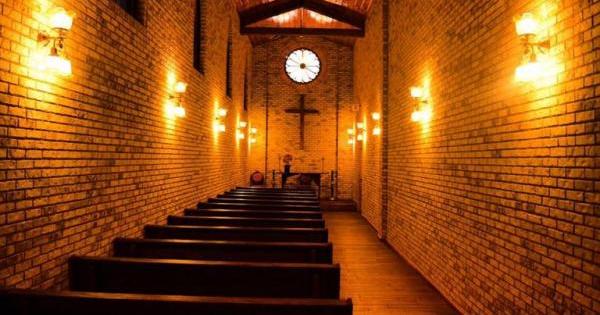
By Connor Cunningham (Own work) [CC BY-SA 4.0 via Wikimedia Commons

As institutions they are quite different, but they share one thing: they are each facing the market realities of contemporary seminary education. Put simply, it is hard to make ends meet. All three are working hard to attract more students and raise enough money to meet their obligations.
And this is not unique to the Twin Cities; seminaries all over the country are having similar struggles.I could wax eloquently about the causes of this reality, things with which my friends in the academy of religion are all too familiar. For the uninitiated, the American religious landscape has been changing in some rapid and significant ways, the sum total effect of which has been to devalue and diminish the importance of seminary education. These changes coincided with a recession, and changing attitudes toward higher education in general, which produced a perfect storm for seminaries. At times working in seminary education feels like being a prescient dinosaur that actually knows the meteor is going to hit and wipe us all out. It is an awareness of extinction before the fact.That is an exaggeration, however. Many seminaries will survive these times. At United Theological Seminary of the Twin Cities we have a strategy for surviving and thriving. It’s a good plan, as far as I can tell, and I am excited about the future. If anyone is interested in knowing more, I am happy to have that conversation.
But this post isn’t a plug for United. The events of the past few years, and really the past few decades, have illuminated a cruel irony. We now exist in a society where a lack of religious education is fueling our own social disintegration. On nearly every divisive issue I can think of—immigration, healthcare, climate change, crime, race, gender, sexuality, terrorism, war, international affairs, poverty, inequality, economics, taxes, abortion, guns—there are underlying explicit and implicit religious ideas at work.
Some of these ideas are theological—what we believe to be true about God—some are hermeneutical—what we think the Bible or other sacred texts are telling us—and some are moral—how we think God expects us to act. Still others are ideas we have about other people and the religions they adhere to, whether they are other kinds of Christians or people from different religions. And this is true for everyone, atheists included, because an anti-faith is still a kind of faith.
What is sad and frustrating is that our social existence and public dialogue is replete with religious ignorance and misunderstanding. Most people don’t understand the history of their own tradition, or the complexities of their own scriptures, much less that history and scriptures of other traditions. We take principled stands on issues without understanding where those principles come from or how they are grounded or whether they are sound. We blindly accept the authority of our chosen religious authorities, but lack the ability to investigate the issues for ourselves. We classify people according to race, age, class, and creed, and then shift the blame to convenient scapegoats, justified in our own sense of moral superiority. We lack the ability to engage with a foreign other, anyone who feels at all threatening to my religious sense of the world.
The cruel irony in all of this is that seminaries are equipped to address this social malady. Seminaries train pastors, chaplains, and other ministers, this is true, but the way that seminaries accomplish this is through education aimed at theological, hermeneutical, moral, and contextual awareness. Increasingly, as American secularism expands, this includes interreligious education. Methods differ from institution to institution, and not all seminaries are as good at it as others, but seminary is still, generally speaking, a transformative experience for its students. It should be the opposite of brainwashing; it is the expansion of one’s ability to be self-aware, self-reflective, other-regarding, and other-engaging.
When I worked at Bethel we commonly referred to this as being “self-differentiated.” It doesn’t mean not having convictions, or being theologically wishy-washy. It is more a kind of humble confidence, which allows one to hold religious convictions without being afraid of encounters with alternative ideas, different traditions, or other religions. It also means being able to manage and attenuate one’s anxiety about other people who are different.
Seminary education is not just learning about the Bible and theology, or about gaining skills for preaching and church administration, it is just as much and arguably more so about learning to be a healthy person, someone who will be a good minister to and for others, someone who can help heal the world instead of making it worse.
I wish everyone could afford a seminary education. I wish seminaries could find better ways of delivering their value to a society in danger of disintegration and collapse. I don’t know how to help make that happen, at least not yet, but I continue to live in hope.
Dr. Kenneth Reynhout is on staff at United Theological Seminary of the Twin Cities, serving as Director of Financial Aid and Institutional Assessment. He previously taught at Bethel Seminary as Professor of Theology and Christian Thought. He has a Ph.D. in philosophy and religion from Princeton Theological Seminary and an M.Div. from Bethel Seminary in St. Paul, MN.
United Theological Seminary of the Twin Cities
Previous Post

January 26, 2018
Announcing a New Commentary on Matthew
Next Post
March 5, 2018 Want to Understand Bultmann? Here's a Little Book For You
Browse Our Archives
Select a Category Uncategorized
Select a Month December 2020 November 2020 June 2020 May 2020 April 2020 December 2018 July 2018 March 2018 February 2018 January 2018 December 2017 November 2017 October 2017 September 2017 August 2017 July 2017 June 2017 April 2017 March 2017 February 2017 January 2017 December 2016 November 2016 October 2016 September 2016 August 2016 July 2016 June 2016 May 2016 April 2016 March 2016 February 2016 January 2016 December 2015 November 2015 October 2015 September 2015 August 2015 July 2015 June 2015 May 2015 April 2015 March 2015 February 2015 January 2015 December 2014
Follow Us!
TAKE THE
Religious Wisdom Quiz
I saw the Lord seated on a throne, high and exalted, while six-winged beings called out 'Holy, holy, holy.' What were these creatures?
Select your answer to see how you score.
Seraphim Leviathan Cherubim Angels
Books by This Author Books by Kyle Roberts
Related posts from Unsystematic Theology

The Breath of God Was in His Body:...


Mother God: What Are We Doing When We...
Want to Understand Bultmann? Here's a Little Book...
TRENDING AT PATHEOS Progressive Christian

What Being a Modern-Day Apostle Means to Me
In my last column, I discussed the ins and outs of modern-day...

Did Ancient China Once Worship the God of...
Across human history, a common thread weaves through the origins of the...

Love Your Neighbor – Including Earth-Kin: Lev. 19,...
God’s command to love your neighbor means acting in an ethical and...

Lead a Church Study of “Jesus and Lao...
Guest writer Jack Thomas (The Irreverent Reverend) reflects on leading his church...

Pastoral Wisdom for Responding to Sermon Pushback
Getting sermon pushback on your social justice sermon? Learn practical, Proverbs-based strategies...

Principles for Understanding the Apostolic Ministry Today
Whenever people discover that my formal ministry title is "apostle," as in...
view all Progressive Christian blogs
Ad-Free & Subscriber Log-In Subscription Support
- About Us
- 2026 Calendar
- Videos
- Podcasts
- Library of World Religions
- Faith In Media Tracker
- Advertise With Us
- Write for Us
- Privacy Policy
- Terms of Service
- Do Not Sell My Data
- Contact Us
- Radiant Digital
- Manage Newsletter Subscriptions
- Unsubscribe From Notifications
- Sitemap
Copyright 2008-2026, Patheos. All rights reserved.
Subscription Support Ad-Free & Subscriber Log-In
Follow Patheos