
BuddhistCatholicContemplativeEvangelicalGeneral ChristianHinduJewishLatter-day SaintMuslimNew VisionsProgressive Christian
Beliefs
- Buddhist
- Catholic
- Contemplative
- Evangelical
- General Christian
- Hindu
- Jewish
- Latter-day Saint
- More Voices
- Muslim
- New Visions
- Pagan
- Progressive Christian
Topics
- Religion News
- Food and Religion
- Sports and Religion
- Religious Art
- Religious Music and Entertainment
- Religious Events
- History and Religion
- Style and Religion
- Politics and Religion
- Women in Religion
- Recreation Outdoors and Religion
- Business Finance and Religion
- Careers Workplace and Religion
- Education and Religion
- Family Parenting and Religion
- Health Fitness and Religion
- Home and Religion
- Relationships and Religion
- Technology and Religion
- Travel and Religion
Columnists
- Buddhist Columnists
- Business Finance and Religion Columnists
- Careers Workplace and Religion Columnists
- Catholic Columnists
- Contemplative Columnists
- Education and Religion Columnists
- Evangelists Columnists
- Family Parenting and Religion Columnists
- General Christian Columnists
- Health Fitness and Religion Columnists
- Hindu Columnists
- History and Religion Columnists
- Home and Religion Columnists
- Jewish Columnists
- More Voices Columnists
- Latter Day Columnists
- Muslim Columnists
- New Visions Columnists
- Nonreligious Columnists
- Pagan Columnists
- Politics and Religion Columnists
- Progressive Columnists
- Recreation Outdoors and Religion Columnists
- Relationships and Religion Columnists
- Religion News Columnists
- Religious Art Columnists
- Religious Events Columnists
- Religious Music and Entertainment Columnists
- Sports and Religion Columnists
- Style and Religion Columnists
- Technology and Religion Columnists
- Travel and Religion Columnists
- Women in Religion Columnists
Resource Library
- 2026 Calendar
- Library of World Religions
- The 100 Most Holy Places on Earth
- Patheos Answers
- Podcasts
- Videos
- Faith Leaders Database
- Anglican Episcopalian
- Bahai
- Baptist
- Buddhism
- Christianity
- Confucianism
- Eastern Orthodoxy
- Hinduism
- Holiness and Pentecostal
- ISKCON
- Islam
- Judaism
- Lutheran
- Methodist
- The Church of Jesus Christ of Latter-day Saints
- New Age
- Paganism
- Presbytarian and Reformed
- Protestantism
- Religion Behind the Scenes
- Roman Catholic
- Scientology
- Shia Islam
- Sikhism
- Sufism
- Sunni Islam
- Taoism
- Zen
- See all religions
Research Tools
 Ad-Free & Subscriber Log-In Subscription Support
Follow Patheos 

- Trending:
- Advent
- |
- Forgiveness
- |
- Thanksgiving
- |
- Election
- |
- Seasonal Holidays
- |
- Marriage
 Unsystematic Theology
- Home
- Progressive Christian
- Virgin Birth or Incarnation? Why You Can’t Have Both
Virgin Birth or Incarnation? Why You Can’t Have Both
Last updated on: December 27, 2017 at 2:42 pm by Kyle Roberts
Virgin Birth or Incarnation? Why You Can’t Have Both 2017-12-27T14:42:23-05:00 Kyle Roberts
Patheos Explore the world's faith through different perspectives on religion and spirituality! Patheos has the views of the prevalent religions and spiritualities of the world.
As I worked through the arguments for and against the virgin birth, the single most important discovery for me was this: You can’t have it all.

By Byzantine 13th Century (possibly from Constantinople) [Public domain], via Wikimedia Commons
That is, you can’t have a virginal conception and an incarnation.
In the first century, they could put the two together conceptually. It made sense, given their understanding of biology, procreation, and so on. Yes, the virgin birth (for the biblical writers and the early theologians) was predicated on a divine miracle. God interrupted normal causation, typical biological processes, entered history and did a new thing.
But in the first century context, there was nothing inherently contradictory in the notion that the mechanism of the incarnation was a virginal conception.
Now, however, we have a very different understanding of how conception works. Sperm meets egg, fertilization leads to life. Both male and female are required to make a true human.
This means that the virginal conception isn’t just a miracle, but it actually undermines the meaning of the incarnation itself. It works against the idea.
Some prominent early theologians insisted that, for the incarnation to have been a true incarnation, the Logos had to have “taken flesh” from his mother. The baby Jesus needed to have taken something of physical nature from his mother–this is what ensured that the Christ was truly flesh of our flesh, bone of our bone. As Gregory of Nazianzus put it: “What has not been assumed has not been healed.”
This directly countered the Docetic view of Christ, which held that Christ was not a true human, but was a phantasm, a mirage; he only appeared to be human.
But for the early Christians, Christ had to take from our very nature–our very flesh–and become truly 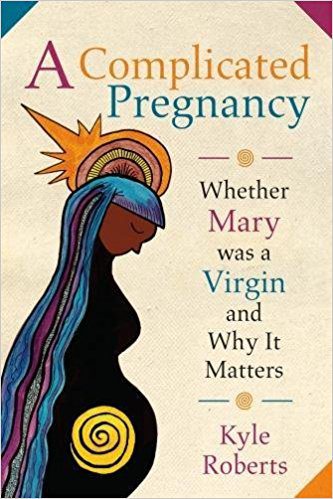 human to heal us. Docetism was considered an inadequate Christology for its deficient view of the incarnation.
From the perspective of contemporary understanding of biology, a virginal conception leads to a Docetic Christology.
What we should consider, given our understanding of how concception works, is that the Logos didn’t just need to take flesh from his mother, but from his father, too.
To my mind, that’s the most compelling reason for Christians to move beyond a literal reading of the virgin birth stories and to accept a fully human conception as the mechanism for the incarnation.
If you believe in the incarnation and if that’s important to your Christian faith, you might take another look at the virgin birth.
For a fully developed version of this argument, see A Complicated Pregnancy: Whether Mary Was a Virgin and Why it Matters.
Previous Post

December 22, 2017
Was Jesus Intersex or Was Mary?
Next Post
January 26, 2018 Announcing a New Commentary on Matthew
Browse Our Archives
Select a Category Uncategorized
Select a Month December 2020 November 2020 June 2020 May 2020 April 2020 December 2018 July 2018 March 2018 February 2018 January 2018 December 2017 November 2017 October 2017 September 2017 August 2017 July 2017 June 2017 April 2017 March 2017 February 2017 January 2017 December 2016 November 2016 October 2016 September 2016 August 2016 July 2016 June 2016 May 2016 April 2016 March 2016 February 2016 January 2016 December 2015 November 2015 October 2015 September 2015 August 2015 July 2015 June 2015 May 2015 April 2015 March 2015 February 2015 January 2015 December 2014
Follow Us!
TAKE THE
Religious Wisdom Quiz
Three of the four beasts from Daniel's vision are: a bear with three ribs in its mouth, a leopard with four wings and four heads, and a terrifying beast with iron teeth and ten horns. Which beast is missing?
Select your answer to see how you score.
A ram with two sets of gilded horns A dragon with seven heads A lion with eagle's wings A bull breathing fire
Books by This Author Books by Kyle Roberts
Related posts from Unsystematic Theology
The King Who Comes in Peace and the...
Reading the Virgin Birth as Legend (or Creative...
Why We Don't Need an Immaculate Conception
Was Jesus Intersex or Was Mary?
TRENDING AT PATHEOS Progressive Christian

Can a Chatbot Touch Your Soul?
Can a chatbot offer genuine spiritual counsel? One conversation brought me to...

Religion and Politics: How Should We Then Live?
Two cultural axioms get repeated in polite company. Don't mix religion and...

7 Things We Get Wrong About Giving Thanks
It's a time of year when many of us turn to the...

Uncaging Truth: Spirituality Beyond Institutions
The Lost Connection: Why True Spirituality, Not Religion, Is the Key to...

Christ the King? Maybe We've Misunderstood the Crown
What do we mean when we say that Jesus is King? What...

Counter “Christ Is King” Nationalism with Christ THE...
Christ the King Sunday is an ideal time to address the heresy...
view all Progressive Christian blogs
Ad-Free & Subscriber Log-In Subscription Support
- About Us
- 2026 Calendar
- Videos
- Podcasts
- Library of World Religions
- Faith In Media Tracker
- Advertise With Us
- Write for Us
- Privacy Policy
- Terms of Service
- Do Not Sell My Data
- Contact Us
- Radiant Digital
- Manage Newsletter Subscriptions
- Unsubscribe From Notifications
- Sitemap
Copyright 2008-2026, Patheos, part of the Radiant Digital network of media brands. All rights reserved.
Subscription Support Ad-Free & Subscriber Log-In
Follow Patheos