
BuddhistCatholicContemplativeEvangelicalGeneral ChristianHinduJewishLatter-day SaintMuslimNew VisionsProgressive Christian
Beliefs
- Buddhist
- Catholic
- Contemplative
- Evangelical
- General Christian
- Hindu
- Jewish
- Latter-day Saint
- More Voices
- Muslim
- New Visions
- Pagan
- Progressive Christian
Topics
- Religion News
- Food and Religion
- Sports and Religion
- Religious Art
- Religious Music and Entertainment
- Religious Events
- History and Religion
- Style and Religion
- Politics and Religion
- Women in Religion
- Recreation Outdoors and Religion
- Business Finance and Religion
- Careers Workplace and Religion
- Education and Religion
- Family Parenting and Religion
- Health Fitness and Religion
- Home and Religion
- Relationships and Religion
- Technology and Religion
- Travel and Religion
Columnists
- Buddhist Columnists
- Business Finance and Religion Columnists
- Careers Workplace and Religion Columnists
- Catholic Columnists
- Contemplative Columnists
- Education and Religion Columnists
- Evangelists Columnists
- Family Parenting and Religion Columnists
- General Christian Columnists
- Health Fitness and Religion Columnists
- Hindu Columnists
- History and Religion Columnists
- Home and Religion Columnists
- Jewish Columnists
- More Voices Columnists
- Latter Day Columnists
- Muslim Columnists
- New Visions Columnists
- Nonreligious Columnists
- Pagan Columnists
- Politics and Religion Columnists
- Progressive Columnists
- Recreation Outdoors and Religion Columnists
- Relationships and Religion Columnists
- Religion News Columnists
- Religious Art Columnists
- Religious Events Columnists
- Religious Music and Entertainment Columnists
- Sports and Religion Columnists
- Style and Religion Columnists
- Technology and Religion Columnists
- Travel and Religion Columnists
- Women in Religion Columnists
Resource Library
- 2026 Calendar
- Library of World Religions
- The 100 Most Holy Places on Earth
- Patheos Answers
- Podcasts
- Videos
- Faith Leaders Database
- Anglican Episcopalian
- Bahai
- Baptist
- Buddhism
- Christianity
- Confucianism
- Eastern Orthodoxy
- Hinduism
- Holiness and Pentecostal
- ISKCON
- Islam
- Judaism
- Lutheran
- Methodist
- The Church of Jesus Christ of Latter-day Saints
- New Age
- Paganism
- Presbytarian and Reformed
- Protestantism
- Religion Behind the Scenes
- Roman Catholic
- Scientology
- Shia Islam
- Sikhism
- Sufism
- Sunni Islam
- Taoism
- Zen
- See all religions
Research Tools
 Ad-Free & Subscriber Log-In Subscription Support
Follow Patheos 

- Trending:
- Advent
- |
- Forgiveness
- |
- Thanksgiving
- |
- Election
- |
- Seasonal Holidays
- |
- Marriage
 Unsystematic Theology
- Home
- Progressive Christian
- How the Bible was Used to Justify Slavery and White Supremacy
How the Bible was Used to Justify Slavery and White Supremacy
Last updated on: September 22, 2016 at 10:09 am by Kyle Roberts
How the Bible was Used to Justify Slavery and White Supremacy 2016-09-22T10:09:17-05:00 Kyle Roberts
Patheos Explore the world's faith through different perspectives on religion and spirituality! Patheos has the views of the prevalent religions and spiritualities of the world.
In my Evangelicalism and Fundamentalism course today, we’ll be talking about the history of slavery and segregation in American Christianity.
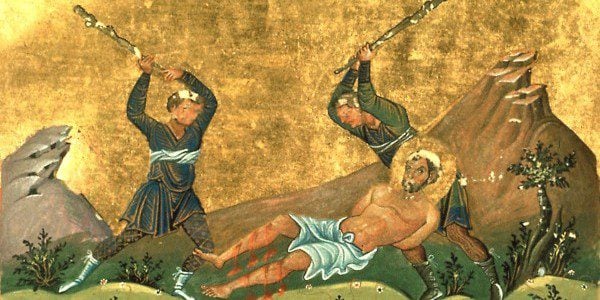
“Onesimus of Byzantium”, Public Domain via WikiCommons
It’s the ugly underbelly we can’t ignore, but so often would rather pass over quickly.
Many of (white) American Christianity’s great “heroes of the faith” defended slavery on “biblical” and theological grounds–as God’s punishment for sin or the outworking of a divinely ordained and divinely sanctioned hierarchy.
Some argued that slavery is necessary for a robust economy, which is necessary for the propagation of the “gospel”–but which “gospel” is that, again? A number of them owned slaves themselves (Jonathan Edwards, George Whitfield, for two prominent examples).
Even many years after the Emancipation Proclamation and in the decades following the Civil War, some theologians and denominational leaders vigorously defended white supremacy and segregation, and refused to grant equal rights to freed slaves and others, simply because of the color of their skin.
Jack Rogers, in Jesus, the Bible, and Homosexuality, details a disturbing and eye-opening description of the way that the Bible was used to defend slavery and to uphold white supremacy in the years preceding and even following the Civil War.
He writes about Robert Lewis Dabney, the “premier theologian of the southern Presbyterian Church from 1865 until 1892,” who included a one-hundred-page defense of slavery in his book, A Defense of Virginia, a book written as the war was unfolding (22).
After the defeat of South, he followed up with a second volume, in which,
…Dabney set forth a genetic argument for the inferiority of Africans, arguing that blacks and whites were different and unequal species. That implied for him that blacks were less capable than whites in most aspects of life: “But while we believe that ‘God made of one blood all nations of men to dwell under the whole heavens,’ we know that the African has become, according to a well-known law of natural history, by the manifold influences of the ages, a different, fixed species of the race, separated from the white man by traits, bodily, mental and moral almost as rigid and permanent as those of genus.” (22-23)
Dabney did as others had done, which was to interpret (inexplicably) the “curse of Ham” in Gen. 9, as an origin story for the “degeneracy” of Africans, and as designating slavery as God’s righteous punishment for their sin. It should go without saying that this interpretation is utterly lacking in exegetical merit, but nonetheless it was used as an Old Testament ground for their view of the inferiority of black people.
In a particularly ugly episode of Presbyterian history, a synod meeting in Virginia (in 1867) debated whether, now that they are freed from slavery, African Americans should be granted “full equality,” in the church, including the right to be ordained as ministers. While some ministers fought hard on the side of inclusion, Dabney’s white supremacist arguments won the day.
From Rogers’ book, which quotes Dabney’s impasioned speech (Dabney called the vote a “moment of life and death for the church”):
“Dabney appealed to the deep-seated fears of his white male audience: “He must be ‘innocent’ indeed, who does not see whither all this tends, as it is designed by our oppressors to terminate. It is (shall I pronounce the aborred word?) to amalgamation!” Dabney raised the specter that if African Americans were ordained, it might mean, “this Negro of yours, reviewing and censuring the records of white sessions, and sitting to judge appeals brought before you by white parties, possibly by white ladies!” He continued to press the possibility of a physical mixing of the races. “Do you tell me that after you have admitted this Negro thus to your debates, your votes, your pulpits, your sick and dying beds, your weddings and funerals, you will still exclude him from your parlours and tables?…I tell you, Sir, this doctrine, if it does not mean nothing, or if it does not mean Yankee hypocrisy, means ultimately almalgation” (23-24).
As Rogers points out, “Dabney’s speech made it clear that he was not simply reacting to the consequences of American slavery. Rather, he was proclaiming a doctrine of white supremacy” (24). “To Dabney, racial purity was the ultimate value, and racial segregation was essential to protect the purity of the white race” (25).
So just as century and a half ago, white supremacy, the assumed inferiority of other races, and a disgust of black flesh ran deep in the psychologies of white Christians–and it was explicit. Some of their “best” theologians devoted their time and energy to interpreting the Bible in defense of white supremacy, slavery, and segregation. They used that doctrine to tap into anxieties, fears, and prejudices in order to exclude, deny rights, enslave and abuse African Americans.
Granted not all did. There were white Christian defenders of racial equality and there were passionate abolitionists–and of course their number grew the years wore on. But ugly as it is, looking at this sordid part of the history of Christianity and of white American theology helps us to see why the psychology of white supremacy runs so tragically and sinfully deep–and can still be so difficult to extricate.
Previous Post

September 16, 2016
How Political Ads Manipulate Your Anxiety About Death
Next Post

September 26, 2016 From Skittles to Syrians and What the Trolley Problem Has to Do With it
Browse Our Archives
Select a Category Uncategorized
Select a Month December 2020 November 2020 June 2020 May 2020 April 2020 December 2018 July 2018 March 2018 February 2018 January 2018 December 2017 November 2017 October 2017 September 2017 August 2017 July 2017 June 2017 April 2017 March 2017 February 2017 January 2017 December 2016 November 2016 October 2016 September 2016 August 2016 July 2016 June 2016 May 2016 April 2016 March 2016 February 2016 January 2016 December 2015 November 2015 October 2015 September 2015 August 2015 July 2015 June 2015 May 2015 April 2015 March 2015 February 2015 January 2015 December 2014
Follow Us!
TAKE THE
Religious Wisdom Quiz
What was the first plague on Egypt?
Select your answer to see how you score.
Lice Death of the Firstborn Nile turned to Blood Hail
Books by This Author Books by Kyle Roberts
Related posts from Unsystematic Theology

Mother God: What Are We Doing When We...

The Value of Seminary in a World Gone...
10 Very Good Books on the Reformation and...

The Problem With Liberal Christianity (From the Perspective...
TRENDING AT PATHEOS Progressive Christian

Can a Chatbot Touch Your Soul?
Can a chatbot offer genuine spiritual counsel? One conversation brought me to...

Religion and Politics: How Should We Then Live?
Two cultural axioms get repeated in polite company. Don't mix religion and...

7 Things We Get Wrong About Giving Thanks
It's a time of year when many of us turn to the...

Uncaging Truth: Spirituality Beyond Institutions
The Lost Connection: Why True Spirituality, Not Religion, Is the Key to...

Christ the King? Maybe We've Misunderstood the Crown
What do we mean when we say that Jesus is King? What...

Counter “Christ Is King” Nationalism with Christ THE...
Christ the King Sunday is an ideal time to address the heresy...
view all Progressive Christian blogs
Ad-Free & Subscriber Log-In Subscription Support
- About Us
- 2026 Calendar
- Videos
- Podcasts
- Library of World Religions
- Faith In Media Tracker
- Advertise With Us
- Write for Us
- Privacy Policy
- Terms of Service
- Do Not Sell My Data
- Contact Us
- Radiant Digital
- Manage Newsletter Subscriptions
- Unsubscribe From Notifications
- Sitemap
Copyright 2008-2026, Patheos, part of the Radiant Digital network of media brands. All rights reserved.
Subscription Support Ad-Free & Subscriber Log-In
Follow Patheos