
BuddhistCatholicContemplativeEvangelicalGeneral ChristianHinduJewishLatter-day SaintMuslimNew VisionsProgressive Christian
Beliefs
- Buddhist
- Catholic
- Contemplative
- Evangelical
- General Christian
- Hindu
- Jewish
- Latter-day Saint
- More Voices
- Muslim
- New Visions
- Pagan
- Progressive Christian
Topics
- Religion News
- Food and Religion
- Sports and Religion
- Religious Art
- Religious Music and Entertainment
- Religious Events
- History and Religion
- Style and Religion
- Politics and Religion
- Women in Religion
- Recreation Outdoors and Religion
- Business Finance and Religion
- Careers Workplace and Religion
- Education and Religion
- Family Parenting and Religion
- Health Fitness and Religion
- Home and Religion
- Relationships and Religion
- Technology and Religion
- Travel and Religion
Columnists
- Buddhist Columnists
- Business Finance and Religion Columnists
- Careers Workplace and Religion Columnists
- Catholic Columnists
- Contemplative Columnists
- Education and Religion Columnists
- Evangelists Columnists
- Family Parenting and Religion Columnists
- General Christian Columnists
- Health Fitness and Religion Columnists
- Hindu Columnists
- History and Religion Columnists
- Home and Religion Columnists
- Jewish Columnists
- More Voices Columnists
- Latter Day Columnists
- Muslim Columnists
- New Visions Columnists
- Nonreligious Columnists
- Pagan Columnists
- Politics and Religion Columnists
- Progressive Columnists
- Recreation Outdoors and Religion Columnists
- Relationships and Religion Columnists
- Religion News Columnists
- Religious Art Columnists
- Religious Events Columnists
- Religious Music and Entertainment Columnists
- Sports and Religion Columnists
- Style and Religion Columnists
- Technology and Religion Columnists
- Travel and Religion Columnists
- Women in Religion Columnists
Resource Library
- 2026 Calendar
- Library of World Religions
- The 100 Most Holy Places on Earth
- Patheos Answers
- Podcasts
- Videos
- Faith Leaders Database
- Anglican Episcopalian
- Bahai
- Baptist
- Buddhism
- Christianity
- Confucianism
- Eastern Orthodoxy
- Hinduism
- Holiness and Pentecostal
- ISKCON
- Islam
- Judaism
- Lutheran
- Methodist
- The Church of Jesus Christ of Latter-day Saints
- New Age
- Paganism
- Presbytarian and Reformed
- Protestantism
- Religion Behind the Scenes
- Roman Catholic
- Scientology
- Shia Islam
- Sikhism
- Sufism
- Sunni Islam
- Taoism
- Zen
- See all religions
Research Tools
 Ad-Free & Subscriber Log-In Subscription Support
Ad-Free & Subscriber Log-In Subscription Support
Follow Patheos 

- Trending:
- Forgiveness
- |
- Marriage
- |
- Consciousness
- |
- Death Penalty
- |
- Election
- |
- Halloween
 Unsystematic Theology
- Home
- Progressive Christian
- What Mary’s Magnificat Says About Poor, Single, Women
What Mary’s Magnificat Says About Poor, Single, Women
Last updated on: December 2, 2015 at 4:55 pm by Kyle Roberts
What Mary’s Magnificat Says About Poor, Single, Women 2015-12-02T16:55:09-05:00 Kyle Roberts
Patheos Explore the world's faith through different perspectives on religion and spirituality! Patheos has the views of the prevalent religions and spiritualities of the world.
I’m guessing that when most pastors preach about Mary, the mother of Jesus, they don’t also talk about poor, single women and welfare reform.
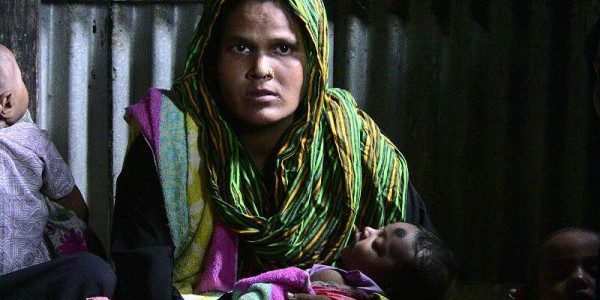
“Mother Cradles Her Child” Creative Commons 2.0
But that’s exactly what Traci West suggests we think about when we think about Mary.
In Disruptive Christian Ethics: When Racism and Women’s Lives Matter, West reads Mary’s Magnificat as having a great deal to say about the plight of poor, single women in our day.
Mary’s song, which is familiar to most of us who grew up hearing the birth narratives told over and over, begins,
“My soul magnifies the Lord, and my spirit rejoices in God my Savior, who has looked with favor on the lowliness of God’s servant. Surely, from now on all generations will call me blessed…”
But West urges us to look closer at the song, and the story of the birth of Jesus. Let’s not neglect the details: Mary’s young age at the time of pregnancy (most likely 12 or 13 yrs, but probably not more than 18) and her precarious socio-economic position as a young, poor, unmarried woman.
In a patriarchal, hierarchical society which discriminated against single, pregnant women (“illegitimate” pregnancies often meant a punishment of death), she accepted the word of the messenger–and her pregnancy–as a blessing from God.
And God reversed the order: It would be through an unmarried, poor, unmarried (though betrothed) woman that the Messiah would come and would bring salvation to the world.
West argues that when we interpret Scripture, we tend to look for “universal” moral values and ethical principles. We neglect the particularities that should capture our attention. She writes,
For this reason, single poor mothers who depend upon public assistance may seem unworthy of being lifted up as the most likely group that Mary’s message in the Magnificat would champion. Seemingly, these women and girls do not possess moral qualities that have universal value, and they are frequently regarded as a particular problem group in the society to be either ignored or brought under control through stringent policies.
However, Mary’s insistent words in the Magnificat carry a message about God’s concern for the particular lives and needs of the lowly and poor. Her message stresses God’s powerful actions on their behalf. Furthermore, in the canticle, salvation of this particular group, the lowly and the poor, is linked with the salvation of the broader faith community of Israel. Christians might be guided by this scripture to judge the morality of Christian faith communities, and even of the broader U.S. society, by assessing their public attitudes about and practices in the interests of poor mothers who need public assistance. To authentically reflect the scripture, a comparison of community attitudes about and practices in the interests of the rich would also have to be added to this assessment. (82)
To understand the inspiration of this comparison, we need only reflect on another line of the Magnificat:
“God has brought the powerful from their thrones, and lifted up the lowly / God has filled the hungry with good things and sent the rich away empty” (1:52).
The story of Jesus and the salvation proclaimed and offered in the gospels is for everyone (I would urge), nonetheless West gives us good reason to reflect on the situations of those for whom the gospels seem especially concerned: the vulnerable, marginalized, oppressed, and victimized.
It may be, in fact, through the “good news” announced to those most vulnerable among us, that the most powerful among us might also be saved.
This advent season may we look, perhaps closer than we usually do, to a new and better way of living with the gospel.
Image Source
Previous Post

November 30, 2015
Advent, the Absence of God, and the Unburied Bones of Rwanda
Next Post
December 4, 2015 Ernest Becker on the Logic of Killing Others
Browse Our Archives
Select a Category Uncategorized
Select a Month December 2020 November 2020 June 2020 May 2020 April 2020 December 2018 July 2018 March 2018 February 2018 January 2018 December 2017 November 2017 October 2017 September 2017 August 2017 July 2017 June 2017 April 2017 March 2017 February 2017 January 2017 December 2016 November 2016 October 2016 September 2016 August 2016 July 2016 June 2016 May 2016 April 2016 March 2016 February 2016 January 2016 December 2015 November 2015 October 2015 September 2015 August 2015 July 2015 June 2015 May 2015 April 2015 March 2015 February 2015 January 2015 December 2014
Follow Us!
TAKE THE
Religious Wisdom Quiz
Which Christian denomination is led by the Pope?
Select your answer to see how you score.
Orthodox Anglican Protestant Catholic
Books by This Author Books by Kyle Roberts
Related posts from Unsystematic Theology
If He "Emptied Himself" Was He Still God?...
The King Who Comes in Peace and the...
Virgin Birth or Incarnation? Why You Can't Have...
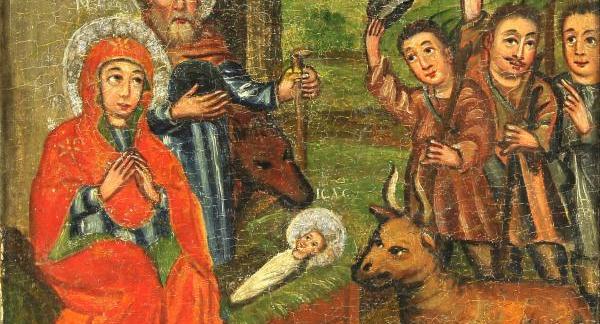
Reading the Virgin Birth as Legend (or Creative...
TRENDING AT PATHEOS Progressive Christian

Why Christians Have a Sacred Duty to Vote:...
The Bible offers strong support for the sacred duty to vote. Here...

What Being a Modern-Day Apostle Means to Me
In my last column, I discussed the ins and outs of modern-day...

Did Ancient China Once Worship the God of...
Across human history, a common thread weaves through the origins of the...

Love Your Neighbor – Including Earth-Kin: Lev. 19,...
God’s command to love your neighbor means acting in an ethical and...

Lead a Church Study of “Jesus and Lao...
Guest writer Jack Thomas (The Irreverent Reverend) reflects on leading his church...

Principles for Understanding the Apostolic Ministry Today
Whenever people discover that my formal ministry title is "apostle," as in...
view all Progressive Christian blogs
Ad-Free & Subscriber Log-In Subscription Support
- About Us
- 2026 Calendar
- Videos
- Podcasts
- Library of World Religions
- Faith In Media Tracker
- Advertise With Us
- Write for Us
- Privacy Policy
- Terms of Service
- Do Not Sell My Data
- Contact Us
- Radiant Digital
- Manage Newsletter Subscriptions
- Unsubscribe From Notifications
- Sitemap
Copyright 2008-2026, Patheos. All rights reserved.
Subscription Support Ad-Free & Subscriber Log-In
Follow Patheos