
BuddhistCatholicContemplativeEvangelicalGeneral ChristianHinduJewishLatter-day SaintMuslimNew VisionsProgressive Christian
Beliefs
- Buddhist
- Catholic
- Contemplative
- Evangelical
- General Christian
- Hindu
- Jewish
- Latter-day Saint
- More Voices
- Muslim
- New Visions
- Pagan
- Progressive Christian
Topics
- Religion News
- Food and Religion
- Sports and Religion
- Religious Art
- Religious Music and Entertainment
- Religious Events
- History and Religion
- Style and Religion
- Politics and Religion
- Women in Religion
- Recreation Outdoors and Religion
- Business Finance and Religion
- Careers Workplace and Religion
- Education and Religion
- Family Parenting and Religion
- Health Fitness and Religion
- Home and Religion
- Relationships and Religion
- Technology and Religion
- Travel and Religion
Columnists
- Buddhist Columnists
- Business Finance and Religion Columnists
- Careers Workplace and Religion Columnists
- Catholic Columnists
- Contemplative Columnists
- Education and Religion Columnists
- Evangelists Columnists
- Family Parenting and Religion Columnists
- General Christian Columnists
- Health Fitness and Religion Columnists
- Hindu Columnists
- History and Religion Columnists
- Home and Religion Columnists
- Jewish Columnists
- More Voices Columnists
- Latter Day Columnists
- Muslim Columnists
- New Visions Columnists
- Nonreligious Columnists
- Pagan Columnists
- Politics and Religion Columnists
- Progressive Columnists
- Recreation Outdoors and Religion Columnists
- Relationships and Religion Columnists
- Religion News Columnists
- Religious Art Columnists
- Religious Events Columnists
- Religious Music and Entertainment Columnists
- Sports and Religion Columnists
- Style and Religion Columnists
- Technology and Religion Columnists
- Travel and Religion Columnists
- Women in Religion Columnists
Resource Library
- 2026 Calendar
- Library of World Religions
- The 100 Most Holy Places on Earth
- Patheos Answers
- Podcasts
- Videos
- Faith Leaders Database
- Anglican Episcopalian
- Bahai
- Baptist
- Buddhism
- Christianity
- Confucianism
- Eastern Orthodoxy
- Hinduism
- Holiness and Pentecostal
- ISKCON
- Islam
- Judaism
- Lutheran
- Methodist
- The Church of Jesus Christ of Latter-day Saints
- New Age
- Paganism
- Presbytarian and Reformed
- Protestantism
- Religion Behind the Scenes
- Roman Catholic
- Scientology
- Shia Islam
- Sikhism
- Sufism
- Sunni Islam
- Taoism
- Zen
- See all religions
Research Tools
 Ad-Free & Subscriber Log-In Subscription Support
Ad-Free & Subscriber Log-In Subscription Support
Follow Patheos 

- Trending:
- Forgiveness
- |
- Marriage
- |
- Consciousness
- |
- Death Penalty
- |
- Election
- |
- Halloween
 Unsystematic Theology
- Home
- Progressive Christian
- Will Progressive Christianity Be More Evangelical?
Will Progressive Christianity Be More Evangelical?
Last updated on: July 29, 2015 at 3:42 pm by Kyle Roberts
Will Progressive Christianity Be More Evangelical? 2015-07-29T15:42:47-05:00 Kyle Roberts
Patheos Explore the world's faith through different perspectives on religion and spirituality! Patheos has the views of the prevalent religions and spiritualities of the world.
These are interesting days for American Christianity.

Photo by Ricardo Camacho
We appear to be in the midst of some major shifts in the American religious landscape.
The recent Pew Research study showed that, between 2007-2014, Evangelical Christianity saw a slight decrease in its share of the religious population (from 26.3% to 25.4%); however, it was the only segment of American Christianity that experienced overall growth in numbers.
The wild and crazy unaffiliated (the infamous”nones”) grew in leaps and bounds, and non-Christian religions ticked up, too.
Mainline Protestants continued their slide to the bottom, dropping 3.4 percentage points, from 18.1% to 14.7.
So, if mainline Protestants are what we typically think of as representing “progressive Christianity” (of course there are plenty of progressive Catholics, too), how should we feel about its future? Pretty bleak, right? One one accounting, evangelical Christianity still seems rather alive and well, while progressive (mainline) Christianity is digging its own grave.
But there are problems with this interpretation.
First off, it seems pretty clear that evangelicalism has a millennial problem. Young people are leaving the evangelical church and have been for some time. That trend is not letting up. They are, by and large, rejecting the conservative politics, conservative morality, and the biblical literalism of older generations.
Now, they aren’t flooding into the mainline Protestant churches, to be sure. But young evangelicals are leaving their churches at a greater rate than young mainliners (if I’m reading the data correctly). Of course, there were more of them to begin with, but the trend seems significant nonetheless. Several years ago, I was struck by a Pew graph that showed a steep decline in Evangelical millennials with the inversely steep rise of the young “nones.” You can find that graph here (scroll to the bottom of the interview).
Where are they going? Most aren’t rushing into the mainline Protestant churches. Most aren’t joining Catholicism.
While some are becoming dones (done with both religion and faith), many are becoming nones. Nones are not necessarily atheists or even agnostists, and they aren’t necessarily irreligious, either.
As Robert Putnam’s landmark study, American Grace, showed, they are occasional church-attenders, can be very spiritual, and are often rather eclectic in the practice of their faith. They can’t be herded into a single stall. And yet, the majority of nones would identify–much more easily with progressive theology and with progressive views of morality than they would with their conservative counterparts.
The recent supreme court decision to inscribe equality for LGBTQ persons has created a watershed moment for the future of Christianity.
I’ve heard appeals from evangelicals to the effect that they need to regroup, regather, and set up camp outside the city, so as to engage culture differently than they did before. This is understandable. To be fair, they aren’t calling for retreat or separatist withdrawal; yet, these Evangelicals are not about to rethinking their fundamentalist stances on issues that will increasingly divide their institutions and lead more and more younger people to the exit doors.
This fundamentalist stance, this biblical literalism, this preoccupation with inerrancy, this insistence on the impurity of LGBTQ expressions of love, will continue to drive millennials away from these conservative evangelical institutions.
Where will they go?
This is why I think the future of progressive Christianity may be destined to become, perhaps ironically enough, more evangelical. These progressive-minded and openhanded Christians–those who do not reject their faith altogether–will need to practice it and will want to practice it in communities of faith–but communities that share their openness and inclusivity. But, they will carry much of their evangelical impulses with them, too.
If mainline Protestant churches can embrace these disaffected exiles, so much the better. This is anecdotal, but I have observed this happening as progressive evangelical seminary graduates have found themselves outside the evangelical “camp,” and have sought refuge (or better: community) in mainline liberal churches. A number of them are women who realized that Evangelical churches were/are not safe or welcoming to them.
But those mainline churches (many of which are “conservative”–i.e. traditional–in their own ways) will need to be open to change, in order to capitalize on the migration of disaffected evangelicals into their ranks.
We’re are seeing more experiments of faith, which might involve not only ecumenical Christian communities and initiatives, but inter-religious ones as well. And we’ll see more progressive evangelicals and former evangelicals (post-evangelicals) joining up with mainline Protestants, progressive/liberal Catholics, and people of other faiths (or no particular institutional faith at all) in bringing a little more hope, peace, and gospel to their neighborhoods. These progressive/post evangelicals are bringing with them a heart for the gospel, a deep respect for the Bible, and a “missionary” (or better: missional) view of the vocation of the Christian.
So when we think about the future of “progressive Christianity,” we’ll need to start thinking beyond the norm, to the “new normal” that is being shaped in this very moment. Progressive Christianity is no longer just mainline Protestants and liberal Catholics. Progresssive Christianity will be Evangelical, too.
For more discussions and links on the intersection of theology and society, like Unsystematic Theology on Facebook

Next Post

July 31, 2015 The Lesson of Cecil the Lion: Reject the Logic of Domination
Browse Our Archives
Select a Category Uncategorized
Select a Month December 2020 November 2020 June 2020 May 2020 April 2020 December 2018 July 2018 March 2018 February 2018 January 2018 December 2017 November 2017 October 2017 September 2017 August 2017 July 2017 June 2017 April 2017 March 2017 February 2017 January 2017 December 2016 November 2016 October 2016 September 2016 August 2016 July 2016 June 2016 May 2016 April 2016 March 2016 February 2016 January 2016 December 2015 November 2015 October 2015 September 2015 August 2015 July 2015 June 2015 May 2015 April 2015 March 2015 February 2015 January 2015 December 2014
Follow Us!
TAKE THE
Religious Wisdom Quiz
What city did the walls fall down after the Israelites marched around it?
Select your answer to see how you score.
Nazareth Jericho Jerusalem Nineveh
Books by This Author Books by Kyle Roberts
Related posts from Unsystematic Theology

A Scholar on Why Evangelicals Love Trump: Not...

"Might Makes Right": How Evangelicals Can Still Support...

The Fundamentalist Heresy: Jesus was a Superhuman Person
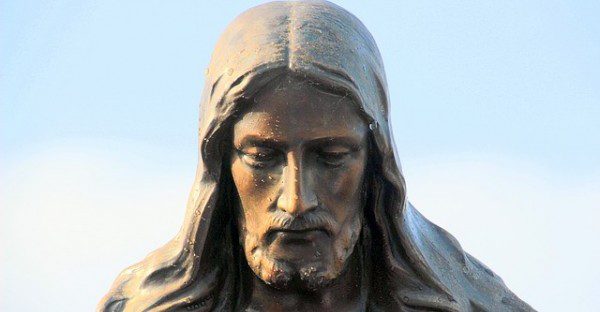
The Inauguration of the Gold-Crowned Jesus
TRENDING AT PATHEOS Progressive Christian

Why Christians Have a Sacred Duty to Vote:...
The Bible offers strong support for the sacred duty to vote. Here...

What Being a Modern-Day Apostle Means to Me
In my last column, I discussed the ins and outs of modern-day...

Did Ancient China Once Worship the God of...
Across human history, a common thread weaves through the origins of the...

Love Your Neighbor – Including Earth-Kin: Lev. 19,...
God’s command to love your neighbor means acting in an ethical and...

Lead a Church Study of “Jesus and Lao...
Guest writer Jack Thomas (The Irreverent Reverend) reflects on leading his church...

Principles for Understanding the Apostolic Ministry Today
Whenever people discover that my formal ministry title is "apostle," as in...
view all Progressive Christian blogs
Ad-Free & Subscriber Log-In Subscription Support
- About Us
- 2026 Calendar
- Videos
- Podcasts
- Library of World Religions
- Faith In Media Tracker
- Advertise With Us
- Write for Us
- Privacy Policy
- Terms of Service
- Do Not Sell My Data
- Contact Us
- Radiant Digital
- Manage Newsletter Subscriptions
- Unsubscribe From Notifications
- Sitemap
Copyright 2008-2026, Patheos. All rights reserved.
Subscription Support Ad-Free & Subscriber Log-In
Follow Patheos