
BuddhistCatholicContemplativeEvangelicalGeneral ChristianHinduJewishLatter-day SaintMuslimNew VisionsProgressive Christian
Beliefs
- Buddhist
- Catholic
- Contemplative
- Evangelical
- General Christian
- Hindu
- Jewish
- Latter-day Saint
- More Voices
- Muslim
- New Visions
- Pagan
- Progressive Christian
Topics
- Religion News
- Food and Religion
- Sports and Religion
- Religious Art
- Religious Music and Entertainment
- Religious Events
- History and Religion
- Style and Religion
- Politics and Religion
- Women in Religion
- Recreation Outdoors and Religion
- Business Finance and Religion
- Careers Workplace and Religion
- Education and Religion
- Family Parenting and Religion
- Health Fitness and Religion
- Home and Religion
- Relationships and Religion
- Technology and Religion
- Travel and Religion
Columnists
- Buddhist Columnists
- Business Finance and Religion Columnists
- Careers Workplace and Religion Columnists
- Catholic Columnists
- Contemplative Columnists
- Education and Religion Columnists
- Evangelists Columnists
- Family Parenting and Religion Columnists
- General Christian Columnists
- Health Fitness and Religion Columnists
- Hindu Columnists
- History and Religion Columnists
- Home and Religion Columnists
- Jewish Columnists
- More Voices Columnists
- Latter Day Columnists
- Muslim Columnists
- New Visions Columnists
- Nonreligious Columnists
- Pagan Columnists
- Politics and Religion Columnists
- Progressive Columnists
- Recreation Outdoors and Religion Columnists
- Relationships and Religion Columnists
- Religion News Columnists
- Religious Art Columnists
- Religious Events Columnists
- Religious Music and Entertainment Columnists
- Sports and Religion Columnists
- Style and Religion Columnists
- Technology and Religion Columnists
- Travel and Religion Columnists
- Women in Religion Columnists
Resource Library
- 2026 Calendar
- Library of World Religions
- The 100 Most Holy Places on Earth
- Patheos Answers
- Podcasts
- Videos
- Faith Leaders Database
- Anglican Episcopalian
- Bahai
- Baptist
- Buddhism
- Christianity
- Confucianism
- Eastern Orthodoxy
- Hinduism
- Holiness and Pentecostal
- ISKCON
- Islam
- Judaism
- Lutheran
- Methodist
- The Church of Jesus Christ of Latter-day Saints
- New Age
- Paganism
- Presbytarian and Reformed
- Protestantism
- Religion Behind the Scenes
- Roman Catholic
- Scientology
- Shia Islam
- Sikhism
- Sufism
- Sunni Islam
- Taoism
- Zen
- See all religions
Research Tools
 Ad-Free & Subscriber Log-In Subscription Support
Ad-Free & Subscriber Log-In Subscription Support
Follow Patheos 

- Trending:
- Forgiveness
- |
- Marriage
- |
- Consciousness
- |
- Death Penalty
- |
- Election
- |
- Halloween
 Unsystematic Theology
- Home
- Progressive Christian
- Where is God in the Nepal Earthquake?
Where is God in the Nepal Earthquake?
Last updated on: April 27, 2015 at 2:50 pm by Kyle Roberts
Where is God in the Nepal Earthquake? 2015-04-27T14:50:41-05:00 Kyle Roberts
Patheos Explore the world's faith through different perspectives on religion and spirituality! Patheos has the views of the prevalent religions and spiritualities of the world.
It is impossible to try to digest the magnitude of the loss: suffering, death, pain, and destruction caused by the earthquake in Nepal. We know that over 3,600 people were killed, numerous buildings destroyed (including some landmark structures in Kathmandu), and many roads rendered impassable. Over a dozen Mt. Everest climbers were also killed, with others left stranded on the mountain.
While at one level, “natural disasters” have a way of being “no respecters of persons,” at another level, they also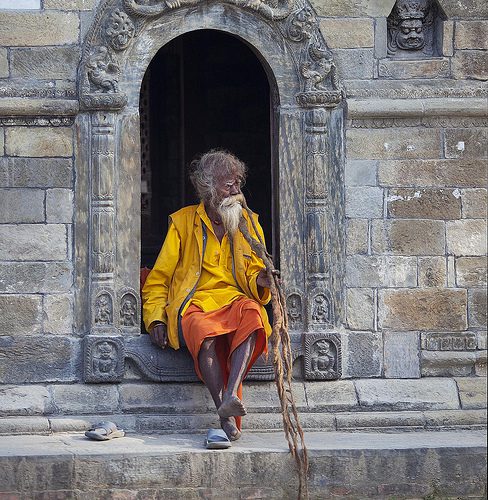
have a way of exposing the massive inequities that persist from country to country, location to location. Nepal is a developing country, scoring a ranking of only 145 of 187 countries in the Human Development Index. It is a poor country that boasts incredible natural and cultural beauty, but with a complicated political situation and challenging economic challenges.
In his book Where is God? Earthquake, Terrorism, Barbarity, and Hope, liberation theologian Jon Sobrino reflects on the theological question of “natural” disasters, in particular the earthquakes of 2001 in El Savador. Sobrino points out that some tragedies are interpreted as having greater world significance, depending on where they occur and–most crucially–whom they affect. The greatest tragedies, then, are those which have the greatest felt impact on the most powerful–the “writers” of the script of history or those whom that script is written around.
A related point is that, very often, “natural” disasters are most disastrous when they hit areas that are more susceptible to the ravages of nature: variables like financial resources, political structure, educational levels, and so on, create situations of deep vulnerability.
Too often in theology, discussions of the “Problem of Evil” make hard distinctions between “moral evil’ and “natural evil.” But the devastation caused by earthquakes, tsunamis, hurricanes, tornadoes, and so on, can reveal deeper and more complex problems of the human condition that cannot be adequately addressed by distinguishing “moral” and “natural” evil. While geographical events and weather patterns are no respecters of persons, they can also be a sign of the lack of progress in affirming globally and fully the imago Dei in all human beings. The way the event is inscribed into our cultural and historical memories (or whether it is quickly forgotten altogether) is one of those signs.
Let me close with Sobrino’s own words from his first reflection on the devastation of an earthquake:
There is no logical, rationally convincing answer to the question about where God is in suffering. Without discussing it further now, let us simply say that God is also crucified. In Europe, Bonhoeffer and Moltmann have made that point very well. Some of us have also thought about the problem. But it is clear that the answer to the question about God can only be found in life: if ultimate mystery, even in a time of catastrophe, can give rise to hope. That is to say, if hope does not die.
photo credit: <a href=”http://www.flickr.com/photos/50979393@N00/5153034163″>sadhus of katmandu</a> via <a href=”http://photopin.com”>photopin</a> <a href=”https://creativecommons.org/licenses/by/2.0/”>(license)</a>
Previous Post

April 24, 2015
Should Seminaries Train the Churches?
Next Post
April 28, 2015 Leaving Evangelicalism, #1a: The Foundations Are Breaking Up
Browse Our Archives
Select a Category Uncategorized
Select a Month December 2020 November 2020 June 2020 May 2020 April 2020 December 2018 July 2018 March 2018 February 2018 January 2018 December 2017 November 2017 October 2017 September 2017 August 2017 July 2017 June 2017 April 2017 March 2017 February 2017 January 2017 December 2016 November 2016 October 2016 September 2016 August 2016 July 2016 June 2016 May 2016 April 2016 March 2016 February 2016 January 2016 December 2015 November 2015 October 2015 September 2015 August 2015 July 2015 June 2015 May 2015 April 2015 March 2015 February 2015 January 2015 December 2014
Follow Us!
TAKE THE
Religious Wisdom Quiz
True or False: Ruth was from Moab and chose to stay with her mother-in-law Naomi.
Select your answer to see how you score.
TRUE FALSE
Books by This Author Books by Kyle Roberts
Related posts from Unsystematic Theology

A Big Problem with Intelligent Design: "Don't Look...

On the Origin of Modern Apologetics and the...
Why is God Waiting (So Long!) to Redeem...
God Couldn't Stop the Terrorist Attacks in Paris,...
TRENDING AT PATHEOS Progressive Christian

Why Christians Have a Sacred Duty to Vote:...
The Bible offers strong support for the sacred duty to vote. Here...

What Being a Modern-Day Apostle Means to Me
In my last column, I discussed the ins and outs of modern-day...

Did Ancient China Once Worship the God of...
Across human history, a common thread weaves through the origins of the...

Love Your Neighbor – Including Earth-Kin: Lev. 19,...
God’s command to love your neighbor means acting in an ethical and...

Lead a Church Study of “Jesus and Lao...
Guest writer Jack Thomas (The Irreverent Reverend) reflects on leading his church...

Principles for Understanding the Apostolic Ministry Today
Whenever people discover that my formal ministry title is "apostle," as in...
view all Progressive Christian blogs
Ad-Free & Subscriber Log-In Subscription Support
- About Us
- 2026 Calendar
- Videos
- Podcasts
- Library of World Religions
- Faith In Media Tracker
- Advertise With Us
- Write for Us
- Privacy Policy
- Terms of Service
- Do Not Sell My Data
- Contact Us
- Radiant Digital
- Manage Newsletter Subscriptions
- Unsubscribe From Notifications
- Sitemap
Copyright 2008-2026, Patheos. All rights reserved.
Subscription Support Ad-Free & Subscriber Log-In
Follow Patheos