
BuddhistCatholicContemplativeEvangelicalGeneral ChristianHinduJewishLatter-day SaintMuslimNew VisionsProgressive Christian
Beliefs
- Buddhist
- Catholic
- Contemplative
- Evangelical
- General Christian
- Hindu
- Jewish
- Latter-day Saint
- More Voices
- Muslim
- New Visions
- Pagan
- Progressive Christian
Topics
- Religion News
- Food and Religion
- Sports and Religion
- Religious Art
- Religious Music and Entertainment
- Religious Events
- History and Religion
- Style and Religion
- Politics and Religion
- Women in Religion
- Recreation Outdoors and Religion
- Business Finance and Religion
- Careers Workplace and Religion
- Education and Religion
- Family Parenting and Religion
- Health Fitness and Religion
- Home and Religion
- Relationships and Religion
- Technology and Religion
- Travel and Religion
Columnists
- Buddhist Columnists
- Business Finance and Religion Columnists
- Careers Workplace and Religion Columnists
- Catholic Columnists
- Contemplative Columnists
- Education and Religion Columnists
- Evangelists Columnists
- Family Parenting and Religion Columnists
- General Christian Columnists
- Health Fitness and Religion Columnists
- Hindu Columnists
- History and Religion Columnists
- Home and Religion Columnists
- Jewish Columnists
- More Voices Columnists
- Latter Day Columnists
- Muslim Columnists
- New Visions Columnists
- Nonreligious Columnists
- Pagan Columnists
- Politics and Religion Columnists
- Progressive Columnists
- Recreation Outdoors and Religion Columnists
- Relationships and Religion Columnists
- Religion News Columnists
- Religious Art Columnists
- Religious Events Columnists
- Religious Music and Entertainment Columnists
- Sports and Religion Columnists
- Style and Religion Columnists
- Technology and Religion Columnists
- Travel and Religion Columnists
- Women in Religion Columnists
Resource Library
- 2026 Calendar
- Library of World Religions
- The 100 Most Holy Places on Earth
- Patheos Answers
- Podcasts
- Videos
- Faith Leaders Database
- Anglican Episcopalian
- Bahai
- Baptist
- Buddhism
- Christianity
- Confucianism
- Eastern Orthodoxy
- Hinduism
- Holiness and Pentecostal
- ISKCON
- Islam
- Judaism
- Lutheran
- Methodist
- The Church of Jesus Christ of Latter-day Saints
- New Age
- Paganism
- Presbytarian and Reformed
- Protestantism
- Religion Behind the Scenes
- Roman Catholic
- Scientology
- Shia Islam
- Sikhism
- Sufism
- Sunni Islam
- Taoism
- Zen
- See all religions
Research Tools
 Ad-Free & Subscriber Log-In Subscription Support
Follow Patheos 

- Trending:
- Advent
- |
- Forgiveness
- |
- Thanksgiving
- |
- Election
- |
- Seasonal Holidays
- |
- Marriage
 Unsystematic Theology
- Home
- Progressive Christian
- Leaving Evangelicalism, #1a: The Foundations Are Breaking Up
Leaving Evangelicalism, #1a: The Foundations Are Breaking Up
Last updated on: April 28, 2015 at 10:37 am by Kyle Roberts
Leaving Evangelicalism, #1a: The Foundations Are Breaking Up 2015-04-28T10:37:35-05:00 Kyle Roberts
Patheos Explore the world's faith through different perspectives on religion and spirituality! Patheos has the views of the prevalent religions and spiritualities of the world.
This is the first post of a series I will be writing over the next few months in which I reflect on my theological journey through Evangelicalism and “out the other side.
I should begin this series with a qualifier: The “Evangelicalism” I will primarily refer to throughout this series is a particular manifestation of a broader and more diverse, global “evangelicalism.” The Evangelicalism I am leaving is U.S. Evangelicalism (designated with a capital “E”), sometimes known as “neo-Evangelicalism”; a movement within (primarily) Anglo-American conservative Protestantism which emerged out of the fundamentalist-modernist controversy of the early twentieth-century. These Evangelicals–and Evangelical institutions–share with fundamentalism strong beliefs in several fundamental doctrines of Christian theology (with a few variations or nuances here and there), but were also organized around a strategic attempt to be more positively culturally engaged and more intellectually sophisticated than the fundamentalists had proved to be. Many of the most significant self-identifying Evangelical institutions (Trinity Evangelical Divinity School, Fuller Seminary, Christianity Today, etc.) were a direct result of that strategic move toward positive cultural and intellectual engagement.
Now that the qualifier is over, I begin this series with a reflection about certainty.
When I was a senior at Wheaton college–a decidedly Evangelical institution–I (like many young Christians) underwent something of an existential and epistemological crisis of faith. I will spare you the details, but

Artwork by Stephanie Roberts
Kierkegaard’s Fear and Trembling helped me work through that crisis and to begin to think differently about faith. Faith, by definition, has no need for epistemic certainty. That’s what makes faith faith. We shouldn’t be looking for any secure “ground” outside of the experience of faith to secure our belief in God, our passion for the gospel, etc. This means the classical apologetic enterprise, and the quest for historical or rational proofs for the existence of God or the historicity of Christ and the resurrection, etc., are not only unnecessary, they are completely wrong-headed. For the very attempt to undergo a quest for certainty actually ends up undercutting the very thing you are looking to deepen and strengthen in the first place–which is faith.
Fast-forward to 2005, and to my first year of a tenure-track position at Bethel Seminary in St. Paul, MN. Questions about epistemology and certainty were swirling about throughout U.S. Evangelicalism. Postmodernism was still a pretty big deal back then, as it had been throughout the 80s/90s. Evangelicals were (somewhat) conflicted about how to think about postmodernism. It’s safe to say that the majority of U.S. Evangelicals saw postmodernism (with its tolerance for otherness and difference, its emphasis on the contextual and historical source of “knowledge” and “truth,” its highlighting of plurality, and its disavowal of the quest for certainty) as threatening to Christianity and to Christian faith.
On the other hand, some Evangelical theologians pushed for a more positive engagement with postmodernism and saw, in the postmodern critique of the modernist quest for certainty about knowledge, a hopeful way forward for Christianity. Foundationalism was an epistemological position that looked for an unquestionable and “self-evident” foundation which would buttress one’s theological beliefs and which could uphold one’s theological and belief system (or worldview) on the basis of an errorless, flawless, and self-evidently true “source” of knowledge. Interestingly, some evangelical theologians and philosophers are now distinguishing between “source” foundationalism–this early form to which I am referring–and “doxastic” foundationalism. which is a more modest and realistic expression. Doxastic foundationalism simply admits that we have some core beliefs which do function as more foundational than others. This is a relatively recent nuance, that I’m not sure has caught on yet. But there have long been more “modest” alternatives, within evangelicalism, to the more rigid “classical” versions of foundationalism.
In any case, one of the most important books in those days for the conversation was Beyond Foundationalism, by Stanley Grenz and John Franke. Grenz and Franke inspired a generation of younger Evangelical theologians to consider a more postmodern-friendly faith and one less hampered by the angst about epistemic certainty. There were debates aplenty during those days at the national Evangelical Theological Society meetings about the perceived merits of foundationalism versus postfoundationalism (as well as variations of each) as epistemological stances for shaping our theological methods. It was also a topic of conversation during the faculty interviews for my first faculty position. The question reflected the larger conflict within Evangelical Christianity: “Where do you stand on the epistemology debate?” I knew then–as I know now–that I’m a postfoundationalist. Because Kierkegaard had saved my faith.
This post has already gotten too long. So I will close with this: The first reason I am “leaving Evangelicalism” is because I think that by and large, it is still too hampered by a desire for certainty about religious knowledge and for certainty about theology. This means that on the whole, Evangelicalism (if I can think anthropomorphically for moment) evidences a unwillingness to rethink its embedded, fundamental positions. Examples of some of those positions will be considered in subsequent posts.
I will follow up this post in coming days with a discussion about my shift from certainty to confidence, and the important role that recognition of context takes in shaping both our faith and our theological beliefs.
Previous Post

April 27, 2015
Where is God in the Nepal Earthquake?
Next Post
April 29, 2015 Book Notice: A Future for American Evangelicalism
Browse Our Archives
Select a Category Uncategorized
Select a Month December 2020 November 2020 June 2020 May 2020 April 2020 December 2018 July 2018 March 2018 February 2018 January 2018 December 2017 November 2017 October 2017 September 2017 August 2017 July 2017 June 2017 April 2017 March 2017 February 2017 January 2017 December 2016 November 2016 October 2016 September 2016 August 2016 July 2016 June 2016 May 2016 April 2016 March 2016 February 2016 January 2016 December 2015 November 2015 October 2015 September 2015 August 2015 July 2015 June 2015 May 2015 April 2015 March 2015 February 2015 January 2015 December 2014
Follow Us!
TAKE THE
Religious Wisdom Quiz
Which Psalm is the longest chapter in the Bible?
Select your answer to see how you score.
Psalm 50 Psalm 23 Psalm 1 Psalm 119
Books by This Author Books by Kyle Roberts
Related posts from Unsystematic Theology
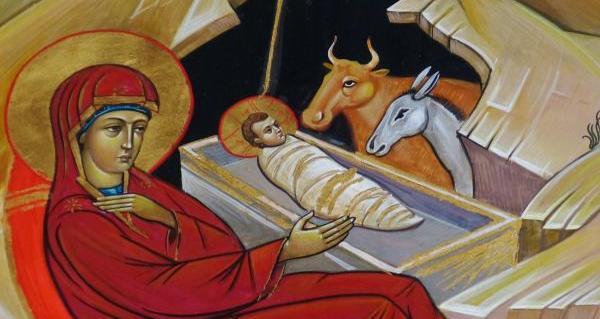
Kierkegaard on the Incarnation: God is Like an...
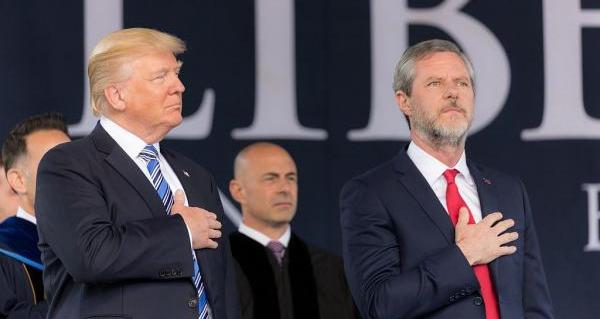
A Scholar on Why Evangelicals Love Trump: Not...

Kierkegaard on Christian Nationalism: "Will He Find Faith...

"Might Makes Right": How Evangelicals Can Still Support...
TRENDING AT PATHEOS Progressive Christian

Can a Chatbot Touch Your Soul?
Can a chatbot offer genuine spiritual counsel? One conversation brought me to...

Religion and Politics: How Should We Then Live?
Two cultural axioms get repeated in polite company. Don't mix religion and...

7 Things We Get Wrong About Giving Thanks
It's a time of year when many of us turn to the...

Uncaging Truth: Spirituality Beyond Institutions
The Lost Connection: Why True Spirituality, Not Religion, Is the Key to...

Christ the King? Maybe We've Misunderstood the Crown
What do we mean when we say that Jesus is King? What...

Counter “Christ Is King” Nationalism with Christ THE...
Christ the King Sunday is an ideal time to address the heresy...
view all Progressive Christian blogs
Ad-Free & Subscriber Log-In Subscription Support
- About Us
- 2026 Calendar
- Videos
- Podcasts
- Library of World Religions
- Faith In Media Tracker
- Advertise With Us
- Write for Us
- Privacy Policy
- Terms of Service
- Do Not Sell My Data
- Contact Us
- Radiant Digital
- Manage Newsletter Subscriptions
- Unsubscribe From Notifications
- Sitemap
Copyright 2008-2026, Patheos, part of the Radiant Digital network of media brands. All rights reserved.
Subscription Support Ad-Free & Subscriber Log-In
Follow Patheos