
BuddhistCatholicContemplativeEvangelicalGeneral ChristianHinduJewishLatter-day SaintMuslimNew VisionsProgressive Christian
Beliefs
- Buddhist
- Catholic
- Contemplative
- Evangelical
- General Christian
- Hindu
- Jewish
- Latter-day Saint
- More Voices
- Muslim
- New Visions
- Pagan
- Progressive Christian
Topics
- Religion News
- Food and Religion
- Sports and Religion
- Religious Art
- Religious Music and Entertainment
- Religious Events
- History and Religion
- Style and Religion
- Politics and Religion
- Women in Religion
- Recreation Outdoors and Religion
- Business Finance and Religion
- Careers Workplace and Religion
- Education and Religion
- Family Parenting and Religion
- Health Fitness and Religion
- Home and Religion
- Relationships and Religion
- Technology and Religion
- Travel and Religion
Columnists
- Buddhist Columnists
- Business Finance and Religion Columnists
- Careers Workplace and Religion Columnists
- Catholic Columnists
- Contemplative Columnists
- Education and Religion Columnists
- Evangelists Columnists
- Family Parenting and Religion Columnists
- General Christian Columnists
- Health Fitness and Religion Columnists
- Hindu Columnists
- History and Religion Columnists
- Home and Religion Columnists
- Jewish Columnists
- More Voices Columnists
- Latter Day Columnists
- Muslim Columnists
- New Visions Columnists
- Nonreligious Columnists
- Pagan Columnists
- Politics and Religion Columnists
- Progressive Columnists
- Recreation Outdoors and Religion Columnists
- Relationships and Religion Columnists
- Religion News Columnists
- Religious Art Columnists
- Religious Events Columnists
- Religious Music and Entertainment Columnists
- Sports and Religion Columnists
- Style and Religion Columnists
- Technology and Religion Columnists
- Travel and Religion Columnists
- Women in Religion Columnists
Resource Library
- 2026 Calendar
- Library of World Religions
- The 100 Most Holy Places on Earth
- Patheos Answers
- Podcasts
- Videos
- Faith Leaders Database
- Anglican Episcopalian
- Bahai
- Baptist
- Buddhism
- Christianity
- Confucianism
- Eastern Orthodoxy
- Hinduism
- Holiness and Pentecostal
- ISKCON
- Islam
- Judaism
- Lutheran
- Methodist
- The Church of Jesus Christ of Latter-day Saints
- New Age
- Paganism
- Presbytarian and Reformed
- Protestantism
- Religion Behind the Scenes
- Roman Catholic
- Scientology
- Shia Islam
- Sikhism
- Sufism
- Sunni Islam
- Taoism
- Zen
- See all religions
Research Tools
 Ad-Free & Subscriber Log-In Subscription Support
Follow Patheos 

- Trending:
- Advent
- |
- Forgiveness
- |
- Thanksgiving
- |
- Election
- |
- Seasonal Holidays
- |
- Marriage
 Unsystematic Theology
- Home
- Progressive Christian
- Beyond Certainty (Leaving Evangelicalism)
Beyond Certainty (Leaving Evangelicalism)
Last updated on: April 30, 2015 at 11:00 am by Kyle Roberts
Beyond Certainty (Leaving Evangelicalism) 2015-04-30T11:00:11-05:00 Kyle Roberts
Patheos Explore the world's faith through different perspectives on religion and spirituality! Patheos has the views of the prevalent religions and spiritualities of the world.
This is the second post of a series I will be writing over the next few months in which I reflect on my theological journey through Evangelicalism and “out the other side.”
When I first starting teaching theology, I discovered the significance of context. This might sound strange and indeed, it is strange that in eight or so years of theological education (seminary and doctoral studies) in Evangelical settings, context was so little discussed and so underestimated. Now, when you study Church History, of course context comes into play. When you do “biblical interpretation” and hermeneutics, you discuss context. But in many Evangelical settings (at least the ones I experienced), context is their context. You need to know their context so as to better understand them. Or you need to know the biblical context so you can rightly interpret the text rather than “eisegete” it.

Jose Clemete Orozco, 1932-34
But as I dove into a whole new level of research to teach Systematic Theology, I was confronted with my context and with the fact that white, mostly male, American Evangelical theology is its own context and is fundamentally no different in that respect than all the contextual theologies which are so often marginalized in Evangelical theology. The mantra began to beat in my head like a drum: All theologies are contextual–even the ones that don’t claim to be. And interestingly, American Evangelical theology represents a pretty recent context in the long scope of history.
What did this all mean? It meant that I have presuppositions, thanks to my embedded (received) theology, and I have biases, blind-spots, and a very limited take on reality. My view of God, my God-images, are shaped by the particular experiences of my life and of my pretty narrow theological and church tradition not to mention my particular ethnic, gendered, and embodied experience.
And I’m supposed to have a definitive take on God from within these contextual limitations?
I’m supposed to have a definitive interpretation of the Bible from within these contextual limitations?
The anxiety about theological and epistemological certainty, which I discussed in my last post, had already faded from my expectations at this point. I had begun to replace “certainty” as a theological goal with “confidence,” or–if you want a stronger, more emotively religious variant–with “conviction.” All knowing is personal knowing (Polayni), truth is subjectivity (Kierkegaard), theology is contextual.
The realization of the shaping significance of context didn’t meant that all is lost, so I should throw up my hands in despair at not being able to ever know anything. It meant that I shifted from aiming for epistemological certainty about theological matters (e.g. the “nature of God,” the “right interpretation of this or that text”) to being content with a settled confidence about some core values and convictions I had–while sorting through (as best I could) the presuppositions and biases that I carry with me.
Certainty is an inevitable human emotion. As Robert Burton points out in On Being Certain: Believing You are Right Even When You’re Not, there’s a special location of the brain dedicated to giving us the feeling of certainty. But certainty isn’t often connected to conscious reflection and reasoning (even though we often imagine it to be). So I’m certainly not claiming to never feel certain about things–or that if we feel certain, we should feel guilty. But it’s healthy to examine whether we are assuming that our sense of certainty is tied to a faulty assumption that we possess objective, final truth about God and that our particular context has not shaped our theological convictions in more ways than we may want to admit.
American Evangelicalism represents a context (or a constellation of relatively similar “contexts,” at the very least). Too often, though, its theologians and pastors fail to recognize their own contextuality (it’s easier to see how context influence others!). This is one reason I have shifted away from Evangelicalism. The theological certainty, based in assumptions about what can be known with definitive precision, became for me a problem too pervasive to avoid. I see that certainty exemplified in a common understanding of Scripture (i.e. the doctrine of inerrancy), a particular (and narrow) definition of the gospel, assumptions about Hell and the “final judgment,” and an aversion to the deep mystery of God.
But more about these things as we move along.
Previous Post

April 29, 2015
Book Notice: A Future for American Evangelicalism
Next Post
April 30, 2015 ISIS and the Psychology of Terror
Browse Our Archives
Select a Category Uncategorized
Select a Month December 2020 November 2020 June 2020 May 2020 April 2020 December 2018 July 2018 March 2018 February 2018 January 2018 December 2017 November 2017 October 2017 September 2017 August 2017 July 2017 June 2017 April 2017 March 2017 February 2017 January 2017 December 2016 November 2016 October 2016 September 2016 August 2016 July 2016 June 2016 May 2016 April 2016 March 2016 February 2016 January 2016 December 2015 November 2015 October 2015 September 2015 August 2015 July 2015 June 2015 May 2015 April 2015 March 2015 February 2015 January 2015 December 2014
Follow Us!
TAKE THE
Religious Wisdom Quiz
Which Psalm is the longest chapter in the Bible?
Select your answer to see how you score.
Psalm 50 Psalm 23 Psalm 1 Psalm 119
Books by This Author Books by Kyle Roberts
Related posts from Unsystematic Theology

A Scholar on Why Evangelicals Love Trump: Not...

"Might Makes Right": How Evangelicals Can Still Support...

The Fundamentalist Heresy: Jesus was a Superhuman Person
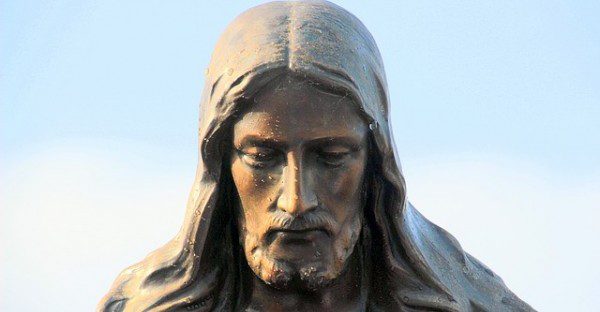
The Inauguration of the Gold-Crowned Jesus
TRENDING AT PATHEOS Progressive Christian

Can a Chatbot Touch Your Soul?
Can a chatbot offer genuine spiritual counsel? One conversation brought me to...

Religion and Politics: How Should We Then Live?
Two cultural axioms get repeated in polite company. Don't mix religion and...

7 Things We Get Wrong About Giving Thanks
It's a time of year when many of us turn to the...

Uncaging Truth: Spirituality Beyond Institutions
The Lost Connection: Why True Spirituality, Not Religion, Is the Key to...

Christ the King? Maybe We've Misunderstood the Crown
What do we mean when we say that Jesus is King? What...

Counter “Christ Is King” Nationalism with Christ THE...
Christ the King Sunday is an ideal time to address the heresy...
view all Progressive Christian blogs
Ad-Free & Subscriber Log-In Subscription Support
- About Us
- 2026 Calendar
- Videos
- Podcasts
- Library of World Religions
- Faith In Media Tracker
- Advertise With Us
- Write for Us
- Privacy Policy
- Terms of Service
- Do Not Sell My Data
- Contact Us
- Radiant Digital
- Manage Newsletter Subscriptions
- Unsubscribe From Notifications
- Sitemap
Copyright 2008-2026, Patheos, part of the Radiant Digital network of media brands. All rights reserved.
Subscription Support Ad-Free & Subscriber Log-In
Follow Patheos