
BuddhistCatholicContemplativeEvangelicalGeneral ChristianHinduJewishLatter-day SaintMuslimNew VisionsProgressive Christian
Beliefs
- Buddhist
- Catholic
- Contemplative
- Evangelical
- General Christian
- Hindu
- Jewish
- Latter-day Saint
- More Voices
- Muslim
- New Visions
- Pagan
- Progressive Christian
Topics
- Religion News
- Food and Religion
- Sports and Religion
- Religious Art
- Religious Music and Entertainment
- Religious Events
- History and Religion
- Style and Religion
- Politics and Religion
- Women in Religion
- Recreation Outdoors and Religion
- Business Finance and Religion
- Careers Workplace and Religion
- Education and Religion
- Family Parenting and Religion
- Health Fitness and Religion
- Home and Religion
- Relationships and Religion
- Technology and Religion
- Travel and Religion
Columnists
- Buddhist Columnists
- Business Finance and Religion Columnists
- Careers Workplace and Religion Columnists
- Catholic Columnists
- Contemplative Columnists
- Education and Religion Columnists
- Evangelists Columnists
- Family Parenting and Religion Columnists
- General Christian Columnists
- Health Fitness and Religion Columnists
- Hindu Columnists
- History and Religion Columnists
- Home and Religion Columnists
- Jewish Columnists
- More Voices Columnists
- Latter Day Columnists
- Muslim Columnists
- New Visions Columnists
- Nonreligious Columnists
- Pagan Columnists
- Politics and Religion Columnists
- Progressive Columnists
- Recreation Outdoors and Religion Columnists
- Relationships and Religion Columnists
- Religion News Columnists
- Religious Art Columnists
- Religious Events Columnists
- Religious Music and Entertainment Columnists
- Sports and Religion Columnists
- Style and Religion Columnists
- Technology and Religion Columnists
- Travel and Religion Columnists
- Women in Religion Columnists
Resource Library
- 2026 Calendar
- Library of World Religions
- The 100 Most Holy Places on Earth
- Patheos Answers
- Podcasts
- Videos
- Faith Leaders Database
- Anglican Episcopalian
- Bahai
- Baptist
- Buddhism
- Christianity
- Confucianism
- Eastern Orthodoxy
- Hinduism
- Holiness and Pentecostal
- ISKCON
- Islam
- Judaism
- Lutheran
- Methodist
- The Church of Jesus Christ of Latter-day Saints
- New Age
- Paganism
- Presbytarian and Reformed
- Protestantism
- Religion Behind the Scenes
- Roman Catholic
- Scientology
- Shia Islam
- Sikhism
- Sufism
- Sunni Islam
- Taoism
- Zen
- See all religions
Research Tools
 Ad-Free & Subscriber Log-In Subscription Support
Ad-Free & Subscriber Log-In Subscription Support
Follow Patheos 

- Trending:
- Forgiveness
- |
- Marriage
- |
- Consciousness
- |
- Death Penalty
- |
- Election
- |
- Halloween
 Unsystematic Theology
- Home
- Progressive Christian
- A Brief Theology of Creation for Earth Day
A Brief Theology of Creation for Earth Day
Last updated on: April 22, 2015 at 8:13 pm by Kyle Roberts
A Brief Theology of Creation for Earth Day 2015-04-22T20:13:47-05:00 Kyle Roberts
Patheos Explore the world's faith through different perspectives on religion and spirituality! Patheos has the views of the prevalent religions and spiritualities of the world.
God brought a world into being, and thereby became vulnerable, instilling within creation a measure of freedom for its own continued development. Gen 1 suggests that God’s spoken, creative word entrusts creation itself with the glorious responsibility of freedom. God sanctions its self-emergence: “let the 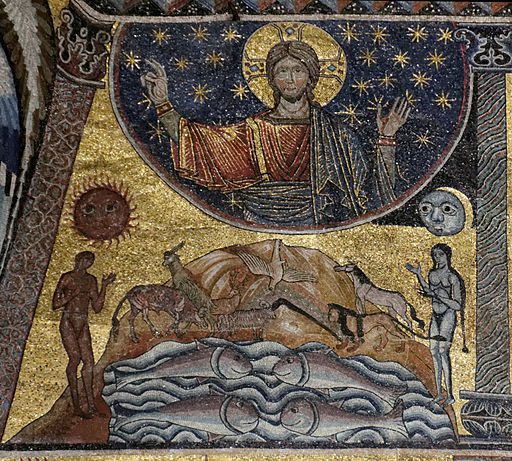 water…be gathered…”; “let the land produce vegetation;” “let there be lights in the vault of the sky”; “let the water teem with living creatures”; “let the land produce living creatures.” Throughout Gen. 1-3, creation is not represented as a finished, final product. As Terrence Fretheim notes, “at the divine initiative, the creation plays an active role in God’s creating work”[1]. When God rested on day seven, creation charged on. William Brown paints the image of God as priest over creation: Resting on the sixth day, he entrusted “to humanity the power and responsibility of managing creation” [2].
God’s sovereignty includes self-imposed limitations, which means creation is both dependent (on God) and contingent–but free. God initiates a largely “free process” (Polkinghorne) which involves creation in an ongoing dynamic of development and change. While creation is relatively free, it is not autonomous of divine influence. As Ian McFarland notes, the doctrine of creatio ex nihilo was meant to secure the distinction of all created matter from the Creator. Creation was affirmed to be dependent on God as its sole cause and to be subservient to God’s will. God alone was cause of its origination.
Creation is ‘very good’ but not perfect.
Creation is neither complete, harmless, nor tame. In creation God through the Spirit, word and wisdom brings order to disorder and beauty from chaos, but neither pain, suffering nor danger are excluded from what God calls “good.” Douglas John Hall, in God and Human Suffering, suggests the creation narrative makes room for constructive forms of suffering: loneliness, limits, temptation and anxiety. This is because “struggle is necessary to the human glory that is God’s intention for us” [3]. The desire to provide an answer to the problem of evil and suffering sometimes tempts Christians to want to read Genesis 1-3 as laying the blame for natural suffering (and death) on original human sin. In so doing, we ironically elevate the role of humanity’s burden for what happens in creation to a height (or depth) the Scriptures do not demand. We are also tempted to trace the origin of all contemporary natural suffering to human sin (whether current or ancient). Genesis 1-3, however, suggests that natural disasters are part and parcel of a dangerous but beautiful world. The recognition that creation is “very good,” but not complete, provides motivation for human involvement in the preservation, cultivation and ongoing care of the earth.
We Are “Red Earth Creatures,” but in the Image of God
 Human beings play a prominent role in both creation accounts. In Gen 1, they are the culmination of God’s creation; in Gen 2 the human (adam) is not only the first of animate things created, but, along with the woman, Eve (“mother of all living”), is the central character in the narrative. The “image of God,” presented in Gen 1 is given legs in Gen 2. The adam, or “groundling” (this literally could be “red earth creature”) is enlivened, animated by the breath of God. So the human being is created through a synthesis of divine breath and mud. This red-earth creature, which we are, is also given the responsibility to care for the earth–to be God’s “image-bearers” in the world and to cultivate, or care for, the earth. See Benjamin Corey’s excellent blog post for the implications of this responsibility. And by the way, I think imago Dei, or “image of God,” has more to do with our vocation as “cultivators” than it has to do with any substantive capacity (like rationality).
Creation is fallen, but will be perfected.
The biblical narrative is book-ended by the tree of life: its subtle (and often overlooked) presence in the center of the Garden of Eden and its more prominent place in the eschatological vision of the book of Revelation suggests that as creation continues on, in all its fertility, mystery, wonder and tragedy, so does God’s redemptive plan for history and for creation. God has invited into that project people who, following in the way of Jesus Christ and in the power of the Spirit, embody and reflect God’s image in the world. They seek to witness to and extend the gift of God’s grace throughout creation as God initiates its consummation, synthesizing earthly reality with the Kingdom of God. The New Jerusalem will descend and make right, heal and complete the old order of things. But this gives us no right to treat the earth and its resources instrumentally or flippantly. What is happening to the earth and its atmosphere and climate is frightening. We must–and can–do better. But we shouldn’t put our ultimate hope in the earth’s condition either–or certainly in our own capacities to preserve it or to heal it.
[1] Terrence Fretheim “Genesis and Ecology,” in The Book of Genesis: Composition, Reception, and Interpretation, p. 685.
[2] William P. Brown, The Seven Pillars of Creation, p. 46.
[3] Douglas John Hall, God and Human Suffering, p. 62.
Previous Post

April 22, 2015
Join Cornel West and Robert George at Biola
Next Post
April 23, 2015 Creflo Dollar, the Devil, and the Kingdom of God
Browse Our Archives
Select a Category Uncategorized
Select a Month December 2020 November 2020 June 2020 May 2020 April 2020 December 2018 July 2018 March 2018 February 2018 January 2018 December 2017 November 2017 October 2017 September 2017 August 2017 July 2017 June 2017 April 2017 March 2017 February 2017 January 2017 December 2016 November 2016 October 2016 September 2016 August 2016 July 2016 June 2016 May 2016 April 2016 March 2016 February 2016 January 2016 December 2015 November 2015 October 2015 September 2015 August 2015 July 2015 June 2015 May 2015 April 2015 March 2015 February 2015 January 2015 December 2014
Follow Us!
TAKE THE
Religious Wisdom Quiz
How many times is Jesus directly quoted in the book of Acts?
Select your answer to see how you score.
1 4 10 6
Books by This Author Books by Kyle Roberts
Related posts from Unsystematic Theology
Kierkegaard on the Incarnation: God is Like an...
Science Can't Rule Out the Resurrection as Our...

Was St. Paul an Evolutionist? (Or, Who "Subjected...
The Pale Blue Dot (A Reflection on Earth...
TRENDING AT PATHEOS Progressive Christian

Why Christians Have a Sacred Duty to Vote:...
The Bible offers strong support for the sacred duty to vote. Here...

What Being a Modern-Day Apostle Means to Me
In my last column, I discussed the ins and outs of modern-day...

Did Ancient China Once Worship the God of...
Across human history, a common thread weaves through the origins of the...

Love Your Neighbor – Including Earth-Kin: Lev. 19,...
God’s command to love your neighbor means acting in an ethical and...

Lead a Church Study of “Jesus and Lao...
Guest writer Jack Thomas (The Irreverent Reverend) reflects on leading his church...

Principles for Understanding the Apostolic Ministry Today
Whenever people discover that my formal ministry title is "apostle," as in...
view all Progressive Christian blogs
Ad-Free & Subscriber Log-In Subscription Support
- About Us
- 2026 Calendar
- Videos
- Podcasts
- Library of World Religions
- Faith In Media Tracker
- Advertise With Us
- Write for Us
- Privacy Policy
- Terms of Service
- Do Not Sell My Data
- Contact Us
- Radiant Digital
- Manage Newsletter Subscriptions
- Unsubscribe From Notifications
- Sitemap
Copyright 2008-2026, Patheos. All rights reserved.
Subscription Support Ad-Free & Subscriber Log-In
Follow Patheos