
BuddhistCatholicContemplativeEvangelicalGeneral ChristianHinduJewishLatter-day SaintMuslimNew VisionsProgressive Christian
Beliefs
- Buddhist
- Catholic
- Contemplative
- Evangelical
- General Christian
- Hindu
- Jewish
- Latter-day Saint
- More Voices
- Muslim
- New Visions
- Pagan
- Progressive Christian
Topics
- Religion News
- Food and Religion
- Sports and Religion
- Religious Art
- Religious Music and Entertainment
- Religious Events
- History and Religion
- Style and Religion
- Politics and Religion
- Women in Religion
- Recreation Outdoors and Religion
- Business Finance and Religion
- Careers Workplace and Religion
- Education and Religion
- Family Parenting and Religion
- Health Fitness and Religion
- Home and Religion
- Relationships and Religion
- Technology and Religion
- Travel and Religion
Columnists
- Buddhist Columnists
- Business Finance and Religion Columnists
- Careers Workplace and Religion Columnists
- Catholic Columnists
- Contemplative Columnists
- Education and Religion Columnists
- Evangelists Columnists
- Family Parenting and Religion Columnists
- General Christian Columnists
- Health Fitness and Religion Columnists
- Hindu Columnists
- History and Religion Columnists
- Home and Religion Columnists
- Jewish Columnists
- More Voices Columnists
- Latter Day Columnists
- Muslim Columnists
- New Visions Columnists
- Nonreligious Columnists
- Pagan Columnists
- Politics and Religion Columnists
- Progressive Columnists
- Recreation Outdoors and Religion Columnists
- Relationships and Religion Columnists
- Religion News Columnists
- Religious Art Columnists
- Religious Events Columnists
- Religious Music and Entertainment Columnists
- Sports and Religion Columnists
- Style and Religion Columnists
- Technology and Religion Columnists
- Travel and Religion Columnists
- Women in Religion Columnists
Resource Library
- 2026 Calendar
- Library of World Religions
- The 100 Most Holy Places on Earth
- Patheos Answers
- Podcasts
- Videos
- Faith Leaders Database
- Anglican Episcopalian
- Bahai
- Baptist
- Buddhism
- Christianity
- Confucianism
- Eastern Orthodoxy
- Hinduism
- Holiness and Pentecostal
- ISKCON
- Islam
- Judaism
- Lutheran
- Methodist
- The Church of Jesus Christ of Latter-day Saints
- New Age
- Paganism
- Presbytarian and Reformed
- Protestantism
- Religion Behind the Scenes
- Roman Catholic
- Scientology
- Shia Islam
- Sikhism
- Sufism
- Sunni Islam
- Taoism
- Zen
- See all religions
Research Tools
 Ad-Free & Subscriber Log-In Subscription Support
Ad-Free & Subscriber Log-In Subscription Support
Follow Patheos 

- Trending:
- Forgiveness
- |
- Marriage
- |
- Consciousness
- |
- Death Penalty
- |
- Election
- |
- Halloween
 Unsystematic Theology
- Home
- Progressive Christian
- The Resurrection Means that God is Not Lonely
The Resurrection Means that God is Not Lonely
Last updated on: March 31, 2015 at 12:19 pm by Kyle Roberts
The Resurrection Means that God is Not Lonely 2015-03-31T12:19:49-05:00 Kyle Roberts
Patheos Explore the world's faith through different perspectives on religion and spirituality! Patheos has the views of the prevalent religions and spiritualities of the world.
The most difficult transition in early Christianity, which of course began as a sect of Judaism, was the shift from the unquestioned monotheism–represented in the Shema prayer (“Hear O Israel! The Lord our God is one Lord!”)– to a burgeoning belief in God as a trinity of equal, unified, but distinct ‘persons.’ Unqualified and single devotion to Jahweh became complicated by the growing 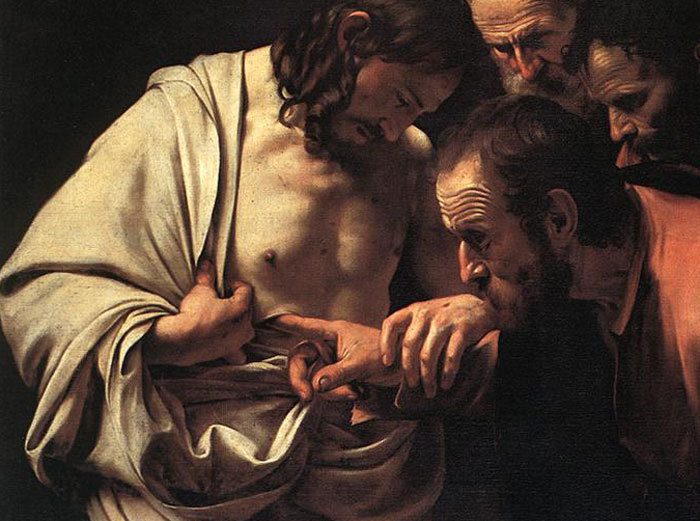 sense that Jesus was also divine and therefore equally worthy of worship–as was the Holy Spirit. Debates raged, of course, as to whether Jesus was equal to God (see “Arius” and “Arianism”) or not, but eventually the Nicene Creed came to dominate the landscape and to determine what counted as Christian orthodoxy. Jesus was thereafter considered “of the same essence” as God the Father. But the “thereafter” took some working out. Things were still far from clear and even farther from a unified consensus.
The resurrection of Jesus was an important piece of the argument in favor of his divinity. But more than that, it changed the way early Christians understood the inner life of God. In The Spirit of Early Christian Thought, Robert Louis Wilken details this development by discussing the contributing of Hilary, the bishop of Poitiers. Hilary became an apologist for the Nicene decision on the divinity of Christ. When he was exiled by Emperor Constantius (who did not support Nicaea’s conclusions), he wrote a work called The Trinity.
In this work, Hilary argued that Thomas’s confession upon seeing the resurrected Jesus, “My Lord and my God,” transforms our understanding of the Shema. How can God be “one,” if Christ and the Father are God? This insight was so counter-intuitive as to require a miraculous disclosure. As Wilkin puts it, “his disciples did not have eyes to see who he was,” and of course they were faithful Jews, so they understood God through the lens of Shema. The full recognition of Christ’s divinity had to await the event of the resurrection–thus its crucial importance. But once understood, it transformed their theology ,not just of who this Jesus was, but of who God is. Wilken explains:
After the resurrection he could continue to recite the Sh’ma because he had begun to conceive of the oneness of God differently. Thomas’s confession ‘my Lord and my God’ was not the ‘acknowledgement of a second God, nor a betrayal of the unity of the divine nature’: it was a recognition that God was not a ‘solitary God’ or a ‘lonely God.’ God is one, says Hilary, but not alone.
While progressive Christians should account for the obvious fallibility–and sometimes horrendously violent politics–of the story of the development of early trinitarian dogma (see, for example, Wendy Farley’s devastatingly honest portrayal in Gathering Those Driven Away, there’s some amazingly rich stuff in there, too. Here’s an example of a pretty cool idea. God is not a “solitary” or “lonely” God. God’s inner life is narrated by a plurality of persons sharing a single essence. The life of God is shaped by God’s acts within history. God’s involvement in creation through the Son’s incarnation and resurrection means that *God is social, dynamic, relational–*not “lonely.” This notion takes flight in contemporary theology, including in the “social trinitarianism” of liberation-oriented theology.
But it begins here with that starting insight about the resurrection: “My Lord and my God!”
Previous Post

March 29, 2015
The Resurrection Matters because Bodies are Beautiful
Next Post
March 31, 2015 All my Gay Friends are Christians (I Should Get Out More)
Browse Our Archives
Select a Category Uncategorized
Select a Month December 2020 November 2020 June 2020 May 2020 April 2020 December 2018 July 2018 March 2018 February 2018 January 2018 December 2017 November 2017 October 2017 September 2017 August 2017 July 2017 June 2017 April 2017 March 2017 February 2017 January 2017 December 2016 November 2016 October 2016 September 2016 August 2016 July 2016 June 2016 May 2016 April 2016 March 2016 February 2016 January 2016 December 2015 November 2015 October 2015 September 2015 August 2015 July 2015 June 2015 May 2015 April 2015 March 2015 February 2015 January 2015 December 2014
Follow Us!
TAKE THE
Religious Wisdom Quiz
True or False: Ruth was from Moab and chose to stay with her mother-in-law Naomi.
Select your answer to see how you score.
TRUE FALSE
Books by This Author Books by Kyle Roberts
Related posts from Unsystematic Theology
"A Complicated Pregnancy" Now Available for Pre-Order

Science Can't Rule Out the Resurrection as Our...
The Resurrection Revealed Jesus as Divine (Pannenberg)

Why I'm a Christian Universalist in One, Simple...
TRENDING AT PATHEOS Progressive Christian

Why Christians Have a Sacred Duty to Vote:...
The Bible offers strong support for the sacred duty to vote. Here...

What Being a Modern-Day Apostle Means to Me
In my last column, I discussed the ins and outs of modern-day...

Did Ancient China Once Worship the God of...
Across human history, a common thread weaves through the origins of the...

Love Your Neighbor – Including Earth-Kin: Lev. 19,...
God’s command to love your neighbor means acting in an ethical and...

Lead a Church Study of “Jesus and Lao...
Guest writer Jack Thomas (The Irreverent Reverend) reflects on leading his church...

Principles for Understanding the Apostolic Ministry Today
Whenever people discover that my formal ministry title is "apostle," as in...
view all Progressive Christian blogs
Ad-Free & Subscriber Log-In Subscription Support
- About Us
- 2026 Calendar
- Videos
- Podcasts
- Library of World Religions
- Faith In Media Tracker
- Advertise With Us
- Write for Us
- Privacy Policy
- Terms of Service
- Do Not Sell My Data
- Contact Us
- Radiant Digital
- Manage Newsletter Subscriptions
- Unsubscribe From Notifications
- Sitemap
Copyright 2008-2026, Patheos. All rights reserved.
Subscription Support Ad-Free & Subscriber Log-In
Follow Patheos