
BuddhistCatholicContemplativeEvangelicalGeneral ChristianHinduJewishLatter-day SaintMuslimNew VisionsProgressive Christian
Beliefs
- Buddhist
- Catholic
- Contemplative
- Evangelical
- General Christian
- Hindu
- Jewish
- Latter-day Saint
- More Voices
- Muslim
- New Visions
- Pagan
- Progressive Christian
Topics
- Religion News
- Food and Religion
- Sports and Religion
- Religious Art
- Religious Music and Entertainment
- Religious Events
- History and Religion
- Style and Religion
- Politics and Religion
- Women in Religion
- Recreation Outdoors and Religion
- Business Finance and Religion
- Careers Workplace and Religion
- Education and Religion
- Family Parenting and Religion
- Health Fitness and Religion
- Home and Religion
- Relationships and Religion
- Technology and Religion
- Travel and Religion
Columnists
- Buddhist Columnists
- Business Finance and Religion Columnists
- Careers Workplace and Religion Columnists
- Catholic Columnists
- Contemplative Columnists
- Education and Religion Columnists
- Evangelists Columnists
- Family Parenting and Religion Columnists
- General Christian Columnists
- Health Fitness and Religion Columnists
- Hindu Columnists
- History and Religion Columnists
- Home and Religion Columnists
- Jewish Columnists
- More Voices Columnists
- Latter Day Columnists
- Muslim Columnists
- New Visions Columnists
- Nonreligious Columnists
- Pagan Columnists
- Politics and Religion Columnists
- Progressive Columnists
- Recreation Outdoors and Religion Columnists
- Relationships and Religion Columnists
- Religion News Columnists
- Religious Art Columnists
- Religious Events Columnists
- Religious Music and Entertainment Columnists
- Sports and Religion Columnists
- Style and Religion Columnists
- Technology and Religion Columnists
- Travel and Religion Columnists
- Women in Religion Columnists
Resource Library
- 2026 Calendar
- Library of World Religions
- The 100 Most Holy Places on Earth
- Patheos Answers
- Podcasts
- Videos
- Faith Leaders Database
- Anglican Episcopalian
- Bahai
- Baptist
- Buddhism
- Christianity
- Confucianism
- Eastern Orthodoxy
- Hinduism
- Holiness and Pentecostal
- ISKCON
- Islam
- Judaism
- Lutheran
- Methodist
- The Church of Jesus Christ of Latter-day Saints
- New Age
- Paganism
- Presbytarian and Reformed
- Protestantism
- Religion Behind the Scenes
- Roman Catholic
- Scientology
- Shia Islam
- Sikhism
- Sufism
- Sunni Islam
- Taoism
- Zen
- See all religions
Research Tools
 Ad-Free & Subscriber Log-In Subscription Support
Ad-Free & Subscriber Log-In Subscription Support
Follow Patheos 

- Trending:
- Forgiveness
- |
- Marriage
- |
- Consciousness
- |
- Death Penalty
- |
- Election
- |
- Halloween
 Unfundamentalist Parenting
- Home
- Progressive Christian
- Family, Parenting and Religion
- Why You Should Take Your Daughter (& Son) to See Wonder Woman
Why You Should Take Your Daughter (& Son) to See Wonder Woman
Last updated on: June 3, 2017 at 4:24 am by Cindy Brandt
Why You Should Take Your Daughter (& Son) to See Wonder Woman 2017-06-03T04:24:52+08:00 Cindy Brandt
Patheos Explore the world's faith through different perspectives on religion and spirituality! Patheos has the views of the prevalent religions and spiritualities of the world.
*Spoiler alert*
What kind of an unfundamentalist (read: feminist) parent would I be if I do not rush to the first showing of a movie featuring a female warrior directed by a woman?
Four days before the June 2 release in America, I got to see Wonder Woman on the big IMAX screen here in Taiwan. The movie carried heavy expectations to shed the stigma from a string of ill-reviewed DC comic book movies as well as to represent feature films with a female superhero as the lead. Launching in a year where the political climate is particularly threatening to women, and after the rallying cries of resistance from the Women’s March, it is more than a little cathartic to watch a woman unleash goddess levels of power on screen, echoing the cries from the streets.
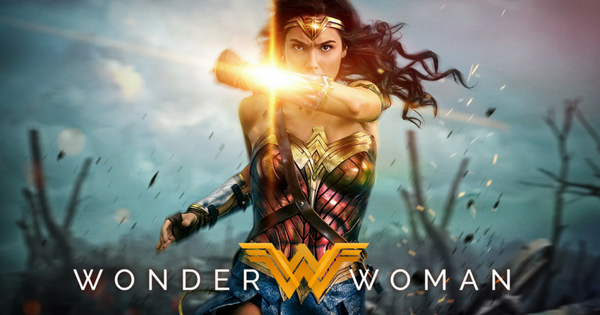
Image: Warner Bros Official movie poster
As a parent, I am glad to see Patty Jenkins (director) choose to begin the origin story from childhood. Seeing 7 year old Diana aspire to be the Amazonian female warriors in her mystical island is a poignant reminder of how our children cannot become what they do not see. You should take your daughter (& son) to see Wonder Woman for the obvious reason that our children need to see women in stories not just as damsels-in-distress but as the superhero warrior as well—that our daughters can save men and our sons can be saved by women.
But sometimes it feels as though we use terms like strength, power, courage, and love without translating them into embodied realities. What does strength mean precisely? Physical prowess? Mental resilience? Gritty perseverance? These are the universal human themes Wonder Woman explores.
Diana Prince (she was never called Wonder Woman in the movie) has natural fighting instincts along with literal, superhuman powers. She did not need to learn how to be adept at her powers like Spiderman or Superman. She is strong and always has been, but what she had to learn was that courage and strength alone isn’t enough to save the world.
In her first battle scene decked in complete Wonder Woman gear, she faces an entire army against German occupied ‘No Man’s Land’ and takes the village back. She was fierce and skillful (stunning choreography sequence), and her love and compassion for the villagers compelled the men who had given up to join in her cause. Her infinite optimism changed the outcome of a brutal reality.
After that glorious victory, her and her rag tag team continue on their mission but with two separate objectives. Diana was convinced killing the god of War, Ares, would end the war (WWI) and peace would reign on earth forever, while the rest of the team had much less sensational goals.
The audience hangs in this tension between hope and realism. There was a part of me that wanted Diana to be right despite the odds. This is a superhero movie, I self-justified, let her defeat the evil monster so everyone can live happily after. Let these short 141 minutes be a respite from what we know to be true—a world filled with complexities and nuance and where evil sometimes reigns.
*Spoiler alert*
She does indeed kill who she thought to be Ares in dramatic fashion with the god-killer sword striking through the heart of the devil. She becomes the hero that she thought she was meant to be, but the skies remained gray. The war does not end. In fact, the enemy unleashes a deadly poison gas bomb and kills everyone in the village she had valiantly saved in the prior scene. It devastates her, and the audience cannot help but grimace the way we do the moment a child loses their innocence. What does it take to save the world, if not by scapegoating our problems onto one evil figure and crushing him with brute strength?
We find out, alongside Diana, that sometimes hope does not come from happy endings, that might cannot always save, and that love does not cover a multitude of evils but is powerful enough to help us resist another day.
I’m not saying a male director and a male superhero lead could not have told a story interrogating universal human values of strength and softness without sacrificing all the action and humor elements that make for a fun flick.
I’m saying a woman and a female superhero did. And did it beautifully.
That’s why you should take your daughter (& son) to see it.
Get a free download of a Christian parenting manifesto that helps us guide children into healthy spirituality + the most helpful parenting resources with progressive values.
*Please use your own discretion when taking young children. The violence in the movie is comparable to Marvel superhero movies. The setting is WWI, but there are no overtly graphic images, and much of the violence is implied.*
Previous Post

June 1, 2017
What ‘Biblical Parenting’ REALLY Means
Next Post

June 5, 2017 Three Reasons to NOT Raise Persecution-Ready Kids
Browse Our Archives
Select a Category Uncategorized
Select a Month November 2017 October 2017 September 2017 August 2017 July 2017 June 2017 May 2017 April 2017 March 2017 February 2017 January 2017 December 2016 November 2016 October 2016 September 2016 August 2016 July 2016 June 2016 May 2016 April 2016 March 2016 February 2016
Follow Us!
TAKE THE
Religious Wisdom Quiz
Which major prophet book is directly after Isaiah?
Select your answer to see how you score.
Jeremiah Daniel Lamentations Ezekiel
Related posts from Unfundamentalist Parenting

Back to School and Child Shaming

How I'm Raising My Son a Feminist

Feminist Dad Gives Best Advice to his Daughter

Should my Daughter Defy Modesty Rules at the...
TRENDING AT PATHEOS Progressive Christian

What Being a Modern-Day Apostle Means to Me
In my last column, I discussed the ins and outs of modern-day...

Did Ancient China Once Worship the God of...
Across human history, a common thread weaves through the origins of the...

Love Your Neighbor – Including Earth-Kin: Lev. 19,...
God’s command to love your neighbor means acting in an ethical and...

Lead a Church Study of “Jesus and Lao...
Guest writer Jack Thomas (The Irreverent Reverend) reflects on leading his church...

Pastoral Wisdom for Responding to Sermon Pushback
Getting sermon pushback on your social justice sermon? Learn practical, Proverbs-based strategies...

Principles for Understanding the Apostolic Ministry Today
Whenever people discover that my formal ministry title is "apostle," as in...
view all Progressive Christian blogs
Ad-Free & Subscriber Log-In Subscription Support
- About Us
- 2026 Calendar
- Videos
- Podcasts
- Library of World Religions
- Faith In Media Tracker
- Advertise With Us
- Write for Us
- Privacy Policy
- Terms of Service
- Do Not Sell My Data
- Contact Us
- Radiant Digital
- Manage Newsletter Subscriptions
- Unsubscribe From Notifications
- Sitemap
Copyright 2008-2026, Patheos. All rights reserved.
Subscription Support Ad-Free & Subscriber Log-In
Follow Patheos