
BuddhistCatholicContemplativeEvangelicalGeneral ChristianHinduJewishLatter-day SaintMuslimNew VisionsProgressive Christian
Beliefs
- Buddhist
- Catholic
- Contemplative
- Evangelical
- General Christian
- Hindu
- Jewish
- Latter-day Saint
- More Voices
- Muslim
- New Visions
- Pagan
- Progressive Christian
Topics
- Religion News
- Food and Religion
- Sports and Religion
- Religious Art
- Religious Music and Entertainment
- Religious Events
- History and Religion
- Style and Religion
- Politics and Religion
- Women in Religion
- Recreation Outdoors and Religion
- Business Finance and Religion
- Careers Workplace and Religion
- Education and Religion
- Family Parenting and Religion
- Health Fitness and Religion
- Home and Religion
- Relationships and Religion
- Technology and Religion
- Travel and Religion
Columnists
- Buddhist Columnists
- Business Finance and Religion Columnists
- Careers Workplace and Religion Columnists
- Catholic Columnists
- Contemplative Columnists
- Education and Religion Columnists
- Evangelists Columnists
- Family Parenting and Religion Columnists
- General Christian Columnists
- Health Fitness and Religion Columnists
- Hindu Columnists
- History and Religion Columnists
- Home and Religion Columnists
- Jewish Columnists
- More Voices Columnists
- Latter Day Columnists
- Muslim Columnists
- New Visions Columnists
- Nonreligious Columnists
- Pagan Columnists
- Politics and Religion Columnists
- Progressive Columnists
- Recreation Outdoors and Religion Columnists
- Relationships and Religion Columnists
- Religion News Columnists
- Religious Art Columnists
- Religious Events Columnists
- Religious Music and Entertainment Columnists
- Sports and Religion Columnists
- Style and Religion Columnists
- Technology and Religion Columnists
- Travel and Religion Columnists
- Women in Religion Columnists
Resource Library
- 2026 Calendar
- Library of World Religions
- The 100 Most Holy Places on Earth
- Patheos Answers
- Podcasts
- Videos
- Faith Leaders Database
- Anglican Episcopalian
- Bahai
- Baptist
- Buddhism
- Christianity
- Confucianism
- Eastern Orthodoxy
- Hinduism
- Holiness and Pentecostal
- ISKCON
- Islam
- Judaism
- Lutheran
- Methodist
- The Church of Jesus Christ of Latter-day Saints
- New Age
- Paganism
- Presbytarian and Reformed
- Protestantism
- Religion Behind the Scenes
- Roman Catholic
- Scientology
- Shia Islam
- Sikhism
- Sufism
- Sunni Islam
- Taoism
- Zen
- See all religions
Research Tools
 Ad-Free & Subscriber Log-In Subscription Support
Ad-Free & Subscriber Log-In Subscription Support
Follow Patheos 

- Trending:
- Forgiveness
- |
- Marriage
- |
- Consciousness
- |
- Death Penalty
- |
- Election
- |
- Halloween
 Unfundamentalist Parenting
- Home
- Progressive Christian
- Family, Parenting and Religion
- How to Parent when Grandparents are Conservative?
How to Parent when Grandparents are Conservative?
Last updated on: April 24, 2017 at 2:27 pm by Cindy Brandt
How to Parent when Grandparents are Conservative? 2017-04-24T14:27:14+08:00 Cindy Brandt
Patheos Explore the world's faith through different perspectives on religion and spirituality! Patheos has the views of the prevalent religions and spiritualities of the world.
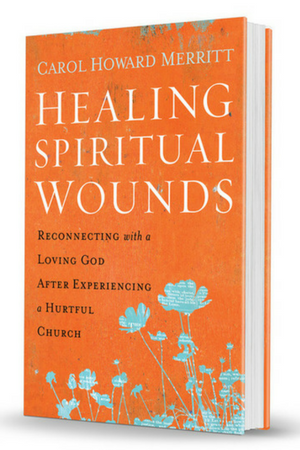
I am honored to interview Carol Howard Merritt today on the blog for Unfundamentalist Parenting. Carol is a Presbyterian pastor and the author of Healing Spiritual Wounds. For those of you who have experienced abuse at the hands of church or Christian institution, I hope you will find solace and healing through Carol’s words, as I have.
What did the faith of your childhood look like?
I was raised in a conservative Southern Baptist Church, then my parents got the Holy Spirit (as they say), and became charismatic, but they kept their Southern Baptist theology and sensibilities. When I was seventeen, I went to Moody Bible Institute in order to train to be a missionary.
There was a darker side too, which I reflected on when I wrote Healing Spiritual Wounds. My father was violent, and he often used passages from the Bible to buttress the abuse.
What is the kind of faith you’d like to pass to your children, and how does that look differently than your own childhood faith?
One of my earliest memories was when my mother left me at the grocery store—for hours. She went home and started cooking dinner, and didn’t realize that I was missing until a neighbor brought me home. That episode followed a series of regular threats from my dad that he was going to leave us. So I always had a fear of abandonment.
My childhood faith exacerbated that terror because it was passed along to me with threats of hell and promises of shunning if I veered from the fundamentals of our church’s beliefs. My fear of abandonment passed from my parents to God.
So, I want to instill in my daughter that God will love her, no matter what she accomplishes, believes, or does not believe. God will surround her and hold her.
Unfundamentalist parenting addresses the intersectional oppressions of gender inequality, racial inequality, and homophobia. How do you approach this in your parenting?
My husband, Brian Merritt, started a Justice and Peace Center five years ago, so my daughter has been raised around Occupy radicals, feminists, vegans, environmentalists, ex-convicts, and trans women. We are in Appalachia, so she understands poverty. We attend an African American Church, and her godfather is gay. So, I suppose it’s learning by immersion. Almost everyone surrounding her, other than her relatives, is teaching her about intersectionality.
Now she’s sixteen, so she often teaches me, pointing out my blind spots and helping me be more compassionate.
A lot of my readers want to parent in more progressive faith but are concerned with grandparents who are more conservative – how do we cultivate that grandparent relationship while keeping toxic theology away from the kids?
The grandparent relationship has been a challenge. My parents always lived far away, and my household was turbulent when I was growing up. So when my father was alive, I didn’t allow my daughter to be at my parents’ home without me. I was sad that I didn’t have that family support system whom I could rely upon, but I think it helped in the long run.
My mom understands that I’m raising my daughter differently. Mom has her own rules in her home, which we respect. She occasionally tells my daughter, “I know your mother allows that, but I do not.” But she does not undermine us, for the most part.
There are things that I don’t allow in our interactions with my family—racism, sexism, and homophobia—and I am very vocal about that. I used to let it slide, but after a lot of therapy, I learned that it was best just to point it out and tell people what I thought. Unfortunately, I think that’s caused a bit of a rift with parts of our family, especially in the age of Trump.
But we have time, parts of our family have changed, and we can keep working on mending fences while holding to what we believe. I always try to think about nieces, nephews, grandnieces, and grandnephews. I want them to know that they have an outlier auntie upon whom they can rely if they get pregnant or fear coming out of the closet.
What are your favorite rituals to do with your children that help nurture their spirituality?
Daily walks have been a central aspect of my spirituality for a while. Now my daughter walks with me each evening.
What have you learned about God through your children?
When I held my daughter in my arms for the first time, she was grasping at the air and could not lift her head on her own neck. She had not done a single thing to deserve my love, and yet, I was flooded with it. I knew at that instant that no matter what she did in her life, I would love her. Somehow feeling that love made me understand how God loved me, and I could finally let go of that fear and sense of abandonment.
Please join us at Raising Children Unfundamentalist.
Consider picking up Carol’s book: Healing Spiritual Wounds.
Previous Post

April 21, 2017
Some Considerations Before Subscribing to Brio 2.0

Browse Our Archives
Select a Category Uncategorized
Select a Month November 2017 October 2017 September 2017 August 2017 July 2017 June 2017 May 2017 April 2017 March 2017 February 2017 January 2017 December 2016 November 2016 October 2016 September 2016 August 2016 July 2016 June 2016 May 2016 April 2016 March 2016 February 2016
Follow Us!
TAKE THE
Religious Wisdom Quiz
I saw my master taken up to heaven in a whirlwind and received a double portion of his spirit. Who am I?
Select your answer to see how you score.
Joshua Elijah Elisha Samuel
Related posts from Unfundamentalist Parenting

When Your Christian Family is Not Perfect
No, John Piper, Kids Do Not Delight to...

Back to School and Child Shaming
7 Spiritual Child Protection Policies
TRENDING AT PATHEOS Progressive Christian

What Being a Modern-Day Apostle Means to Me
In my last column, I discussed the ins and outs of modern-day...

Did Ancient China Once Worship the God of...
Across human history, a common thread weaves through the origins of the...

Love Your Neighbor – Including Earth-Kin: Lev. 19,...
God’s command to love your neighbor means acting in an ethical and...

Lead a Church Study of “Jesus and Lao...
Guest writer Jack Thomas (The Irreverent Reverend) reflects on leading his church...

Pastoral Wisdom for Responding to Sermon Pushback
Getting sermon pushback on your social justice sermon? Learn practical, Proverbs-based strategies...

Principles for Understanding the Apostolic Ministry Today
Whenever people discover that my formal ministry title is "apostle," as in...
view all Progressive Christian blogs
Ad-Free & Subscriber Log-In Subscription Support
- About Us
- 2026 Calendar
- Videos
- Podcasts
- Library of World Religions
- Faith In Media Tracker
- Advertise With Us
- Write for Us
- Privacy Policy
- Terms of Service
- Do Not Sell My Data
- Contact Us
- Radiant Digital
- Manage Newsletter Subscriptions
- Unsubscribe From Notifications
- Sitemap
Copyright 2008-2026, Patheos. All rights reserved.
Subscription Support Ad-Free & Subscriber Log-In
Follow Patheos