
BuddhistCatholicContemplativeEvangelicalGeneral ChristianHinduJewishLatter-day SaintMuslimNew VisionsProgressive Christian
Beliefs
- Buddhist
- Catholic
- Contemplative
- Evangelical
- General Christian
- Hindu
- Jewish
- Latter-day Saint
- More Voices
- Muslim
- New Visions
- Pagan
- Progressive Christian
Topics
- Religion News
- Food and Religion
- Sports and Religion
- Religious Art
- Religious Music and Entertainment
- Religious Events
- History and Religion
- Style and Religion
- Politics and Religion
- Women in Religion
- Recreation Outdoors and Religion
- Business Finance and Religion
- Careers Workplace and Religion
- Education and Religion
- Family Parenting and Religion
- Health Fitness and Religion
- Home and Religion
- Relationships and Religion
- Technology and Religion
- Travel and Religion
Columnists
- Buddhist Columnists
- Business Finance and Religion Columnists
- Careers Workplace and Religion Columnists
- Catholic Columnists
- Contemplative Columnists
- Education and Religion Columnists
- Evangelists Columnists
- Family Parenting and Religion Columnists
- General Christian Columnists
- Health Fitness and Religion Columnists
- Hindu Columnists
- History and Religion Columnists
- Home and Religion Columnists
- Jewish Columnists
- More Voices Columnists
- Latter Day Columnists
- Muslim Columnists
- New Visions Columnists
- Nonreligious Columnists
- Pagan Columnists
- Politics and Religion Columnists
- Progressive Columnists
- Recreation Outdoors and Religion Columnists
- Relationships and Religion Columnists
- Religion News Columnists
- Religious Art Columnists
- Religious Events Columnists
- Religious Music and Entertainment Columnists
- Sports and Religion Columnists
- Style and Religion Columnists
- Technology and Religion Columnists
- Travel and Religion Columnists
- Women in Religion Columnists
Resource Library
- 2026 Calendar
- Library of World Religions
- The 100 Most Holy Places on Earth
- Patheos Answers
- Podcasts
- Videos
- Faith Leaders Database
- Anglican Episcopalian
- Bahai
- Baptist
- Buddhism
- Christianity
- Confucianism
- Eastern Orthodoxy
- Hinduism
- Holiness and Pentecostal
- ISKCON
- Islam
- Judaism
- Lutheran
- Methodist
- The Church of Jesus Christ of Latter-day Saints
- New Age
- Paganism
- Presbytarian and Reformed
- Protestantism
- Religion Behind the Scenes
- Roman Catholic
- Scientology
- Shia Islam
- Sikhism
- Sufism
- Sunni Islam
- Taoism
- Zen
- See all religions
Research Tools
 Ad-Free & Subscriber Log-In Subscription Support
Follow Patheos 

- Trending:
- Advent
- |
- Forgiveness
- |
- Thanksgiving
- |
- Election
- |
- Seasonal Holidays
- |
- Marriage
 Unfundamentalist Parenting
- Home
- Progressive Christian
- Family, Parenting and Religion
- Children as Theological Concern and Hermeneutic
Children as Theological Concern and Hermeneutic
Last updated on: March 3, 2017 at 5:58 pm by Ryan Stollar
Children as Theological Concern and Hermeneutic 2017-03-03T17:58:51+08:00 Ryan Stollar
Patheos Explore the world's faith through different perspectives on religion and spirituality! Patheos has the views of the prevalent religions and spiritualities of the world.
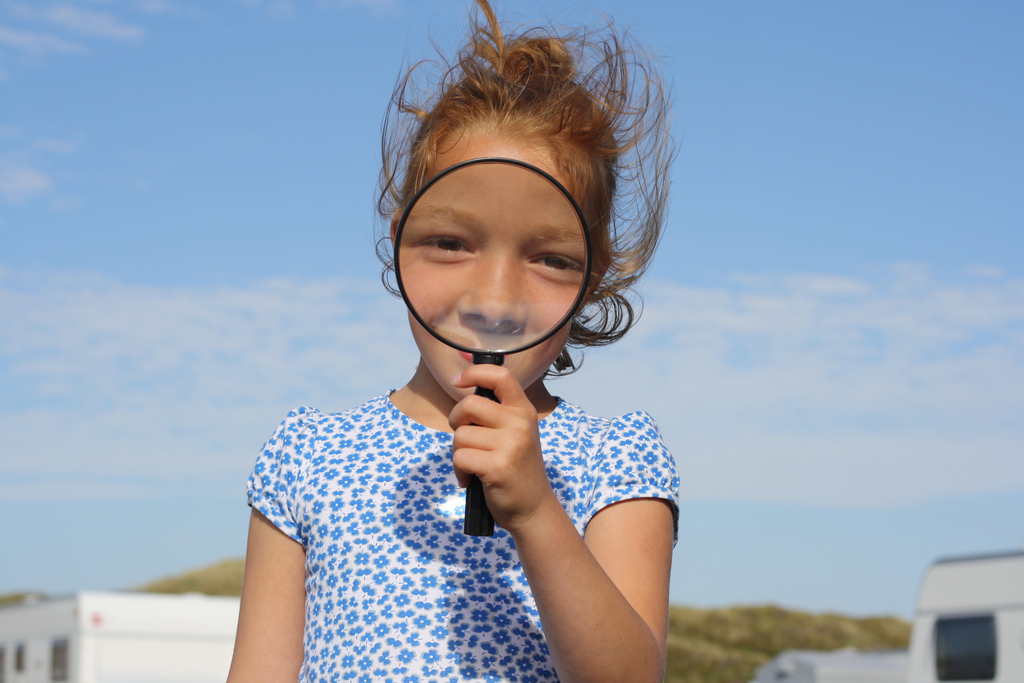
“Vergroot” by Dick Sijtsma, Flickr. Used according to Creative Commons license.
When we think about theology and hermeneutics, we usually think about theoretical matters. For example: what is the nature of sin? Is sin original? Are we born as the perfect, unbroken images of God Almighty, as Pelagians suggest? Or are the Calvinists right when they argue for universal depravity?
These may seem, at first glance, purely academic questions. But all sorts of practical matters hinge on how one answers them. If one believes in universal depravity, for example, that will have an impact on how one views the world and interacts with other people. It will have an impact on the Church at large as well as the specific church one attends.
One may decide, for example, that church membership and service should be open to all equally if all are universally depraved. Does not Romans 3:23 say that “For all have sinned and fallen short of the glory of God”? one might ask. One might deduce from this that no one person is less depraved than another, thus all people are equally dangerous and safe.
This is not merely a theoretical concern. Because if one takes this theoretical view, practically it might lead one to embrace all newcomers to one’s church without discrimination. It might cause one to downplay the importance of or outright reject child safety practices. To such a person, the theology of universal depravity might mean that convicted sex offenders should be welcomed at the table alongside the very people they victimize. Or perhaps one might believe that universal depravity means that survivors of child abuse should be forced to prematurely forgive their abusers, because Let him who is without sin cast the first stone, amiright?
What about the flip side? If one believes children can be sinless, that might lead one to promote harsh and punitive child-rearing practices. While such practices are often believed to be the result of viewing children as sinful, the opposite is also true: if one believes children can be without sin, one might believe in doing everything imaginable—including physically hurting one’s children—in the hopes of getting them to obey.
The point here is not to attack any one theology. Rather, my goal is to point out that ideas have consequences, and sometimes unintended ones. Theology and hermeneutics are neither theoretical nor neutral.
Theology and hermeneutics inherently involve praxis, or action. They involve the day-to-day activities of Christians and the church.
How we think theologically, therefore, has a great impact on how we think about children and child protection. Conversely, I would argue, how we think about children and child protection should have a great impact on how we think theologically. Children should be both a theological concern in themselves as well as a hermeneutic for how we look at and interpret the Bible.
To understand this, consider the example of Jesus in the Gospel of Matthew. In Chapter 18, the disciples are having a theoretical debate about who is the greatest in the Kingdom of Heaven. Jesus disrupts the debate by placing a small child in the disciples’ midst, declaring that, “Whoever welcomes one such child in my name welcomes me.” The message of Jesus is, I think, both literal and figurative: the disciples should literally be thinking about the children around them when they do theology. Similarly, the disciples should be using children in general as a figurative lens when they consider the world.
This message is reinforced when Jesus gives the striking warning that, “If anyone causes one of these little ones to stumble, it would be better for them to have a large millstone hung around their neck and to be drowned in the depths of the sea.” I can hardly think of a stronger message of the biblical importance of child protection than this.
Children—and later child protection—are thereby elevated by Jesus to be both theological concern and hermeneutic. That is to say, children should have parity as a theological concern alongside other theological concerns and they should be a, or even the, focal point through which we think about God and the world. “Whatever you do to the least of these you do to me” (Matthew 25:40).
How can children and child protection be a theological concern? I think children being a theological concern means that we must consider how each and every other theological concern impacts children. When we think about a doctrine like universal depravity or original sin or free will, we should be asking: But what about children? How does this doctrine impact them? How will practitioners of the faith in our churches apply this doctrine to how they raise children? To how they conceive of childhood? To how they respect children in the church and the larger world?
We should not compartmentalize children and childhood as a subject that only children’s church addresses, or that only children’s pastors should think about. Children and childhood should be brought into the openness of the general sanctuary and should be taken seriously and respected.
In similar fashion, children and child protection can become a hermeneutic—in other words, a method of interpretation—by using them as lenses through which we view the Bible. When we read passages about violence towards children, we should be asking questions like, What does this passage teach me about those who harm children? How can I apply this passage to better protect the children around me? When we read passages where children are lifted up, we should be asking questions like, What is this passage saying to me about the way God views children? How can I likewise lift up the children in my life? And when passages seem to have nothing to do with children, we should not cease to think about them. We should be thinking about how such passages are read by children, how they might relate to children, and how they might impact how we interact with children in our day-to-day lives.
Just as various liberation theologies suggest to us that we should be centering our view of the Bible, the Church, and the world on poverty, skin color, gender, and sexual orientation, I believe that we should also be centering children. This is how we begin to liberate children from adultist and childist ideas and practices that permeate our local faith communities and our world at large.
Previous Post
March 1, 2017
You Don't Love Your Children Unless You Do This
Next Post

March 6, 2017 Unfundamentalist Parenting in The Shack - Part 1
Browse Our Archives
Select a Category Uncategorized
Select a Month November 2017 October 2017 September 2017 August 2017 July 2017 June 2017 May 2017 April 2017 March 2017 February 2017 January 2017 December 2016 November 2016 October 2016 September 2016 August 2016 July 2016 June 2016 May 2016 April 2016 March 2016 February 2016
Follow Us!
TAKE THE
Religious Wisdom Quiz
Who spoke to the burning bush?
Select your answer to see how you score.
Miriam Moses Joseph Aaron
Related posts from Unfundamentalist Parenting

Understanding Children’s Existential Struggles
Give Children Space to be Conscientious Objectors

TRENDING AT PATHEOS Progressive Christian

Can a Chatbot Touch Your Soul?
Can a chatbot offer genuine spiritual counsel? One conversation brought me to...

Religion and Politics: How Should We Then Live?
Two cultural axioms get repeated in polite company. Don't mix religion and...

7 Things We Get Wrong About Giving Thanks
It's a time of year when many of us turn to the...

Uncaging Truth: Spirituality Beyond Institutions
The Lost Connection: Why True Spirituality, Not Religion, Is the Key to...

Christ the King? Maybe We've Misunderstood the Crown
What do we mean when we say that Jesus is King? What...

Counter “Christ Is King” Nationalism with Christ THE...
Christ the King Sunday is an ideal time to address the heresy...
view all Progressive Christian blogs
Ad-Free & Subscriber Log-In Subscription Support
- About Us
- 2026 Calendar
- Videos
- Podcasts
- Library of World Religions
- Faith In Media Tracker
- Advertise With Us
- Write for Us
- Privacy Policy
- Terms of Service
- Do Not Sell My Data
- Contact Us
- Radiant Digital
- Manage Newsletter Subscriptions
- Unsubscribe From Notifications
- Sitemap
Copyright 2008-2026, Patheos, part of the Radiant Digital network of media brands. All rights reserved.
Subscription Support Ad-Free & Subscriber Log-In
Follow Patheos