
BuddhistCatholicContemplativeEvangelicalGeneral ChristianHinduJewishLatter-day SaintMuslimNew VisionsProgressive Christian
Beliefs
- Buddhist
- Catholic
- Contemplative
- Evangelical
- General Christian
- Hindu
- Jewish
- Latter-day Saint
- More Voices
- Muslim
- New Visions
- Pagan
- Progressive Christian
Topics
- Religion News
- Food and Religion
- Sports and Religion
- Religious Art
- Religious Music and Entertainment
- Religious Events
- History and Religion
- Style and Religion
- Politics and Religion
- Women in Religion
- Recreation Outdoors and Religion
- Business Finance and Religion
- Careers Workplace and Religion
- Education and Religion
- Family Parenting and Religion
- Health Fitness and Religion
- Home and Religion
- Relationships and Religion
- Technology and Religion
- Travel and Religion
Columnists
- Buddhist Columnists
- Business Finance and Religion Columnists
- Careers Workplace and Religion Columnists
- Catholic Columnists
- Contemplative Columnists
- Education and Religion Columnists
- Evangelists Columnists
- Family Parenting and Religion Columnists
- General Christian Columnists
- Health Fitness and Religion Columnists
- Hindu Columnists
- History and Religion Columnists
- Home and Religion Columnists
- Jewish Columnists
- More Voices Columnists
- Latter Day Columnists
- Muslim Columnists
- New Visions Columnists
- Nonreligious Columnists
- Pagan Columnists
- Politics and Religion Columnists
- Progressive Columnists
- Recreation Outdoors and Religion Columnists
- Relationships and Religion Columnists
- Religion News Columnists
- Religious Art Columnists
- Religious Events Columnists
- Religious Music and Entertainment Columnists
- Sports and Religion Columnists
- Style and Religion Columnists
- Technology and Religion Columnists
- Travel and Religion Columnists
- Women in Religion Columnists
Resource Library
- 2026 Calendar
- Library of World Religions
- The 100 Most Holy Places on Earth
- Patheos Answers
- Podcasts
- Videos
- Faith Leaders Database
- Anglican Episcopalian
- Bahai
- Baptist
- Buddhism
- Christianity
- Confucianism
- Eastern Orthodoxy
- Hinduism
- Holiness and Pentecostal
- ISKCON
- Islam
- Judaism
- Lutheran
- Methodist
- The Church of Jesus Christ of Latter-day Saints
- New Age
- Paganism
- Presbytarian and Reformed
- Protestantism
- Religion Behind the Scenes
- Roman Catholic
- Scientology
- Shia Islam
- Sikhism
- Sufism
- Sunni Islam
- Taoism
- Zen
- See all religions
Research Tools
 Ad-Free & Subscriber Log-In Subscription Support
Ad-Free & Subscriber Log-In Subscription Support
Follow Patheos 

- Trending:
- Forgiveness
- |
- Marriage
- |
- Consciousness
- |
- Death Penalty
- |
- Election
- |
- Halloween
 Unfundamentalist Parenting
- Home
- Progressive Christian
- Family, Parenting and Religion
- Raising Children to be Spiritually Multilingual
Raising Children to be Spiritually Multilingual
Last updated on: May 29, 2017 at 9:12 am by Cindy Brandt
Raising Children to be Spiritually Multilingual 2017-05-29T09:12:49+08:00 Cindy Brandt
Patheos Explore the world's faith through different perspectives on religion and spirituality! Patheos has the views of the prevalent religions and spiritualities of the world.
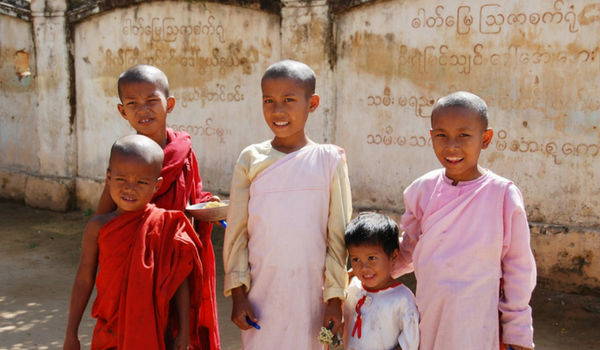
Image: Pixabay
Sometimes on Saturday mornings when my husband and I are eager to finally launch into our weekend with a good dose of zzz’s, we will be rudely awakened by loud noises outside—clanging cymbals, followed by a string of firecrackers.
If we were more familiar with the Taiwanese folk religion, which celebrates certain festivals according to the lunar calendar by parading gods on platforms with teams of brightly costumed men through the streets, we would have anticipated which days the noise of firecrackers would intrude our slumber.
As jaded (and sleepy) adults, we may not be so pleased with the noisy celebrations outside, but curious children are often drawn to the excitement of noise, colors, and activity. Eager young parents hoist their toddlers up on their shoulders on the side of the road so they can get a clear view of what’s happening, not unlike what American parents do at the end of the day at Disneyland.
And yet, because of the religious nature of god parades, I was taught in my conservative evangelical upbringing that these displays of folk religion were contaminated by evil spirits, and the sight of them should bring me grief because they are blatant declarations by people who have rejected God.
Ironically, in an effort by the spiritual leaders in my young life to bolster my faith, they inadvertently damaged a vitality in my spirituality. Because when you set up Christianity as the correct choice to make against other religions that contain scary demons, you are capitalizing on the fears of young children and robbing them of the autonomy to explore a wide landscape of spirituality. It’s fear-based coercion and an injustice to kids.
I am doing things much differently with my own children. It remains important for me to cultivate their spirituality, and particularly with our Christian tradition, but I am not afraid for them to follow this curious inclinations towards other faiths. Most of my children’s peers belong in families of other faiths, and not only am I not afraid of it, I am pleased they have the opportunity to develop savvy when navigating a multiplicity of religions.
I love Dr. Lisa Miller’s term in her NYT Bestseller, The Spiritual Child, “Spiritual Multilingualism.” She says becoming spiritually multilingual enables our children to see the sacred in others. Indeed, the devastating error of my evangelical childhood was the crippling inability to humanize those who worship differently than I do, relegating them to soulless puppets lost to the deceptions of the devil. When our children see others as less than human, it also chips away at their own humanity. We can find dignity, respect, and ultimate value in our own selves only as far as we can extend that to others. My children’s beloved-ness comes from their capacity to give love away.
I know tolerance of other religions and faiths is seen by some as a dirty, liberal word, because it is misconstrued as a watering down of each particular faith—a weak, wishy-washy acceptance of all faiths. I don’t believe this to be true. On the contrary, spiritual multilingualism is gritty work because it requires diligence in learning the tenets of other faiths, the discipline to constantly step outside of our comfort zones into unfamiliar traditions, and the emotional resilience to accept critical differences in others because of our shared humanity. These are traits I want to develop in my children to make them citizens of integrity in our diverse world.
Am I concerned exposure and education in other religions will make my children less committed to a Christian faith? Not at all. Here are three reasons why.
First, shutting down the spiritual curiosity of my children limits their ability to experience God more fully. Asking questions, inquiring of others, wrestling with the tensions of conflicting beliefs strengthens the authenticity of one’s faith. I want them to constantly expand the boundaries of their view of God, and I think looking outside of Christian orthodoxy helps them grow. Faithfulness isn’t an insular, inward guarding of doctrines, but as Bromleigh McCleneghan says, it’s about “risking ourselves in love.”
Second, the Christian faith tradition is not infallible and is rife with mistakes, some of them fatal and devastating. I want my children to become critical of their own faith. They will face different blind spots in their generation. I will have too much of my own spiritual baggage to help them see theirs. But what I can do is encourage them to constantly self-examine their own tradition, and one effective way to do so is allow other faiths to bring their own faith to accountability.
Third, Christians should be marked by humility. Ignorance breeds pride. Learning from others helps us gain an appreciation of different perspectives and humble ourselves by considering that we may not know everything. As I’ve said previously, to respect others is the most Christian thing to do.
How can we teach our children to be spiritually multilingual? Our job is more than half finished if we simply refrain from teaching them to be afraid of other religions. In our pluralistic world, it is likely our children are rubbing shoulders with peers of different faith backgrounds, so by not erecting arrogant barriers we are allowing them to follow their own curiosities to expose themselves to other faiths. For even more intentional study of world religions for both ourselves and our children, Ryan has compiled a list of resources, which you can find here. Please feel free to add your own suggestions in the comment section. May we, together with our children, move towards spiritual multilingualism.
Get a free download of a Christian parenting manifesto that helps us guide children into healthy spirituality + the most helpful parenting resources with progressive values.
Previous Post

October 31, 2016
Evangelical? Progressive? Unfundamentalist?
Next Post

November 11, 2016 Five Ways to be an Unfundamentalist Parent After the Election
Browse Our Archives
Select a Category Uncategorized
Select a Month November 2017 October 2017 September 2017 August 2017 July 2017 June 2017 May 2017 April 2017 March 2017 February 2017 January 2017 December 2016 November 2016 October 2016 September 2016 August 2016 July 2016 June 2016 May 2016 April 2016 March 2016 February 2016
Follow Us!
TAKE THE
Religious Wisdom Quiz
What book comes directly after Lamentations?
Select your answer to see how you score.
Hosea Jeremiah Daniel Ezekiel
Related posts from Unfundamentalist Parenting

Talking to Your Children About Other Religions
Don't Unload your Spiritual Baggage on your Children

Training for Motherhood: Learning to Be Invisible

My Grandfather Was Racist, and I Loved Him
TRENDING AT PATHEOS Progressive Christian

What Being a Modern-Day Apostle Means to Me
In my last column, I discussed the ins and outs of modern-day...

Did Ancient China Once Worship the God of...
Across human history, a common thread weaves through the origins of the...

Love Your Neighbor – Including Earth-Kin: Lev. 19,...
God’s command to love your neighbor means acting in an ethical and...

Lead a Church Study of “Jesus and Lao...
Guest writer Jack Thomas (The Irreverent Reverend) reflects on leading his church...

Pastoral Wisdom for Responding to Sermon Pushback
Getting sermon pushback on your social justice sermon? Learn practical, Proverbs-based strategies...

Principles for Understanding the Apostolic Ministry Today
Whenever people discover that my formal ministry title is "apostle," as in...
view all Progressive Christian blogs
Ad-Free & Subscriber Log-In Subscription Support
- About Us
- 2026 Calendar
- Videos
- Podcasts
- Library of World Religions
- Faith In Media Tracker
- Advertise With Us
- Write for Us
- Privacy Policy
- Terms of Service
- Do Not Sell My Data
- Contact Us
- Radiant Digital
- Manage Newsletter Subscriptions
- Unsubscribe From Notifications
- Sitemap
Copyright 2008-2026, Patheos. All rights reserved.
Subscription Support Ad-Free & Subscriber Log-In
Follow Patheos