
BuddhistCatholicContemplativeEvangelicalGeneral ChristianHinduJewishLatter-day SaintMuslimNew VisionsProgressive Christian
Beliefs
- Buddhist
- Catholic
- Contemplative
- Evangelical
- General Christian
- Hindu
- Jewish
- Latter-day Saint
- More Voices
- Muslim
- New Visions
- Pagan
- Progressive Christian
Topics
- Religion News
- Food and Religion
- Sports and Religion
- Religious Art
- Religious Music and Entertainment
- Religious Events
- History and Religion
- Style and Religion
- Politics and Religion
- Women in Religion
- Recreation Outdoors and Religion
- Business Finance and Religion
- Careers Workplace and Religion
- Education and Religion
- Family Parenting and Religion
- Health Fitness and Religion
- Home and Religion
- Relationships and Religion
- Technology and Religion
- Travel and Religion
Columnists
- Buddhist Columnists
- Business Finance and Religion Columnists
- Careers Workplace and Religion Columnists
- Catholic Columnists
- Contemplative Columnists
- Education and Religion Columnists
- Evangelists Columnists
- Family Parenting and Religion Columnists
- General Christian Columnists
- Health Fitness and Religion Columnists
- Hindu Columnists
- History and Religion Columnists
- Home and Religion Columnists
- Jewish Columnists
- More Voices Columnists
- Latter Day Columnists
- Muslim Columnists
- New Visions Columnists
- Nonreligious Columnists
- Pagan Columnists
- Politics and Religion Columnists
- Progressive Columnists
- Recreation Outdoors and Religion Columnists
- Relationships and Religion Columnists
- Religion News Columnists
- Religious Art Columnists
- Religious Events Columnists
- Religious Music and Entertainment Columnists
- Sports and Religion Columnists
- Style and Religion Columnists
- Technology and Religion Columnists
- Travel and Religion Columnists
- Women in Religion Columnists
Resource Library
- 2026 Calendar
- Library of World Religions
- The 100 Most Holy Places on Earth
- Patheos Answers
- Podcasts
- Videos
- Faith Leaders Database
- Anglican Episcopalian
- Bahai
- Baptist
- Buddhism
- Christianity
- Confucianism
- Eastern Orthodoxy
- Hinduism
- Holiness and Pentecostal
- ISKCON
- Islam
- Judaism
- Lutheran
- Methodist
- The Church of Jesus Christ of Latter-day Saints
- New Age
- Paganism
- Presbytarian and Reformed
- Protestantism
- Religion Behind the Scenes
- Roman Catholic
- Scientology
- Shia Islam
- Sikhism
- Sufism
- Sunni Islam
- Taoism
- Zen
- See all religions
Research Tools
 Ad-Free & Subscriber Log-In Subscription Support
Ad-Free & Subscriber Log-In Subscription Support
Follow Patheos 

- Trending:
- Forgiveness
- |
- Marriage
- |
- Consciousness
- |
- Death Penalty
- |
- Election
- |
- Halloween
 Unfundamentalist Parenting
- Home
- Progressive Christian
- Family, Parenting and Religion
- John Piper, Children & Suffering – Part 1
John Piper, Children & Suffering – Part 1
Last updated on: May 11, 2017 at 5:37 pm by Cindy Brandt
John Piper, Children & Suffering – Part 1 2017-05-11T17:37:59+08:00 Cindy Brandt
Patheos Explore the world's faith through different perspectives on religion and spirituality! Patheos has the views of the prevalent religions and spiritualities of the world.
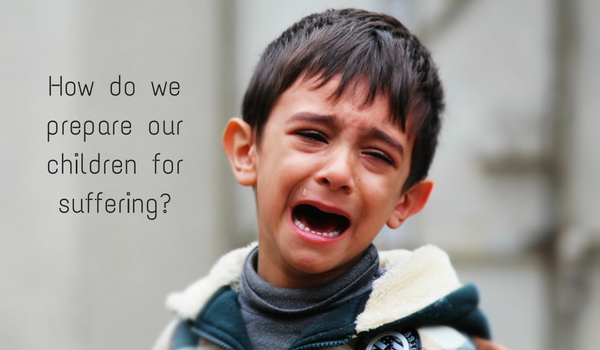
Image: Pixabay
I don’t normally frequent the Desiring God site as my theology has taken a dramatic departure from John Piper’s brand of Christianity.
*Let it be noted that John Piper was a large influence in inspiring me towards global missions, a vocation I dedicated years of my life to—so when I say I departed from his theology, it isn’t a flippant statement but a concise description of a long, painful, identity-shedding and faith shifting process.*
But because of the work I am doing with Unfundamentalist Parenting, I pay attention to influential voices giving advice to parents with spiritual authority. Here, John Piper answers the question, “how do we prepare our children for suffering?”—a relevant and poignant question for all parents as we face the reality of our precious children walking vulnerably into an unkind world.
As can be expected, I agreed with very little of it, as our views on almost everything from Scripture to suffering to discipline come from opposing ends of the theological spectrum. But one thing we have in common is that we both care for children and for parents, and this tender question, “how do we prepare our children for suffering?” is worth addressing.
Let me take two blog posts, this part one to raise one giant metaphorical eyebrow at Piper’s answer. And because Critique and Create are two sides of the same coin, I’ll flip the coin in part two to answer this same question, “how do we prepare our children for suffering?” from an unfundamentalist perspective.
Ready?
Piper sums up his answer into three parts, so I will engage them in the order given:
- Teach your son a glorious, all-encompassing biblical worldview that puts suffering in its proper place.
- Discipline him with appropriate firmness, and require of him self denial.
- Model for him trust and joy in the midst of your own suffering and sorrow.
For Piper, coherence of worldview and the ability to categorize every life experience, including suffering, into a “proper place” is an absolute prerequisite for living life. He believes, as Christians, the Bible must provide all the answers, or at least the correct lens through which to view life events. Certainty is a must. Right doctrine is what will ground us when the unpredictable hammer of life’s suffering comes swinging and knock us off kilter. Here are Piper’s theological stakes:
God created the world as good but it is broken by sin. Our children are not perfect because they are sinful.
Pound that stake in.
God is sovereign. Even when unspeakable suffering occurs. God isn’t helpless.
Pound. Pound.
The suffering we endure is not punishment because Christ bore it all. The suffering that happens to us is God’s “fatherly discipline” for the sake of our holiness.
Pound. Pound. Pound.
God is sovereign. God is wise. God has purposes for us in our suffering.
“Saturate your child with this worldview.” Piper says. The stakes are now firmly in place, and we can hide underneath the safe refuge of the doctrinal canopy.
There is a line between loving instruction and indoctrination and I think John Piper crosses it. Loving instruction is to give our children the vocabulary and tools to express their intuition and give them the autonomy to engage the world with their own ideas. Indoctrination is to insert ideas that are counter-intuitive and beat them (and I wish I meant this metaphorically) into accepting them.
A sovereign God who lets God’s children suffer as “fatherly discipline” cannot be loving. This is so counter intuitive to the human spirit that only indoctrination can make a child accept it. A child trusts that a loving parent will come to their rescue. When babies cry and parents respond to their cries with cuddles and soothing touch, it increases their bond and is an investment in the baby’s emotional resilience. The intuitive, human response is to recoil from harsh parenting. Children don’t want to stay under the canopy of horrible theology, their free spirit wants to fly away.
However.
The teaching John Piper wants Christian parents to do is to control our children, reign them in, so that they stay submissively within doctrinal boundaries. As effective as it may be, it comes with the cost of breaking children’s tender spirits, erases their own intuition, and robs them of the freedom to think for themselves.
If you think I am being overly harsh, look no further to Piper’s second point: “Require him of self denial.” Piper says to spank them, so they are trained to not getting what they want. The spiritual justification for this, according to Piper, is so they “put to death” their “sinful desires.”
First, mentally control your children. Second, physically restrain them.
Both the content and the methods espoused are dominating and abuses the power adults have over children. This is physically, mentally, and spiritually violating of the dignity children deserve. They are small, but their personhood is sacred, and our humanity requires that we create a society in which children are given the time and space to grow into their individual identity without violent oppression.
Lastly, Piper says we are to model trust and joy in the midst of our own suffering for the children to emulate. I wish he had led with this piece of advice, because it is the only one out of the three that I don’t consider an infringement of children’s rights. But even in this, I take issue.
Trust and joy in the midst of suffering is a beautiful inspiration, one that I deeply admire in those who exhibit these qualities, but only if it is borne of authentic display of character. Unfortunately, those who have been taught “self denial” from childhood, have learned to manufacture a superficial joy because they know it is what the Christian community expects of them. They have also never learned the skills to express authentic emotions in a healthy manner.
Certainly, modeling virtue for our children is the best way to influence their own character. But authenticity, the honest wrestling with even the demons of our hearts, is just as important as simply exuding trust and joy without questioning. It’s especially crucial because it validates the negative emotions that rise up within the children’s own hearts as they learn how to struggle in life.
Click here for part 2: 9 Ways to prepare our Children for Suffering.
Want more resources on parenting with progressive values?
Join our Facebook Group, Raising Children Unfundamentalist.
Previous Post
October 18, 2016
3 Things to Teach Children about the Cross
Next Post

October 21, 2016 How Donald Trump Exemplifies the Grooming Process of Abusers
Browse Our Archives
Select a Category Uncategorized
Select a Month November 2017 October 2017 September 2017 August 2017 July 2017 June 2017 May 2017 April 2017 March 2017 February 2017 January 2017 December 2016 November 2016 October 2016 September 2016 August 2016 July 2016 June 2016 May 2016 April 2016 March 2016 February 2016
Follow Us!
TAKE THE
Religious Wisdom Quiz
I saw a river flowing from the temple threshold, getting deeper until it became a river no one could cross. What grew along its banks?
Select your answer to see how you score.
Grass Flowers Trees Vines
Related posts from Unfundamentalist Parenting

If Trump Swears, Can the Children?

My Daughter Loves Jesus. Is That Okay?
No, John Piper, Kids Do Not Delight to...

Break the Cycle: Spiritual Abuse and the Conversion...
TRENDING AT PATHEOS Progressive Christian

What Being a Modern-Day Apostle Means to Me
In my last column, I discussed the ins and outs of modern-day...

Did Ancient China Once Worship the God of...
Across human history, a common thread weaves through the origins of the...

Love Your Neighbor – Including Earth-Kin: Lev. 19,...
God’s command to love your neighbor means acting in an ethical and...

Lead a Church Study of “Jesus and Lao...
Guest writer Jack Thomas (The Irreverent Reverend) reflects on leading his church...

Pastoral Wisdom for Responding to Sermon Pushback
Getting sermon pushback on your social justice sermon? Learn practical, Proverbs-based strategies...

Principles for Understanding the Apostolic Ministry Today
Whenever people discover that my formal ministry title is "apostle," as in...
view all Progressive Christian blogs
Ad-Free & Subscriber Log-In Subscription Support
- About Us
- 2026 Calendar
- Videos
- Podcasts
- Library of World Religions
- Faith In Media Tracker
- Advertise With Us
- Write for Us
- Privacy Policy
- Terms of Service
- Do Not Sell My Data
- Contact Us
- Radiant Digital
- Manage Newsletter Subscriptions
- Unsubscribe From Notifications
- Sitemap
Copyright 2008-2026, Patheos. All rights reserved.
Subscription Support Ad-Free & Subscriber Log-In
Follow Patheos