
BuddhistCatholicContemplativeEvangelicalGeneral ChristianHinduJewishLatter-day SaintMuslimNew VisionsProgressive Christian
Beliefs
- Buddhist
- Catholic
- Contemplative
- Evangelical
- General Christian
- Hindu
- Jewish
- Latter-day Saint
- More Voices
- Muslim
- New Visions
- Pagan
- Progressive Christian
Topics
- Religion News
- Food and Religion
- Sports and Religion
- Religious Art
- Religious Music and Entertainment
- Religious Events
- History and Religion
- Style and Religion
- Politics and Religion
- Women in Religion
- Recreation Outdoors and Religion
- Business Finance and Religion
- Careers Workplace and Religion
- Education and Religion
- Family Parenting and Religion
- Health Fitness and Religion
- Home and Religion
- Relationships and Religion
- Technology and Religion
- Travel and Religion
Columnists
- Buddhist Columnists
- Business Finance and Religion Columnists
- Careers Workplace and Religion Columnists
- Catholic Columnists
- Contemplative Columnists
- Education and Religion Columnists
- Evangelists Columnists
- Family Parenting and Religion Columnists
- General Christian Columnists
- Health Fitness and Religion Columnists
- Hindu Columnists
- History and Religion Columnists
- Home and Religion Columnists
- Jewish Columnists
- More Voices Columnists
- Latter Day Columnists
- Muslim Columnists
- New Visions Columnists
- Nonreligious Columnists
- Pagan Columnists
- Politics and Religion Columnists
- Progressive Columnists
- Recreation Outdoors and Religion Columnists
- Relationships and Religion Columnists
- Religion News Columnists
- Religious Art Columnists
- Religious Events Columnists
- Religious Music and Entertainment Columnists
- Sports and Religion Columnists
- Style and Religion Columnists
- Technology and Religion Columnists
- Travel and Religion Columnists
- Women in Religion Columnists
Resource Library
- 2026 Calendar
- Library of World Religions
- The 100 Most Holy Places on Earth
- Patheos Answers
- Podcasts
- Videos
- Faith Leaders Database
- Anglican Episcopalian
- Bahai
- Baptist
- Buddhism
- Christianity
- Confucianism
- Eastern Orthodoxy
- Hinduism
- Holiness and Pentecostal
- ISKCON
- Islam
- Judaism
- Lutheran
- Methodist
- The Church of Jesus Christ of Latter-day Saints
- New Age
- Paganism
- Presbytarian and Reformed
- Protestantism
- Religion Behind the Scenes
- Roman Catholic
- Scientology
- Shia Islam
- Sikhism
- Sufism
- Sunni Islam
- Taoism
- Zen
- See all religions
Research Tools
 Ad-Free & Subscriber Log-In Subscription Support
Ad-Free & Subscriber Log-In Subscription Support
Follow Patheos 

- Trending:
- Forgiveness
- |
- Marriage
- |
- Consciousness
- |
- Death Penalty
- |
- Election
- |
- Halloween
 Unfundamentalist Parenting
- Home
- Progressive Christian
- Family, Parenting and Religion
- 9 Ways to Prepare our Children for Suffering
9 Ways to Prepare our Children for Suffering
Last updated on: May 11, 2017 at 5:39 pm by Cindy Brandt
9 Ways to Prepare our Children for Suffering 2017-05-11T17:39:06+08:00 Cindy Brandt
Patheos Explore the world's faith through different perspectives on religion and spirituality! Patheos has the views of the prevalent religions and spiritualities of the world.
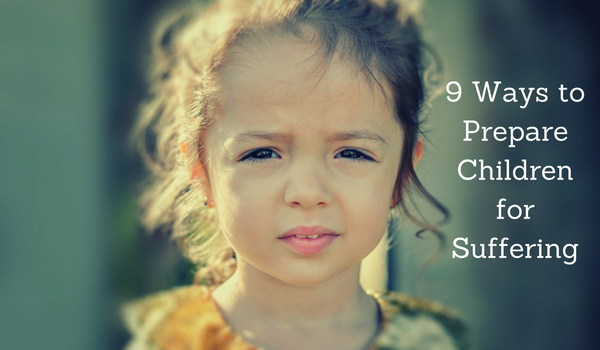
Image: Pixabay
How do we prepare our children for suffering? John Piper answers in a three point audio cast which I find to be in violation of a child’s autonomy. Today, I’d like to offer better alternatives in hopes of navigating with my fellow unfundamentalist parents, the vulnerable job of raising our children to face the daunting yet inevitable task: to suffer. Here I propose 9 ways to prepare our children for suffering.
- You can’t. I’m sorry to begin this list with such a downer. But I always choose to be true and real over false promises. If we can adequately prepare any of ourselves for life’s suffering, well then, life wouldn’t be so life-y, as Anne Lamott eloquently says. My mother tells me, the thing you worry about never happens, it’s always the curveballs you can’t predict that life throws at you. This is reality, but it is also what makes life wild and interesting and filled with potential for us to show up and overcome. Now that we’ve established we can never be 100% prepared for suffering, we can get to work on being oh, say, 68% prepared.
- Be present for your kids. Yes, I know we can’t guarantee even our own survival to be there for our kids, but remember, we’re going for 68% prepared. And I don’t mean for us to become helicopter parents and hover over our children’s every move. What I mean is to show up for our children so that when their bodies ache with a fever, or their hearts are wounded by friends, or their souls are parched for depth and longing that they have experience of us walking alongside them. If their memory banks are full of their parents snuggling with them when they cry out from a nightmare, they will know where to find us when the boogeyman in their dreams become real life monsters. Suzanne Tucker from Generation Mindful says beautifully, “What if instead of stop crying, people said, ‘I’m here?’” What if we responded to our children’s distress with our loving presence?
- Affirm their goodness. Nothing compounds the suffering of life more than heaping additional self-hatred. We’ve all been there. When something bad happens, we are inclined to blame ourselves, or allow others to blame us, which makes our suffering worse. Our kids are going to receive many negative messages from the world, we cannot overemphasize their worthiness as the foundation of their self image. This is a tough one for many Christian parents because they don’t want to disregard the teachings on sinful nature in Scripture. A robust understanding of the theological doctrine of sin can wait until children are secure of their self-affirmation. As theologian Danielle Shroyer says, “belief in a sin nature begets sinning.” We cannot hope for our children to rise to goodness when we falsely insist they are bad. God is good. Our children are made in the image of a good God. They are good and loved and worthy. Self affirmation leads to self compassion. When the trials of life inevitably intrudes in their tender lives, they will need the assurance of the importance of taking care of themselves. This will help them weather those storms.
- Trust their instincts. Life can get overwhelming, especially as our children are raised in a generation of smartphones where information is readily accessible. Sometimes when circumstances are tough, we reflexively grab at the first rope we see as a lifeline, but sometimes those ropes are flimsy and we fall further instead of pulling up. When the suffering of life disorients our children, they will need to cut through the noise and allow their inner voice, their God-given conscience, their gut to carry them into the next right step. We can help them prepare for that time by trusting their instincts even when they are very young. Listen to their arguments even when they aren’t yet pronouncing words precisely. Observe their ways of solving problems in their play and honor that. Let them make their own decisions as much as possible as soon as possible so they learn early on that their ideas matter. Their voices count.
- Be trustworthy. Children learn to build healthy social relationships from their first experiences in the home. And having a strong social support structure is a safety net for when hard times fall. Model a healthy relationship for them so they expect the same standard as they begin forging friendships outside the home. Be a trustworthy person who treats them with respect. Give and take from each other to teach healthy reciprocity. Draw good boundaries by caring for one another while respecting each family member’s privacy and limitations.
- Work their vulnerability muscle. Our children will build emotional resilience if they learn how to take risks, be vulnerable, and make mistakes. Please note that exercising the vulnerability muscle is NOT the same as exposing our children to hardship in order to toughen them up. “Training” children by forcing them to “do hard things” is sometimes hailed as “tough love” from some Christian circles and I find it to be toxic. Love is never tough, that’s an oxymoron. On the contrary, we should train our children to become soft. Help them to feel their emotions and express their pain. Follow their intuitive compassion for themselves and others and give them space to work that out in their unique ways. Developing the vulnerability muscle means even though our children are aware of their imperfections and possibilities of failure, they forge ahead into life with courage anyway. Setbacks are ahead of them. Life is hard. But they will be empowered knowing they have failed and have survived and thrived.
- Cultivate their spirituality. Contrary to John Piper’s indoctrination of worldview, cultivating our children’s spirituality is to make space for their connection to God without forcing them into counter-intuitive dogma. It’s to let go of our own theological agendas and let our children take the lead in taking charge of their own spirituality. Don’t shut down our children’s curiosities about life, death, and suffering with cookie cutter answers, but talk with them with open ended questions. Help them know if there is a God, that God is loving and is present with them and would never harm them. Being able to fall into the arms of an unconditionally loving God will be a powerful asset when they encounter deep suffering.
- Be kind to one another. Why does Mr. Rogers tell us to look for the helpers in times of great suffering? It’s because love and kindness brings beauty out of suffering. It bonds us in our distress and declares that evil cannot have the last word. That even in our suffering love wins and always will. Make kindness and other virtues a high priority in your family value. Read stories to your children so they develop empathy. Practice hospitality and generosity so they internalize a spirit of kindness. Be kind to our children so they can pay it forward. Shaping our children’s character will help them face suffering with dignity and grace and authenticity.
- Make a better world for our children. We are facing some daunting threats as a civilization, but we are also making tremendous strides in overcoming suffering. There is less disease and less violence today than there were in antiquity. Unfundamentalist parenting is about striving for more justice, equality, and extending dignity to all so that our environment fosters less suffering for the upcoming generations. This is our responsibility: to leave the world better than when we came into it. May it be so.
Bonus: Carpe Diem. I wish none of us have to do this hardest of things—watch our children go through suffering. But because anyone paying any attention knows life is riddled with pain, we must do our damnedest best to grasp hold of the moments of joy that infiltrate our life if only we look for them. Those peals of baby laughter, the wide-eyed wander at their first Christmas, those snarky teenage jokes when we finally don’t have to fake-laugh at—apprehend those memories and keep it without parole in your memory banks. Let them enlarge our hearts, better to love our children back some more. As much as possible, say yes to your kids because who knows what tomorrow holds. Darkness will come—but for now, we dance in the light.
Want more resources on parenting with progressive values?
Join our Facebook Group, Raising Children Unfundamentalist.
Previous Post

October 21, 2016
How Donald Trump Exemplifies the Grooming Process of Abusers
Next Post

October 31, 2016 Evangelical? Progressive? Unfundamentalist?
Browse Our Archives
Select a Category Uncategorized
Select a Month November 2017 October 2017 September 2017 August 2017 July 2017 June 2017 May 2017 April 2017 March 2017 February 2017 January 2017 December 2016 November 2016 October 2016 September 2016 August 2016 July 2016 June 2016 May 2016 April 2016 March 2016 February 2016
Follow Us!
TAKE THE
Religious Wisdom Quiz
In Philippians, Paul mentions two women who need to be of the same mind. Who are they?
Select your answer to see how you score.
Euodia and Syntyche Phoebe and Priscilla Lydia and Chloe Mary and Martha
Related posts from Unfundamentalist Parenting

If Trump Swears, Can the Children?

My Daughter Loves Jesus. Is That Okay?

No, John Piper, Kids Do Not Delight to...

Break the Cycle: Spiritual Abuse and the Conversion...
TRENDING AT PATHEOS Progressive Christian

What Being a Modern-Day Apostle Means to Me
In my last column, I discussed the ins and outs of modern-day...

Did Ancient China Once Worship the God of...
Across human history, a common thread weaves through the origins of the...

Love Your Neighbor – Including Earth-Kin: Lev. 19,...
God’s command to love your neighbor means acting in an ethical and...

Lead a Church Study of “Jesus and Lao...
Guest writer Jack Thomas (The Irreverent Reverend) reflects on leading his church...

Pastoral Wisdom for Responding to Sermon Pushback
Getting sermon pushback on your social justice sermon? Learn practical, Proverbs-based strategies...

Principles for Understanding the Apostolic Ministry Today
Whenever people discover that my formal ministry title is "apostle," as in...
view all Progressive Christian blogs
Ad-Free & Subscriber Log-In Subscription Support
- About Us
- 2026 Calendar
- Videos
- Podcasts
- Library of World Religions
- Faith In Media Tracker
- Advertise With Us
- Write for Us
- Privacy Policy
- Terms of Service
- Do Not Sell My Data
- Contact Us
- Radiant Digital
- Manage Newsletter Subscriptions
- Unsubscribe From Notifications
- Sitemap
Copyright 2008-2026, Patheos. All rights reserved.
Subscription Support Ad-Free & Subscriber Log-In
Follow Patheos