
BuddhistCatholicContemplativeEvangelicalGeneral ChristianHinduJewishLatter-day SaintMuslimNew VisionsProgressive Christian
Beliefs
- Buddhist
- Catholic
- Contemplative
- Evangelical
- General Christian
- Hindu
- Jewish
- Latter-day Saint
- More Voices
- Muslim
- New Visions
- Pagan
- Progressive Christian
Topics
- Religion News
- Food and Religion
- Sports and Religion
- Religious Art
- Religious Music and Entertainment
- Religious Events
- History and Religion
- Style and Religion
- Politics and Religion
- Women in Religion
- Recreation Outdoors and Religion
- Business Finance and Religion
- Careers Workplace and Religion
- Education and Religion
- Family Parenting and Religion
- Health Fitness and Religion
- Home and Religion
- Relationships and Religion
- Technology and Religion
- Travel and Religion
Columnists
- Buddhist Columnists
- Business Finance and Religion Columnists
- Careers Workplace and Religion Columnists
- Catholic Columnists
- Contemplative Columnists
- Education and Religion Columnists
- Evangelists Columnists
- Family Parenting and Religion Columnists
- General Christian Columnists
- Health Fitness and Religion Columnists
- Hindu Columnists
- History and Religion Columnists
- Home and Religion Columnists
- Jewish Columnists
- More Voices Columnists
- Latter Day Columnists
- Muslim Columnists
- New Visions Columnists
- Nonreligious Columnists
- Pagan Columnists
- Politics and Religion Columnists
- Progressive Columnists
- Recreation Outdoors and Religion Columnists
- Relationships and Religion Columnists
- Religion News Columnists
- Religious Art Columnists
- Religious Events Columnists
- Religious Music and Entertainment Columnists
- Sports and Religion Columnists
- Style and Religion Columnists
- Technology and Religion Columnists
- Travel and Religion Columnists
- Women in Religion Columnists
Resource Library
- 2026 Calendar
- Library of World Religions
- The 100 Most Holy Places on Earth
- Patheos Answers
- Podcasts
- Videos
- Faith Leaders Database
- Anglican Episcopalian
- Bahai
- Baptist
- Buddhism
- Christianity
- Confucianism
- Eastern Orthodoxy
- Hinduism
- Holiness and Pentecostal
- ISKCON
- Islam
- Judaism
- Lutheran
- Methodist
- The Church of Jesus Christ of Latter-day Saints
- New Age
- Paganism
- Presbytarian and Reformed
- Protestantism
- Religion Behind the Scenes
- Roman Catholic
- Scientology
- Shia Islam
- Sikhism
- Sufism
- Sunni Islam
- Taoism
- Zen
- See all religions
Research Tools
 Ad-Free & Subscriber Log-In Subscription Support
Ad-Free & Subscriber Log-In Subscription Support
Follow Patheos 

- Trending:
- Forgiveness
- |
- Marriage
- |
- Consciousness
- |
- Death Penalty
- |
- Election
- |
- Halloween
 Unfundamentalist Parenting
- Home
- Progressive Christian
- Family, Parenting and Religion
- What Harriet Tubman Taught My White Five-Year-Old
What Harriet Tubman Taught My White Five-Year-Old
Last updated on: June 14, 2016 at 11:16 am by Guest Contributor
What Harriet Tubman Taught My White Five-Year-Old 2016-06-14T11:16:00+08:00 Guest Contributor
Patheos Explore the world's faith through different perspectives on religion and spirituality! Patheos has the views of the prevalent religions and spiritualities of the world.
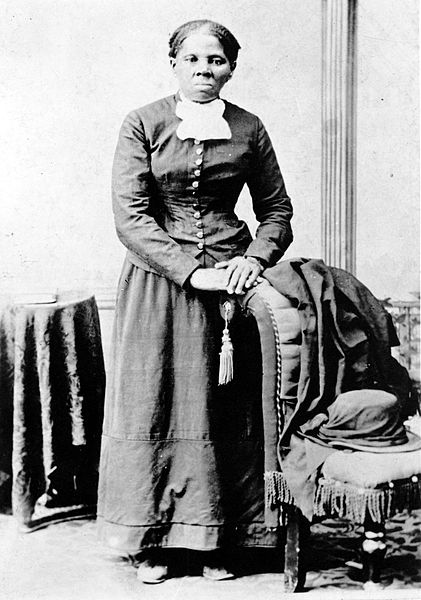
Image: Wikimedia Commons

My five-year-old tends to have a Song Of The Week—the random tune she warbles to herself all day, every day, until a new song comes along. Last winter, one song stuck around far longer. It was being taught at school and had several verses so as she learned more, so did everyone who came within five feet of her:
Come on up, I got a lifeline. Come on up to this train of mine. They said her name was Harriet Tubman. And she drove… for the Underground Railroad
My kids go to a school that introduces the history of slavery in an age-appropriate curriculum on social justice. And even in our current moment—in the era of Black Lives Matter—parents of all colors and cultures run the gamut from thrilled to highly concerned as they confront their four-year-olds learning about the history of enslavement of Black people in this country. Reasons are deeply personal, from “We want this to come from us, not the school” to “They’ll feel guilty/angry/confused/sad.” But for the most part, the concern is:
“They are WAY too young to understand.”
I empathize. It’s big stuff. The biggest. And big stuff should come from home, right? Especially historical big stuff—which, according to Understanding Slavery, a site devoted to supporting educators and parents who want to teach about the transatlantic slave trade, is beyond the grasp of a four-to-five year old:
“Children aged ten and under are often not able to contextualize and make sense of the transatlantic slave trade. This may be because they lack the broader historical knowledge of the economic and social conditions that drove Britain from the 16th century onwards—essential to understand how such an abhorrent system of trade could flourish and be widely accepted.”
Yet this site assumes that the triangle trade must be taught with the breadth and depth of a 4th grade social studies unit. My daughter’s Pre-K teachers know the four-year-old brain, heart, and social-emotional world exceedingly well, and see things quite differently.
They believe that children must learn about the realities of their world in order to become active citizens in it, and that there are many developmentally appropriate ways to do this with young children.
So why begin with slavery? When in doubt, ask a five year old.
Mama: Why do you think (your teachers) told you the story of Harriet Tubman?
My daughter: Because she carried so many people!
Mama: …carried?
My daughter: She carried people to freedom! She came when everybody was sleeping and said really quiet, “Come on, lets GO! I’ll help you so don’t be scared!”
And then I get it. In the hands of smart teachers, Harriet’s story isn’t a story of the triangle trade and its aftermath. It is the story of heroism and bravery and going back until you get everyone out, of all the things four- and five-year-olds must know they can do to navigate their big world:
Help people who are sad or hurt. Share what you have. Don’t let fear stop you. Keep going when you feel like giving up.
Harriet captures the four- and five-year-old imagination in ways that sound a lot like their adoration of dinosaurs, princesses and superheroes—she was powerful and unstoppable—but also, she was Black. She was a woman. And she was REAL.
As the year went on, Harriet remained a touch-point for our discussions of the news my daughter would overhear: Police who had killed Eric Garner and Michael Brown received non-indictment verdicts. Black Lives Matter grew. Syrians fled their country and were stranded, and saved. And as I continue to listen and think and answer her questions, my daughter’s response is so often reflected through the language she learned from Harriet’s story:
“The protesters spoke up so people will know this is not fair.”
“It is OK to tell me about scary things because they got hurt, and when you are hurt you have to not keep it a secret because then nobody can help you.”
“We have to not let anymore hurting go on—we have to do something about it.”
When you’re bigger, it goes by many names: Activism. Freedom Fighter. Justice. It has so many faces and stories. It is nuanced, and the older you get the more you see the gray areas; the struggles when there was no possible action without complex consequences.
But when you’re four, it’s simply being a real-life superhero. Like Harriet.
This post was originally published by Raising Race Conscious Children.
Alexandra Lopez Reitzes is an educator, artist, food doula, herbalist and consultant. She develops content and curricula where art, farming, food, medicine, and social justice intersect. She is the founder of Mamis Unite, an 4,800-member online solidarity community, and a proud mama.
Previous Post
June 13, 2016
Unfundamentalist Parenting with Kathy Escobar
Next Post
June 16, 2016 The End of Child Liberation Theology
Browse Our Archives
Select a Category Uncategorized
Select a Month November 2017 October 2017 September 2017 August 2017 July 2017 June 2017 May 2017 April 2017 March 2017 February 2017 January 2017 December 2016 November 2016 October 2016 September 2016 August 2016 July 2016 June 2016 May 2016 April 2016 March 2016 February 2016
Follow Us!
TAKE THE
Religious Wisdom Quiz
In 2 Peter, what did God not spare when he judged the people of Noah's Time?
Select your answer to see how you score.
The wicked Angels who sinned Sodom and Gomorrah The ancient world
Related posts from Unfundamentalist Parenting

If Trump Swears, Can the Children?

My Daughter Loves Jesus. Is That Okay?

Break the Cycle: Spiritual Abuse and the Conversion...

Help! My Child Got "Saved" at VBS
TRENDING AT PATHEOS Progressive Christian

What Being a Modern-Day Apostle Means to Me
In my last column, I discussed the ins and outs of modern-day...

Did Ancient China Once Worship the God of...
Across human history, a common thread weaves through the origins of the...

Love Your Neighbor – Including Earth-Kin: Lev. 19,...
God’s command to love your neighbor means acting in an ethical and...

Lead a Church Study of “Jesus and Lao...
Guest writer Jack Thomas (The Irreverent Reverend) reflects on leading his church...

Pastoral Wisdom for Responding to Sermon Pushback
Getting sermon pushback on your social justice sermon? Learn practical, Proverbs-based strategies...

Principles for Understanding the Apostolic Ministry Today
Whenever people discover that my formal ministry title is "apostle," as in...
view all Progressive Christian blogs
Ad-Free & Subscriber Log-In Subscription Support
- About Us
- 2026 Calendar
- Videos
- Podcasts
- Library of World Religions
- Faith In Media Tracker
- Advertise With Us
- Write for Us
- Privacy Policy
- Terms of Service
- Do Not Sell My Data
- Contact Us
- Radiant Digital
- Manage Newsletter Subscriptions
- Unsubscribe From Notifications
- Sitemap
Copyright 2008-2026, Patheos. All rights reserved.
Subscription Support Ad-Free & Subscriber Log-In
Follow Patheos