
BuddhistCatholicContemplativeEvangelicalGeneral ChristianHinduJewishLatter-day SaintMuslimNew VisionsProgressive Christian
Beliefs
- Buddhist
- Catholic
- Contemplative
- Evangelical
- General Christian
- Hindu
- Jewish
- Latter-day Saint
- More Voices
- Muslim
- New Visions
- Pagan
- Progressive Christian
Topics
- Religion News
- Food and Religion
- Sports and Religion
- Religious Art
- Religious Music and Entertainment
- Religious Events
- History and Religion
- Style and Religion
- Politics and Religion
- Women in Religion
- Recreation Outdoors and Religion
- Business Finance and Religion
- Careers Workplace and Religion
- Education and Religion
- Family Parenting and Religion
- Health Fitness and Religion
- Home and Religion
- Relationships and Religion
- Technology and Religion
- Travel and Religion
Columnists
- Buddhist Columnists
- Business Finance and Religion Columnists
- Careers Workplace and Religion Columnists
- Catholic Columnists
- Contemplative Columnists
- Education and Religion Columnists
- Evangelists Columnists
- Family Parenting and Religion Columnists
- General Christian Columnists
- Health Fitness and Religion Columnists
- Hindu Columnists
- History and Religion Columnists
- Home and Religion Columnists
- Jewish Columnists
- More Voices Columnists
- Latter Day Columnists
- Muslim Columnists
- New Visions Columnists
- Nonreligious Columnists
- Pagan Columnists
- Politics and Religion Columnists
- Progressive Columnists
- Recreation Outdoors and Religion Columnists
- Relationships and Religion Columnists
- Religion News Columnists
- Religious Art Columnists
- Religious Events Columnists
- Religious Music and Entertainment Columnists
- Sports and Religion Columnists
- Style and Religion Columnists
- Technology and Religion Columnists
- Travel and Religion Columnists
- Women in Religion Columnists
Resource Library
- 2026 Calendar
- Library of World Religions
- The 100 Most Holy Places on Earth
- Patheos Answers
- Podcasts
- Videos
- Faith Leaders Database
- Anglican Episcopalian
- Bahai
- Baptist
- Buddhism
- Christianity
- Confucianism
- Eastern Orthodoxy
- Hinduism
- Holiness and Pentecostal
- ISKCON
- Islam
- Judaism
- Lutheran
- Methodist
- The Church of Jesus Christ of Latter-day Saints
- New Age
- Paganism
- Presbytarian and Reformed
- Protestantism
- Religion Behind the Scenes
- Roman Catholic
- Scientology
- Shia Islam
- Sikhism
- Sufism
- Sunni Islam
- Taoism
- Zen
- See all religions
Research Tools
 Ad-Free & Subscriber Log-In Subscription Support
Ad-Free & Subscriber Log-In Subscription Support
Follow Patheos 

- Trending:
- Forgiveness
- |
- Marriage
- |
- Consciousness
- |
- Death Penalty
- |
- Election
- |
- Halloween
 Unfundamentalist Parenting
- Home
- Progressive Christian
- Family, Parenting and Religion
- The End of Child Liberation Theology
The End of Child Liberation Theology
Last updated on: June 16, 2016 at 5:49 am by Ryan Stollar
The End of Child Liberation Theology 2016-06-16T05:49:17+08:00 Ryan Stollar
Patheos Explore the world's faith through different perspectives on religion and spirituality! Patheos has the views of the prevalent religions and spiritualities of the world.
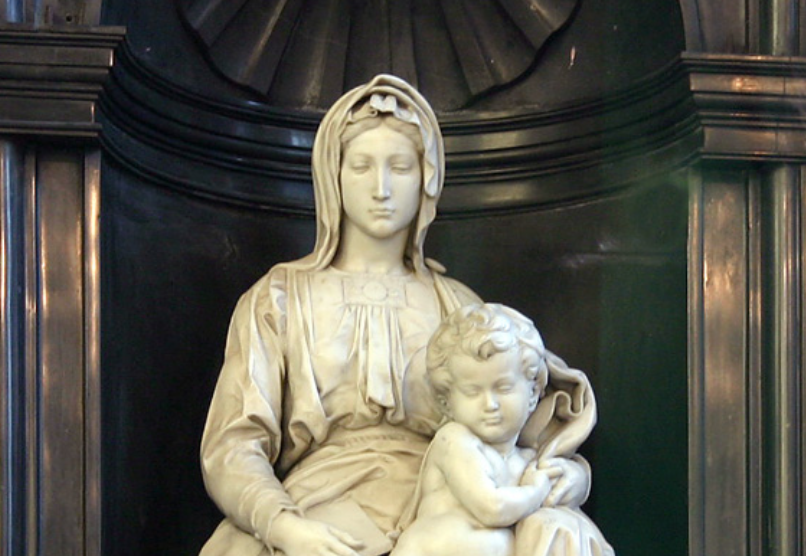
Image source: Michelangelo’s Madonna, public domain.
Liberation theology is a theology of self-determination.
In Mujerista Theology: A Theology for the Twenty-First Century, Ada Maria Isasi-Diaz writes that, “Liberation is not something one person can give another.” Instead, liberation is “a process in which the oppressed are protagonists” (1). Gustavo Gutierrez echoes this in A Theology of Liberation, saying that, “We will have an authentic theology of liberation only when the oppressed themselves can freely raise their voice and express themselves directly and creatively in society and in the heart of the People of God, when they themselves ‘account for the hope’ which they bear, when they are the protagonists of their own liberation” (174).
What this means is that, to be authentic, the people creating the theology should be the ones seeking liberation. A liberation theology for the poor, for example, will be inauthentic if it is controlled and dictated by the rich. A liberation theology for transgender people will be inauthentic if it is controlled and dictated by cisgender people. The whole point of liberation theology is to empower the marginalized and the oppressed to rise up and claim their voice, their destiny, and their God-given right to speak about God from their own unique perspective.
Liberation theology welcomes the marginalized and the oppressed like Jesus welcomes the children, saying, “Let them come to me, and do not hinder them, for the Kingdom of God belongs to such as these” (Mark 10:14). The Kingdom of God is not just for the white person, for the male person, for the able-boded person. The Kingdom of God is for everyone, for everyone of every age and gender and sexuality and race and ability and financial status.
The Kingdom of God is the kingdom that liberation theology proclaims. It is a prophetic critique against the privileged and the oppressing, those who — like the disciples around Jesus — want to keep away the children, the misfits, the pariahs. Liberation theology aims to awaken the privileged and the oppressing to the reality that they have no monopoly on the right to speak about God. Everyone has that right. And no one — especially the privileged and the oppressing — speaks about God from an objective, neutral point. Our fingerprints are all over our own ideas, and it is the privileged and the oppressing who — accustomed to having and keeping the power to speak about God to themselves — most want to deny that.
If, then, liberation theology needs to be from the ground-up, needs to give the marginalized and the oppressed the chance to self-determine (and restore their right to do so), that means child liberation theology will only be fully authentic when it is created by children themselves. If a liberation theology for the poor will be inauthentic if it is developed by the rich, then a liberation theology for children will similarly be inauthentic if it is controlled and dictated by adults.
But this creates a problem for adults like myself who believe in the importance and significance of creating a child liberation theology. Because the very reason why this theology is so important, so significant, and especially so necessary, is because much of the Church today — and much of the Church in the past — is held captive by the sin of adultism. Much of the Church is possessed by the ideological demons that whisper in our ears about the inadequacy of children. There is no space in many faith communities for children to do theological work. In fact, many faith communities would think this is an outright impossibility, even a blasphemous heresy. Theology is for adults, not children. Children are to sit quietly and absorb what the adults teach; they are to say, “Yes, sir,” and “As you wish.” Children are not to stand up and speak out and do theology loudly and joyfully alongside their adult brethren.
If there is no space in our faith communities where children can do theology, how can children create a theology that will liberate them? And if our faith communities do not even believe children can do theology, how will we ever get to the point where a space for children’s own theological work exists in the first place?
This is the most significant challenge, then, with which we adults who believe in child liberation theology must wrestle. We must develop a child liberation theology such that children will be liberated to the point that they can rise up and seize their right to do that theology themselves. As adults, we are — in relation to children — those in power. Yet we must use our power not to increase our privilege and opportunities to oppress but rather to systematically empty ourselves of that power and give it to children. This is a process that Ada Maria Isasi-Diaz speaks of in Mujerista Theology:
In a liberative use of power a dominant agent exercises power over a subordinate agent for the latter’s benefit. However, the dominant agent’s aim is not simply to act for the benefit of the subordinate agent; rather the dominant agent attempts to exercise his power in such a way that the subordinate agent learns certain skills that undercut the power differential between her and the dominant agent. The liberative use of power is a use of power that seeks to bring about its own obsolescence by means of the empowerment of the subordinate… In a liberative use of power, the learning of skills by the subordinate agent is a matter of taking power, of becoming self-defining and self-actualizing. It is precisely because of this that the power of the dominant agent becomes obsolescent, non-operative (119-20).
This is the model that child liberation theology must follow in its preliminary stages. In these preliminary stages, adults like myself must never lose sight of the end goal: to equip children to take this theology into their own hands. As such, it is inherently a theology of praxis: every ideological nook and cranny should be practical, should be aimed towards liberating children in the here and now, should be aimed towards liberating children so that they can seize their God-given right to speak about God from their own unique perspective.
Only then will child liberation theology be successful. And only then will child liberation theology have truly begun.
For adults, the end of child liberation theology is children beginning it.
Previous Post
June 14, 2016
What Harriet Tubman Taught My White Five-Year-Old
Next Post
June 20, 2016 Six Ways Children Do Faith Better Than Adults
Browse Our Archives
Select a Category Uncategorized
Select a Month November 2017 October 2017 September 2017 August 2017 July 2017 June 2017 May 2017 April 2017 March 2017 February 2017 January 2017 December 2016 November 2016 October 2016 September 2016 August 2016 July 2016 June 2016 May 2016 April 2016 March 2016 February 2016
Follow Us!
TAKE THE
Religious Wisdom Quiz
Who was Rahab's husband?
Select your answer to see how you score.
Obed Boaz Salmon Jesse
Related posts from Unfundamentalist Parenting

Understanding Children’s Existential Struggles

Give Children Space to be Conscientious Objectors

TRENDING AT PATHEOS Progressive Christian

What Being a Modern-Day Apostle Means to Me
In my last column, I discussed the ins and outs of modern-day...

Did Ancient China Once Worship the God of...
Across human history, a common thread weaves through the origins of the...

Love Your Neighbor – Including Earth-Kin: Lev. 19,...
God’s command to love your neighbor means acting in an ethical and...

Lead a Church Study of “Jesus and Lao...
Guest writer Jack Thomas (The Irreverent Reverend) reflects on leading his church...

Pastoral Wisdom for Responding to Sermon Pushback
Getting sermon pushback on your social justice sermon? Learn practical, Proverbs-based strategies...

Principles for Understanding the Apostolic Ministry Today
Whenever people discover that my formal ministry title is "apostle," as in...
view all Progressive Christian blogs
Ad-Free & Subscriber Log-In Subscription Support
- About Us
- 2026 Calendar
- Videos
- Podcasts
- Library of World Religions
- Faith In Media Tracker
- Advertise With Us
- Write for Us
- Privacy Policy
- Terms of Service
- Do Not Sell My Data
- Contact Us
- Radiant Digital
- Manage Newsletter Subscriptions
- Unsubscribe From Notifications
- Sitemap
Copyright 2008-2026, Patheos. All rights reserved.
Subscription Support Ad-Free & Subscriber Log-In
Follow Patheos