
BuddhistCatholicContemplativeEvangelicalGeneral ChristianHinduJewishLatter-day SaintMuslimNew VisionsProgressive Christian
Beliefs
- Buddhist
- Catholic
- Contemplative
- Evangelical
- General Christian
- Hindu
- Jewish
- Latter-day Saint
- More Voices
- Muslim
- New Visions
- Pagan
- Progressive Christian
Topics
- Religion News
- Food and Religion
- Sports and Religion
- Religious Art
- Religious Music and Entertainment
- Religious Events
- History and Religion
- Style and Religion
- Politics and Religion
- Women in Religion
- Recreation Outdoors and Religion
- Business Finance and Religion
- Careers Workplace and Religion
- Education and Religion
- Family Parenting and Religion
- Health Fitness and Religion
- Home and Religion
- Relationships and Religion
- Technology and Religion
- Travel and Religion
Columnists
- Buddhist Columnists
- Business Finance and Religion Columnists
- Careers Workplace and Religion Columnists
- Catholic Columnists
- Contemplative Columnists
- Education and Religion Columnists
- Evangelists Columnists
- Family Parenting and Religion Columnists
- General Christian Columnists
- Health Fitness and Religion Columnists
- Hindu Columnists
- History and Religion Columnists
- Home and Religion Columnists
- Jewish Columnists
- More Voices Columnists
- Latter Day Columnists
- Muslim Columnists
- New Visions Columnists
- Nonreligious Columnists
- Pagan Columnists
- Politics and Religion Columnists
- Progressive Columnists
- Recreation Outdoors and Religion Columnists
- Relationships and Religion Columnists
- Religion News Columnists
- Religious Art Columnists
- Religious Events Columnists
- Religious Music and Entertainment Columnists
- Sports and Religion Columnists
- Style and Religion Columnists
- Technology and Religion Columnists
- Travel and Religion Columnists
- Women in Religion Columnists
Resource Library
- 2026 Calendar
- Library of World Religions
- The 100 Most Holy Places on Earth
- Patheos Answers
- Podcasts
- Videos
- Faith Leaders Database
- Anglican Episcopalian
- Bahai
- Baptist
- Buddhism
- Christianity
- Confucianism
- Eastern Orthodoxy
- Hinduism
- Holiness and Pentecostal
- ISKCON
- Islam
- Judaism
- Lutheran
- Methodist
- The Church of Jesus Christ of Latter-day Saints
- New Age
- Paganism
- Presbytarian and Reformed
- Protestantism
- Religion Behind the Scenes
- Roman Catholic
- Scientology
- Shia Islam
- Sikhism
- Sufism
- Sunni Islam
- Taoism
- Zen
- See all religions
Research Tools
 Ad-Free & Subscriber Log-In Subscription Support
Follow Patheos 

- Trending:
- Advent
- |
- Forgiveness
- |
- Thanksgiving
- |
- Election
- |
- Seasonal Holidays
- |
- Marriage
 Unfundamentalist Parenting
- Home
- Progressive Christian
- Family, Parenting and Religion
- Tearing the Robe Twice: Christian Parenting and the Rape of Tamar
Tearing the Robe Twice: Christian Parenting and the Rape of Tamar
Last updated on: June 9, 2017 at 7:50 am by Ryan Stollar
Tearing the Robe Twice: Christian Parenting and the Rape of Tamar 2017-06-09T07:50:46+08:00 Ryan Stollar
Patheos Explore the world's faith through different perspectives on religion and spirituality! Patheos has the views of the prevalent religions and spiritualities of the world.
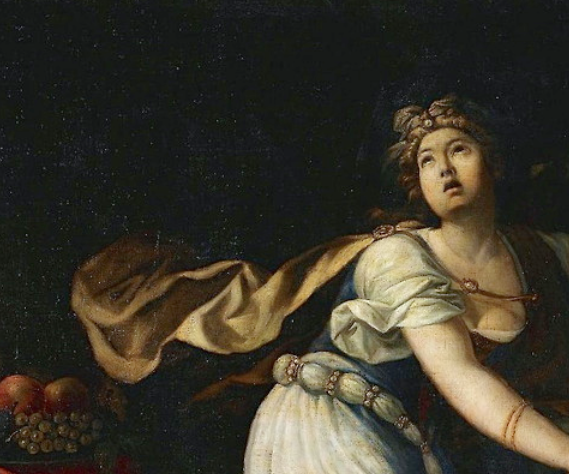
Image source: Public domain.
Tamar was wearing a long robe with many colors. The king’s virgin daughters wore robes like this. Tamar tore her robe of many colors and put ashes on her head. Then she put her hand on her head and began crying. Then Tamar’s brother Absalom said to her, “Have you been with your brother Amnon? Did he hurt you? Now, calm down sister. Amnon is your brother, so we will take care of this. Don’t let it upset you too much.” So Tamar did not say anything. She quietly went to live at Absalom’s house. King David heard the news and became very angry, but he did not want to say anything to upset Amnon, because he loved him since he was his firstborn son. Absalom began to hate Amnon. Absalom did not say one word, good or bad, to Amnon, but he hated him because Amnon had raped his sister Tamar.
~ 2 Samuel 13:18-22 (ERV)
As a child and survivor advocate, I find Tamar’s story to be one of the most haunting in the Bible. Along with the murder of Abel and the rape of Dinah, Tamar’s abuse shows how parents and leaders have failed to properly understand and respond to child abuse since the beginning of time. Their actions have amplified the damage instead of fostered healing. It was Amnon who first caused Tamar to tear her robe in grief. Yet her father David and her brother Absalom cause a second tearing of the robe, by forcing Tamar into further silence and shame. Absalom later goes on a murderous rampage against Amnon, but Tamar — her story, her injustice, even her very existence — vanish from the text, as absent from future biblical narratives as they are from most sermons and pulpits today.
Part of the idea behind creating “Unfundamentalist Parenting” — and why I love Cindy Brandt’s vision — is that it is not sufficient to critique how “other” Christian parents parent, namely, conservative and/or fundamentalist Christians. Deconstruction has a place and is an act of love; however, constructing alternative visions is also vital. So I want to focus in this piece not on attacking the different ways I have seen conservative or fundamentalist Christian parents model their responses to child abuse after the very failures made by King David and his son Absalom. Rather, I want to highlight how Christian parents — whether conservative or progressive or whatever they may be — can move away from these failures and provide healthy, supportive responses to children.
For me, personally, the underlying principle in moving away from a fundamentalist approach to anything (whether parenting or otherwise) is to value human beings more than ideologies. To me, fundamentalism is an obsession with getting ideology right, rather than a dedication to doing right by people. I think the opposite approach is the healthier one for Christian parents: to be obsessed with doing right by people, to seeing, respecting, and protecting the imago Dei in all of our children, rather than thinking — like the Priest and Levite in the Parable of the Good Samaritan — that God values doxy over praxis, thought over action.
When I think about how Tamar’s story shows a failure to respect her humanity, I see a number of ways that Christian parents today can better value their children and ensure their children’s robes are not torn a second time. Here are five of those ways:
1. Teach your children a healthy view of sexuality.
It is heartbreaking that Tamar’s first response to rape is not to run for help or seek justice. Her first response is realize she is no longer “worthy” of her beautiful robes, that she will now be considered less valuable. “The king’s virgin daughters wore robes like this” — but she will never wear such robes again.
Let your children know they always deserve beautiful robes. That knowledge begins with accurate information. Teach your children about their bodies. Teach them the proper names for their body parts, genitals included. Teach them the truth about virginity: that most of the ideas around it are myths used to justify the marginalization, oppression, and abuse of women. Most of all, teach them — no matter what they do with their bodies, no matter what other people do to their bodies, and no matter who or what they are sexually (whether they are straight or gay or bi) — that they are fearfully and wonderfully made. That God loves them unconditionally. That there is nothing they can do, nothing that can be done to them, that will change those facts. They are not sticks of gum, pieces of tape, or whatever damaging metaphors purity culture tells them they are. They are images of God: resilient, valuable, and eternally worthy of love, protection, and respect.
2. Teach your children the importance of consent, that love does not abuse.
When Tamar’s brother Absalom sees Tamar’s despair, he immediately asks her if Amnon did something to her. This tells me that those around Tamar, and thus likely Tamar herself, considered Amnon suspicious and/or unsafe. Yet Tamar felt obliged to acquiesce to Amnon’s demands. Whether this was because he was family or because he “loved” Tamar, it matters not. What matters is that Tamar’s body, rights, and safety were not respected.
Teach your children the opposite. Teach your children that their bodies belong to themselves, that they can say “No” to people who make them feel unsafe, that when it comes to other people’s bodies, only an enthusiastic “Yes!” is a green light. Your children owe hugs to no one. No one, not even a United States Senator like Ted Cruz, has the right to force kisses on them if they do not want to be kissed. No one has the right to violate their bodies, even in the name of “love.” Teach your children that the love of Amnon is no true love; love does not abuse.
3. Let your children feel emotions, even negative ones.
King David and Absalom pour salt on Tamar’s wounds when they command her to “Calm down” and “Don’t let it upset you too much.” Throughout the Bible, God Themself weeps over and rages against abuse. Why should children (and abuse survivors like Tamar) not express the same emotions that God does to evil? Allowing children to feel emotions, even negative ones, and to express those emotions is a fundamentally important part of healing from abuse. It is also fundamentally important to child development in general.
4. Overturn the tables of privilege and hierarchy.
Humans have always lived in a world obsessed with celebrity, hierarchy, and power. We turn a blind eye to evil time and time again: to Jerry Sandusky at Penn State, to Paul Shanley in the Catholic Church, to Bill Gothard in the conservative Christian homeschooling world. This tendency dates back even to Tamar’s time. King David turns a blind eye to the rape because “he loved [Amnon] since he was his firstborn son.” In a patriarchal society, Amnon was a political favorite.
Overturn these tables and teach your children to do so as well. Model for your children how Jesus puts the last first and the first last, how Jesus lifts up the lowly and oppressed from the margins and centers them. As Janet Pais writes in Suffer the Children, “Jesus turned upside down all earthly notions of status: The powerless and the oppressed are those who count. Children fall within this category—powerless, oppressed, lacking social status. But…’to such belongs the kingdom of God’” (p. 13).
5. Speak out against injustice towards children.
German theologian Dietrich Bonhoeffer once said, “Silence in the face of evil is evil itself.” Yet after his sister’s rape, “Absalom did not say one word, good or bad.” Similarly, David “did not want to say anything.” This is not the path of Jesus. Jesus spoke out against abuse: overturning temple tables and calling abusers a “den of thieves.” Christian parenting should instill similar courage in children. This begins with parents modeling that courage: speaking out when children are treated unfairly by adults, siding with child abuse survivors, and being unafraid to take a stand against powers and principalities that hurt children.
Protecting children begins in the home. Fostering a world that takes child abuse seriously starts with parenting. Christian parents should take Tamar’s story to heart, working to create a world where no child’s robe is torn twice again.
Additional readings:
• Ryan Stollar, “Rethinking Purity”
• Elizabeth Esther, “Elizabeth Smart & the life-threatening danger of shame-based purity culture”
• Emily Maynard, “I Will Listen”
• Allyson McKinney, “When There Is No Justice in Scripture: The Rape of Tamar”
• Boz Tchividjian, “A church silent in the face of evil is no church at all”
• Sarah Galo, “Why Aren’t More Christians Talking About Bill Cosby?”
Get a free download of a Christian parenting manifesto that helps us guide children into healthy spirituality + the most helpful parenting resources with progressive values.
Previous Post

March 8, 2016
Andy Stanley, Large Churches, & Kids
Next Post

March 14, 2016 Christian vs. Secular Parenting
Browse Our Archives
Select a Category Uncategorized
Select a Month November 2017 October 2017 September 2017 August 2017 July 2017 June 2017 May 2017 April 2017 March 2017 February 2017 January 2017 December 2016 November 2016 October 2016 September 2016 August 2016 July 2016 June 2016 May 2016 April 2016 March 2016 February 2016
Follow Us!
TAKE THE
Religious Wisdom Quiz
Who said, "The stone the builders rejected has become the cornerstone"?
Select your answer to see how you score.
Paul David Jesus Isaiah
Related posts from Unfundamentalist Parenting

Break the Cycle: Spiritual Abuse and the Conversion...
7 Spiritual Child Protection Policies

Understanding Children’s Existential Struggles

It's Time to Speak Out Against Corporal Punishment
TRENDING AT PATHEOS Progressive Christian

The Secret behind A Charlie Brown Thanksgiving
Do you know the secret behind A Charlie Brown Thanksgiving? Sparky was...

Bridging the Gap Between God and Man
From Far Off to the Ultimate Embrace “God is a Spirit: and...

Let Matthew 25 Guide You to a Greater...
With the crisp feel of fall in the air, our minds quickly...

Can a Chatbot Touch Your Soul?
Can a chatbot offer genuine spiritual counsel? One conversation brought me to...

Religion and Politics: How Should We Then Live?
Two cultural axioms get repeated in polite company. Don't mix religion and...

7 Things We Get Wrong About Giving Thanks
It's a time of year when many of us turn to the...
view all Progressive Christian blogs
Ad-Free & Subscriber Log-In Subscription Support
- About Us
- 2026 Calendar
- Videos
- Podcasts
- Library of World Religions
- Faith In Media Tracker
- Advertise With Us
- Write for Us
- Privacy Policy
- Terms of Service
- Do Not Sell My Data
- Contact Us
- Radiant Digital
- Manage Newsletter Subscriptions
- Unsubscribe From Notifications
- Sitemap
Copyright 2008-2026, Patheos, part of the Radiant Digital network of media brands. All rights reserved.
Subscription Support Ad-Free & Subscriber Log-In
Follow Patheos