
BuddhistCatholicContemplativeEvangelicalGeneral ChristianHinduJewishLatter-day SaintMuslimNew VisionsProgressive Christian
Beliefs
- Buddhist
- Catholic
- Contemplative
- Evangelical
- General Christian
- Hindu
- Jewish
- Latter-day Saint
- More Voices
- Muslim
- New Visions
- Pagan
- Progressive Christian
Topics
- Religion News
- Food and Religion
- Sports and Religion
- Religious Art
- Religious Music and Entertainment
- Religious Events
- History and Religion
- Style and Religion
- Politics and Religion
- Women in Religion
- Recreation Outdoors and Religion
- Business Finance and Religion
- Careers Workplace and Religion
- Education and Religion
- Family Parenting and Religion
- Health Fitness and Religion
- Home and Religion
- Relationships and Religion
- Technology and Religion
- Travel and Religion
Columnists
- Buddhist Columnists
- Business Finance and Religion Columnists
- Careers Workplace and Religion Columnists
- Catholic Columnists
- Contemplative Columnists
- Education and Religion Columnists
- Evangelists Columnists
- Family Parenting and Religion Columnists
- General Christian Columnists
- Health Fitness and Religion Columnists
- Hindu Columnists
- History and Religion Columnists
- Home and Religion Columnists
- Jewish Columnists
- More Voices Columnists
- Latter Day Columnists
- Muslim Columnists
- New Visions Columnists
- Nonreligious Columnists
- Pagan Columnists
- Politics and Religion Columnists
- Progressive Columnists
- Recreation Outdoors and Religion Columnists
- Relationships and Religion Columnists
- Religion News Columnists
- Religious Art Columnists
- Religious Events Columnists
- Religious Music and Entertainment Columnists
- Sports and Religion Columnists
- Style and Religion Columnists
- Technology and Religion Columnists
- Travel and Religion Columnists
- Women in Religion Columnists
Resource Library
- 2026 Calendar
- Library of World Religions
- The 100 Most Holy Places on Earth
- Patheos Answers
- Podcasts
- Videos
- Faith Leaders Database
- Anglican Episcopalian
- Bahai
- Baptist
- Buddhism
- Christianity
- Confucianism
- Eastern Orthodoxy
- Hinduism
- Holiness and Pentecostal
- ISKCON
- Islam
- Judaism
- Lutheran
- Methodist
- The Church of Jesus Christ of Latter-day Saints
- New Age
- Paganism
- Presbytarian and Reformed
- Protestantism
- Religion Behind the Scenes
- Roman Catholic
- Scientology
- Shia Islam
- Sikhism
- Sufism
- Sunni Islam
- Taoism
- Zen
- See all religions
Research Tools
 Ad-Free & Subscriber Log-In Subscription Support
Ad-Free & Subscriber Log-In Subscription Support
Follow Patheos 

- Trending:
- Forgiveness
- |
- Marriage
- |
- Consciousness
- |
- Death Penalty
- |
- Election
- |
- Halloween
 Unfundamentalist Christians
- Home
- Progressive Christian
- Fundamentalism Is about Policing the Borders
Fundamentalism Is about Policing the Borders
Last updated on: May 10, 2017 at 11:52 am by Guest Contributor
Fundamentalism Is about Policing the Borders 2017-05-10T11:52:08-06:00 Guest Contributor
Patheos Explore the world's faith through different perspectives on religion and spirituality! Patheos has the views of the prevalent religions and spiritualities of the world.
This guest post was written by Darrell Lackey.
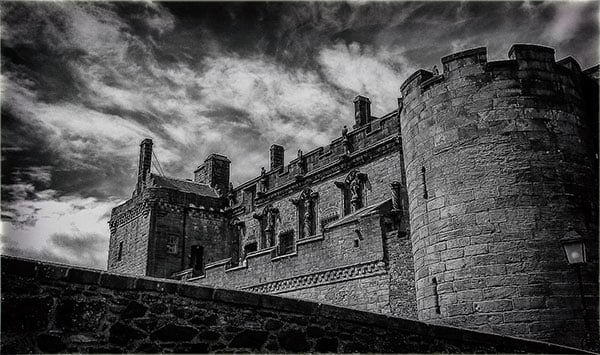
Fundamentalism, as a description, is used in different ways depending upon the context and point a writer is trying to make. I am using the word in its general dictionary meaning, such as given in the Cambridge Dictionary: “the belief that the traditional principles of a religion or set of beliefs should be maintained.” I am also referring to its historical context, as found in a set of essays published from 1910 to 1915 by the Bible Institute of Los Angeles (BIOLA) called “The Fundamentals.” In that series of essays, the writers called the church and the culture back to the so-called “fundamentals” of Christianity.
For an in-depth study of fundamentalism, I recommend George Marsden’s acclaimed book, Fundamentalism and American Culture. But in this post, what we might gather from the general dictionary meaning and the reference to the early essays, is that fundamentalism is about policing the borders or boundaries. We might think about Christian theology or doctrine as castles (Truth) of great importance. There they stand in the distance, big and beautiful. We must protect them. So, we begin to build walls around these castles; we build them thick and high. Once built, we then proceed to police them. Like guards, we walk along the border, the boundaries of the wall, to make sure no one scales the wall and attacks the castle.
It is easy to think we are very noble for doing this. Look at us: here we are on the very boundary, the border, diligent, making sure there is none who trespasses. We are the Protectors of Truth. We stand guard, night and day, so that the castle, the precious theology and doctrine (Truth), is safe from all those who might change it or get it wrong.
What makes “policing the borders” even more attractive is that it also allows us to be the gatekeepers. Someone approaches the border or boundary. They ask if they can see or enter the castle. They’ve heard of its beauty and they want to know more about it. Well, hang on just a second there stranger. What do you think about the castle? What is your view, your opinion, your doctrine, your theology? What group are you with? What is the history regarding how your group has viewed the castle? We “listen” to the answers given. We confer together. “Nope,” we say, “you are clearly not the person who should be seeing or entering the castle. Please move away from the wall and continue on.”
And, of course, this leads to a strict black-and-white notion of who is “in” and who is “out.” Borders and walls are great for determining who is on one side or the other, right? It’s obvious–I’m on this side, and you are on the other. It is all so clear this way. No gray. It’s black and white. I’m up here on the wall, and you are down there on the other side. I’m “in,” and you are “out.”
Historically, a good example of this type thinking, this policing the borders, was the Pharisees. They were always on the lookout for any who might be trespassing or trying to get over the border. And, one day, they found this strange fellow from Nazareth doing that very thing. He healed people on the Sabbath. He ate with “sinners.” He said he could forgive sins. He said he was God. And even when it was “clear” and obvious that God had said in the Hebrew Scriptures to hate one’s enemies, this fellow said, “But I tell you, to love your enemies.” This guy was the worst—a clear violator and trespasser. He was constantly trying to scale the wall, cross the boundaries, and destroy the castle. But the Pharisees, being so noble, righteous, and dedicated to policing the borders, finally put a stop to this guy. How? They had the state kill him.
This mindset, this understanding of what it means to be a “committed” Christian, this idea of policing the borders, is one of the fundamental (pun intended) flaws of fundamentalism. It is about building walls and boundaries, rather than bringing them down so that people can experience and enjoy the castle. The castle, if it is truly built by God, doesn’t need protecting or policing. It needs to be lived in and lived out of. Jesus was about destroying and bringing down borders, walls, and boundaries. He destroyed the one between Jew and Gentile, slave and free, male and female. He tore the curtain between the “outer” and “inner” part of the temple, the border.
The other thing this mindset, policing the borders, does, is it makes being judgmental a fundamental aspect of the Christian life, because it makes us the gatekeepers. But such a role is not given to us in Scripture. Jesus is the gatekeeper (and the gate). Jesus is the judge. When we take those roles upon ourselves, we end up making being judgmental the operating logic of our Christian life, which makes our lives the very opposite of Christian.
I’m not suggesting that theology and doctrine are not important. They are very important and not to be taken lightly. However, if our doctrines and theologies reflect what is true about God, then let’s invite people into them, to walk around inside and experience them. They might reject them. If so, at least they knew what they were rejecting. If they stay, they might try and rearrange some of the furniture. That is fine, as a community we can talk and develop a consensus—sometimes the furniture needs to be moved, sometimes not. No one said living in the same house would be easy.
Instead of building the borders and boundaries we then police, let’s tear them down, invite people inside the castle, and let God decide who belongs and how best to protect the truth, which is, after all, not a castle but a person: Jesus.
Image via Pixabay, edited by Dan Wilkinson.
 About Darrell Lackey
Darrell Lackey has been a lead pastor and is currently working in the private sector. He is part of a home gathering of some amazing, wonderful Christians and a graduate of the University of San Francisco and Golden Gate Baptist Theological Seminary (Now Gateway). He and his wife reside in Northern California.
Previous Post

May 2, 2017
You're in a Safe Place Here...
Next Post

May 5, 2017 What Has Made Me Who I Am Does Not Have to Be What I Become
Browse Our Archives
Select a Category Book Reviews Christian History Christian Issues Christian Spirituality Current Events Fundamentalism Islam John Shore LGBT Movie Reviews Poetry Uncategorized
Select a Month October 2017 September 2017 August 2017 July 2017 June 2017 May 2017 April 2017 March 2017 February 2017 January 2017 December 2016 November 2016 October 2016 September 2016 August 2016 July 2016 June 2016 May 2016 April 2016 March 2016 February 2016 January 2016 December 2015 November 2015 October 2015 September 2015 August 2015 July 2015 June 2015 May 2015 April 2015 March 2015 February 2015 January 2015 December 2014 November 2014 October 2014 September 2014 August 2014 July 2014 June 2014 May 2014 April 2014 March 2014 February 2014 January 2014 December 2013 November 2013 October 2013 September 2013 August 2013 July 2013 June 2013
Follow Us!
TAKE THE
Religious Wisdom Quiz
What year was the Temple in Jerusalem destroyed by the Romans?
Select your answer to see how you score.
586 BC 120 AD 70 AD 33 AD
Related posts from Unfundamentalist Christians

Why Not Sign the Nashville Statement?


Christian: You Are Upset About the Wrong Things
TRENDING AT PATHEOS Progressive Christian

What Being a Modern-Day Apostle Means to Me
In my last column, I discussed the ins and outs of modern-day...

Did Ancient China Once Worship the God of...
Across human history, a common thread weaves through the origins of the...

Love Your Neighbor – Including Earth-Kin: Lev. 19,...
God’s command to love your neighbor means acting in an ethical and...

Lead a Church Study of “Jesus and Lao...
Guest writer Jack Thomas (The Irreverent Reverend) reflects on leading his church...

Pastoral Wisdom for Responding to Sermon Pushback
Getting sermon pushback on your social justice sermon? Learn practical, Proverbs-based strategies...

Principles for Understanding the Apostolic Ministry Today
Whenever people discover that my formal ministry title is "apostle," as in...
view all Progressive Christian blogs
Ad-Free & Subscriber Log-In Subscription Support
- About Us
- 2026 Calendar
- Videos
- Podcasts
- Library of World Religions
- Faith In Media Tracker
- Advertise With Us
- Write for Us
- Privacy Policy
- Terms of Service
- Do Not Sell My Data
- Contact Us
- Radiant Digital
- Manage Newsletter Subscriptions
- Unsubscribe From Notifications
- Sitemap
Copyright 2008-2026, Patheos. All rights reserved.
Subscription Support Ad-Free & Subscriber Log-In
Follow Patheos