
BuddhistCatholicContemplativeEvangelicalGeneral ChristianHinduJewishLatter-day SaintMuslimNew VisionsProgressive Christian
Beliefs
- Buddhist
- Catholic
- Contemplative
- Evangelical
- General Christian
- Hindu
- Jewish
- Latter-day Saint
- More Voices
- Muslim
- New Visions
- Pagan
- Progressive Christian
Topics
- Religion News
- Food and Religion
- Sports and Religion
- Religious Art
- Religious Music and Entertainment
- Religious Events
- History and Religion
- Style and Religion
- Politics and Religion
- Women in Religion
- Recreation Outdoors and Religion
- Business Finance and Religion
- Careers Workplace and Religion
- Education and Religion
- Family Parenting and Religion
- Health Fitness and Religion
- Home and Religion
- Relationships and Religion
- Technology and Religion
- Travel and Religion
Columnists
- Buddhist Columnists
- Business Finance and Religion Columnists
- Careers Workplace and Religion Columnists
- Catholic Columnists
- Contemplative Columnists
- Education and Religion Columnists
- Evangelists Columnists
- Family Parenting and Religion Columnists
- General Christian Columnists
- Health Fitness and Religion Columnists
- Hindu Columnists
- History and Religion Columnists
- Home and Religion Columnists
- Jewish Columnists
- More Voices Columnists
- Latter Day Columnists
- Muslim Columnists
- New Visions Columnists
- Nonreligious Columnists
- Pagan Columnists
- Politics and Religion Columnists
- Progressive Columnists
- Recreation Outdoors and Religion Columnists
- Relationships and Religion Columnists
- Religion News Columnists
- Religious Art Columnists
- Religious Events Columnists
- Religious Music and Entertainment Columnists
- Sports and Religion Columnists
- Style and Religion Columnists
- Technology and Religion Columnists
- Travel and Religion Columnists
- Women in Religion Columnists
Resource Library
- 2026 Calendar
- Library of World Religions
- The 100 Most Holy Places on Earth
- Patheos Answers
- Podcasts
- Videos
- Faith Leaders Database
- Anglican Episcopalian
- Bahai
- Baptist
- Buddhism
- Christianity
- Confucianism
- Eastern Orthodoxy
- Hinduism
- Holiness and Pentecostal
- ISKCON
- Islam
- Judaism
- Lutheran
- Methodist
- The Church of Jesus Christ of Latter-day Saints
- New Age
- Paganism
- Presbytarian and Reformed
- Protestantism
- Religion Behind the Scenes
- Roman Catholic
- Scientology
- Shia Islam
- Sikhism
- Sufism
- Sunni Islam
- Taoism
- Zen
- See all religions
Research Tools
 Ad-Free & Subscriber Log-In Subscription Support
Ad-Free & Subscriber Log-In Subscription Support
Follow Patheos 

- Trending:
- Forgiveness
- |
- Marriage
- |
- Consciousness
- |
- Death Penalty
- |
- Election
- |
- Halloween
 Unfundamentalist Christians
- Home
- Progressive Christian
- Not Anomalies: Reclaiming the Biblical Heroines
Not Anomalies: Reclaiming the Biblical Heroines
Last updated on: January 18, 2017 at 3:15 am by Guest Contributor
Not Anomalies: Reclaiming the Biblical Heroines 2017-01-17T20:35:05-06:00 Guest Contributor
Patheos Explore the world's faith through different perspectives on religion and spirituality! Patheos has the views of the prevalent religions and spiritualities of the world.
This guest post was written by Lindsay Mustafa Davis.
Growing up with a single mother, I learned that being a woman and being strong go hand in hand.
Growing up in the Pentecostal church, I learned that the Holy Spirit gave the power to everyone, male or female, to preach the Gospel, live a Christ-like life, and do fantastic works that would bring people to Jesus.
In two formative ways, I learned that to be a woman is not in and of itself a hindrance to accomplishment. Being a woman, in both contexts, is something to be celebrated. Together, my mother and the Spirit emboldened me to do anything God put in my heart to do.
So of course I asked if the Spirit was calling my beloved, empowered self to be a leader in the church, maybe even a pastor.
Then things got weird.
My mom told me there was no question: of course I could be a pastor if that was what I really wanted to do.
The church of my youth and evangelical groups I joined, however, told me there were limits to this empowerment, especially for girls. Perhaps the Spirit might have given me the gifts of teaching, but only to teach children, youth, and other women.
But to teach everyone, including (and especially) men? You heard God wrong on that, they said. Maybe instead of being a pastor, you’re called to be a pastor’s wife.
I balked quite a bit at that idea.
So I found myself confused. And as a result, I asked more questions.
I asked, “Why would the Spirit awaken such gifts within me only to put odd limits on them for the sole fact that I am female, not male?”
The church answered, “God’s ways are not our ways.”
I asked, “Then why would the Bible contain women like Miriam the prophetess, Deborah the judge, and Mary Magdalene the apostle to the apostles?”
And they answered, “Those women were anomalies.”
The church told me they were performing these “men only” roles due to a lack of any “worthy” men willing to do the work. God used women because there weren’t any men willing enough to do their jobs.
After all, they said, if God can use rocks and donkeys, God can use women, too, when necessary.
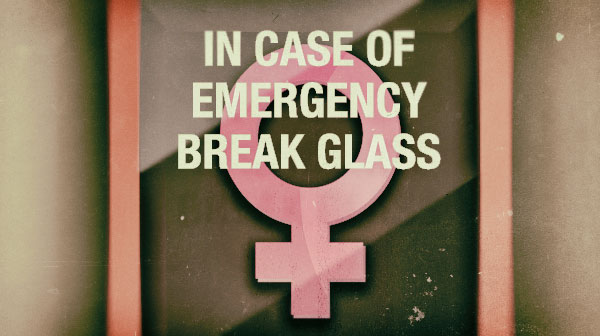
So don’t interpret those women as the norm. God only uses them “In Case of Emergency,” as if those women were put behind a glass case for God to shatter and use when the fire was out of control, and the “real men” weren’t there to do their jobs.
The message rang loud and clear: the only way women get to be the heroes, in the biblical or Christian story, is when God uses them in spite of their womanhood.
Wrestling with my calling as a woman is nothing new. I, along with countless women in ministry, have had to simultaneously defend my desire to preach and the validity of my faith in ways most men will never have to.
When times were especially tough, when I wondered whether I was meant to lead or leave the Church, I turned to stories for solace and inspiration. I read comics and books, and watched shows and movies, some of which featured amazing female protagonists. Through these pursuits, I found Buffy, Kamala Khan, River Song, Misty Knight, and Jessica Jones, among others.
And I noticed something about these characters, something in how their creators made them that contradicted what the churches taught me about biblical women.
They weren’t anomalies. They belonged in their worlds. They were there on purpose.
They weren’t there because a man didn’t step up, or because there were no rocks or donkeys willing to do any supernatural work.
They were there because the author wanted and needed them there to tell the story.
And when I took another look at the stories of those biblical women, I realized they were there on purpose, too.
They were leading the story. They were doing God’s work because God called them to do it, not to take on some other guy’s neglected burden. God gave them this work on purpose.
Miriam prophesied not because Moses and Aaron wouldn’t, but because she couldn’t hold God’s truth in her and needed tambourines and song to proclaim it.
Deborah led not because Barak wouldn’t, but because leading as a judge utilized the passion and power with which God had already endowed her.
Mary Magdalene stayed at the tomb long enough to witness the miracle of Christ’s resurrection out of her own grief and love for Jesus, not so God that could spite the other disciples.
These and many other women fill the pages of the very Bibles used to silence and degrade women, and their stories keep the tale of God’s radical and inclusive love and justice moving forward. They continue to proclaim encouragement, empowerment, and love to our sisters in Christ today.
These women were not anomalies. They were heroines in a long line of powerful biblical women, and when we honor the heroines of the Bible, we honor the heroines of faith today.
So Church, lift up the female biblical heroes in a world, and even a religion, that continues to see women as second-best and expendable.
Lift up heroines in society and in literature, from Emma Watson to her literary counterpart Hermione Granger. Lift up the inspirational women who have gone before us to do justice, love mercy, and walk humbly with God, from Deborah to Maya Angelou. Lift them up to remind women that their callings are not anomalies but necessities in this world which desperately needs their love and care.
When we tell women they are heroines, that their leadership and strength are needed, they will no longer consider themselves anomalies, and neither will the Church. They will take their place alongside their brothers and lead the world into tomorrow.
And the Church will be all the better for it, because we will be living into the Kingdom the way God intended: together, as equals.
Photo illustration by Dan Wilkinson.
 About Lindsay Mustafa Davis
Lindsay Mustafa Davis is a recent M.Div graduate from Eastern Mennonite Seminary. She is passionate about social justice, geek culture, theology, and their intersections. Lindsay blogs at lindsaymdavis.com, is obsessed with Harry Potter, and looks forward to marrying her best friend Bryce later this year.
Next Post

January 20, 2017 Confessions of a Doubting Christian
Browse Our Archives
Select a Category Book Reviews Christian History Christian Issues Christian Spirituality Current Events Fundamentalism Islam John Shore LGBT Movie Reviews Poetry Uncategorized
Select a Month October 2017 September 2017 August 2017 July 2017 June 2017 May 2017 April 2017 March 2017 February 2017 January 2017 December 2016 November 2016 October 2016 September 2016 August 2016 July 2016 June 2016 May 2016 April 2016 March 2016 February 2016 January 2016 December 2015 November 2015 October 2015 September 2015 August 2015 July 2015 June 2015 May 2015 April 2015 March 2015 February 2015 January 2015 December 2014 November 2014 October 2014 September 2014 August 2014 July 2014 June 2014 May 2014 April 2014 March 2014 February 2014 January 2014 December 2013 November 2013 October 2013 September 2013 August 2013 July 2013 June 2013
Follow Us!
TAKE THE
Religious Wisdom Quiz
According to Ecclesiastes 12, what happens to the human spirit when a person dies?
Select your answer to see how you score.
It ceases to exist It returns to God It remains on earth It is reincarnated
Related posts from Unfundamentalist Christians

Faith in the Fog: On Losing Beliefs and...

My Cancer Didn't Happen for a Reason

5 Things We'll Miss If We Take the...

No, Our Non-Profit Is Not a Ministry
TRENDING AT PATHEOS Progressive Christian

Why Christians Have a Sacred Duty to Vote:...
The Bible offers strong support for the sacred duty to vote. Here...

What Being a Modern-Day Apostle Means to Me
In my last column, I discussed the ins and outs of modern-day...

Did Ancient China Once Worship the God of...
Across human history, a common thread weaves through the origins of the...

Love Your Neighbor – Including Earth-Kin: Lev. 19,...
God’s command to love your neighbor means acting in an ethical and...

Lead a Church Study of “Jesus and Lao...
Guest writer Jack Thomas (The Irreverent Reverend) reflects on leading his church...

Principles for Understanding the Apostolic Ministry Today
Whenever people discover that my formal ministry title is "apostle," as in...
view all Progressive Christian blogs
Ad-Free & Subscriber Log-In Subscription Support
- About Us
- 2026 Calendar
- Videos
- Podcasts
- Library of World Religions
- Faith In Media Tracker
- Advertise With Us
- Write for Us
- Privacy Policy
- Terms of Service
- Do Not Sell My Data
- Contact Us
- Radiant Digital
- Manage Newsletter Subscriptions
- Unsubscribe From Notifications
- Sitemap
Copyright 2008-2026, Patheos. All rights reserved.
Subscription Support Ad-Free & Subscriber Log-In
Follow Patheos