
BuddhistCatholicContemplativeEvangelicalGeneral ChristianHinduJewishLatter-day SaintMuslimNew VisionsProgressive Christian
Beliefs
- Buddhist
- Catholic
- Contemplative
- Evangelical
- General Christian
- Hindu
- Jewish
- Latter-day Saint
- More Voices
- Muslim
- New Visions
- Pagan
- Progressive Christian
Topics
- Religion News
- Food and Religion
- Sports and Religion
- Religious Art
- Religious Music and Entertainment
- Religious Events
- History and Religion
- Style and Religion
- Politics and Religion
- Women in Religion
- Recreation Outdoors and Religion
- Business Finance and Religion
- Careers Workplace and Religion
- Education and Religion
- Family Parenting and Religion
- Health Fitness and Religion
- Home and Religion
- Relationships and Religion
- Technology and Religion
- Travel and Religion
Columnists
- Buddhist Columnists
- Business Finance and Religion Columnists
- Careers Workplace and Religion Columnists
- Catholic Columnists
- Contemplative Columnists
- Education and Religion Columnists
- Evangelists Columnists
- Family Parenting and Religion Columnists
- General Christian Columnists
- Health Fitness and Religion Columnists
- Hindu Columnists
- History and Religion Columnists
- Home and Religion Columnists
- Jewish Columnists
- More Voices Columnists
- Latter Day Columnists
- Muslim Columnists
- New Visions Columnists
- Nonreligious Columnists
- Pagan Columnists
- Politics and Religion Columnists
- Progressive Columnists
- Recreation Outdoors and Religion Columnists
- Relationships and Religion Columnists
- Religion News Columnists
- Religious Art Columnists
- Religious Events Columnists
- Religious Music and Entertainment Columnists
- Sports and Religion Columnists
- Style and Religion Columnists
- Technology and Religion Columnists
- Travel and Religion Columnists
- Women in Religion Columnists
Resource Library
- 2026 Calendar
- Library of World Religions
- The 100 Most Holy Places on Earth
- Patheos Answers
- Podcasts
- Videos
- Faith Leaders Database
- Anglican Episcopalian
- Bahai
- Baptist
- Buddhism
- Christianity
- Confucianism
- Eastern Orthodoxy
- Hinduism
- Holiness and Pentecostal
- ISKCON
- Islam
- Judaism
- Lutheran
- Methodist
- The Church of Jesus Christ of Latter-day Saints
- New Age
- Paganism
- Presbytarian and Reformed
- Protestantism
- Religion Behind the Scenes
- Roman Catholic
- Scientology
- Shia Islam
- Sikhism
- Sufism
- Sunni Islam
- Taoism
- Zen
- See all religions
Research Tools
 Ad-Free & Subscriber Log-In Subscription Support
Ad-Free & Subscriber Log-In Subscription Support
Follow Patheos 

- Trending:
- Forgiveness
- |
- Marriage
- |
- Consciousness
- |
- Death Penalty
- |
- Election
- |
- Halloween
 Unfundamentalist Christians
- Home
- Progressive Christian
- Native Americans, the Mainline Church, and the Quest for Interracial Justice
Native Americans, the Mainline Church, and the Quest for Interracial Justice
Last updated on: January 17, 2017 at 7:12 am by Dan Wilkinson
Native Americans, the Mainline Church, and the Quest for Interracial Justice 2017-01-17T07:12:11-06:00 Dan Wilkinson
Patheos Explore the world's faith through different perspectives on religion and spirituality! Patheos has the views of the prevalent religions and spiritualities of the world.
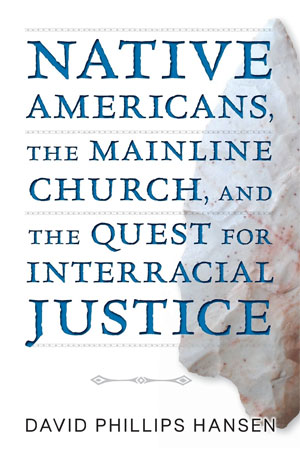 David Phillips Hansen’s new book, Native Americans, the Mainline Church, and the Quest for Interracial Justice (Chalice Press, $29.99), is a sobering and important exploration of the historical, theological, and social relationships between the church and native peoples.
Hansen’s objectives are straightforward: “first, to expose and deconstruct the causes of the church’s war on indigenous cultures; and second to identify and define key theological, political, and economic foundations for the church’s reformation that will prepare it for our multicultural future.” (3)
He more than accomplishes those goals in this meticulously footnoted volume. Structured around a framework developed by Eric K. Yamamoto, Hansen explores four “praxis dimensions” for addressing interracial injustice: recognition, responsibility, reconstruction, and reparation.
The opening section on recognition examines the history of Christianity’s tumultuous relationship with racial issues, beginning in medieval Europe and progressing through the twentieth century. Next, the chapters on responsibility discuss the interaction between theology and society, including an important reflection on the impact of the biblical story of the Exodus. A chapter on reconstruction discusses the need for repentance within the church, and the closing section on reparation discusses how our values must shape our future policies and practices.
Native Americans, the Mainline Church, and the Quest for Interracial Justice is written not just for those who are part of the mainline church, nor solely for Christians interested in Native American issues, but is for anyone concerned with the wider national (and international) conversation about religion, race, and interracial justice.
If, as Hanesen says, it is the responsibility of the church to “fully commit itself to the urgent task of building a more just and peaceful multicultural society in which the rights native Americans, other people of color, and non-Christian peoples are equally respected and honored,” (3) then this book offers a vital starting point for realizing that goal.
Find out more about David Phillips Hansen and about Native Americans, the Mainline Church, and the Quest for Interracial Justice.
 Dan Wilkinson
Dan is the Executive Editor of the Unfundamentalist Christians blog. He is a writer, graphic designer and IT specialist. He lives in Montana, is married and owns three cats.
Previous Post

January 13, 2017
No, the Bible Isn't God's Personal Letter to You
Next Post

January 18, 2017 Not Anomalies: Reclaiming the Biblical Heroines
Browse Our Archives
Select a Category Book Reviews Christian History Christian Issues Christian Spirituality Current Events Fundamentalism Islam John Shore LGBT Movie Reviews Poetry Uncategorized
Select a Month October 2017 September 2017 August 2017 July 2017 June 2017 May 2017 April 2017 March 2017 February 2017 January 2017 December 2016 November 2016 October 2016 September 2016 August 2016 July 2016 June 2016 May 2016 April 2016 March 2016 February 2016 January 2016 December 2015 November 2015 October 2015 September 2015 August 2015 July 2015 June 2015 May 2015 April 2015 March 2015 February 2015 January 2015 December 2014 November 2014 October 2014 September 2014 August 2014 July 2014 June 2014 May 2014 April 2014 March 2014 February 2014 January 2014 December 2013 November 2013 October 2013 September 2013 August 2013 July 2013 June 2013
Follow Us!
TAKE THE
Religious Wisdom Quiz
Who said, "My God, my God, why have you forsaken me?"
Select your answer to see how you score.
Job Isaiah David Jesus
Related posts from Unfundamentalist Christians


Bible Nation: The United States of Hobby Lobby

What's So Confusing About Grace?

TRENDING AT PATHEOS Progressive Christian

Why Christians Have a Sacred Duty to Vote:...
The Bible offers strong support for the sacred duty to vote. Here...

What Being a Modern-Day Apostle Means to Me
In my last column, I discussed the ins and outs of modern-day...

Did Ancient China Once Worship the God of...
Across human history, a common thread weaves through the origins of the...

Love Your Neighbor – Including Earth-Kin: Lev. 19,...
God’s command to love your neighbor means acting in an ethical and...

Lead a Church Study of “Jesus and Lao...
Guest writer Jack Thomas (The Irreverent Reverend) reflects on leading his church...

Principles for Understanding the Apostolic Ministry Today
Whenever people discover that my formal ministry title is "apostle," as in...
view all Progressive Christian blogs
Ad-Free & Subscriber Log-In Subscription Support
- About Us
- 2026 Calendar
- Videos
- Podcasts
- Library of World Religions
- Faith In Media Tracker
- Advertise With Us
- Write for Us
- Privacy Policy
- Terms of Service
- Do Not Sell My Data
- Contact Us
- Radiant Digital
- Manage Newsletter Subscriptions
- Unsubscribe From Notifications
- Sitemap
Copyright 2008-2026, Patheos. All rights reserved.
Subscription Support Ad-Free & Subscriber Log-In
Follow Patheos