
BuddhistCatholicContemplativeEvangelicalGeneral ChristianHinduJewishLatter-day SaintMuslimNew VisionsProgressive Christian
Beliefs
- Buddhist
- Catholic
- Contemplative
- Evangelical
- General Christian
- Hindu
- Jewish
- Latter-day Saint
- More Voices
- Muslim
- New Visions
- Pagan
- Progressive Christian
Topics
- Religion News
- Food and Religion
- Sports and Religion
- Religious Art
- Religious Music and Entertainment
- Religious Events
- History and Religion
- Style and Religion
- Politics and Religion
- Women in Religion
- Recreation Outdoors and Religion
- Business Finance and Religion
- Careers Workplace and Religion
- Education and Religion
- Family Parenting and Religion
- Health Fitness and Religion
- Home and Religion
- Relationships and Religion
- Technology and Religion
- Travel and Religion
Columnists
- Buddhist Columnists
- Business Finance and Religion Columnists
- Careers Workplace and Religion Columnists
- Catholic Columnists
- Contemplative Columnists
- Education and Religion Columnists
- Evangelists Columnists
- Family Parenting and Religion Columnists
- General Christian Columnists
- Health Fitness and Religion Columnists
- Hindu Columnists
- History and Religion Columnists
- Home and Religion Columnists
- Jewish Columnists
- More Voices Columnists
- Latter Day Columnists
- Muslim Columnists
- New Visions Columnists
- Nonreligious Columnists
- Pagan Columnists
- Politics and Religion Columnists
- Progressive Columnists
- Recreation Outdoors and Religion Columnists
- Relationships and Religion Columnists
- Religion News Columnists
- Religious Art Columnists
- Religious Events Columnists
- Religious Music and Entertainment Columnists
- Sports and Religion Columnists
- Style and Religion Columnists
- Technology and Religion Columnists
- Travel and Religion Columnists
- Women in Religion Columnists
Resource Library
- 2026 Calendar
- Library of World Religions
- The 100 Most Holy Places on Earth
- Patheos Answers
- Podcasts
- Videos
- Faith Leaders Database
- Anglican Episcopalian
- Bahai
- Baptist
- Buddhism
- Christianity
- Confucianism
- Eastern Orthodoxy
- Hinduism
- Holiness and Pentecostal
- ISKCON
- Islam
- Judaism
- Lutheran
- Methodist
- The Church of Jesus Christ of Latter-day Saints
- New Age
- Paganism
- Presbytarian and Reformed
- Protestantism
- Religion Behind the Scenes
- Roman Catholic
- Scientology
- Shia Islam
- Sikhism
- Sufism
- Sunni Islam
- Taoism
- Zen
- See all religions
Research Tools
 Ad-Free & Subscriber Log-In Subscription Support
Ad-Free & Subscriber Log-In Subscription Support
Follow Patheos 

- Trending:
- Forgiveness
- |
- Marriage
- |
- Consciousness
- |
- Death Penalty
- |
- Election
- |
- Halloween
 Unfundamentalist Christians
- Home
- Progressive Christian
- On Christian Culture Wars: Making Room at the Table
On Christian Culture Wars: Making Room at the Table
Last updated on: November 23, 2016 at 6:36 am by Guest Contributor
On Christian Culture Wars: Making Room at the Table 2016-11-23T06:36:36-06:00 Guest Contributor
Patheos Explore the world's faith through different perspectives on religion and spirituality! Patheos has the views of the prevalent religions and spiritualities of the world.
This guest post was written by Sarah Anderson.
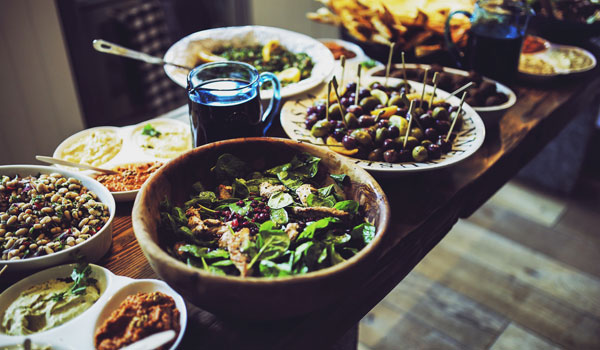
In one of the very last chapters in the very last book of the Christian Bible, Revelation, after pages of confusing imagery and uncertain meanings, after plagues and beasts, after horsemen and scrolls, you find mention of a feast. But not just any meal. A wedding meal. An image that brings to mind long tables full of satisfying food, of rosy cheeks and emptying bottles of wine, of hearty laughs and settled hearts. It is—John, the writer of this cryptic book says—the wedding feast of the Lamb.
Something happens over a shared table. A bond over food is not a bond easily broken. As believers, we know the meaning goes as far back as 2,000 years ago, when a Jewish rabbi gathered His closest friends together, washed their feet, insisted on His certain death, and commissioned them to love another, to serve one another, as He had done them—over bread representing His body, over wine signifying His blood.
Food at the table has always meant more than a necessity. It is a tie, a connectedness that transcends the physical and becomes spiritual.
In Acts chapter 10, Peter’s vision for the expanding church is one that includes a change in diet. In his dream he sees food—previously excluded to faithful Jews, as said by the God who led that wandering tribe—now suddenly, permitted, reveled in, and all that food represents, including the people behind it, the lifestyles surrounding it, the background emerging from it.
They’re in, God assures. Go, take this glorious news of my resurrected Son to them. Don’t let their differences frighten you. I’m bigger than what separates. My love is more expansive than divisive. In other words, the meal is far larger than you thought. There’s more seating than you ever imagined. Scoot together, make space, there’s room at the table. For everyone.
When I think of the Christian leaders I have the most respect for, I think of people like Peter. Who have been made uncomfortable as God has called them to expand their reach, who have held loosely to all but the very necessary of essentials: Christ crucified, Christ resurrected. Period. Who, like James declared at the Jerusalem Council, “It is my judgment, therefore, that we should not make it difficult for the Gentiles who are turning to God”—even when that meant disregarding thousands of years worth of laws and traditionally held beliefs to make it so—follow suit. I think of people who live lightly and live well. Who don’t take themselves too seriously, and who follow a God who takes love very seriously. I think of people who have made it their mission to make room for everyone. Who have crowded closer to others in order to make a little more space for a table that miraculously, graciously, by God’s goodness alone, keeps growing.
But I’ve noticed something particular in recent months. It seems there are others at the table who believe that seating is limited. Who, in noticing those making every effort to make room for the marginalized and oppressed, the overlooked and disgraced, are swiftly and efficiently eliminating the seating of those whose vision of the kingdom is farther reaching than their own.
There seems to be an uncomfortable number of lines in the sand being drawn lately. Definitive stances and certain convictions that have made the table smaller and smaller. Not simply rejecting those whom other Christians are inviting in, but, in effect, dismissing the leaders and ministers who have done the difficult work of making room for them.
The table, once a growing and expansive place, has started to shrink. The studies tell us the church in North America is decreasing. But in recent weeks it seems as if this isn’t a result of culture, worship style, discipleship, or even politics. It is our own doing. We are trimming the fat in our own ranks, tightening the guard, sifting through those we deem unfit for a place at the table we did not set.
You believe that? we wonder. Dismissed.
You teach that? we inquire. No longer welcomed.
You are uncertain about this complicated theology? No room for you.
And in the meantime, the table is growing emptier, the food growing colder, the wine abandoned, the smiles waning , the scene moving from that of a feast, to that of a witch hunt.
We sit at a table laden with good and plentiful nourishment, and instead of enjoying it, we cannibalize each other. We take our eyes off the meal, off the Lamb whose feast it is, and insist the guest list is ours to manage, the table ours to host, the body of the Lamb, the blood of the Lamb, ours to dispense. How arrogant of us.
I believe there is a growing number of us who have a place at the table, and find it so gloriously welcoming we can’t help but want to include as many as we can, but are now finding our spaces revoked, our chairs removed, our plates carried away. We wouldn’t necessarily consider ourselves outside the fold of Evangelical Christianity, but the determination has been made on our behalf. There is no room for dissenting opinions. We have filed a litmus test we didn’t know we were being judged on. We, along with the ones we would like to make room for, are no longer welcome. The feast, it would seem, is not for the likes of us.
Except that is not the picture of the Jesus I know. In fact, He faced the same problem. In His day there too was a group of people who held tight-fisted to their beliefs, and used their correct thinking to excuse all kinds of despicable behavior. They knew all the Scripture. They believed they spoke for God. They thought the table was small and for the elite. Scripture was clear after all. But then Jesus came and ate with sinners. He kept company with prostitutes. He laughed with tax collectors. He shared meals with unlikely guests. He pulled up a chair for Himself, and then a dozen more for all who were interested, and He passed the bread. And He poured the wine. And doing all of it, He communicated again and again and again, My body, broken for you. My blood, shed for you. My love, always for you.
There is room at the table. For the progressives and the reformers. For the Southern Baptists and the Episcopalians. For the Jen Hatmakers, Russell Moores, John Pipers, and Rachel Held Evans’. There’s room for uncommon fellowship at a common table. And if we find ourselves living and teaching and treating people with a contrary message in mind, we are making a mockery of the feast we participate in and the Lamb whose feast it is.
Take away my chair, clear my plate, close the space, if you insist. I must have been at the wrong feast. My feast, my meal, my table, is with the resurrected Jesus, who ends the book of the Revelation with the words in which every church and every believer finds inexpressible comfort and undeniable grace:
“Come!…Come! Whoever is thirsty, let him come; and whoever wishes, let him take the free gift of the water of life.”
Yes and amen.
There is room at the table.
Photo via Pixabay.
About Sarah Anderson
Sarah is a wife to Rodney, mom to Asher and Pace, and lives in the Atlanta area. She works as a writer for Orange and blogs regularly at www.sarahbanderson.com.
Previous Post

November 21, 2016
Let Love Reign! Never Trump-ism!
Next Post
November 25, 2016 It's Time! No More!
Browse Our Archives
Select a Category Book Reviews Christian History Christian Issues Christian Spirituality Current Events Fundamentalism Islam John Shore LGBT Movie Reviews Poetry Uncategorized
Select a Month October 2017 September 2017 August 2017 July 2017 June 2017 May 2017 April 2017 March 2017 February 2017 January 2017 December 2016 November 2016 October 2016 September 2016 August 2016 July 2016 June 2016 May 2016 April 2016 March 2016 February 2016 January 2016 December 2015 November 2015 October 2015 September 2015 August 2015 July 2015 June 2015 May 2015 April 2015 March 2015 February 2015 January 2015 December 2014 November 2014 October 2014 September 2014 August 2014 July 2014 June 2014 May 2014 April 2014 March 2014 February 2014 January 2014 December 2013 November 2013 October 2013 September 2013 August 2013 July 2013 June 2013
Follow Us!
TAKE THE
Religious Wisdom Quiz
Who said, "What is impossible with man is possible with God"?
Select your answer to see how you score.
Jesus Moses Paul Peter
Related posts from Unfundamentalist Christians



TRENDING AT PATHEOS Progressive Christian

Why Christians Have a Sacred Duty to Vote:...
The Bible offers strong support for the sacred duty to vote. Here...

What Being a Modern-Day Apostle Means to Me
In my last column, I discussed the ins and outs of modern-day...

Did Ancient China Once Worship the God of...
Across human history, a common thread weaves through the origins of the...

Love Your Neighbor – Including Earth-Kin: Lev. 19,...
God’s command to love your neighbor means acting in an ethical and...

Lead a Church Study of “Jesus and Lao...
Guest writer Jack Thomas (The Irreverent Reverend) reflects on leading his church...

Principles for Understanding the Apostolic Ministry Today
Whenever people discover that my formal ministry title is "apostle," as in...
view all Progressive Christian blogs
Ad-Free & Subscriber Log-In Subscription Support
- About Us
- 2026 Calendar
- Videos
- Podcasts
- Library of World Religions
- Faith In Media Tracker
- Advertise With Us
- Write for Us
- Privacy Policy
- Terms of Service
- Do Not Sell My Data
- Contact Us
- Radiant Digital
- Manage Newsletter Subscriptions
- Unsubscribe From Notifications
- Sitemap
Copyright 2008-2026, Patheos. All rights reserved.
Subscription Support Ad-Free & Subscriber Log-In
Follow Patheos