
BuddhistCatholicContemplativeEvangelicalGeneral ChristianHinduJewishLatter-day SaintMuslimNew VisionsProgressive Christian
Beliefs
- Buddhist
- Catholic
- Contemplative
- Evangelical
- General Christian
- Hindu
- Jewish
- Latter-day Saint
- More Voices
- Muslim
- New Visions
- Pagan
- Progressive Christian
Topics
- Religion News
- Food and Religion
- Sports and Religion
- Religious Art
- Religious Music and Entertainment
- Religious Events
- History and Religion
- Style and Religion
- Politics and Religion
- Women in Religion
- Recreation Outdoors and Religion
- Business Finance and Religion
- Careers Workplace and Religion
- Education and Religion
- Family Parenting and Religion
- Health Fitness and Religion
- Home and Religion
- Relationships and Religion
- Technology and Religion
- Travel and Religion
Columnists
- Buddhist Columnists
- Business Finance and Religion Columnists
- Careers Workplace and Religion Columnists
- Catholic Columnists
- Contemplative Columnists
- Education and Religion Columnists
- Evangelists Columnists
- Family Parenting and Religion Columnists
- General Christian Columnists
- Health Fitness and Religion Columnists
- Hindu Columnists
- History and Religion Columnists
- Home and Religion Columnists
- Jewish Columnists
- More Voices Columnists
- Latter Day Columnists
- Muslim Columnists
- New Visions Columnists
- Nonreligious Columnists
- Pagan Columnists
- Politics and Religion Columnists
- Progressive Columnists
- Recreation Outdoors and Religion Columnists
- Relationships and Religion Columnists
- Religion News Columnists
- Religious Art Columnists
- Religious Events Columnists
- Religious Music and Entertainment Columnists
- Sports and Religion Columnists
- Style and Religion Columnists
- Technology and Religion Columnists
- Travel and Religion Columnists
- Women in Religion Columnists
Resource Library
- 2026 Calendar
- Library of World Religions
- The 100 Most Holy Places on Earth
- Patheos Answers
- Podcasts
- Videos
- Faith Leaders Database
- Anglican Episcopalian
- Bahai
- Baptist
- Buddhism
- Christianity
- Confucianism
- Eastern Orthodoxy
- Hinduism
- Holiness and Pentecostal
- ISKCON
- Islam
- Judaism
- Lutheran
- Methodist
- The Church of Jesus Christ of Latter-day Saints
- New Age
- Paganism
- Presbytarian and Reformed
- Protestantism
- Religion Behind the Scenes
- Roman Catholic
- Scientology
- Shia Islam
- Sikhism
- Sufism
- Sunni Islam
- Taoism
- Zen
- See all religions
Research Tools
 Ad-Free & Subscriber Log-In Subscription Support
Ad-Free & Subscriber Log-In Subscription Support
Follow Patheos 

- Trending:
- Forgiveness
- |
- Marriage
- |
- Consciousness
- |
- Death Penalty
- |
- Election
- |
- Halloween
 Unfundamentalist Christians
- Home
- Progressive Christian
- No, We Are NOT Marcionites
No, We Are NOT Marcionites
Last updated on: November 7, 2016 at 10:48 am by Matthew Distefano
No, We Are NOT Marcionites 2016-11-07T10:48:28-06:00 Matthew Distefano
Patheos Explore the world's faith through different perspectives on religion and spirituality! Patheos has the views of the prevalent religions and spiritualities of the world.
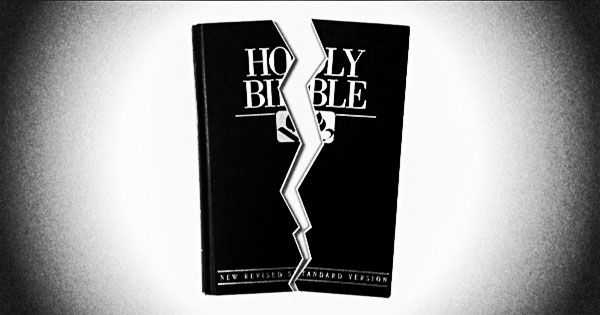
The charge of Marcionism is often leveled toward anyone who says that “God is just like Jesus,” who rejects the violence depicted in the Old Testament, and who insists that Christianity is centered on the ideas of peace and reconciliation. This accusation is a form of the straw man logical fallacy, in which someone’s position is misrepresented in order to make it easier to attack and refute.
To understand why the charge of Marcionism is fallacious, let’s begin by taking a brief look at Marcion and his beliefs. Then, we will compare that system with what I, as a Girardian, believe, to see if the two belief systems are synonymous, or if the Marcionism accusation is grossly misguided.
Marcion of Sinope (c. 85 – c. 160 CE)
Though there are a number of reasons why Marcion was an important figure during the second century, he is now primarily remembered as the arch-heretic of the early Church because he rejected the God of the Hebrew Scriptures. Why would he do such a thing? Because Marcion could not reconcile the violence of the deity in the Jewish Bible with the nonviolence of Jesus Christ. Marcion asked the correct questions regarding divine violence, but he didn’t come to the correct conclusions. Instead, he arrived at dualism, where the Hebrew God was more like a demiurge, subservient to the New Testament Father of Christ.
As an unabashed Girardian, I completely reject this view. I don’t reject the God of the Hebrew Scriptures, only some of the theology espoused by Old Testament writers. For instance, the writer of Deuteronomy 28 paints the following picture of God:
- Deut 28:15: “If you will not obey the Lord your God by diligently observing all his commandments and decrees, which I am commanding you today, then all these curses shall come upon you and overtake you.”
- Deut 28:20–25: “The Lord will send upon you disaster, panic, and frustration in everything you attempt to do, until you are destroyed and perish quickly, on account of the evil your deeds, because you have forsaken me. The Lord will afflict you with consumption, fever, inflammation, with fiery heat and drought, and with blight and mildew; they shall pursue you until you perish. The sky over your head shall be bronze, and the earth under you iron. The Lord will change the rain of your land into powder, and only dust shall come down upon you from the sky until you are destroyed” (emphasis mine).
- Deut 28:59–61: “The Lord will overwhelm both you and your offspring with severe and lasting afflictions and grievous and lasting maladies. He will bring back upon you all the diseases of Egypt, of which you were in dread, and they shall cling to you. Every other malady and affliction, even though not recorded in the book of this law, the Lord will inflict on you until you are destroyed.”
But Jesus shows us how to reorient the theology behind these passages. For example, in John 9, Jesus’ disciples assume a blind man is a sinner (or that his parents are), because no blind man is in God’s good graces (see also Exod 15:26). It’s the same type of worldview that Job’s “friends” had. Even the dreaded Pharisees concur with this theology when they accuse the blind man of being “born entirely in sins” (John 9:34).
For Jesus, this understanding isn’t accurate. John 9:3 states: “Jesus answered, ‘neither this man nor his parents sinned; he was born blind so that God’s works might be revealed in him.’” In John 9:7, that good work is shown to be healing and reconciliation, when Jesus cures the man of his blindness. Remember, in the Sermon on the Mount, Jesus subverts the Deuteronomic God, teaching that instead of God drying up the rain on the wicked (Deut 28:25), he sends his rain down on everyone (Matt 5:45), the “wicked” included.
However–and this is a big however!–we are not then chucking out the entire Old Testament, as Marcion did. That is not what Jesus did, nor is it what we are doing. I, for one, simply see the dying, rising, and forgiving Christ as the hermeneutical lens through which we should view the Hebrew Scriptures. I kinda thought that was what being a Christ-ian was all about!
What is striking, then, is that when we do use this Cruciform hermeneutic, we actually see Christ throughout the Old Testament. We see a Christ figure in the Suffering Servant of Isaiah, who is sent to the grave as a wicked man, even though “he had done no violence” (Isaiah 53:9). We witness the themes of forgiveness and reconciliation—themes that pervade Christ’s Gospel (Eph 6:15, Col 1:15–20)—in the story of Joseph and his brothers. In this story, Joseph’s brothers end up bowing to Joseph precisely because he forgives their original treachery. This is significant because it stands in contrast to the idea that reconciliation occurs only when a victim is expelled. Such is the case in the myth of Oedipus, where the city of Thebes is saved from a curse only after the people expel Oedipus from their city. But the Jewish Scriptures get it right, stepping in, saying “hold on just a minute”—mercy and forgiveness are what bring true peace!
That is why we do not throw the Hebrew Bible out. It is inspired (2 Tim 3:16). I know Evangelicals will agree with me there. We just may not agree that every writer of every bit of Scripture had the perfect theological framework to work with. But again, this is hardly Marcionism. Rather, this is taking seriously what Paul calls the “Gospel of Peace” (Eph 6:15). It is putting peace and reconciliation, as achieved through the blood of the cross (Col 1:20), front and center.
This view is nothing new, though, for it was also the view of many early church fathers. Clement of Rome, reminds us “how free from the wrath [God] is towards all his creation.” The Girardian can then help out and comment on why the God of the Old Testament is said to be so wrathful, which I’ll explore further in my next piece. But there’s no need to go all Texas Chainsaw Massacre on the Hebrew Scriptures!
So, before y’all get the urge to liken folks like me, who say God is and has always been like Christ Jesus, to one of the most infamous heretics the Church hath ever known, please reconsider and hear us out. We are probably not as “out there” as it may first seem. In fact, the case can be made that many of us are quite orthodox in our faith. Go figure.
Grace and peace.
Photo by Dan Wilkinson.
 About Matthew Distefano
Matthew Distefano is the author of All Set Free: How God is Revealed in Jesus and Why That is Really Good News and the forthcoming From the Blood of Abel. He is also a Regular Contributor for The Raven ReView and ProgressiveChristianity.org. You can find him on his website, Facebook, and Twitter.
Previous Post

October 25, 2016
I've Decided to Leave Church
Next Post

November 2, 2016 Things We Don't Talk About: DAPL and the Doctrine of Discovery
Browse Our Archives
Select a Category Book Reviews Christian History Christian Issues Christian Spirituality Current Events Fundamentalism Islam John Shore LGBT Movie Reviews Poetry Uncategorized
Select a Month October 2017 September 2017 August 2017 July 2017 June 2017 May 2017 April 2017 March 2017 February 2017 January 2017 December 2016 November 2016 October 2016 September 2016 August 2016 July 2016 June 2016 May 2016 April 2016 March 2016 February 2016 January 2016 December 2015 November 2015 October 2015 September 2015 August 2015 July 2015 June 2015 May 2015 April 2015 March 2015 February 2015 January 2015 December 2014 November 2014 October 2014 September 2014 August 2014 July 2014 June 2014 May 2014 April 2014 March 2014 February 2014 January 2014 December 2013 November 2013 October 2013 September 2013 August 2013 July 2013 June 2013
Follow Us!
TAKE THE
Religious Wisdom Quiz
I saw the Lord seated on a throne, high and exalted, while six-winged beings called out 'Holy, holy, holy.' What were these creatures?
Select your answer to see how you score.
Leviathan Angels Seraphim Cherubim
Related posts from Unfundamentalist Christians
On Conservative Christians’ Sudden Devotion to Imperial Cult

Faith in the Fog: On Losing Beliefs and...
Bullying Bishops and Castrated Christians: The Nashville Statement’s...

My Cancer Didn't Happen for a Reason
TRENDING AT PATHEOS Progressive Christian

Why Christians Have a Sacred Duty to Vote:...
The Bible offers strong support for the sacred duty to vote. Here...

What Being a Modern-Day Apostle Means to Me
In my last column, I discussed the ins and outs of modern-day...

Did Ancient China Once Worship the God of...
Across human history, a common thread weaves through the origins of the...

Love Your Neighbor – Including Earth-Kin: Lev. 19,...
God’s command to love your neighbor means acting in an ethical and...

Lead a Church Study of “Jesus and Lao...
Guest writer Jack Thomas (The Irreverent Reverend) reflects on leading his church...

Principles for Understanding the Apostolic Ministry Today
Whenever people discover that my formal ministry title is "apostle," as in...
view all Progressive Christian blogs
Ad-Free & Subscriber Log-In Subscription Support
- About Us
- 2026 Calendar
- Videos
- Podcasts
- Library of World Religions
- Faith In Media Tracker
- Advertise With Us
- Write for Us
- Privacy Policy
- Terms of Service
- Do Not Sell My Data
- Contact Us
- Radiant Digital
- Manage Newsletter Subscriptions
- Unsubscribe From Notifications
- Sitemap
Copyright 2008-2026, Patheos. All rights reserved.
Subscription Support Ad-Free & Subscriber Log-In
Follow Patheos