
BuddhistCatholicContemplativeEvangelicalGeneral ChristianHinduJewishLatter-day SaintMuslimNew VisionsProgressive Christian
Beliefs
- Buddhist
- Catholic
- Contemplative
- Evangelical
- General Christian
- Hindu
- Jewish
- Latter-day Saint
- More Voices
- Muslim
- New Visions
- Pagan
- Progressive Christian
Topics
- Religion News
- Food and Religion
- Sports and Religion
- Religious Art
- Religious Music and Entertainment
- Religious Events
- History and Religion
- Style and Religion
- Politics and Religion
- Women in Religion
- Recreation Outdoors and Religion
- Business Finance and Religion
- Careers Workplace and Religion
- Education and Religion
- Family Parenting and Religion
- Health Fitness and Religion
- Home and Religion
- Relationships and Religion
- Technology and Religion
- Travel and Religion
Columnists
- Buddhist Columnists
- Business Finance and Religion Columnists
- Careers Workplace and Religion Columnists
- Catholic Columnists
- Contemplative Columnists
- Education and Religion Columnists
- Evangelists Columnists
- Family Parenting and Religion Columnists
- General Christian Columnists
- Health Fitness and Religion Columnists
- Hindu Columnists
- History and Religion Columnists
- Home and Religion Columnists
- Jewish Columnists
- More Voices Columnists
- Latter Day Columnists
- Muslim Columnists
- New Visions Columnists
- Nonreligious Columnists
- Pagan Columnists
- Politics and Religion Columnists
- Progressive Columnists
- Recreation Outdoors and Religion Columnists
- Relationships and Religion Columnists
- Religion News Columnists
- Religious Art Columnists
- Religious Events Columnists
- Religious Music and Entertainment Columnists
- Sports and Religion Columnists
- Style and Religion Columnists
- Technology and Religion Columnists
- Travel and Religion Columnists
- Women in Religion Columnists
Resource Library
- 2026 Calendar
- Library of World Religions
- The 100 Most Holy Places on Earth
- Patheos Answers
- Podcasts
- Videos
- Faith Leaders Database
- Anglican Episcopalian
- Bahai
- Baptist
- Buddhism
- Christianity
- Confucianism
- Eastern Orthodoxy
- Hinduism
- Holiness and Pentecostal
- ISKCON
- Islam
- Judaism
- Lutheran
- Methodist
- The Church of Jesus Christ of Latter-day Saints
- New Age
- Paganism
- Presbytarian and Reformed
- Protestantism
- Religion Behind the Scenes
- Roman Catholic
- Scientology
- Shia Islam
- Sikhism
- Sufism
- Sunni Islam
- Taoism
- Zen
- See all religions
Research Tools
 Ad-Free & Subscriber Log-In Subscription Support
Ad-Free & Subscriber Log-In Subscription Support
Follow Patheos 

- Trending:
- Forgiveness
- |
- Marriage
- |
- Consciousness
- |
- Death Penalty
- |
- Election
- |
- Halloween
 Unfundamentalist Christians
- Home
- Progressive Christian
- How Can You Call Yourselves Christian When You Don’t Believe in the Bible?
How Can You Call Yourselves Christian When You Don’t Believe in the Bible?
Last updated on: November 28, 2016 at 9:41 am by Dan Wilkinson
How Can You Call Yourselves Christian When You Don’t Believe in the Bible? 2016-11-28T09:41:46-06:00 Dan Wilkinson
Patheos Explore the world's faith through different perspectives on religion and spirituality! Patheos has the views of the prevalent religions and spiritualities of the world.
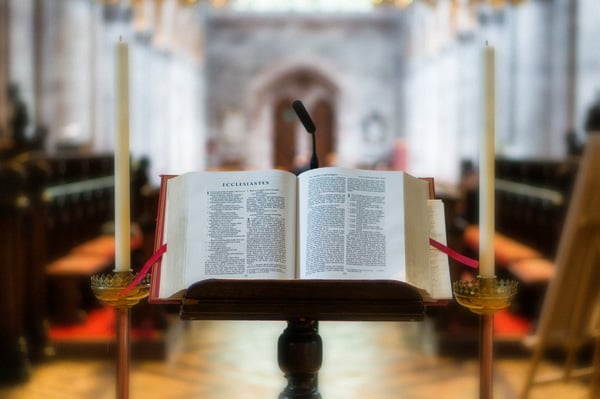
I recently received this question via our contact form:
How can you call yourselves Christian when you do NOT believe in the Bible?
It’s easy to dismiss this as mere ignorant trolling, but on the off-chance that it contains some degree of sincerity, I’m going to respond to it.
Ironically, the requirement to “believe in the Bible” in order to be a Christian is itself unbiblical. Nowhere in the Bible is this standard ever stated. Jesus doesn’t preach that one must believe in the Bible to be saved. The disciples don’t go forth to deliver Bibles to the world so that those who read them can be saved. Paul doesn’t proclaim that the Gospel is believing in the Bible. Nor is the converse true: the Bible never declares that those who don’t believe in it are excluded from the Kingdom of God.
But the very idea of “believing” in the Bible is itself nonsensical. The Bible is an extraordinarily complex collection of texts, written and edited by various authors over great spans of time for different reasons and within different contexts. Interpretation of these texts is an equally complex process, and cannot simply be reduced to “believing” everything that is contained within the pages of the Bible. I don’t believe that bashing infants’ heads against rocks makes you happy (Psalm 137:9). I don’t believe that slaves should submit to the cruelty of their masters (1 Peter 2:18). And I don’t believe that women should be silent in church (1 Corinthians 14:34). Does not believing those passages make me not a Christian?
Of course there is much in the Bible that I do believe. I believe that Jesus is Lord (Romans 10:9). I believe that Jesus died for our sins and rose from the dead (1 Corinthians 15:3-4). I believe that God is love (1 John 4:8). I believe that the greatest commandments are to love God and neighbor (Matthew 22:36-40). And I believe that Christ will bring peace and salvation to everyone (Colossians 1:19-20). If believing those things isn’t sufficient for me to claim the label “Christian,” then I’m not sure it’s a label worth claiming.
However, I doubt that’s what this question is really driving at. Instead, my guess is that the question is informed by the fundamentalist dogma that if you don’t believe the supposedly biblical notions that homosexuality is a sin, that non-Christians are destined for eternal conscious torment in Hell, that the Earth was created in six literal days 10,000 years ago, and that the Bible itself is absolutely infallible and inerrant, then you can’t really be a Christian. If that’s the standard by which Christians are to be judged, then count me out.
Don’t get me wrong: the Bible is a great book. It is foundational to Christian faith and practice. But it’s not the foundation of Christianity. Christian faith rests not on a book, but upon God. To position particular interpretations of a written text as arbitrary gatekeepers of our relationship with God is the height of folly and arrogance. In this regard, I’m inclined to agree with New Testament scholar N.T. Wright when he says:
The Bible is the book of my life. It’s the book I live with, the book I live by, the book I want to die by. How emphatic can I get about what the Bible means to me? But the Bible is God’s book for God’s people, and the security of God’s people is ultimately in God. To get overprotective about particular readings of the Bible is always in danger idolatry.
N.T. Wright. “The New Theologians.” Christianity Today. February 8, 1999: 46.
 Dan Wilkinson
Dan is the Executive Editor of the Unfundamentalist Christians blog. He is a writer, graphic designer and IT specialist. He lives in Montana, is married and has three cats.
Previous Post

November 27, 2016
Advent One: Keep Your Lamps Trimmed and Burning
Next Post

November 29, 2016 An Inappropriate Christmas
Browse Our Archives
Select a Category Book Reviews Christian History Christian Issues Christian Spirituality Current Events Fundamentalism Islam John Shore LGBT Movie Reviews Poetry Uncategorized
Select a Month October 2017 September 2017 August 2017 July 2017 June 2017 May 2017 April 2017 March 2017 February 2017 January 2017 December 2016 November 2016 October 2016 September 2016 August 2016 July 2016 June 2016 May 2016 April 2016 March 2016 February 2016 January 2016 December 2015 November 2015 October 2015 September 2015 August 2015 July 2015 June 2015 May 2015 April 2015 March 2015 February 2015 January 2015 December 2014 November 2014 October 2014 September 2014 August 2014 July 2014 June 2014 May 2014 April 2014 March 2014 February 2014 January 2014 December 2013 November 2013 October 2013 September 2013 August 2013 July 2013 June 2013
Follow Us!
TAKE THE
Religious Wisdom Quiz
What is the primary language of the Eastern Orthodox liturgy in Greece?
Select your answer to see how you score.
English Russian Latin Greek
Related posts from Unfundamentalist Christians


Bible Nation: The United States of Hobby Lobby

Faith in the Fog: On Losing Beliefs and...

My Cancer Didn't Happen for a Reason
TRENDING AT PATHEOS Progressive Christian

What Being a Modern-Day Apostle Means to Me
In my last column, I discussed the ins and outs of modern-day...

Did Ancient China Once Worship the God of...
Across human history, a common thread weaves through the origins of the...

Love Your Neighbor – Including Earth-Kin: Lev. 19,...
God’s command to love your neighbor means acting in an ethical and...

Lead a Church Study of “Jesus and Lao...
Guest writer Jack Thomas (The Irreverent Reverend) reflects on leading his church...

Pastoral Wisdom for Responding to Sermon Pushback
Getting sermon pushback on your social justice sermon? Learn practical, Proverbs-based strategies...

Principles for Understanding the Apostolic Ministry Today
Whenever people discover that my formal ministry title is "apostle," as in...
view all Progressive Christian blogs
Ad-Free & Subscriber Log-In Subscription Support
- About Us
- 2026 Calendar
- Videos
- Podcasts
- Library of World Religions
- Faith In Media Tracker
- Advertise With Us
- Write for Us
- Privacy Policy
- Terms of Service
- Do Not Sell My Data
- Contact Us
- Radiant Digital
- Manage Newsletter Subscriptions
- Unsubscribe From Notifications
- Sitemap
Copyright 2008-2026, Patheos. All rights reserved.
Subscription Support Ad-Free & Subscriber Log-In
Follow Patheos