
BuddhistCatholicContemplativeEvangelicalGeneral ChristianHinduJewishLatter-day SaintMuslimNew VisionsProgressive Christian
Beliefs
- Buddhist
- Catholic
- Contemplative
- Evangelical
- General Christian
- Hindu
- Jewish
- Latter-day Saint
- More Voices
- Muslim
- New Visions
- Pagan
- Progressive Christian
Topics
- Religion News
- Food and Religion
- Sports and Religion
- Religious Art
- Religious Music and Entertainment
- Religious Events
- History and Religion
- Style and Religion
- Politics and Religion
- Women in Religion
- Recreation Outdoors and Religion
- Business Finance and Religion
- Careers Workplace and Religion
- Education and Religion
- Family Parenting and Religion
- Health Fitness and Religion
- Home and Religion
- Relationships and Religion
- Technology and Religion
- Travel and Religion
Columnists
- Buddhist Columnists
- Business Finance and Religion Columnists
- Careers Workplace and Religion Columnists
- Catholic Columnists
- Contemplative Columnists
- Education and Religion Columnists
- Evangelists Columnists
- Family Parenting and Religion Columnists
- General Christian Columnists
- Health Fitness and Religion Columnists
- Hindu Columnists
- History and Religion Columnists
- Home and Religion Columnists
- Jewish Columnists
- More Voices Columnists
- Latter Day Columnists
- Muslim Columnists
- New Visions Columnists
- Nonreligious Columnists
- Pagan Columnists
- Politics and Religion Columnists
- Progressive Columnists
- Recreation Outdoors and Religion Columnists
- Relationships and Religion Columnists
- Religion News Columnists
- Religious Art Columnists
- Religious Events Columnists
- Religious Music and Entertainment Columnists
- Sports and Religion Columnists
- Style and Religion Columnists
- Technology and Religion Columnists
- Travel and Religion Columnists
- Women in Religion Columnists
Resource Library
- 2026 Calendar
- Library of World Religions
- The 100 Most Holy Places on Earth
- Patheos Answers
- Podcasts
- Videos
- Faith Leaders Database
- Anglican Episcopalian
- Bahai
- Baptist
- Buddhism
- Christianity
- Confucianism
- Eastern Orthodoxy
- Hinduism
- Holiness and Pentecostal
- ISKCON
- Islam
- Judaism
- Lutheran
- Methodist
- The Church of Jesus Christ of Latter-day Saints
- New Age
- Paganism
- Presbytarian and Reformed
- Protestantism
- Religion Behind the Scenes
- Roman Catholic
- Scientology
- Shia Islam
- Sikhism
- Sufism
- Sunni Islam
- Taoism
- Zen
- See all religions
Research Tools
 Ad-Free & Subscriber Log-In Subscription Support
Ad-Free & Subscriber Log-In Subscription Support
Follow Patheos 

- Trending:
- Forgiveness
- |
- Marriage
- |
- Consciousness
- |
- Death Penalty
- |
- Election
- |
- Halloween
 Unfundamentalist Christians
- Home
- Progressive Christian
- The Good Book of Human Nature
The Good Book of Human Nature
Last updated on: June 15, 2016 at 6:54 am by Dan Wilkinson
The Good Book of Human Nature 2016-06-15T06:54:37-06:00 Dan Wilkinson
Patheos Explore the world's faith through different perspectives on religion and spirituality! Patheos has the views of the prevalent religions and spiritualities of the world.
 When it comes to the Bible, negotiating the span between religious reverence and secular scorn can be a daunting task of intellectual funambulism. Too often, the faithful view the Bible solely as a divine message from God, immune to critical analysis. Likewise, the non-religious often dismiss the Bible as an irrelevant–or even dangerous–collection of outdated and ignorant writings.
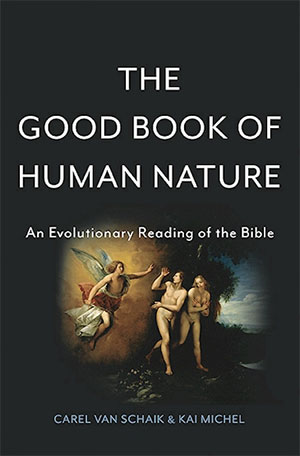
In their new book, The Good Book of Human Nature, (Basic Books, $29.99), evolutionary anthropologist Carel van Schaik and historian Kai Michel capably bridge this gap, boldly defending the thesis that the Bible is the most important book in the history of humanity. Though both agnostic, they believe that the Bible offers an invaluable key to a better understanding of ourselves. Through the lenses of cognitive science, evolutionary biology, archeology, and religious history, they explore what the Bible reveals about human nature and the cultural evolution of our species:
“In the Bible we find answers to humanity’s greatest questions. We do not mean this in a religious sense. Rather, it teaches us why we fear death, how we deal with great misfortunes, and where our deep-seated desire for justice originated. The Bible shows us how we learned to survive in large, anonymous societies, why our modern lives sometimes seem so pointless, and why we are so often nagged by what we should describe as a longing for Paradise. When viewed without its halo, the Bible has something important to say to all of humanity.” (2)
Much of their Biblical analysis is informed by the pivotal moment in human cultural evolution when homo sapiens transitioned from living as hunter-gatherers to the sedentary way of life we still live out today. This new mode of existence led to myriad social stressors and inequalities that posed deep problems for our distant ancestors. The authors describe these challenges as “mismatch problems … difficulties created by our sedentary way of life, which were so new and urgent that people had to develop cultural solutions to bring them under control” (284).
Van Schaik and Michel discover these “cultural solutions” throughout the Bible, woven into the fabric of the biblical accounts of Adam and Eve, Cain and Abel, the Tower of Babel, the Exodus, Moses and Mosaic Law, Job, the Prophets, the Psalms, and the New Testament. Reading these texts from a biological-anthropological perspective, the authors unveil insights into morality, justice, and humanity’s struggle to make sense of its place in the world.
Of particular note is the chapter on biblical violence. Van Schaik and Michel soundly refute those who would paint the Old Testament as an irredeemably violent text reflective of a cruel and vindictive God. To the contrary, they view the morality expressed in the Old Testament as representing a crucial step forward in our cultural evolution, concluding that:
“At a time when societies were in danger of collapsing under the violent egos of tyrants and emperors, this God was the best thing that could happen to the people. They had to identify a cause for every catastrophe, meaning they had to find out why God had reacted with such rage. And because God got angry at the same things that angered people, his divine morality was a projection of human morality. He hated exorbitant luxury, despised injustice, and demanded that people treat their peers well. After all, this is exactly what our first nature whispers into our ears.” (252)
The Good Book of Human Nature is a tour de force of cross-disciplinary insight, offering challenging reinterpretations of texts that many of us take for granted. Those on all sides of these issues will likely find more than a few points of contention with the authors’ conclusions–that’s simply the nature of a book with such a sweeping and provocative perspective. But aside from mere matters of opinion, there were two notable instances where it seemed to me that the authors came up a bit short.
Van Schaik and Michel too-hastily dismiss the fear of death as a foundational motivation for religious belief, saying “it is a massive—albeit widespread—misconception to presume that religion’s main function is to take away our fear of death. This is simply not the case” (284). But they fail to interact at all with the seminal work of Ernest Becker on that topic. Perhaps the authors are correct that the fear of death is a relatively modern concern and not an essential part of the evolutionary development of religious belief, but, for me at least, they failed to make a convincing case in that regard.
Likewise, their frustratingly brief section on Jesus’ crucifixion presents only two understandings of the atonement: either as a sacrifice or as a ransom payment. In but a single sentence they dismiss the notion of sacrifice as making no sense: “[people] didn’t kill the son of the being supposed to forgive their sins and thereby cleanse them. Their debt would have been immeasurable if they had. So it seems that we must reject this possibility” (358). Instead, they conclude that “God had to pay with his son’s life to ransom humanity from Satan” (359). It is a glaring oversight that at this point they fail to interact with other theories of atonement, and especially that they don’t acknowledge the work of René Girard, whose theory of mimetic violence offers a profoundly important alternative understanding of not just the atonement, but of the entire history of human cultural interaction.
Though the omission of Becker’s and Girard’s work is an unfortunate oversight, it by no means invalidates van Schaik and Michel’s broader project of examining the Bible in light of evolutionary anthropology. It is a rare work that can truly draw new insights from texts that have been pored over for thousands of years. The Good Book of Human Nature challenges us to reexamine the text that is central to the faith over over 2 billion people today, and in doing so, to reconsider our ourselves and our culture.
To find out more about The Good Book of Human Nature or to purchase a copy, visit www.basicbooks.com/full-details?isbn=9780465074709.
 Dan Wilkinson
Dan is the Executive Editor of the Unfundamentalist Christians blog. He is a writer, graphic designer and IT specialist. He lives in Montana, is married and has at least two cats.
Previous Post

June 14, 2016
Dear Non-LGBT-Affirming Christians, Please Search Your Hearts
Next Post

June 16, 2016 What if the Orlando shooter was gay?
Browse Our Archives
Select a Category Book Reviews Christian History Christian Issues Christian Spirituality Current Events Fundamentalism Islam John Shore LGBT Movie Reviews Poetry Uncategorized
Select a Month October 2017 September 2017 August 2017 July 2017 June 2017 May 2017 April 2017 March 2017 February 2017 January 2017 December 2016 November 2016 October 2016 September 2016 August 2016 July 2016 June 2016 May 2016 April 2016 March 2016 February 2016 January 2016 December 2015 November 2015 October 2015 September 2015 August 2015 July 2015 June 2015 May 2015 April 2015 March 2015 February 2015 January 2015 December 2014 November 2014 October 2014 September 2014 August 2014 July 2014 June 2014 May 2014 April 2014 March 2014 February 2014 January 2014 December 2013 November 2013 October 2013 September 2013 August 2013 July 2013 June 2013
Follow Us!
TAKE THE
Religious Wisdom Quiz
We made a deceptive treaty with Israel by pretending to come from a distant land with moldy bread and worn-out wineskins. Who are we?
Select your answer to see how you score.
The Amorites The Gibeonites The Canaanites The Hivites
Related posts from Unfundamentalist Christians


Bible Nation: The United States of Hobby Lobby

5 Things We'll Miss If We Take the...

What's So Confusing About Grace?
TRENDING AT PATHEOS Progressive Christian

Why Christians Have a Sacred Duty to Vote:...
The Bible offers strong support for the sacred duty to vote. Here...

What Being a Modern-Day Apostle Means to Me
In my last column, I discussed the ins and outs of modern-day...

Did Ancient China Once Worship the God of...
Across human history, a common thread weaves through the origins of the...

Love Your Neighbor – Including Earth-Kin: Lev. 19,...
God’s command to love your neighbor means acting in an ethical and...

Lead a Church Study of “Jesus and Lao...
Guest writer Jack Thomas (The Irreverent Reverend) reflects on leading his church...

Principles for Understanding the Apostolic Ministry Today
Whenever people discover that my formal ministry title is "apostle," as in...
view all Progressive Christian blogs
Ad-Free & Subscriber Log-In Subscription Support
- About Us
- 2026 Calendar
- Videos
- Podcasts
- Library of World Religions
- Faith In Media Tracker
- Advertise With Us
- Write for Us
- Privacy Policy
- Terms of Service
- Do Not Sell My Data
- Contact Us
- Radiant Digital
- Manage Newsletter Subscriptions
- Unsubscribe From Notifications
- Sitemap
Copyright 2008-2026, Patheos. All rights reserved.
Subscription Support Ad-Free & Subscriber Log-In
Follow Patheos