
BuddhistCatholicContemplativeEvangelicalGeneral ChristianHinduJewishLatter-day SaintMuslimNew VisionsProgressive Christian
Beliefs
- Buddhist
- Catholic
- Contemplative
- Evangelical
- General Christian
- Hindu
- Jewish
- Latter-day Saint
- More Voices
- Muslim
- New Visions
- Pagan
- Progressive Christian
Topics
- Religion News
- Food and Religion
- Sports and Religion
- Religious Art
- Religious Music and Entertainment
- Religious Events
- History and Religion
- Style and Religion
- Politics and Religion
- Women in Religion
- Recreation Outdoors and Religion
- Business Finance and Religion
- Careers Workplace and Religion
- Education and Religion
- Family Parenting and Religion
- Health Fitness and Religion
- Home and Religion
- Relationships and Religion
- Technology and Religion
- Travel and Religion
Columnists
- Buddhist Columnists
- Business Finance and Religion Columnists
- Careers Workplace and Religion Columnists
- Catholic Columnists
- Contemplative Columnists
- Education and Religion Columnists
- Evangelists Columnists
- Family Parenting and Religion Columnists
- General Christian Columnists
- Health Fitness and Religion Columnists
- Hindu Columnists
- History and Religion Columnists
- Home and Religion Columnists
- Jewish Columnists
- More Voices Columnists
- Latter Day Columnists
- Muslim Columnists
- New Visions Columnists
- Nonreligious Columnists
- Pagan Columnists
- Politics and Religion Columnists
- Progressive Columnists
- Recreation Outdoors and Religion Columnists
- Relationships and Religion Columnists
- Religion News Columnists
- Religious Art Columnists
- Religious Events Columnists
- Religious Music and Entertainment Columnists
- Sports and Religion Columnists
- Style and Religion Columnists
- Technology and Religion Columnists
- Travel and Religion Columnists
- Women in Religion Columnists
Resource Library
- 2026 Calendar
- Library of World Religions
- The 100 Most Holy Places on Earth
- Patheos Answers
- Podcasts
- Videos
- Faith Leaders Database
- Anglican Episcopalian
- Bahai
- Baptist
- Buddhism
- Christianity
- Confucianism
- Eastern Orthodoxy
- Hinduism
- Holiness and Pentecostal
- ISKCON
- Islam
- Judaism
- Lutheran
- Methodist
- The Church of Jesus Christ of Latter-day Saints
- New Age
- Paganism
- Presbytarian and Reformed
- Protestantism
- Religion Behind the Scenes
- Roman Catholic
- Scientology
- Shia Islam
- Sikhism
- Sufism
- Sunni Islam
- Taoism
- Zen
- See all religions
Research Tools
 Ad-Free & Subscriber Log-In Subscription Support
Ad-Free & Subscriber Log-In Subscription Support
Follow Patheos 

- Trending:
- Forgiveness
- |
- Marriage
- |
- Consciousness
- |
- Death Penalty
- |
- Election
- |
- Halloween
 Unfundamentalist Christians
- Home
- Progressive Christian
- In Our Bones: Holy Week Reflections
In Our Bones: Holy Week Reflections
Last updated on: March 18, 2016 at 7:20 am by Guest Contributor
In Our Bones: Holy Week Reflections 2016-03-18T07:20:26-06:00 Guest Contributor
Patheos Explore the world's faith through different perspectives on religion and spirituality! Patheos has the views of the prevalent religions and spiritualities of the world.
This guest post is by Jill Crainshaw.
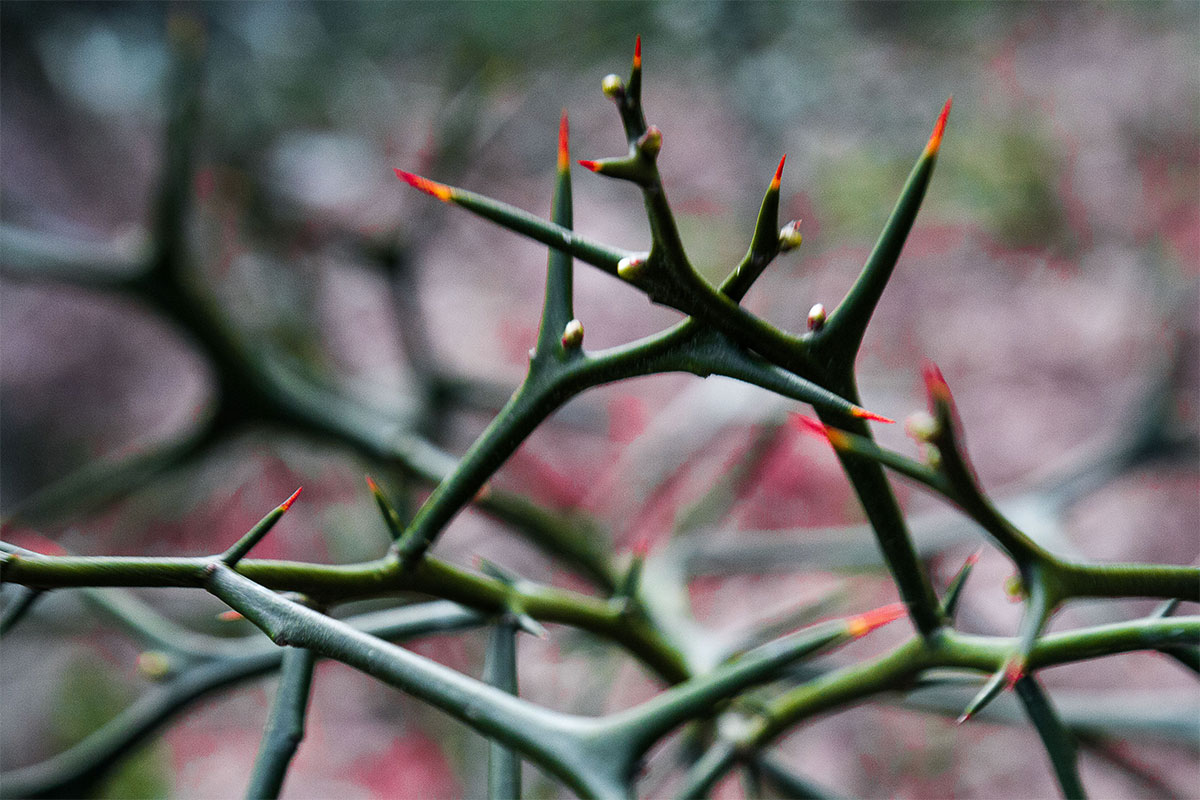
Photo © Sheila Hunter. Used by permission.
Holy Week begins this Sunday, on Palm Sunday. On Palm Sunday, many Christians process into worship, colorful banners and streamers and emerald palm branches dancing in the air as they go.
I do not dance with ease on any day. I stumble even more on Palm Sunday. My uncooperative sense of rhythm is only part of the problem. I process with awkward reluctance because my heart and mind are reluctant to grapple yet again with the seven days Christians have marked as Holy Week.
What makes this particular version of Sunday through Saturday holier than other weeks of Sundays through Saturdays? Judging by recent news headlines, I think it is fair to say that human endeavors will not do much to create an ecology of particular or peculiar holiness during this week (though I suppose we can be on the lookout every week for those moments when human courage and faith ease or even transform some element of communal brokenness). How do our ritual actions during this week we call “holy” speak of God in and to communities crucified every day to appease the gods of discrimination or commerce or politics? What do our 21st century embodiments of Jesus’s story mean in a world where violence or racism or war destroy life and where too many of the wrong things and not enough of the right things are resurrected? These questions trouble my feet as I make my way in fits and starts along well-traveled Holy Week pathways.
But I am a liturgical theologian. So when my head and even my heart have no insight or energy with which to reckon with what Christian theology speaks, means or accomplishes, my bones take over. I do not understand with any precision the physiology or spirituality of why it is the case, but I am somehow able to believe in my bones that something about what we embody in Christian worship connects us to the on-the-ground realities of our neighborhoods and communities. And something about what we embody as community in Christian worship and in our neighborhoods connects us to God’s Spirit.
For me, worship — communal ritual practices — keep our feet on the ground when our thoughts roam without direction through complex ambiguities and when our feelings ebb and flow without rhyme or reason. When we cannot understand and face the barest bones of belief, our physical bones incarnate and carry out as best they can what we understand God to be in the midst of suffering. When we decide, in spite of our lack of rhythm, to keep on stumbling together along Holy Week pathways and let those pathways take us to streets where people are hungry or into neighborhoods where people have been forgotten, ignored, or cast out, then we at least stumble together on holy ground.
A Jesuit theologian, Agbonkhianmeghe Orobator, is helping me to limp with more grace through Holy Week this year. Orobator writes that in the midst of our awkward liturgical actions, there remains a graceful Word. What we do during this week is more than theological abstraction or ritual legalism. What we do during this week is more than scripted rhetoric about Jesus’s crucified body and our redemption.
During Holy Week, we break bread on Maundy Thursday and lean with longing into the silence of a Friday that is anything but good. In that silence, says Orobator, in those moments when Jesus cries out to a God who does not answer, another holy Word is spoken. What Word? The Word that speaks in the lives of unacknowledged, marginalized, and ignored prophets who in their work in their cities and neighborhoods “show the ‘face of redemption turned visibly’ toward the sick, the poor, the refugees.”[1]
These ones absent from word-centered religious, political, and economic institutional arenas? They are sacraments of a sort of God’s saving presence with God’s people. They believe with their bones — with their beaten down backs, their arthritic fingers, and their road weary feet — and in their believing they incarnate in despairing places the promises of God’s grace and love. By remembering and acknowledging their presence, we remember Jesus.
Last year on Palm Sunday I drove past a local church on my way to my own church’s Holy Week Sabbath celebration. That community’s triumphal entry was under way. I looked, and then I looked again. Two women, one in a wheelchair and the other using a walker, waved palm branches in the air as others helped them down the sidewalk and into the sanctuary. Then at my own church? We remembered Jesus’s triumphal entry into Jerusalem and then heard in word and music the story of Jesus’s passion, Jesus’s suffering. The choir sang the haunting laments of the season — “O Sacred Head Now Wounded,” “Were You There When They Crucified My Lord?” “Beneath the Cross of Jesus.” The pastor spoke about Jesus’s pain-wracked and broken body. The sacramental irony? I sat in worship just inches away from our community’s newest member, an infant a mere four weeks into this beautiful, joyful, terrifying thing we call human living. As those mournful songs washed over us, that infant yawned, slept, stretched, kicked the air with tiny feet, gurgled, and cooed.
They grounded me again on Palm Sunday, those aging ones who we too often forget and that tiny one who so needs our care. And as I waved my palm branch and smiled at that sleeping child, I felt it in my bones, the presence of Holy Week’s absent One.
So, I will do it one more time — limp through Holy Week, and give thanks to God that my bones, though aching for resurrected justice and hope as they make the journey, ground me in the same kind of human communities where Jesus’s own bones took him.
—————————
- ^ Agbonkhianmeghe Orobator, “A Global Sign of Outward Grace: The Sacramentality of the World Church in the Era of Globalization,” Proceedings of the Catholic Theological Society of America 67 (2012).
 About Jill Crainshaw
Jill Crainshaw is a PCUSA minister and Blackburn Professor of Worship and Liturgical Theology at Wake Forest University School of Divinity. She is the author of several books on worship and ministry.
Previous Post

March 16, 2016
The Cosmic Cross (the sixth saying of Jesus from the cross)
Next Post
March 21, 2016 Three Glorious Surprises in the Resurrection
Browse Our Archives
Select a Category Book Reviews Christian History Christian Issues Christian Spirituality Current Events Fundamentalism Islam John Shore LGBT Movie Reviews Poetry Uncategorized
Select a Month October 2017 September 2017 August 2017 July 2017 June 2017 May 2017 April 2017 March 2017 February 2017 January 2017 December 2016 November 2016 October 2016 September 2016 August 2016 July 2016 June 2016 May 2016 April 2016 March 2016 February 2016 January 2016 December 2015 November 2015 October 2015 September 2015 August 2015 July 2015 June 2015 May 2015 April 2015 March 2015 February 2015 January 2015 December 2014 November 2014 October 2014 September 2014 August 2014 July 2014 June 2014 May 2014 April 2014 March 2014 February 2014 January 2014 December 2013 November 2013 October 2013 September 2013 August 2013 July 2013 June 2013
Follow Us!
TAKE THE
Religious Wisdom Quiz
She is more precious than rubies, and nothing you desire compares to her. Her ways are pleasant and all her paths are peace. Who is she?
Select your answer to see how you score.
Understanding Wisdom Knowledge A virtuous woman
Related posts from Unfundamentalist Christians


TRENDING AT PATHEOS Progressive Christian

What Being a Modern-Day Apostle Means to Me
In my last column, I discussed the ins and outs of modern-day...

Did Ancient China Once Worship the God of...
Across human history, a common thread weaves through the origins of the...

Love Your Neighbor – Including Earth-Kin: Lev. 19,...
God’s command to love your neighbor means acting in an ethical and...

Lead a Church Study of “Jesus and Lao...
Guest writer Jack Thomas (The Irreverent Reverend) reflects on leading his church...

Pastoral Wisdom for Responding to Sermon Pushback
Getting sermon pushback on your social justice sermon? Learn practical, Proverbs-based strategies...

Principles for Understanding the Apostolic Ministry Today
Whenever people discover that my formal ministry title is "apostle," as in...
view all Progressive Christian blogs
Ad-Free & Subscriber Log-In Subscription Support
- About Us
- 2026 Calendar
- Videos
- Podcasts
- Library of World Religions
- Faith In Media Tracker
- Advertise With Us
- Write for Us
- Privacy Policy
- Terms of Service
- Do Not Sell My Data
- Contact Us
- Radiant Digital
- Manage Newsletter Subscriptions
- Unsubscribe From Notifications
- Sitemap
Copyright 2008-2026, Patheos. All rights reserved.
Subscription Support Ad-Free & Subscriber Log-In
Follow Patheos