
BuddhistCatholicContemplativeEvangelicalGeneral ChristianHinduJewishLatter-day SaintMuslimNew VisionsProgressive Christian
Beliefs
- Buddhist
- Catholic
- Contemplative
- Evangelical
- General Christian
- Hindu
- Jewish
- Latter-day Saint
- More Voices
- Muslim
- New Visions
- Pagan
- Progressive Christian
Topics
- Religion News
- Food and Religion
- Sports and Religion
- Religious Art
- Religious Music and Entertainment
- Religious Events
- History and Religion
- Style and Religion
- Politics and Religion
- Women in Religion
- Recreation Outdoors and Religion
- Business Finance and Religion
- Careers Workplace and Religion
- Education and Religion
- Family Parenting and Religion
- Health Fitness and Religion
- Home and Religion
- Relationships and Religion
- Technology and Religion
- Travel and Religion
Columnists
- Buddhist Columnists
- Business Finance and Religion Columnists
- Careers Workplace and Religion Columnists
- Catholic Columnists
- Contemplative Columnists
- Education and Religion Columnists
- Evangelists Columnists
- Family Parenting and Religion Columnists
- General Christian Columnists
- Health Fitness and Religion Columnists
- Hindu Columnists
- History and Religion Columnists
- Home and Religion Columnists
- Jewish Columnists
- More Voices Columnists
- Latter Day Columnists
- Muslim Columnists
- New Visions Columnists
- Nonreligious Columnists
- Pagan Columnists
- Politics and Religion Columnists
- Progressive Columnists
- Recreation Outdoors and Religion Columnists
- Relationships and Religion Columnists
- Religion News Columnists
- Religious Art Columnists
- Religious Events Columnists
- Religious Music and Entertainment Columnists
- Sports and Religion Columnists
- Style and Religion Columnists
- Technology and Religion Columnists
- Travel and Religion Columnists
- Women in Religion Columnists
Resource Library
- 2026 Calendar
- Library of World Religions
- The 100 Most Holy Places on Earth
- Patheos Answers
- Podcasts
- Videos
- Faith Leaders Database
- Anglican Episcopalian
- Bahai
- Baptist
- Buddhism
- Christianity
- Confucianism
- Eastern Orthodoxy
- Hinduism
- Holiness and Pentecostal
- ISKCON
- Islam
- Judaism
- Lutheran
- Methodist
- The Church of Jesus Christ of Latter-day Saints
- New Age
- Paganism
- Presbytarian and Reformed
- Protestantism
- Religion Behind the Scenes
- Roman Catholic
- Scientology
- Shia Islam
- Sikhism
- Sufism
- Sunni Islam
- Taoism
- Zen
- See all religions
Research Tools
 Ad-Free & Subscriber Log-In Subscription Support
Ad-Free & Subscriber Log-In Subscription Support
Follow Patheos 

- Trending:
- Forgiveness
- |
- Marriage
- |
- Consciousness
- |
- Death Penalty
- |
- Election
- |
- Halloween
 Unfundamentalist Christians
- Home
- Progressive Christian
- The Quest for the Historical Jesus: Part Two
The Quest for the Historical Jesus: Part Two
Last updated on: January 16, 2017 at 7:12 pm by Guest Contributor
The Quest for the Historical Jesus: Part Two 2017-01-16T19:12:46-06:00 Guest Contributor
Patheos Explore the world's faith through different perspectives on religion and spirituality! Patheos has the views of the prevalent religions and spiritualities of the world.
This five part series is written by Christian Chiakulas. Part one is here, part two is here, part three is here, part four is here, and part five is here.

In my previous post, I said that the crucifixion of Jesus of Nazareth is perhaps the most sure thing we can know about him, based on the double contemporary attestation from non-Christian sources within one hundred years of Jesus’s death.
Historians use a technique called reconstruction to flesh out their sketches of the Historical Jesus. They start with the most basic and indisputable facts, and then add and subtract from the evidence based on what those facts say.
Based on our non-Christian independent sources (Josephus and Tacitus), we can identify the following facts about the Jesus:
- Jesus was crucified under Roman procurator Pontius Pilate.
- Jesus was known as a miracle worker and gathered followers.
- Shortly after his death, some of Jesus’s followers claimed that he had risen from the dead and continued his ministry in some form.
From there, we can consider our primary sources, the Gospels. Remember that when viewed simply as documents primarily concerned with exalting Jesus (and expressing the authors’ already-held convictions), we can’t take their claims at face-value. Everything must be measured against our more concrete knowledge about Jesus, as well as the background of 1st-century Palestine.
Mark, Matthew, and Luke are called the synoptics because they share many similarities. Mark was written first, around 70 CE. Matthew and Luke’s relationships to Mark and to each other can be explained in two ways: the 2-source theory claims that they each used Mark along with another source (nicknamed Q) that has since been lost to history. The alternative theory (which is more widely accepted outside of the US, but is still controversial) is that Luke used Matthew as a source.
John, the Fourth Gospel, was written in the 1st century and is generally disregarded by scholars as a valid historical source. Although it does get some details right, these are most likely because it uses one of the synoptics as a source.
We also have several “apocryphal” gospels that were found at Nag Hammadi. Most are of little historical value, but one, called the Gospel of Thomas, is sometimes dated as early as the 50s CE, and according to Uta Ranke-Heinemann “bears all the marks of authenticity.”
Thomas is a “sayings gospel,” which means that it is a collection of sayings attributed to Jesus without any narrative. It shares much in common with Q, which is also thought to have been a sayings gospel.
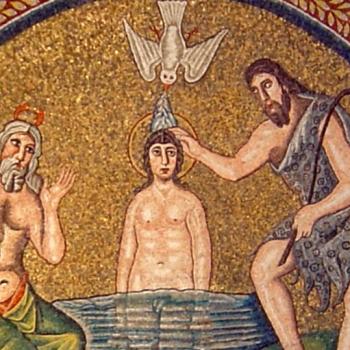
Since it’s the earliest, Mark gives the best general narrative of Jesus’s ministry. In Mark there is no Christmas story; we begin with Jesus’s baptism by John the Baptist. Next, Jesus travels throughout Galilee, preaching and healing and gathering followers. After about a year, he and his followers travel to Jerusalem for Passover, where he “cleanses” the great Temple, and is crucified soon after.
Our oldest manuscripts of Mark end at 16:8, when Mary Magdalene and other women find the stone in front of Jesus’s tomb moved. There is no appearance of the risen Jesus, instead the text ends abruptly, saying that the women “said nothing to anyone, for they were afraid.”
Based on Mark’s narrative, we can add a few more items to our list of facts about the Historical Jesus:
- Jesus was baptized by John the Baptist.
- Jesus’s ministry was itinerant; that is, he moved from place to place. This is in stark contrast to John the Baptist, who we know from Josephus was based on the banks of the Jordan River and let his disciples come to him.
- Jesus was crucified at Passover, one of the Jewish festivals that brought thousands of pilgrims to Jerusalem every year.
- Jesus performed some sort of prophetic act against the Temple in Jerusalem shortly before his execution.
Now we can begin reconstructing more facts about Jesus’s life by postulating claims, presenting the evidence, and drawing conclusions. I’ll use a claim of my own as an example:
Claim:
Jesus began as a disciple of John the Baptist.
Evidence:
We can be confident in Jesus’s baptism by John based on the “criterion of embarrassment.” Since the Gospels intended to exalt Jesus, it’s unlikely they would have fabricated a story where another figure had authority over Jesus. Therefore the baptism is most likely historical.
Next, we look at how the successive Gospels treat the relationship between Jesus and John. In Mark, John foretells Jesus; in Matthew, John protests Jesus’s request for baptism; in Luke, the baptism is rushed and diminished in favor of God’s exaltation of Jesus; and finally in the Fourth Gospel, the baptism is ignored altogether.
Finally, we examine Jesus’s and John’s messages. John preached a baptism of repentance “for the forgiveness of sins,” as well as the coming Kingdom of [God], both topics Jesus also spoke about. He also, like Jesus, was executed by the State (Herod Antipas in Galilee for John, Pontius Pilate in Judea for Jesus), pointing to an anti-establishment bent in both their movements.
Conclusion:
Based on this evidence, it seems likely that Jesus was more than simply baptized by John. He was probably a disciple of John and spent considerable time learning from him.
In my next post, I’ll explore Jesus’s social and political background as our picture of him continues to develop…
 About Christian Chiakulas
Christian Chiakulas is a writer and musician from Chicago. He studied writing at Columbia College and writes both fiction and nonfiction. Find him on Twitter and Facebook.
Previous Post

February 8, 2016
Review: Life's Too Short to Pretend You're Not Religious
Next Post

February 9, 2016 Ashes to Ashes, Dust to Dust
Browse Our Archives
Select a Category Book Reviews Christian History Christian Issues Christian Spirituality Current Events Fundamentalism Islam John Shore LGBT Movie Reviews Poetry Uncategorized
Select a Month October 2017 September 2017 August 2017 July 2017 June 2017 May 2017 April 2017 March 2017 February 2017 January 2017 December 2016 November 2016 October 2016 September 2016 August 2016 July 2016 June 2016 May 2016 April 2016 March 2016 February 2016 January 2016 December 2015 November 2015 October 2015 September 2015 August 2015 July 2015 June 2015 May 2015 April 2015 March 2015 February 2015 January 2015 December 2014 November 2014 October 2014 September 2014 August 2014 July 2014 June 2014 May 2014 April 2014 March 2014 February 2014 January 2014 December 2013 November 2013 October 2013 September 2013 August 2013 July 2013 June 2013
Follow Us!
TAKE THE
Religious Wisdom Quiz
Which book comes last in the New Testament?
Select your answer to see how you score.
Acts Revelation 2 Peter Jude
Related posts from Unfundamentalist Christians
On Conservative Christians’ Sudden Devotion to Imperial Cult
Bullying Bishops and Castrated Christians: The Nashville Statement’s...

No, Our Non-Profit Is Not a Ministry

TRENDING AT PATHEOS Progressive Christian

Why Christians Have a Sacred Duty to Vote:...
The Bible offers strong support for the sacred duty to vote. Here...

What Being a Modern-Day Apostle Means to Me
In my last column, I discussed the ins and outs of modern-day...

Did Ancient China Once Worship the God of...
Across human history, a common thread weaves through the origins of the...

Love Your Neighbor – Including Earth-Kin: Lev. 19,...
God’s command to love your neighbor means acting in an ethical and...

Lead a Church Study of “Jesus and Lao...
Guest writer Jack Thomas (The Irreverent Reverend) reflects on leading his church...

Principles for Understanding the Apostolic Ministry Today
Whenever people discover that my formal ministry title is "apostle," as in...
view all Progressive Christian blogs
Ad-Free & Subscriber Log-In Subscription Support
- About Us
- 2026 Calendar
- Videos
- Podcasts
- Library of World Religions
- Faith In Media Tracker
- Advertise With Us
- Write for Us
- Privacy Policy
- Terms of Service
- Do Not Sell My Data
- Contact Us
- Radiant Digital
- Manage Newsletter Subscriptions
- Unsubscribe From Notifications
- Sitemap
Copyright 2008-2026, Patheos. All rights reserved.
Subscription Support Ad-Free & Subscriber Log-In
Follow Patheos