
BuddhistCatholicContemplativeEvangelicalGeneral ChristianHinduJewishLatter-day SaintMuslimNew VisionsProgressive Christian
Beliefs
- Buddhist
- Catholic
- Contemplative
- Evangelical
- General Christian
- Hindu
- Jewish
- Latter-day Saint
- More Voices
- Muslim
- New Visions
- Pagan
- Progressive Christian
Topics
- Religion News
- Food and Religion
- Sports and Religion
- Religious Art
- Religious Music and Entertainment
- Religious Events
- History and Religion
- Style and Religion
- Politics and Religion
- Women in Religion
- Recreation Outdoors and Religion
- Business Finance and Religion
- Careers Workplace and Religion
- Education and Religion
- Family Parenting and Religion
- Health Fitness and Religion
- Home and Religion
- Relationships and Religion
- Technology and Religion
- Travel and Religion
Columnists
- Buddhist Columnists
- Business Finance and Religion Columnists
- Careers Workplace and Religion Columnists
- Catholic Columnists
- Contemplative Columnists
- Education and Religion Columnists
- Evangelists Columnists
- Family Parenting and Religion Columnists
- General Christian Columnists
- Health Fitness and Religion Columnists
- Hindu Columnists
- History and Religion Columnists
- Home and Religion Columnists
- Jewish Columnists
- More Voices Columnists
- Latter Day Columnists
- Muslim Columnists
- New Visions Columnists
- Nonreligious Columnists
- Pagan Columnists
- Politics and Religion Columnists
- Progressive Columnists
- Recreation Outdoors and Religion Columnists
- Relationships and Religion Columnists
- Religion News Columnists
- Religious Art Columnists
- Religious Events Columnists
- Religious Music and Entertainment Columnists
- Sports and Religion Columnists
- Style and Religion Columnists
- Technology and Religion Columnists
- Travel and Religion Columnists
- Women in Religion Columnists
Resource Library
- 2026 Calendar
- Library of World Religions
- The 100 Most Holy Places on Earth
- Patheos Answers
- Podcasts
- Videos
- Faith Leaders Database
- Anglican Episcopalian
- Bahai
- Baptist
- Buddhism
- Christianity
- Confucianism
- Eastern Orthodoxy
- Hinduism
- Holiness and Pentecostal
- ISKCON
- Islam
- Judaism
- Lutheran
- Methodist
- The Church of Jesus Christ of Latter-day Saints
- New Age
- Paganism
- Presbytarian and Reformed
- Protestantism
- Religion Behind the Scenes
- Roman Catholic
- Scientology
- Shia Islam
- Sikhism
- Sufism
- Sunni Islam
- Taoism
- Zen
- See all religions
Research Tools
 Ad-Free & Subscriber Log-In Subscription Support
Ad-Free & Subscriber Log-In Subscription Support
Follow Patheos 

- Trending:
- Forgiveness
- |
- Marriage
- |
- Consciousness
- |
- Death Penalty
- |
- Election
- |
- Halloween
 Unfundamentalist Christians
- Home
- Progressive Christian
- It’s All About How We See
It’s All About How We See
Last updated on: November 13, 2015 at 5:00 am by Chuck Queen
It’s All About How We See 2015-11-12T17:00:52-06:00 Chuck Queen
Patheos Explore the world's faith through different perspectives on religion and spirituality! Patheos has the views of the prevalent religions and spiritualities of the world.
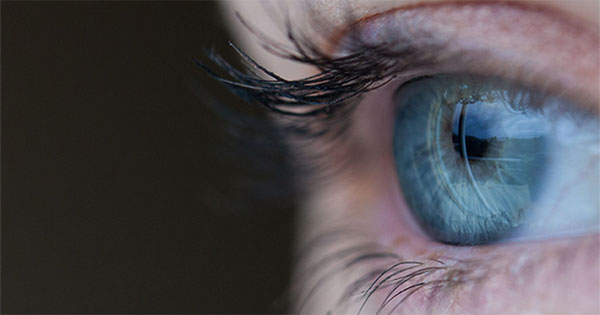
See what you see. This is the meaning of a Jesus saying in the Gospel of Thomas,
Jesus said, “Know what is in front of your face, and what is hidden from you will be disclosed to you. For there is nothing hidden that will not be revealed” (Logion 5, trans. by Marvin Meyer).
Not long ago I went into the kitchen to fix a piece of toast for breakfast. I opened the pantry door and looked in the basket where we keep the bread. No bread. So I looked around in the pantry. Couldn’t find it. I opened the cabinet where we keep the cereal. It wasn’t there. So I did what many people do. I blamed someone. I’m thinking, “Ok, where did my wife put the bread?” In the meanwhile I cracked my boiled egg, peeled it, and as I tossed the last piece of shell in the trash, I glanced around in the pantry one more time and guess what? There was the bread. Guess where it was? In the basket where it was supposed to be. So how did I miss it? How did I not see what I was obviously looking at it?
While this may be a rare kind of experience in the physical world, in the spiritual world it happens all the time. We tend to see reality as we are, not as it really is.
Consider how two Christians can read the same biblical text and interpret it not only in different ways, but opposite ways. We all know how the Bible has been used to support slavery, violence, patriarchy, oppression, elitism, nationalism, bigotry, etc.
In the hands of an unenlightened, unloving person even the most enlightened, progressive texts can be employed in oppressive, punitive, and destructive ways. On the other hand, in the hands of a truly enlightened, compassionate person even the most unenlightened, regressive texts can be used in positive, healing, and liberating ways. It all has to do with how one sees.
According to Luke’s version of Paul’s encounter with the Christ, when he was awakened to the truth and beheld the light, when “something like scales [the scales of illusion, pride, self-righteousness, false assumptions, etc.] fell from his eyes” (Acts 9:18), Paul could then see Christ in the very ones he had been persecuting (Acts 9:5; Rom. 8:9-10).
The command to see what is, to discern the truth in any given text, situation, relationship, event, or experience requires real faith. By real faith I don’t mean belief in dogma or certitudes, I mean a dynamic trust in the power and reality of unconditional love. Seeing what is true involves looking at life – ourselves and others, as well as our sacred texts – with humility, honesty, compassion, and a genuine desire to find the truth. This is when the previously hidden mysteries are revealed.
How might we ready ourselves to see what is?
In his letter to the Philippians Paul says,
Beloved, whatever is true, whatever is honorable, whatever is just, whatever is pure, whatever is pleasing, whatever is commendable, if there is any excellence and if there is anything worthy of praise, think about [or take account of] these things (4:8).
In 1 John the writer says,
Beloved, let us love one another, because love is from God; everyone who loves is born of God and knows God. . . . God is love, and those who abide in love abide in God, and God abides in them (4:7, 16b).
So how might we prepare our minds and hearts to see what is really real, to see more clearly what is clearly true? By thinking about, focusing on, and orienting our lives around what is good, right, fair, and praiseworthy, and by engaging in acts and deeds of compassion and love.
However, what is real and true, as well as the real and true God remain hidden to those whose only interest is in protecting their ego, defending their beliefs/certitudes, and guarding their turf. Religion (God) can become a way to further a person or group’s own ends and justify their egocentricity and self-righteousness.
Our present situation and circumstances can conceal God or reveal God. It all depends on how we see.
The story of Jacob’s dream at Bethel (Gen. 28:10-17) is a wonderful illustration of this. The text says that Jacob came to a certain place – it was just any, ordinary place where Jacob stopped for the night. He had a dream of a ladder that stretched from earth to heaven with angels ascending and descending on it. The Lord appeared in his dream and promised him land and descendants and that he would be an instrument through whom “all the families of the earth shall be blessed.” The Lord promised to be with him and keep him wherever he went. When Jacob awoke from his dream he said, “Surely the Lord is in this place – and I did not know it! . . . How awesome is this place! This is none other than the house of God, and this is the gate of heaven.”
This suggests that in the very ordinary places of our lives – our daily activities, responsibilities, relationships, periods of rest and work and recreation, etc. – God is present. There are angels descending and ascending, that is, there are spiritual powers and forces at work in this place at this moment in our very ordinary lives and relationships. This is all right before our face. Can we see?
Can I see God in the face of a child?
Can I see God in a selfless act by a friend or loved one?
Can I see God in the joy and laugher of friends sharing a special moment?
Can I see God in the forgiving embrace of a wife or husband for some stupid remark or foolish act?
Can I see God in the trees dancing in the wind or in the red bird on my deck?
Those who are advanced in the spiritual life can even see God in suffering and death.
Thomas says “the mysteries will be revealed to you” – the ultimate mystery is the mystery of the Christ/God/the Spirit dwelling in us. The writer of Colossians declares that Christ in us is our hope of glory (Col. 1:27). This means we are capable of reflecting the Christ image. This means that we have the potential to live and love like Christ.
What possibility and potential resides in each human being! If only we could see what we see.
 Chuck Queen is a Baptist minister and the author of Being a Progressive Christian (is not) for Dummies (nor for know-it-alls): An Evolution of Faith. Chuck blogs at A Fresh Perspective, and is also a contributor to the blog Faith Forward and Baptist News Global.
Next Post
November 16, 2015 How the Traditional Doctrine of Hell Undermines Christian Character
Browse Our Archives
Select a Category Book Reviews Christian History Christian Issues Christian Spirituality Current Events Fundamentalism Islam John Shore LGBT Movie Reviews Poetry Uncategorized
Select a Month October 2017 September 2017 August 2017 July 2017 June 2017 May 2017 April 2017 March 2017 February 2017 January 2017 December 2016 November 2016 October 2016 September 2016 August 2016 July 2016 June 2016 May 2016 April 2016 March 2016 February 2016 January 2016 December 2015 November 2015 October 2015 September 2015 August 2015 July 2015 June 2015 May 2015 April 2015 March 2015 February 2015 January 2015 December 2014 November 2014 October 2014 September 2014 August 2014 July 2014 June 2014 May 2014 April 2014 March 2014 February 2014 January 2014 December 2013 November 2013 October 2013 September 2013 August 2013 July 2013 June 2013
Follow Us!
TAKE THE
Religious Wisdom Quiz
What animals did Jesus ride into Jerusalem?
Select your answer to see how you score.
A horse A camel An ox A donkey
Related posts from Unfundamentalist Christians



TRENDING AT PATHEOS Progressive Christian

Why Christians Have a Sacred Duty to Vote:...
The Bible offers strong support for the sacred duty to vote. Here...

What Being a Modern-Day Apostle Means to Me
In my last column, I discussed the ins and outs of modern-day...

Did Ancient China Once Worship the God of...
Across human history, a common thread weaves through the origins of the...

Love Your Neighbor – Including Earth-Kin: Lev. 19,...
God’s command to love your neighbor means acting in an ethical and...

Lead a Church Study of “Jesus and Lao...
Guest writer Jack Thomas (The Irreverent Reverend) reflects on leading his church...

Principles for Understanding the Apostolic Ministry Today
Whenever people discover that my formal ministry title is "apostle," as in...
view all Progressive Christian blogs
Ad-Free & Subscriber Log-In Subscription Support
- About Us
- 2026 Calendar
- Videos
- Podcasts
- Library of World Religions
- Faith In Media Tracker
- Advertise With Us
- Write for Us
- Privacy Policy
- Terms of Service
- Do Not Sell My Data
- Contact Us
- Radiant Digital
- Manage Newsletter Subscriptions
- Unsubscribe From Notifications
- Sitemap
Copyright 2008-2026, Patheos. All rights reserved.
Subscription Support Ad-Free & Subscriber Log-In
Follow Patheos