
BuddhistCatholicContemplativeEvangelicalGeneral ChristianHinduJewishLatter-day SaintMuslimNew VisionsProgressive Christian
Beliefs
- Buddhist
- Catholic
- Contemplative
- Evangelical
- General Christian
- Hindu
- Jewish
- Latter-day Saint
- More Voices
- Muslim
- New Visions
- Pagan
- Progressive Christian
Topics
- Religion News
- Food and Religion
- Sports and Religion
- Religious Art
- Religious Music and Entertainment
- Religious Events
- History and Religion
- Style and Religion
- Politics and Religion
- Women in Religion
- Recreation Outdoors and Religion
- Business Finance and Religion
- Careers Workplace and Religion
- Education and Religion
- Family Parenting and Religion
- Health Fitness and Religion
- Home and Religion
- Relationships and Religion
- Technology and Religion
- Travel and Religion
Columnists
- Buddhist Columnists
- Business Finance and Religion Columnists
- Careers Workplace and Religion Columnists
- Catholic Columnists
- Contemplative Columnists
- Education and Religion Columnists
- Evangelists Columnists
- Family Parenting and Religion Columnists
- General Christian Columnists
- Health Fitness and Religion Columnists
- Hindu Columnists
- History and Religion Columnists
- Home and Religion Columnists
- Jewish Columnists
- More Voices Columnists
- Latter Day Columnists
- Muslim Columnists
- New Visions Columnists
- Nonreligious Columnists
- Pagan Columnists
- Politics and Religion Columnists
- Progressive Columnists
- Recreation Outdoors and Religion Columnists
- Relationships and Religion Columnists
- Religion News Columnists
- Religious Art Columnists
- Religious Events Columnists
- Religious Music and Entertainment Columnists
- Sports and Religion Columnists
- Style and Religion Columnists
- Technology and Religion Columnists
- Travel and Religion Columnists
- Women in Religion Columnists
Resource Library
- 2026 Calendar
- Library of World Religions
- The 100 Most Holy Places on Earth
- Patheos Answers
- Podcasts
- Videos
- Faith Leaders Database
- Anglican Episcopalian
- Bahai
- Baptist
- Buddhism
- Christianity
- Confucianism
- Eastern Orthodoxy
- Hinduism
- Holiness and Pentecostal
- ISKCON
- Islam
- Judaism
- Lutheran
- Methodist
- The Church of Jesus Christ of Latter-day Saints
- New Age
- Paganism
- Presbytarian and Reformed
- Protestantism
- Religion Behind the Scenes
- Roman Catholic
- Scientology
- Shia Islam
- Sikhism
- Sufism
- Sunni Islam
- Taoism
- Zen
- See all religions
Research Tools
 Ad-Free & Subscriber Log-In Subscription Support
Ad-Free & Subscriber Log-In Subscription Support
Follow Patheos 

- Trending:
- Forgiveness
- |
- Marriage
- |
- Consciousness
- |
- Death Penalty
- |
- Election
- |
- Halloween
 Unfundamentalist Christians
- Home
- Progressive Christian
- Southern Baptists, Racism, and Biblical Inerrancy
Southern Baptists, Racism, and Biblical Inerrancy
Last updated on: April 29, 2015 at 9:59 am by Chuck Queen
Southern Baptists, Racism, and Biblical Inerrancy 2015-04-29T09:59:52-06:00 Chuck Queen
Patheos Explore the world's faith through different perspectives on religion and spirituality! Patheos has the views of the prevalent religions and spiritualities of the world.
Writing in The Atlantic, Emma Green attempts (and does so quite admirably) to navigate the turbulent history of Southern Baptists’ previous support of racism to their now vocal opposition. She notes that since 1995 the SBC has been publicly repenting of its history of racial discrimination, which marks a decisive turn from the denomination’s beginnings when it “helped define the history of American racism.”
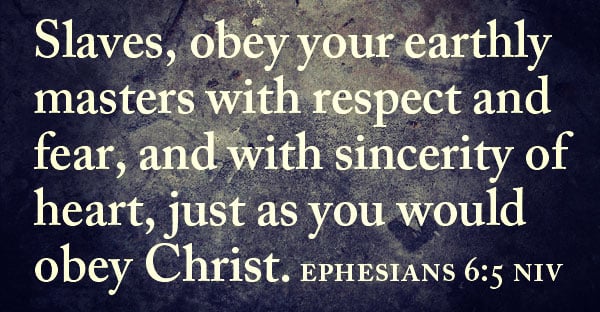
Southern Baptists who defended slavery and then later segregation appealed to an inerrant scripture for their justification. Ironically, when Green spoke with pastors and church leaders in Nashville, most cited scripture as their justification for opposing racism.
While Southern Baptists believe that scripture is “truth without any mixture of error” it is obvious that Southern Baptists do not read the Bible without any mixture of error. Southern Baptists, along with everyone else, read the Bible as fallible, error-prone human beings who are about as likely to get things wrong as right.
Green also observes how Southern Baptists read the text with an emphasis on the individual. She spoke with SBC African American pastor Thabiti Anyabwile, who said,
Most of my African American brothers and sisters, we’ve had a group experience. Our experience in this country has been defined first and foremost by this pigment that we share. So when we have these conversations about how to make progress, African Americans go to group experience pretty quickly. We speak in “we”. And white Americans go pretty quickly to the individual and speak of “I” …
One of the things we have to repent of as a denomination or as conservative Christians … [is] the shrinking idea of justice down to abortion and homosexuality. There’s far more going on in the world affecting far more people that we also ought to be concerned about.
The issues Anyabwile mentioned that Southern Baptists should be concerned with included criminal-justice policies, education funding, and the alleviation of child poverty. This, of course, is not likely to happen. And why? Well, it’s back to the Bible.
According to Russell Moore, the head of the SBC Ethics and Religious Liberty Commission (ERLC), scripture is not clear on these social issues the way it is clear that racism reflects humankind’s sinful nature. Green perceptively comments,
Notably absent from the ERLC’s policy priorities are issues like mass incarceration or fiscal programs designed to support those in poverty. It’s one thing to aim to purge a man’s heart of ill will toward his black or white brothers in Christ. It’s quite another to try to rectify the after-effects of 250 years of slavery and decades of Jim Crow that followed.
Green observes how ironic it is for Southern Baptists to embrace the former and ignore the later for the simple reason that Southern Baptists have had such a defining role in shaping the history of racism.
Fred Clark, responding on his blog to Green’s article, argues that inerrancy and individualism were not mere impediments to racial and social justice, they were justifications for injustice. He contends,
Inerrancy is an artifice constructed to provide a way of reading the Bible to defend slavery … That’s why it exists. It enabled Southern Baptists in 1833 and 1845 and 1965 to cite pro-slavery proof texts in order to limit and trump the Golden Rule …
And the white evangelical ideal of individual salvation – a ‘personal Lord and Savior’ whose kingdom exists only in some otherworldly afterlife – was developed as a rationalization for the brutal injustice and denial of salvation [read social justice] that white Christians were determined to defend and endorse in this world and in this life.
Either way – as contributing factors or as justifications/rationalizations – the Southern Baptist belief in biblical inerrancy and over-emphasis on individual salvation continues to limit their participation in a holistic gospel that intentionally pursues racial reconciliation and social justice issues.
 Chuck Queen is a Baptist minister and the author of Being a Progressive Christian (is not) for Dummies (nor for know-it-alls): An Evolution of Faith. Chuck blogs at A Fresh Perspective, and is also a contributor to the blog Faith Forward.
Previous Post

April 21, 2015
To Christians who support RFRA laws: Grow Up!
Next Post

May 4, 2015 Shoe Polish, Gospel Gratitude, and Teacher Appreciation Week
Browse Our Archives
Select a Category Book Reviews Christian History Christian Issues Christian Spirituality Current Events Fundamentalism Islam John Shore LGBT Movie Reviews Poetry Uncategorized
Select a Month October 2017 September 2017 August 2017 July 2017 June 2017 May 2017 April 2017 March 2017 February 2017 January 2017 December 2016 November 2016 October 2016 September 2016 August 2016 July 2016 June 2016 May 2016 April 2016 March 2016 February 2016 January 2016 December 2015 November 2015 October 2015 September 2015 August 2015 July 2015 June 2015 May 2015 April 2015 March 2015 February 2015 January 2015 December 2014 November 2014 October 2014 September 2014 August 2014 July 2014 June 2014 May 2014 April 2014 March 2014 February 2014 January 2014 December 2013 November 2013 October 2013 September 2013 August 2013 July 2013 June 2013
Follow Us!
TAKE THE
Religious Wisdom Quiz
Who healed a blind man by making mud and placing it on his eyes?
Select your answer to see how you score.
Jesus Elijah Peter Moses
Related posts from Unfundamentalist Christians


Bible Nation: The United States of Hobby Lobby

Faith in the Fog: On Losing Beliefs and...

My Cancer Didn't Happen for a Reason
TRENDING AT PATHEOS Progressive Christian

Why Christians Have a Sacred Duty to Vote:...
The Bible offers strong support for the sacred duty to vote. Here...

What Being a Modern-Day Apostle Means to Me
In my last column, I discussed the ins and outs of modern-day...

Did Ancient China Once Worship the God of...
Across human history, a common thread weaves through the origins of the...

Love Your Neighbor – Including Earth-Kin: Lev. 19,...
God’s command to love your neighbor means acting in an ethical and...

Lead a Church Study of “Jesus and Lao...
Guest writer Jack Thomas (The Irreverent Reverend) reflects on leading his church...

Principles for Understanding the Apostolic Ministry Today
Whenever people discover that my formal ministry title is "apostle," as in...
view all Progressive Christian blogs
Ad-Free & Subscriber Log-In Subscription Support
- About Us
- 2026 Calendar
- Videos
- Podcasts
- Library of World Religions
- Faith In Media Tracker
- Advertise With Us
- Write for Us
- Privacy Policy
- Terms of Service
- Do Not Sell My Data
- Contact Us
- Radiant Digital
- Manage Newsletter Subscriptions
- Unsubscribe From Notifications
- Sitemap
Copyright 2008-2026, Patheos. All rights reserved.
Subscription Support Ad-Free & Subscriber Log-In
Follow Patheos