
BuddhistCatholicContemplativeEvangelicalGeneral ChristianHinduJewishLatter-day SaintMuslimNew VisionsProgressive Christian
Beliefs
- Buddhist
- Catholic
- Contemplative
- Evangelical
- General Christian
- Hindu
- Jewish
- Latter-day Saint
- More Voices
- Muslim
- New Visions
- Pagan
- Progressive Christian
Topics
- Religion News
- Food and Religion
- Sports and Religion
- Religious Art
- Religious Music and Entertainment
- Religious Events
- History and Religion
- Style and Religion
- Politics and Religion
- Women in Religion
- Recreation Outdoors and Religion
- Business Finance and Religion
- Careers Workplace and Religion
- Education and Religion
- Family Parenting and Religion
- Health Fitness and Religion
- Home and Religion
- Relationships and Religion
- Technology and Religion
- Travel and Religion
Columnists
- Buddhist Columnists
- Business Finance and Religion Columnists
- Careers Workplace and Religion Columnists
- Catholic Columnists
- Contemplative Columnists
- Education and Religion Columnists
- Evangelists Columnists
- Family Parenting and Religion Columnists
- General Christian Columnists
- Health Fitness and Religion Columnists
- Hindu Columnists
- History and Religion Columnists
- Home and Religion Columnists
- Jewish Columnists
- More Voices Columnists
- Latter Day Columnists
- Muslim Columnists
- New Visions Columnists
- Nonreligious Columnists
- Pagan Columnists
- Politics and Religion Columnists
- Progressive Columnists
- Recreation Outdoors and Religion Columnists
- Relationships and Religion Columnists
- Religion News Columnists
- Religious Art Columnists
- Religious Events Columnists
- Religious Music and Entertainment Columnists
- Sports and Religion Columnists
- Style and Religion Columnists
- Technology and Religion Columnists
- Travel and Religion Columnists
- Women in Religion Columnists
Resource Library
- 2026 Calendar
- Library of World Religions
- The 100 Most Holy Places on Earth
- Patheos Answers
- Podcasts
- Videos
- Faith Leaders Database
- Anglican Episcopalian
- Bahai
- Baptist
- Buddhism
- Christianity
- Confucianism
- Eastern Orthodoxy
- Hinduism
- Holiness and Pentecostal
- ISKCON
- Islam
- Judaism
- Lutheran
- Methodist
- The Church of Jesus Christ of Latter-day Saints
- New Age
- Paganism
- Presbytarian and Reformed
- Protestantism
- Religion Behind the Scenes
- Roman Catholic
- Scientology
- Shia Islam
- Sikhism
- Sufism
- Sunni Islam
- Taoism
- Zen
- See all religions
Research Tools
 Ad-Free & Subscriber Log-In Subscription Support
Ad-Free & Subscriber Log-In Subscription Support
Follow Patheos 

- Trending:
- Forgiveness
- |
- Marriage
- |
- Consciousness
- |
- Death Penalty
- |
- Election
- |
- Halloween
 Unfundamentalist Christians
- Home
- Progressive Christian
- How (and why) Adam and Eve evolved
How (and why) Adam and Eve evolved
Last updated on: March 2, 2015 at 7:54 am by Dan Wilkinson
How (and why) Adam and Eve evolved 2015-03-02T07:54:55-06:00 Dan Wilkinson
Patheos Explore the world's faith through different perspectives on religion and spirituality! Patheos has the views of the prevalent religions and spiritualities of the world.
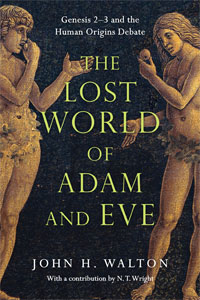 Adam, Eve, a garden, a snake, an apple. Images that pervade Western culture. Images viewed by many as mere myth and by others as absolute truth.
What really happened at the dawn of human existence? Were Adam and Eve real people? Was there really a Garden of Eden? Did sin really enter the world through a piece of fruit?
Do Christians really have to believe all this stuff, even when science seems to point in a different direction?
In his forthcoming book The Lost World of Adam and Eve: Genesis 2-3 and the Human Origins Debate (IVP Academic, $17) Wheaton College Old Testament Professor John Walton sets out to address these questions by exploring what the Bible says (and doesn’t say) about the origins of humanity.
Walton rejects the idea that there is “an essential, inherent conflict between the claims of the Bible and the current scientific consensus about human origins.” From his perspective,
The perceived threat posed by the current consensus about human origins is overblown. That consensus accepts the principles of common ancestry and evolutionary theory as the explanation for the existence of all life. … regardless of whether the scientific conclusions stand the test of time or not, they pose no threat to biblical belief.
Walton’s understanding of Genesis includes these core propositions:
-
That Genesis 1 is an account of functional, not material origins. It describes God ordering the cosmos into a sacred space, but has virtually nothing to say about the scientific process of creation. (Walton explores these views more fully in his earlier book The Lost World of Genesis One.)
-
That Genesis 2 describes not the material creation of the original pair of humans, but instead establishes Adam and Eve as archetypes. In other words, what is being said about Adam and Eve is not a unique account of material creation, but a description applicable to all humanity. It is a story of our “destiny and identity,” not our physical origins. This archetypal usage finds, he writes, further support in the New Testament, where “Paul’s use of Adam is more interested in the effect of sin on the cosmos than in the effect of sin on humanity, and has nothing to say about human origins.”
-
That the Garden of Eden was created as a sacred space for encountering God. The universe as a whole functions as God’s temple, but the Garden functioned as the center of that temple. Adam and Eve were set apart as priests to administer this space.
-
That Adam and Eve chose to make themselves, rather than God, the center of order and wisdom, and in doing rejected the role that God had given them. Thus, rather than developing and maintaining order, they gave way to disorder. Describing sin’s entrance into the world, Walton says:
Genesis 3 is more about the encroachment of disorder (brought about by sin) into a world in the process of being ordered than it is about the first sin. It is about how humanity lost access to the presence of God when its representatives tragically declared their independence from their Creator. It is more focused literarily and theologically on how corporate humanity is therefore distanced from God—alienation—than in the sinful state of each human being…
Undoubtedly some Christians will feel the Walton pushes the envelope entirely too far, that it is heresy to believe that there were humans prior to Adam, and that evolution is compatible with the Bible. Conversely, some may feel that in clinging to the authority of Scripture, Walton allows theology to unduly influence his exegesis.
Either way, Walton’s arguments should be taken seriously. The framework through which he understands the opening chapters of Genesis offers an important opportunity to reconcile faith and science. Understanding the narrative of Scripture as not merely about individual sin and individual salvation, but instead as a grand narrative about order and disorder, about the nature of God and the nature of humanity, and about function and relationship, has the potential to reshape how we live as Christians today. By allowing us to gain a better understanding of Adam and Eve’s “lost world,” Walton allows us to better understand the Bible, God and ourselves.
 Dan Wilkinson
Dan is a writer, graphic designer and IT specialist. He lives in Montana, is married and has two cats. He blogs at CoolingTwilight.com.
Previous Post

February 16, 2015
Can gentleness save evangelical apologetics?
Next Post

March 16, 2015 The Political Punch Behind Christianity’s Favorite Prayer
Browse Our Archives
Select a Category Book Reviews Christian History Christian Issues Christian Spirituality Current Events Fundamentalism Islam John Shore LGBT Movie Reviews Poetry Uncategorized
Select a Month October 2017 September 2017 August 2017 July 2017 June 2017 May 2017 April 2017 March 2017 February 2017 January 2017 December 2016 November 2016 October 2016 September 2016 August 2016 July 2016 June 2016 May 2016 April 2016 March 2016 February 2016 January 2016 December 2015 November 2015 October 2015 September 2015 August 2015 July 2015 June 2015 May 2015 April 2015 March 2015 February 2015 January 2015 December 2014 November 2014 October 2014 September 2014 August 2014 July 2014 June 2014 May 2014 April 2014 March 2014 February 2014 January 2014 December 2013 November 2013 October 2013 September 2013 August 2013 July 2013 June 2013
Follow Us!
TAKE THE
Religious Wisdom Quiz
What was the name of the river where Ezekiel saw his vision?
Select your answer to see how you score.
Euphrates River River Chebar Jordan River Nile River
Related posts from Unfundamentalist Christians


Bible Nation: The United States of Hobby Lobby

What's So Confusing About Grace?
Native Americans, the Mainline Church, and the Quest...
TRENDING AT PATHEOS Progressive Christian

Why Christians Have a Sacred Duty to Vote:...
The Bible offers strong support for the sacred duty to vote. Here...

What Being a Modern-Day Apostle Means to Me
In my last column, I discussed the ins and outs of modern-day...

Did Ancient China Once Worship the God of...
Across human history, a common thread weaves through the origins of the...

Love Your Neighbor – Including Earth-Kin: Lev. 19,...
God’s command to love your neighbor means acting in an ethical and...

Lead a Church Study of “Jesus and Lao...
Guest writer Jack Thomas (The Irreverent Reverend) reflects on leading his church...

Principles for Understanding the Apostolic Ministry Today
Whenever people discover that my formal ministry title is "apostle," as in...
view all Progressive Christian blogs
Ad-Free & Subscriber Log-In Subscription Support
- About Us
- 2026 Calendar
- Videos
- Podcasts
- Library of World Religions
- Faith In Media Tracker
- Advertise With Us
- Write for Us
- Privacy Policy
- Terms of Service
- Do Not Sell My Data
- Contact Us
- Radiant Digital
- Manage Newsletter Subscriptions
- Unsubscribe From Notifications
- Sitemap
Copyright 2008-2026, Patheos. All rights reserved.
Subscription Support Ad-Free & Subscriber Log-In
Follow Patheos