
BuddhistCatholicContemplativeEvangelicalGeneral ChristianHinduJewishLatter-day SaintMuslimNew VisionsProgressive Christian
Beliefs
- Buddhist
- Catholic
- Contemplative
- Evangelical
- General Christian
- Hindu
- Jewish
- Latter-day Saint
- More Voices
- Muslim
- New Visions
- Pagan
- Progressive Christian
Topics
- Religion News
- Food and Religion
- Sports and Religion
- Religious Art
- Religious Music and Entertainment
- Religious Events
- History and Religion
- Style and Religion
- Politics and Religion
- Women in Religion
- Recreation Outdoors and Religion
- Business Finance and Religion
- Careers Workplace and Religion
- Education and Religion
- Family Parenting and Religion
- Health Fitness and Religion
- Home and Religion
- Relationships and Religion
- Technology and Religion
- Travel and Religion
Columnists
- Buddhist Columnists
- Business Finance and Religion Columnists
- Careers Workplace and Religion Columnists
- Catholic Columnists
- Contemplative Columnists
- Education and Religion Columnists
- Evangelists Columnists
- Family Parenting and Religion Columnists
- General Christian Columnists
- Health Fitness and Religion Columnists
- Hindu Columnists
- History and Religion Columnists
- Home and Religion Columnists
- Jewish Columnists
- More Voices Columnists
- Latter Day Columnists
- Muslim Columnists
- New Visions Columnists
- Nonreligious Columnists
- Pagan Columnists
- Politics and Religion Columnists
- Progressive Columnists
- Recreation Outdoors and Religion Columnists
- Relationships and Religion Columnists
- Religion News Columnists
- Religious Art Columnists
- Religious Events Columnists
- Religious Music and Entertainment Columnists
- Sports and Religion Columnists
- Style and Religion Columnists
- Technology and Religion Columnists
- Travel and Religion Columnists
- Women in Religion Columnists
Resource Library
- 2026 Calendar
- Library of World Religions
- The 100 Most Holy Places on Earth
- Patheos Answers
- Podcasts
- Videos
- Faith Leaders Database
- Anglican Episcopalian
- Bahai
- Baptist
- Buddhism
- Christianity
- Confucianism
- Eastern Orthodoxy
- Hinduism
- Holiness and Pentecostal
- ISKCON
- Islam
- Judaism
- Lutheran
- Methodist
- The Church of Jesus Christ of Latter-day Saints
- New Age
- Paganism
- Presbytarian and Reformed
- Protestantism
- Religion Behind the Scenes
- Roman Catholic
- Scientology
- Shia Islam
- Sikhism
- Sufism
- Sunni Islam
- Taoism
- Zen
- See all religions
Research Tools
 Ad-Free & Subscriber Log-In Subscription Support
Ad-Free & Subscriber Log-In Subscription Support
Follow Patheos 

- Trending:
- Forgiveness
- |
- Marriage
- |
- Consciousness
- |
- Death Penalty
- |
- Election
- |
- Halloween
 Unfundamentalist Christians
- Home
- Progressive Christian
- Can gentleness save evangelical apologetics?
Can gentleness save evangelical apologetics?
Last updated on: February 16, 2015 at 8:51 am by Dan Wilkinson
Can gentleness save evangelical apologetics? 2015-02-16T08:51:59-06:00 Dan Wilkinson
Patheos Explore the world's faith through different perspectives on religion and spirituality! Patheos has the views of the prevalent religions and spiritualities of the world.
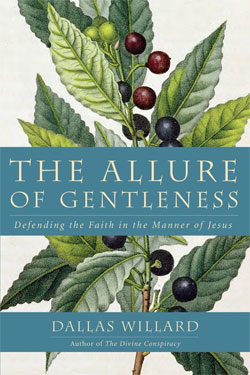 “Apologetics itself has become a problem. It has become a problem in both its content and its spirit.” So says the late Dallas Willard in a new book about apologetics, The Allure of Gentleness: Defending the Faith in the Manner of Jesus, (HarperOne, $26.99).
In a series of talks that were compiled and edited by Willard’s daughter Rebecca Willard Heatley, Willard argues for an approach to Christian apologetics that isn’t solely based on argument, evidence and reason, but also is characterized by gentleness.
He seeks to temper the often combative and acerbic nature of apologetic discourse with a humble, generous, open and loving approach, wisely realizing that apologetic arguments “will all be wasted unless the allure of gentleness pervades all that we do.”
Willard covers much of the usual apologetic ground, discussing knowledge, truth, reason, faith, doubt, God’s existence, divine hiddenness, hell, cosmology and the problems of pain and evil. But, though framed by a good intent, Willard’s arguments are often cut from the same well-worn cloth of most modern evangelical apologetics.
Despite setting out to correct Christian apologetic’s problems of content and spirit, Willard’s approach often perpetuates them. For example, while discussing Christian ethics, Willard says that
Richard Robinson was one of the leading atheist philosophers during the latter part of the twentieth century. He died in 1996, and he knows better now … [emphasis added]
The idea that Robinson “knows better now” was probably intended as merely a humorous interjection, but it’s precisely that sort of thoughtless smugness which pervades so much of Christian apologetics. Willard speaks of having confidence in the Christian faith, but an off-handed diminishment of a deceased interlocutor goes beyond confidence into the realm of arrogance. Alluring gentleness this is not.
Later in the book, Willard argues for the reliably of the Bible, saying that “as God gave the scriptures, in their original form, they were absolutely perfect.” He acknowledges the circular nature of arguing for biblical reliability based on what it says about itself, instead saying that “the Bible, taken merely by the recognized standards of historiography, is demonstrably a reliable historical record,” so that Christians can say that “we know the Bible is true, because the standard canon of historiography authenticated it.”
Such an argument is either naïve or disingenuous. All but the most ardent fundamentalists will readily admit that there are numerous historical challenges to the biblical account. At best, we can’t verify the historical authenticity of many biblical accounts and at worst, the biblical accounts sometimes get the history completely wrong. But regardless of how one understands the historicity of scripture, it is demonstrably false that “the standard canon of historiography [has] authenticated it.”
If Willard is unable to approach the Bible honestly, if he’s unwilling to acknowledge the real difficulties and doubts that confront the Christian faith, then I question the significance of his entire apologetic undertaking. Gentleness in apologetics is a noble goal, ignorance and obfuscation are not.
I don’t think there’s anything inherently wrong with apologetics. It’s good to seek to understand the reasons for our faith and to be able to explain them to others. Sadly however, apologetics, as practiced by many Christians, including Dallas Willard, continues to be an exercise in easy answers and self-reinforcing arguments.
I wholeheartedly agree with Willard that “apologetics itself has become a problem … in both its content and its spirit.” Unfortunately, those problems persist.
 Dan Wilkinson
Dan is a writer, graphic designer and IT specialist. He lives in Montana, is married and has two cats. He blogs at CoolingTwilight.com.
Previous Post

February 11, 2015
Denied a birth certificate and SSN# by her fundamentalist parents
Next Post

March 2, 2015 How (and why) Adam and Eve evolved
Browse Our Archives
Select a Category Book Reviews Christian History Christian Issues Christian Spirituality Current Events Fundamentalism Islam John Shore LGBT Movie Reviews Poetry Uncategorized
Select a Month October 2017 September 2017 August 2017 July 2017 June 2017 May 2017 April 2017 March 2017 February 2017 January 2017 December 2016 November 2016 October 2016 September 2016 August 2016 July 2016 June 2016 May 2016 April 2016 March 2016 February 2016 January 2016 December 2015 November 2015 October 2015 September 2015 August 2015 July 2015 June 2015 May 2015 April 2015 March 2015 February 2015 January 2015 December 2014 November 2014 October 2014 September 2014 August 2014 July 2014 June 2014 May 2014 April 2014 March 2014 February 2014 January 2014 December 2013 November 2013 October 2013 September 2013 August 2013 July 2013 June 2013
Follow Us!
TAKE THE
Religious Wisdom Quiz
What does "Genesis" mean?
Select your answer to see how you score.
Origin or beginning Wisdom History Law
Related posts from Unfundamentalist Christians


Bible Nation: The United States of Hobby Lobby

What's So Confusing About Grace?
Native Americans, the Mainline Church, and the Quest...
TRENDING AT PATHEOS Progressive Christian

Why Christians Have a Sacred Duty to Vote:...
The Bible offers strong support for the sacred duty to vote. Here...

What Being a Modern-Day Apostle Means to Me
In my last column, I discussed the ins and outs of modern-day...

Did Ancient China Once Worship the God of...
Across human history, a common thread weaves through the origins of the...

Love Your Neighbor – Including Earth-Kin: Lev. 19,...
God’s command to love your neighbor means acting in an ethical and...

Lead a Church Study of “Jesus and Lao...
Guest writer Jack Thomas (The Irreverent Reverend) reflects on leading his church...

Principles for Understanding the Apostolic Ministry Today
Whenever people discover that my formal ministry title is "apostle," as in...
view all Progressive Christian blogs
Ad-Free & Subscriber Log-In Subscription Support
- About Us
- 2026 Calendar
- Videos
- Podcasts
- Library of World Religions
- Faith In Media Tracker
- Advertise With Us
- Write for Us
- Privacy Policy
- Terms of Service
- Do Not Sell My Data
- Contact Us
- Radiant Digital
- Manage Newsletter Subscriptions
- Unsubscribe From Notifications
- Sitemap
Copyright 2008-2026, Patheos. All rights reserved.
Subscription Support Ad-Free & Subscriber Log-In
Follow Patheos