
BuddhistCatholicContemplativeEvangelicalGeneral ChristianHinduJewishLatter-day SaintMuslimNew VisionsProgressive Christian
Beliefs
- Buddhist
- Catholic
- Contemplative
- Evangelical
- General Christian
- Hindu
- Jewish
- Latter-day Saint
- More Voices
- Muslim
- New Visions
- Pagan
- Progressive Christian
Topics
- Religion News
- Food and Religion
- Sports and Religion
- Religious Art
- Religious Music and Entertainment
- Religious Events
- History and Religion
- Style and Religion
- Politics and Religion
- Women in Religion
- Recreation Outdoors and Religion
- Business Finance and Religion
- Careers Workplace and Religion
- Education and Religion
- Family Parenting and Religion
- Health Fitness and Religion
- Home and Religion
- Relationships and Religion
- Technology and Religion
- Travel and Religion
Columnists
- Buddhist Columnists
- Business Finance and Religion Columnists
- Careers Workplace and Religion Columnists
- Catholic Columnists
- Contemplative Columnists
- Education and Religion Columnists
- Evangelists Columnists
- Family Parenting and Religion Columnists
- General Christian Columnists
- Health Fitness and Religion Columnists
- Hindu Columnists
- History and Religion Columnists
- Home and Religion Columnists
- Jewish Columnists
- More Voices Columnists
- Latter Day Columnists
- Muslim Columnists
- New Visions Columnists
- Nonreligious Columnists
- Pagan Columnists
- Politics and Religion Columnists
- Progressive Columnists
- Recreation Outdoors and Religion Columnists
- Relationships and Religion Columnists
- Religion News Columnists
- Religious Art Columnists
- Religious Events Columnists
- Religious Music and Entertainment Columnists
- Sports and Religion Columnists
- Style and Religion Columnists
- Technology and Religion Columnists
- Travel and Religion Columnists
- Women in Religion Columnists
Resource Library
- 2026 Calendar
- Library of World Religions
- The 100 Most Holy Places on Earth
- Patheos Answers
- Podcasts
- Videos
- Faith Leaders Database
- Anglican Episcopalian
- Bahai
- Baptist
- Buddhism
- Christianity
- Confucianism
- Eastern Orthodoxy
- Hinduism
- Holiness and Pentecostal
- ISKCON
- Islam
- Judaism
- Lutheran
- Methodist
- The Church of Jesus Christ of Latter-day Saints
- New Age
- Paganism
- Presbytarian and Reformed
- Protestantism
- Religion Behind the Scenes
- Roman Catholic
- Scientology
- Shia Islam
- Sikhism
- Sufism
- Sunni Islam
- Taoism
- Zen
- See all religions
Research Tools
 Ad-Free & Subscriber Log-In Subscription Support
Ad-Free & Subscriber Log-In Subscription Support
Follow Patheos 

- Trending:
- Forgiveness
- |
- Marriage
- |
- Consciousness
- |
- Death Penalty
- |
- Election
- |
- Halloween
 Unfundamentalist Christians
- Home
- Progressive Christian
- Which story are you in?
Which story are you in?
Last updated on: May 28, 2014 at 10:27 am by Dan Wilkinson
Which story are you in? 2014-05-28T10:27:31-06:00 Dan Wilkinson
Patheos Explore the world's faith through different perspectives on religion and spirituality! Patheos has the views of the prevalent religions and spiritualities of the world.
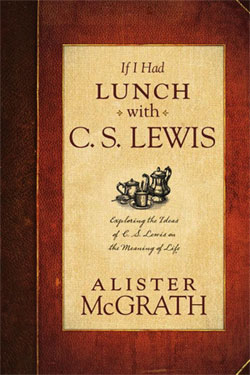 “Which story are you in? Have you chosen your story wisely? Have you challenged the story you tell yourself, if it doesn’t align with reality?”
So asks C.S. Lewis during an imagined lunchtime conversation in Alister McGrath’s new book “If I Had Lunch with C.S. Lewis.” (Tyndale House, 2014) McGrath uses Lewis’s writings and biography as a springboard to explore important questions of life and faith.
In chapter 3, “A Story-Shaped World,” he examines how and why Lewis came to write the Chronicles of Narnia and the importance of the Narnia stories as representations of the Christian story.
Lewis saw stories as a means to better understand the deep truths of life and as a way of “sneak[ing] past the ‘watchful dragons’ of a dogmatic rationalism.” For Lewis, stories are able to make theological ideas intelligible, making them “real” in a way that dry exposition never could.
As a young man Lewis struggled to understand what story he inhabited and what relevance Christianity had to his life. It was through his friend J.R.R. Tolkien that he came to understand Christianity as a “true myth,” a story that “unifies and transcends” the “fragmentary and imperfect insights” of our lives.
McGrath says that “For Tolkien, the Gospels narrate ‘a story of a larger kind,’ which embraces what is good, true, and beautiful in the great myths of literature, expressing it as ‘a far-off gleam or echo of the evangelium in the real world.’” It was this conception of Christianity that captured the mind and imagination of Lewis and that shaped his Christian life.
McGrath also confronts the conundrum that we all must face in relation to the stories we encounter: which story can we trust? Not all stories are compatible; the story of secular humanism stands at odds with the story of Christianity, stories of nihilism are opposed to stories of hope. Do we inhabit “A tale told by an idiot, full of sound and fury, signifying nothing?” Or are we part of a deeper narrative, one that is full of truth and meaning?
According to McGrath, “In the end, we have to decide for ourselves which is right. And having made that decision, we then need to inhabit the story we trust.” We must trust the story that is the most plausible, that best unifies the individual stories of our disparate lives. “Our deepest intuitions point us to the true meaning of things; that there is indeed something beautiful and wonderful at the heart of the universe; and that this may be found, embraced, and adored.”
It is our role in this larger narrative that gives it meaning and purpose and it is through stories like Lewis’s Chronicles of Narnia that we are able to better understand what it means to be part of such a story. The stories of Narnia help us understand that being part of the Christian story is not a denial of who we are, but rather an opportunity to more fully realize our identity: “We do not lose our individuality; rather, we gain a new identity while still remaining individuals who are loved by God. In other words, we become new individuals without ceasing to be individuals.”
This is memorably illustrated in the story of the “undragoning” of Eustace Scrubb as told in Lewis’s “The Voyage of the ‘Dawn Treader.’” The boy Eustace has succumbed to the allure of gold and thus becomes trapped in the form of a dragon. It is only through the power of the lion Aslan that he is able to escape that fate and regain his humanity. Through this story we are able to see and experience our “selfish, fallen nature and the transforming power of divine grace.”
Trying to identify the story we are in is not merely an act of idle speculation, a meaningless and esoteric thought experiment. For Lewis (and McGrath), the story we choose to inhabit is vitally important because it “determines what we think about ourselves and consequently how we live.” Whether we realize it or not, our lives are part of a story, a story with countless characters, complexly interwoven plotlines and profound scenes of both triumph and failure.
Which features define your story?
Which story makes sense of your world and your experience?
Which story best ties all the other stories together in a grand metanarrative of life?
Which story are you in?
For further conversation about this book, be sure to visit its Patheos Book Club Page.
 Dan Wilkinson
Dan is a writer, graphic designer and IT specialist. He lives in Montana, is married and has two cats. He blogs at CoolingTwilight.com.
Previous Post
March 30, 2014
"Noah" in a nutshell: Watchers lose, love wins
Next Post

April 2, 2014 Top 7 claims for why homosexuality is "unnatural" refuted
Browse Our Archives
Select a Category Book Reviews Christian History Christian Issues Christian Spirituality Current Events Fundamentalism Islam John Shore LGBT Movie Reviews Poetry Uncategorized
Select a Month October 2017 September 2017 August 2017 July 2017 June 2017 May 2017 April 2017 March 2017 February 2017 January 2017 December 2016 November 2016 October 2016 September 2016 August 2016 July 2016 June 2016 May 2016 April 2016 March 2016 February 2016 January 2016 December 2015 November 2015 October 2015 September 2015 August 2015 July 2015 June 2015 May 2015 April 2015 March 2015 February 2015 January 2015 December 2014 November 2014 October 2014 September 2014 August 2014 July 2014 June 2014 May 2014 April 2014 March 2014 February 2014 January 2014 December 2013 November 2013 October 2013 September 2013 August 2013 July 2013 June 2013
Follow Us!
TAKE THE
Religious Wisdom Quiz
What does the Hebrew word 'El Shaddai' mean?
Select your answer to see how you score.
Holy One God Everlasting Father The Lord is my Shepherd
Related posts from Unfundamentalist Christians


Bible Nation: The United States of Hobby Lobby

What's So Confusing About Grace?

Hell by Way of a Gingerbread Cookie
TRENDING AT PATHEOS Progressive Christian

Why Christians Have a Sacred Duty to Vote:...
The Bible offers strong support for the sacred duty to vote. Here...

What Being a Modern-Day Apostle Means to Me
In my last column, I discussed the ins and outs of modern-day...

Did Ancient China Once Worship the God of...
Across human history, a common thread weaves through the origins of the...

Love Your Neighbor – Including Earth-Kin: Lev. 19,...
God’s command to love your neighbor means acting in an ethical and...

Lead a Church Study of “Jesus and Lao...
Guest writer Jack Thomas (The Irreverent Reverend) reflects on leading his church...

Principles for Understanding the Apostolic Ministry Today
Whenever people discover that my formal ministry title is "apostle," as in...
view all Progressive Christian blogs
Ad-Free & Subscriber Log-In Subscription Support
- About Us
- 2026 Calendar
- Videos
- Podcasts
- Library of World Religions
- Faith In Media Tracker
- Advertise With Us
- Write for Us
- Privacy Policy
- Terms of Service
- Do Not Sell My Data
- Contact Us
- Radiant Digital
- Manage Newsletter Subscriptions
- Unsubscribe From Notifications
- Sitemap
Copyright 2008-2026, Patheos. All rights reserved.
Subscription Support Ad-Free & Subscriber Log-In
Follow Patheos