
BuddhistCatholicContemplativeEvangelicalGeneral ChristianHinduJewishLatter-day SaintMuslimNew VisionsProgressive Christian
Beliefs
- Buddhist
- Catholic
- Contemplative
- Evangelical
- General Christian
- Hindu
- Jewish
- Latter-day Saint
- More Voices
- Muslim
- New Visions
- Pagan
- Progressive Christian
Topics
- Religion News
- Food and Religion
- Sports and Religion
- Religious Art
- Religious Music and Entertainment
- Religious Events
- History and Religion
- Style and Religion
- Politics and Religion
- Women in Religion
- Recreation Outdoors and Religion
- Business Finance and Religion
- Careers Workplace and Religion
- Education and Religion
- Family Parenting and Religion
- Health Fitness and Religion
- Home and Religion
- Relationships and Religion
- Technology and Religion
- Travel and Religion
Columnists
- Buddhist Columnists
- Business Finance and Religion Columnists
- Careers Workplace and Religion Columnists
- Catholic Columnists
- Contemplative Columnists
- Education and Religion Columnists
- Evangelists Columnists
- Family Parenting and Religion Columnists
- General Christian Columnists
- Health Fitness and Religion Columnists
- Hindu Columnists
- History and Religion Columnists
- Home and Religion Columnists
- Jewish Columnists
- More Voices Columnists
- Latter Day Columnists
- Muslim Columnists
- New Visions Columnists
- Nonreligious Columnists
- Pagan Columnists
- Politics and Religion Columnists
- Progressive Columnists
- Recreation Outdoors and Religion Columnists
- Relationships and Religion Columnists
- Religion News Columnists
- Religious Art Columnists
- Religious Events Columnists
- Religious Music and Entertainment Columnists
- Sports and Religion Columnists
- Style and Religion Columnists
- Technology and Religion Columnists
- Travel and Religion Columnists
- Women in Religion Columnists
Resource Library
- 2026 Calendar
- Library of World Religions
- The 100 Most Holy Places on Earth
- Patheos Answers
- Podcasts
- Videos
- Faith Leaders Database
- Anglican Episcopalian
- Bahai
- Baptist
- Buddhism
- Christianity
- Confucianism
- Eastern Orthodoxy
- Hinduism
- Holiness and Pentecostal
- ISKCON
- Islam
- Judaism
- Lutheran
- Methodist
- The Church of Jesus Christ of Latter-day Saints
- New Age
- Paganism
- Presbytarian and Reformed
- Protestantism
- Religion Behind the Scenes
- Roman Catholic
- Scientology
- Shia Islam
- Sikhism
- Sufism
- Sunni Islam
- Taoism
- Zen
- See all religions
Research Tools
 Ad-Free & Subscriber Log-In Subscription Support
Ad-Free & Subscriber Log-In Subscription Support
Follow Patheos 

- Trending:
- Forgiveness
- |
- Marriage
- |
- Consciousness
- |
- Death Penalty
- |
- Election
- |
- Halloween
 Unfundamentalist Christians
- Home
- Progressive Christian
- “Noah” in a nutshell: Watchers lose, love wins
“Noah” in a nutshell: Watchers lose, love wins
Last updated on: May 28, 2014 at 10:27 am by Dan Wilkinson
“Noah” in a nutshell: Watchers lose, love wins 2014-05-28T10:27:41-06:00 Dan Wilkinson
Patheos Explore the world's faith through different perspectives on religion and spirituality! Patheos has the views of the prevalent religions and spiritualities of the world.
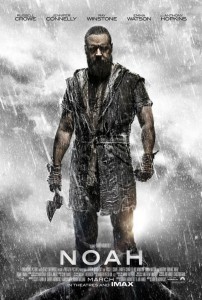 In my previous post about “Noah,” I observed: “Like any artist with a singular vision, Aronofsky’s work is often uneven and polarizing, but always thought-provoking and engaging.” I didn’t realize how prescient those words would be. Though intended to describe Aronofsky’s entire oeuvre, that sentence turned out to be an apt summation of my feelings after seeing “Noah.” Uneven? Definitely. Thought-proving? Undoubtedly.
Spoiler Alert: I reveal some plot elements that aren’t in the Bible and are key to the movie. If you haven’t yet seen it and plan on doing so, don’t continue … you’ve been warned!
First, the uneven.
Aronofsky’s Watchers are the ultimate Gnostic archetypes: beings of pure light entrapped by the muck of the material world, yearning for release from the bondage of physicality. But the Watchers, as depicted by Aronofsky, are lumbering, cartoonish beasts, an awkward and uninspired mix of Ent, Transformer and Muppet that would be laughable if not for the naïve earnestness of their role in the script.
The film would have been far stronger had they been omitted entirely, along with the underwhelming battle scene in which they featured. Aronofsky is clearly at his best when examining the psychological motivations and interactions of his human characters, not when orchestrating CGI battles featuring ballet dancers with yoga boxes taped to their arms and legs.
Rather than further bemoaning this misstep, I have another interpretation of these Watchers that offers at least a bit of reprieve: that they are intentional references to our cinematic mythology and deliberately unsettling reminders that we are watching a film that is far from perfect. The Watchers seem so false and out-of-place, so poorly conceived and awkwardly rendered, precisely because we are judging them in light of our intimate familiarity with myriad expressions of modern cinematic myth.
They are a potent reminder that, just as the people of the Ancient Near East had stories to make sense of the world around them, so we too cling to tales to help fashion meaning out of reality. The story of Noah is merely the antecedent of our own mythologies; each has their relative strengths and weaknesses and each must be evaluated within their own contexts and on their own terms.
But despite the distraction of the Watchers, “Noah” still offers fertile ground for theological and philosophical reflection.
At the heart of the film is a masterful exploration of the mimetic desire that drives humanity toward violent confrontation. Aronofsky’s antediluvian world is shaped by murder, Cain’s single act of violence reverberating through virtually every aspect of life, pushing humanity toward ever greater strife in desperate attempts to regain what was lost so long ago.
Aronofsky also shows us the only antidote to that pervasive and pernicious violence: love. His postdiluvian world is founded on love, where Noah’s choice to place innocent life above his own will — and even above his perception of God’s will — sends a decisive message about the priorities of the new creation.
Noah’s selfless choice in favor of love gives humanity a second chance, and in his refusal to sacrifice his grandchildren for a supposed greater good we see mirrored God’s refusal to sacrifice all of humanity despite our constant failures. We are deeply flawed creatures, bent on defilement and destruction and death, but we also have, inside ourselves, the ability to rise above selfishness and greed and jealousy and to choose what is good and just and right.
The film asks us to confront what it means to be able to make that choice for good, what it means to be bearers of the imago dei: are we reflecting God’s image by exercising dominion over creation, taming it and subduing it and bending it to our own will? Or do we best reflect God when we show his love, choosing love even when such a choice challenges our preconceptions?
The story of Noah is a story of choices. In Genesis, it is about God’s choice to push the reset button on creation and his choice to save Noah and his family. In Aronofsky’s film, it also about Noah’s choice of love.
As humanity continues to push our world and our lives out of balance, the choices we make inevitably have consequences. Those consequences may not take the form of a divinely instigated global deluge (though anthropogenic climate change may eventually have just such an effect), but nevertheless justice must eventually be served and balance must be restored. As in “Noah,” there is only one choice that promises to guide us towards peace and justice: love.
The words of 1 Peter 4:7-8 would have been timely before the Flood and are even more timely today:
The end of all things is near. Therefore be alert and of sober mind so that you may pray. Above all, love each other deeply, because love covers over a multitude of sins.
 Dan Wilkinson
Dan is a writer, graphic designer and IT specialist. He lives in Montana, is married and has two cats. He blogs at CoolingTwilight.com.
Previous Post

March 24, 2014
Sink or swim, "Noah" is a story worth retelling
Next Post

April 1, 2014 Which story are you in?
Browse Our Archives
Select a Category Book Reviews Christian History Christian Issues Christian Spirituality Current Events Fundamentalism Islam John Shore LGBT Movie Reviews Poetry Uncategorized
Select a Month October 2017 September 2017 August 2017 July 2017 June 2017 May 2017 April 2017 March 2017 February 2017 January 2017 December 2016 November 2016 October 2016 September 2016 August 2016 July 2016 June 2016 May 2016 April 2016 March 2016 February 2016 January 2016 December 2015 November 2015 October 2015 September 2015 August 2015 July 2015 June 2015 May 2015 April 2015 March 2015 February 2015 January 2015 December 2014 November 2014 October 2014 September 2014 August 2014 July 2014 June 2014 May 2014 April 2014 March 2014 February 2014 January 2014 December 2013 November 2013 October 2013 September 2013 August 2013 July 2013 June 2013
Follow Us!
TAKE THE
Religious Wisdom Quiz
Who was Rahab's great-great-grandson?
Select your answer to see how you score.
King David Boaz Solomon Jesse
Related posts from Unfundamentalist Christians

Why Boycotting Disney over a Gay Character Is...
A Close Encounter of the Ark Kind
An Act of Love: Frank Schaefer, United Methodists...

God Still Wishes He Were Dead: A Scene-By-Scene...
TRENDING AT PATHEOS Progressive Christian

What Being a Modern-Day Apostle Means to Me
In my last column, I discussed the ins and outs of modern-day...

Did Ancient China Once Worship the God of...
Across human history, a common thread weaves through the origins of the...

Love Your Neighbor – Including Earth-Kin: Lev. 19,...
God’s command to love your neighbor means acting in an ethical and...

Lead a Church Study of “Jesus and Lao...
Guest writer Jack Thomas (The Irreverent Reverend) reflects on leading his church...

Pastoral Wisdom for Responding to Sermon Pushback
Getting sermon pushback on your social justice sermon? Learn practical, Proverbs-based strategies...

Principles for Understanding the Apostolic Ministry Today
Whenever people discover that my formal ministry title is "apostle," as in...
view all Progressive Christian blogs
Ad-Free & Subscriber Log-In Subscription Support
- About Us
- 2026 Calendar
- Videos
- Podcasts
- Library of World Religions
- Faith In Media Tracker
- Advertise With Us
- Write for Us
- Privacy Policy
- Terms of Service
- Do Not Sell My Data
- Contact Us
- Radiant Digital
- Manage Newsletter Subscriptions
- Unsubscribe From Notifications
- Sitemap
Copyright 2008-2026, Patheos. All rights reserved.
Subscription Support Ad-Free & Subscriber Log-In
Follow Patheos