
BuddhistCatholicContemplativeEvangelicalGeneral ChristianHinduJewishLatter-day SaintMuslimNew VisionsProgressive Christian
Beliefs
- Buddhist
- Catholic
- Contemplative
- Evangelical
- General Christian
- Hindu
- Jewish
- Latter-day Saint
- More Voices
- Muslim
- New Visions
- Pagan
- Progressive Christian
Topics
- Religion News
- Food and Religion
- Sports and Religion
- Religious Art
- Religious Music and Entertainment
- Religious Events
- History and Religion
- Style and Religion
- Politics and Religion
- Women in Religion
- Recreation Outdoors and Religion
- Business Finance and Religion
- Careers Workplace and Religion
- Education and Religion
- Family Parenting and Religion
- Health Fitness and Religion
- Home and Religion
- Relationships and Religion
- Technology and Religion
- Travel and Religion
Columnists
- Buddhist Columnists
- Business Finance and Religion Columnists
- Careers Workplace and Religion Columnists
- Catholic Columnists
- Contemplative Columnists
- Education and Religion Columnists
- Evangelists Columnists
- Family Parenting and Religion Columnists
- General Christian Columnists
- Health Fitness and Religion Columnists
- Hindu Columnists
- History and Religion Columnists
- Home and Religion Columnists
- Jewish Columnists
- More Voices Columnists
- Latter Day Columnists
- Muslim Columnists
- New Visions Columnists
- Nonreligious Columnists
- Pagan Columnists
- Politics and Religion Columnists
- Progressive Columnists
- Recreation Outdoors and Religion Columnists
- Relationships and Religion Columnists
- Religion News Columnists
- Religious Art Columnists
- Religious Events Columnists
- Religious Music and Entertainment Columnists
- Sports and Religion Columnists
- Style and Religion Columnists
- Technology and Religion Columnists
- Travel and Religion Columnists
- Women in Religion Columnists
Resource Library
- 2026 Calendar
- Library of World Religions
- The 100 Most Holy Places on Earth
- Patheos Answers
- Podcasts
- Videos
- Faith Leaders Database
- Anglican Episcopalian
- Bahai
- Baptist
- Buddhism
- Christianity
- Confucianism
- Eastern Orthodoxy
- Hinduism
- Holiness and Pentecostal
- ISKCON
- Islam
- Judaism
- Lutheran
- Methodist
- The Church of Jesus Christ of Latter-day Saints
- New Age
- Paganism
- Presbytarian and Reformed
- Protestantism
- Religion Behind the Scenes
- Roman Catholic
- Scientology
- Shia Islam
- Sikhism
- Sufism
- Sunni Islam
- Taoism
- Zen
- See all religions
Research Tools
 Ad-Free & Subscriber Log-In Subscription Support
Ad-Free & Subscriber Log-In Subscription Support
Follow Patheos 

- Trending:
- Forgiveness
- |
- Marriage
- |
- Consciousness
- |
- Death Penalty
- |
- Election
- |
- Halloween
 Unequally Yoked
- Home
- Catholic
- Dwelling In Wounds To Hide From Grace
Dwelling In Wounds To Hide From Grace
Last updated on: March 24, 2016 at 10:48 am by Leah Libresco
Dwelling In Wounds To Hide From Grace 2016-03-24T10:48:31-04:00 Leah Libresco
Patheos Explore the world's faith through different perspectives on religion and spirituality! Patheos has the views of the prevalent religions and spiritualities of the world.
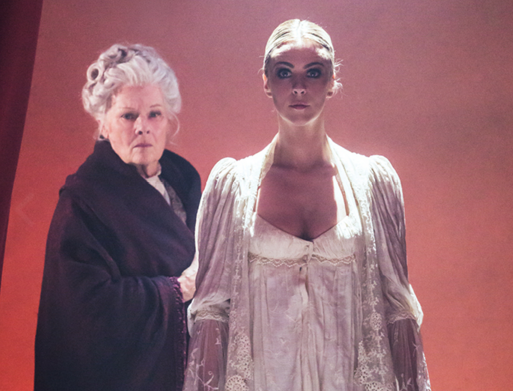
(The Winter’s Tale, Johan Persson)
I really enjoyed seeing a broadcast of Kenneth Brannagh’s The Winter’s Tale (and, if the taped version becomes more widely available, I highly recommend it). I’d only seen it once before, and one thing that changed for me when I saw this new one was that I couldn’t simply see Paulina as a pure heroine anymore.
In The Winter’s Tale, the king falsely believes his wife to be unfaithful, and he hounds her (he thinks) to death and orders her infant exposed to the elements. Paulina is the one who orchestrates the play’s resolution, concealing the queen, preventing the king from remarrying, and eventually restoring the queen after the king has realized his error and mourned (I’m compressing a lot here). I liked her for being a Prospero-like figure (magic and all) who puts all things right.
But when I saw Judi Dench in the role, I wasn’t so confident that Paulina had the situation in hand. She leads the king into an endless life of penance, and casts herself as his scourge. They both seem equally trapped in despair. Watching their grim folie à deux reminded me of Leslie Jamison’s discussion of “wound-dwelling” in her essay “Grand Unified Theory of Female Pain.”
What’s fertile in a wound? Why dwell in one? Wounds promise authenticity and profundity, beauty and singularity, desirability. They summon sympathy. They bleed enough light to write by. They yield scars full of stories and slights that become rallying cries. They break upon the fuming fruits of damaged engines and dust these engines with color. And yet—beyond and beneath their fruits—they still hurt. The boons of a wound never get rid of it; they just bloom from it. It’s perilous to think of them as chosen. Perhaps a better phrase to use is wound appeal, which is to say: the ways a wound can seduce, how it promises what it rarely gives. My friend Harriet put it like this: “Pain that gets performed is still pain.”
In Aleteia today, Alexi Sargeant goes further, and explains how we, like Paulina, can make repentance a wholly personal project that leaves no room for God or for grace.
When we become aware of the evil we have done, we should detest it. That is contrition. The problem is, Leontes becomes just as obsessed by contrition as he was once by jealousy. We are told that, for sixteen years, the king “shuts up himself,” living in virtual isolation to torment himself with recollection of his crimes. He seems to have no hope of forgiveness. This is a temptation we can recognize too. The shame of sin can be paralyzing, can hold us back from asking for God’s absolution: it seems like too much to ask. This is, of course, a perversely prideful thought. Who are we to cling to our burden when God offers to take it up?
The Triduum begins today, and as Lent comes to an end, it’s important to remember not to dwell in the loneliness of Holy Saturday all year.

Next Post

March 29, 2016 Engagement, A Bibliography
Browse Our Archives
Select a Category 7 Quick Takes Apologetics Atheism Book Conversion Debate Tactics Debates Epistemology/Philosophy Housekeeping Ideological Turing Test Marriage Morality in Practice Parsing Catholicism Possibly Heretical Radio Reviews/Recommendations Sequence Index Spiritual Practice Uncategorized
Select a Month April 2017 March 2017 January 2017 December 2016 September 2016 August 2016 July 2016 June 2016 May 2016 April 2016 March 2016 February 2016 January 2016 December 2015 November 2015 October 2015 September 2015 August 2015 July 2015 June 2015 May 2015 April 2015 March 2015 February 2015 January 2015 December 2014 November 2014 October 2014 September 2014 August 2014 July 2014 June 2014 May 2014 April 2014 March 2014 February 2014 January 2014 December 2013 November 2013 October 2013 September 2013 August 2013 July 2013 June 2013 May 2013 April 2013 March 2013 February 2013 January 2013 December 2012 November 2012 October 2012 September 2012 August 2012 July 2012 June 2012 May 2012 April 2012 March 2012 February 2012 January 2012 December 2011 November 2011 October 2011 September 2011 August 2011 July 2011 June 2011 May 2011 April 2011 March 2011 February 2011 January 2011 December 2010 November 2010 October 2010 September 2010 August 2010 July 2010 June 2010
Follow Us!
TAKE THE
Religious Wisdom Quiz
Who wrote the Book of Acts?
Select your answer to see how you score.
Luke Peter Paul Mark
Related posts from Unequally Yoked

Starving Laypeople of Devotion in Church

Aunt Alberta And Being Right (but the boring...

The Virtues of Sad Songs (a piece for...

The (Extra) Mercy of My Conversion
TRENDING AT PATHEOS Catholic

Rejecting Doom: Christian Hope And Human Action
Christianity is a religion of hope. We are to have hope and...

It’s What Comes From Within Which Matters
One of the most difficult things for us to understand is why...

Why I Choose the Eucharist Over the Sermon
Choose the Eucharist, Not the Sermon What are we supposed to get...

5 Design Elements Found in Spiritually Rooted Homes
Putting Spirituality Into Home Decor Our homes are more than our living...

Credo: A Story of God Told with the...
About 10 years ago, I began to imagine a personal "Credo" that...

The Anatomy of Divine Revelation in Catholic Thought
The claim that God has made Himself known to human beings is...
view all Catholic blogs
Ad-Free & Subscriber Log-In Subscription Support
- About Us
- 2026 Calendar
- Videos
- Podcasts
- Library of World Religions
- Faith In Media Tracker
- Advertise With Us
- Write for Us
- Privacy Policy
- Terms of Service
- Do Not Sell My Data
- Contact Us
- Radiant Digital
- Manage Newsletter Subscriptions
- Unsubscribe From Notifications
- Sitemap
Copyright 2008-2026, Patheos. All rights reserved.
Subscription Support Ad-Free & Subscriber Log-In
Follow Patheos