
BuddhistCatholicContemplativeEvangelicalGeneral ChristianHinduJewishLatter-day SaintMuslimNew VisionsProgressive Christian
Beliefs
- Buddhist
- Catholic
- Contemplative
- Evangelical
- General Christian
- Hindu
- Jewish
- Latter-day Saint
- More Voices
- Muslim
- New Visions
- Pagan
- Progressive Christian
Topics
- Religion News
- Food and Religion
- Sports and Religion
- Religious Art
- Religious Music and Entertainment
- Religious Events
- History and Religion
- Style and Religion
- Politics and Religion
- Women in Religion
- Recreation Outdoors and Religion
- Business Finance and Religion
- Careers Workplace and Religion
- Education and Religion
- Family Parenting and Religion
- Health Fitness and Religion
- Home and Religion
- Relationships and Religion
- Technology and Religion
- Travel and Religion
Columnists
- Buddhist Columnists
- Business Finance and Religion Columnists
- Careers Workplace and Religion Columnists
- Catholic Columnists
- Contemplative Columnists
- Education and Religion Columnists
- Evangelists Columnists
- Family Parenting and Religion Columnists
- General Christian Columnists
- Health Fitness and Religion Columnists
- Hindu Columnists
- History and Religion Columnists
- Home and Religion Columnists
- Jewish Columnists
- More Voices Columnists
- Latter Day Columnists
- Muslim Columnists
- New Visions Columnists
- Nonreligious Columnists
- Pagan Columnists
- Politics and Religion Columnists
- Progressive Columnists
- Recreation Outdoors and Religion Columnists
- Relationships and Religion Columnists
- Religion News Columnists
- Religious Art Columnists
- Religious Events Columnists
- Religious Music and Entertainment Columnists
- Sports and Religion Columnists
- Style and Religion Columnists
- Technology and Religion Columnists
- Travel and Religion Columnists
- Women in Religion Columnists
Resource Library
- 2026 Calendar
- Library of World Religions
- The 100 Most Holy Places on Earth
- Patheos Answers
- Podcasts
- Videos
- Faith Leaders Database
- Anglican Episcopalian
- Bahai
- Baptist
- Buddhism
- Christianity
- Confucianism
- Eastern Orthodoxy
- Hinduism
- Holiness and Pentecostal
- ISKCON
- Islam
- Judaism
- Lutheran
- Methodist
- The Church of Jesus Christ of Latter-day Saints
- New Age
- Paganism
- Presbytarian and Reformed
- Protestantism
- Religion Behind the Scenes
- Roman Catholic
- Scientology
- Shia Islam
- Sikhism
- Sufism
- Sunni Islam
- Taoism
- Zen
- See all religions
Research Tools
 Ad-Free & Subscriber Log-In Subscription Support
Ad-Free & Subscriber Log-In Subscription Support
Follow Patheos 

- Trending:
- Forgiveness
- |
- Marriage
- |
- Consciousness
- |
- Death Penalty
- |
- Election
- |
- Halloween
 Unequally Yoked
- Home
- Catholic
- Filing Down the Sharp Edges of Failure [Pope Francis Bookclub]
Filing Down the Sharp Edges of Failure [Pope Francis Bookclub]
Last updated on: December 15, 2014 at 2:57 pm by Leah Libresco
Filing Down the Sharp Edges of Failure [Pope Francis Bookclub] 2014-12-15T14:57:15-05:00 Leah Libresco
Patheos Explore the world's faith through different perspectives on religion and spirituality! Patheos has the views of the prevalent religions and spiritualities of the world.
In 2014, I’m reading and blogging through Pope Francis/Cardinal Bergoglio’s Open Mind, Faithful Heart: Reflections on Following Jesus. Every Monday, I’ll be writing about the next meditation in the book, so you’re welcome to peruse them all and/or read along.
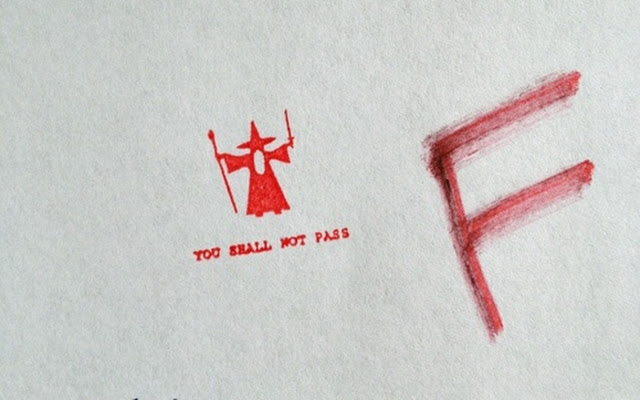 There are two paragraphs in particular from this week’s chapter that give a pretty good impression of what Pope Francis is talking about when he titled this section “The Failure of Jesus”
Our human tendency is to disguise all evidence of the reality that most frustrates us: death. We need only look at the cemeteries, the gravestones. the monuments to understand the ways in which we seek to embellish our mortality and banish from our minds this ultimate failure of our humanity. Sometimes we even resort to “canonizing” our dead. After Saint Peter’s Square, the place where most people are canonized is at wakes: usually the dead person is described as a “saint.” Of course, he was a saint because now he can’t bother us! These are just ways of camouflaging the failure that is death. We use subterfuge to situate our hope outside the sphere of failure, and so we fail to place our hope in God.
This means that Christians today must incorporate into their daily lives the conviction that Jesus Christ is fully alive and walking in our midst. Otherwise, their Christianity will be a pseud0-failure. If they try to evade the scandalous failure of the cross, which appears to be the total negation of human hope, then they have not truly “hoped against hope.” If their hope fails, they will seek out a more acceptable kind of failure, failure that can coexist elegantly with universal, all-purpose values. Such is the failure of religion without devotion.
If I want to find an example of the aesthetic of pseudo-failure, I’d go with “Now You Know” from Merrily We Roll Along, where the protagonist’s friends comfort him after his divorce with a chorus of “Best thing that ever could have happened.” Here, every failure must contain the seeds of some useful lesson or subtle improvement, no need for psalms of desolation and a plea for external help. Frank and his friends are a long way from Gesthemane Off-stage, there’s a little of this attitude in the spirit of Silicon Valley that both engendered FailCon and found it ultimately superfluous. As the NYT reported:
Five years ago, Cassandra Phillipps founded FailCon, a one-day conference in San Francisco celebrating failure. Discouraged by a growing chorus of start-up founders promoting their triumphs throughout Silicon Valley, and nervous about her own prospects as an entrepreneur, she craved the stories of people who had flopped. The conference was a success. And every October for the next four years, up to 500 tech start-up newbies have gathered with industry veterans who dish on their “biggest fail” and lead round-table discussions with titles like “How to Conduct Yourself When It All Goes Off the Rails.” But this year, the FailCon event in San Francisco was canceled, and Ms. Phillipps says part of the reason is that failure chatter is now so pervasive in Silicon Valley that a conference almost seems superfluous. “It’s in the lexicon that you’re going to fail,” she says. … Now failure is emerging as a badge of honor among some Silicon Valley start-ups, as entrepreneurs publicly trumpet how they have faced adversity head-on.
There is some useful work being done by projects like FailCon. We’re reluctant to acknowledge and learn from our failures, so it tends to take a special effort to push past ugh fields and seek out disconfirmatory evidence. But the danger in taking this rose-colored attitude too far is that it leaves us without a story when we find a failure/injury/desolation that we don’t learn from and doesn’t make us stronger. If weakness is usually just a matter of not looking hard enough for the angle, then we won’t understand how to treat other people (or ourselves) when we are genuinely helpless.
Previous Post

December 13, 2014
A Rosary App from One of Our Regulars
Next Post

December 16, 2014 Tell Your College Women Friends About Arete!
Browse Our Archives
Select a Category 7 Quick Takes Apologetics Atheism Book Conversion Debate Tactics Debates Epistemology/Philosophy Housekeeping Ideological Turing Test Marriage Morality in Practice Parsing Catholicism Possibly Heretical Radio Reviews/Recommendations Sequence Index Spiritual Practice Uncategorized
Select a Month April 2017 March 2017 January 2017 December 2016 September 2016 August 2016 July 2016 June 2016 May 2016 April 2016 March 2016 February 2016 January 2016 December 2015 November 2015 October 2015 September 2015 August 2015 July 2015 June 2015 May 2015 April 2015 March 2015 February 2015 January 2015 December 2014 November 2014 October 2014 September 2014 August 2014 July 2014 June 2014 May 2014 April 2014 March 2014 February 2014 January 2014 December 2013 November 2013 October 2013 September 2013 August 2013 July 2013 June 2013 May 2013 April 2013 March 2013 February 2013 January 2013 December 2012 November 2012 October 2012 September 2012 August 2012 July 2012 June 2012 May 2012 April 2012 March 2012 February 2012 January 2012 December 2011 November 2011 October 2011 September 2011 August 2011 July 2011 June 2011 May 2011 April 2011 March 2011 February 2011 January 2011 December 2010 November 2010 October 2010 September 2010 August 2010 July 2010 June 2010
Follow Us!
TAKE THE
Religious Wisdom Quiz
Who asked Jesus, "Lord, we don’t know where you are going, so how can we know the way?"
Select your answer to see how you score.
Thomas Peter John Philip
Related posts from Unequally Yoked

Rational Faith: More working hypothesis than logical proof

Life Lessons that Can't be Taught at College's...

Books that Change the Way You Think [Radio...

Catching the Joy of Others [Pope Francis Bookclub]
TRENDING AT PATHEOS Catholic

Rejecting Doom: Christian Hope And Human Action
Christianity is a religion of hope. We are to have hope and...

It’s What Comes From Within Which Matters
One of the most difficult things for us to understand is why...

Why I Choose the Eucharist Over the Sermon
Choose the Eucharist, Not the Sermon What are we supposed to get...

5 Design Elements Found in Spiritually Rooted Homes
Putting Spirituality Into Home Decor Our homes are more than our living...

Credo: A Story of God Told with the...
About 10 years ago, I began to imagine a personal "Credo" that...

The Anatomy of Divine Revelation in Catholic Thought
The claim that God has made Himself known to human beings is...
view all Catholic blogs
Ad-Free & Subscriber Log-In Subscription Support
- About Us
- 2026 Calendar
- Videos
- Podcasts
- Library of World Religions
- Faith In Media Tracker
- Advertise With Us
- Write for Us
- Privacy Policy
- Terms of Service
- Do Not Sell My Data
- Contact Us
- Radiant Digital
- Manage Newsletter Subscriptions
- Unsubscribe From Notifications
- Sitemap
Copyright 2008-2026, Patheos. All rights reserved.
Subscription Support Ad-Free & Subscriber Log-In
Follow Patheos