
BuddhistCatholicContemplativeEvangelicalGeneral ChristianHinduJewishLatter-day SaintMuslimNew VisionsProgressive Christian
Beliefs
- Buddhist
- Catholic
- Contemplative
- Evangelical
- General Christian
- Hindu
- Jewish
- Latter-day Saint
- More Voices
- Muslim
- New Visions
- Pagan
- Progressive Christian
Topics
- Religion News
- Food and Religion
- Sports and Religion
- Religious Art
- Religious Music and Entertainment
- Religious Events
- History and Religion
- Style and Religion
- Politics and Religion
- Women in Religion
- Recreation Outdoors and Religion
- Business Finance and Religion
- Careers Workplace and Religion
- Education and Religion
- Family Parenting and Religion
- Health Fitness and Religion
- Home and Religion
- Relationships and Religion
- Technology and Religion
- Travel and Religion
Columnists
- Buddhist Columnists
- Business Finance and Religion Columnists
- Careers Workplace and Religion Columnists
- Catholic Columnists
- Contemplative Columnists
- Education and Religion Columnists
- Evangelists Columnists
- Family Parenting and Religion Columnists
- General Christian Columnists
- Health Fitness and Religion Columnists
- Hindu Columnists
- History and Religion Columnists
- Home and Religion Columnists
- Jewish Columnists
- More Voices Columnists
- Latter Day Columnists
- Muslim Columnists
- New Visions Columnists
- Nonreligious Columnists
- Pagan Columnists
- Politics and Religion Columnists
- Progressive Columnists
- Recreation Outdoors and Religion Columnists
- Relationships and Religion Columnists
- Religion News Columnists
- Religious Art Columnists
- Religious Events Columnists
- Religious Music and Entertainment Columnists
- Sports and Religion Columnists
- Style and Religion Columnists
- Technology and Religion Columnists
- Travel and Religion Columnists
- Women in Religion Columnists
Resource Library
- 2026 Calendar
- Library of World Religions
- The 100 Most Holy Places on Earth
- Patheos Answers
- Podcasts
- Videos
- Faith Leaders Database
- Anglican Episcopalian
- Bahai
- Baptist
- Buddhism
- Christianity
- Confucianism
- Eastern Orthodoxy
- Hinduism
- Holiness and Pentecostal
- ISKCON
- Islam
- Judaism
- Lutheran
- Methodist
- The Church of Jesus Christ of Latter-day Saints
- New Age
- Paganism
- Presbytarian and Reformed
- Protestantism
- Religion Behind the Scenes
- Roman Catholic
- Scientology
- Shia Islam
- Sikhism
- Sufism
- Sunni Islam
- Taoism
- Zen
- See all religions
Research Tools
 Ad-Free & Subscriber Log-In Subscription Support
Ad-Free & Subscriber Log-In Subscription Support
Follow Patheos 

- Trending:
- Forgiveness
- |
- Marriage
- |
- Consciousness
- |
- Death Penalty
- |
- Election
- |
- Halloween
 Unequally Yoked
- Home
- Catholic
- Pope Francis’s Judith Leaves Me A Little Lost
Pope Francis’s Judith Leaves Me A Little Lost
Last updated on: November 17, 2014 at 2:30 pm by Leah Libresco
Pope Francis’s Judith Leaves Me A Little Lost 2014-11-17T14:30:34-05:00 Leah Libresco
Patheos Explore the world's faith through different perspectives on religion and spirituality! Patheos has the views of the prevalent religions and spiritualities of the world.
In 2014, I’m reading and blogging through Pope Francis/Cardinal Bergoglio’s Open Mind, Faithful Heart: Reflections on Following Jesus. Every Monday, I’ll be writing about the next meditation in the book, so you’re welcome to peruse them all and/or read along.
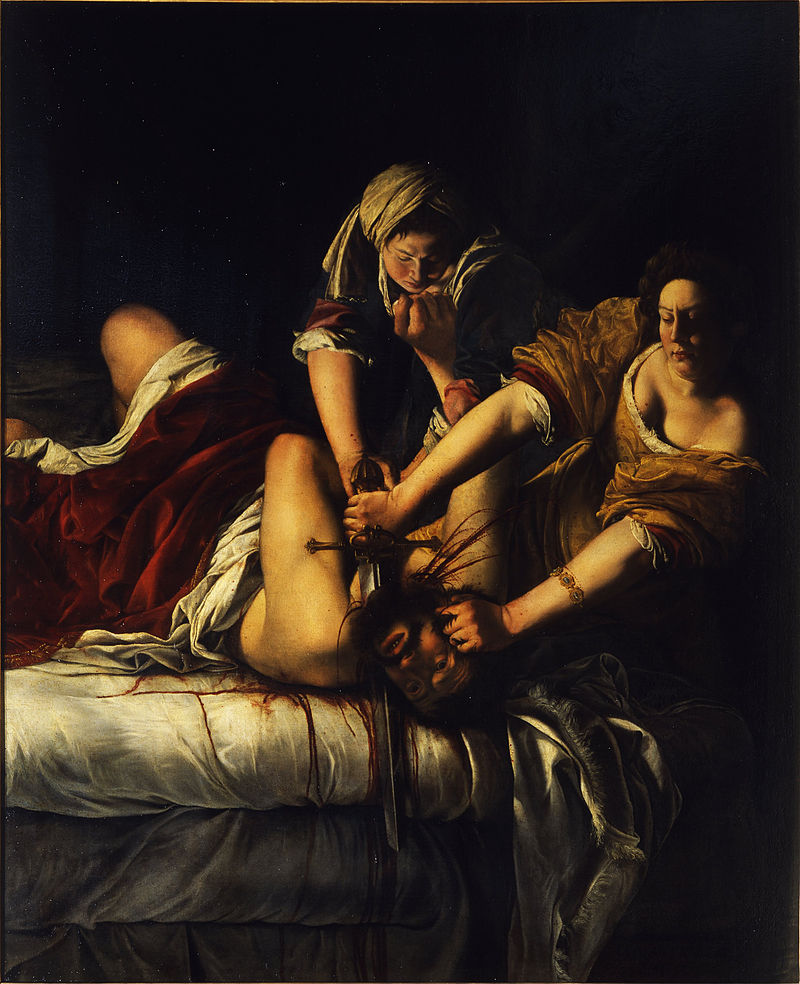
This week’s chapter is only three and a half pages long, and I feel like it sorely needed to be expanded. As Pope Francis discusses Judith’s beheading of Holofernes, he emphasizes the way that her faith is guided by her “memory-soaked flesh,” her connection to the history of the Jews relation to God. Francis’s own prose is allusion-soaked as he writes:
Judith prays even while in action: both before and after she beheads Holofernes, she calls upon the Lord. Her action is truly dramatic, for the truest drama is that which takes between our freedom and God’s (Jdt 13:4-10). There is no question here of the self-sufficiency of Tosca’s lethal kiss (questo è il baccio) or of Macbeth’s debate with himself about killing the king. The sufficiency here is in the tragedy. What we see in Judith is true salvation history, the struggle between freedom and grace.
[…]
Judith believes neither in quietism nor in deal-making. She does not isolate herself in self-sufficiency, nor does she retreat into insecurity. What cries out to God and lets God act is simply her memory-filled woundedness.
This passage is enough, if it were on a flyer advertising a lecture, to guarantee my attendance, but it isn’t enough for me to actually understand what Pope Francis is explaining. It’s too bad, because it feels like if I could grok it better, Francis’s discussion of Judith acting out of “memory-filled woundedness” would speak somehow to Catherine’s essay about her struggles with the sanctity-through-suffering of St. Catherine of Siena.
I’d be interested in your thoughts, or anything you can do to expand on the contrast Pope Francis is drawing between Judith and Tosca and Macbeth. (I’m only familiar with the Shakespeare, myself).
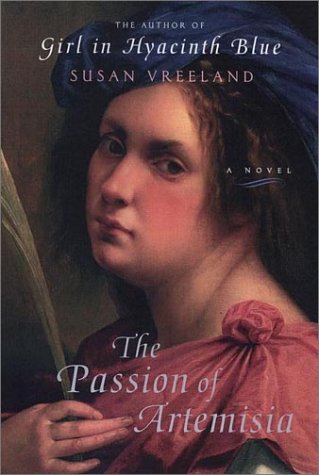
I think the main thing I have to add is that I recommend the historical fiction novel The Passion of Artemisia by Susan Vreeland, which I greatly enjoyed. It is Artemisia’s portrait of Judith slaying Holofernes that is at the top of this post.
(Now’s probably time to caveat my recommendation by saying that I really love books that have long descriptions of things being made: Tamora Pierce’s Circle of Magic quartet, the furniture repair sections of Donna Tartt’s The Goldfinch (and pretty much only those parts), and even non-fiction instruction manuals that I wind up happily rereading. So, I think that The Passion of Artemisia was pretty good, but my recommendation may be more about the how of the painter protagonist than the whom).
Luckily, the reason I want to recommend it today is about the how parts. Vreeland narrates Artemisia’s choices about how to compose her Judith (and a second one later in life). When she paints Judith, Susanna, and Lucretia, Vreeland’s Artemisia spends a good deal of time deciding how to illustrate the “true drama” that Francis praises. If I had the book to hand, I’d like to look back at it this week, to see how the compositions she considers and rejects illuminate, in a via negativa kind of way, what elevates and moves Judith, and how women (incuding Vreeland’s Artemisia) use intimate knowledge of woundedness to shape how they exercise their strength.
Previous Post

November 16, 2014
Torn Between Two Saint Catherines
Next Post

November 18, 2014 "It is Not Good for Man to be Alone" - a review of Gay and Catholic
Browse Our Archives
Select a Category 7 Quick Takes Apologetics Atheism Book Conversion Debate Tactics Debates Epistemology/Philosophy Housekeeping Ideological Turing Test Marriage Morality in Practice Parsing Catholicism Possibly Heretical Radio Reviews/Recommendations Sequence Index Spiritual Practice Uncategorized
Select a Month April 2017 March 2017 January 2017 December 2016 September 2016 August 2016 July 2016 June 2016 May 2016 April 2016 March 2016 February 2016 January 2016 December 2015 November 2015 October 2015 September 2015 August 2015 July 2015 June 2015 May 2015 April 2015 March 2015 February 2015 January 2015 December 2014 November 2014 October 2014 September 2014 August 2014 July 2014 June 2014 May 2014 April 2014 March 2014 February 2014 January 2014 December 2013 November 2013 October 2013 September 2013 August 2013 July 2013 June 2013 May 2013 April 2013 March 2013 February 2013 January 2013 December 2012 November 2012 October 2012 September 2012 August 2012 July 2012 June 2012 May 2012 April 2012 March 2012 February 2012 January 2012 December 2011 November 2011 October 2011 September 2011 August 2011 July 2011 June 2011 May 2011 April 2011 March 2011 February 2011 January 2011 December 2010 November 2010 October 2010 September 2010 August 2010 July 2010 June 2010
Follow Us!
TAKE THE
Religious Wisdom Quiz
Which Jewish festival was occurring when the Holy Spirit came upon the disciples in Acts 2?
Select your answer to see how you score.
Pentecost Hanukkah Passover Tabernacles
Related posts from Unequally Yoked

I'm keynoting at a Con for Christian nerds!

How do you throw a fasting and silence...
Lenten disciplines draw on our weakness, not our...

I'm speaking about my conversion in Denver!
TRENDING AT PATHEOS Catholic

The Parable Of The Sower And The Word...
One of Christ’s most famous parables is that of the sower who...

Rejecting Doom: Christian Hope And Human Action
Christianity is a religion of hope. We are to have hope and...

Why I Choose the Eucharist Over the Sermon
Choose the Eucharist, Not the Sermon What are we supposed to get...

5 Design Elements Found in Spiritually Rooted Homes
Putting Spirituality Into Home Decor Our homes are more than our living...

Credo: A Story of God Told with the...
About 10 years ago, I began to imagine a personal "Credo" that...

The Anatomy of Divine Revelation in Catholic Thought
The claim that God has made Himself known to human beings is...
view all Catholic blogs
Ad-Free & Subscriber Log-In Subscription Support
- About Us
- 2026 Calendar
- Videos
- Podcasts
- Library of World Religions
- Faith In Media Tracker
- Advertise With Us
- Write for Us
- Privacy Policy
- Terms of Service
- Do Not Sell My Data
- Contact Us
- Radiant Digital
- Manage Newsletter Subscriptions
- Unsubscribe From Notifications
- Sitemap
Copyright 2008-2026, Patheos. All rights reserved.
Subscription Support Ad-Free & Subscriber Log-In
Follow Patheos