
BuddhistCatholicContemplativeEvangelicalGeneral ChristianHinduJewishLatter-day SaintMuslimNew VisionsProgressive Christian
Beliefs
- Buddhist
- Catholic
- Contemplative
- Evangelical
- General Christian
- Hindu
- Jewish
- Latter-day Saint
- More Voices
- Muslim
- New Visions
- Pagan
- Progressive Christian
Topics
- Religion News
- Food and Religion
- Sports and Religion
- Religious Art
- Religious Music and Entertainment
- Religious Events
- History and Religion
- Style and Religion
- Politics and Religion
- Women in Religion
- Recreation Outdoors and Religion
- Business Finance and Religion
- Careers Workplace and Religion
- Education and Religion
- Family Parenting and Religion
- Health Fitness and Religion
- Home and Religion
- Relationships and Religion
- Technology and Religion
- Travel and Religion
Columnists
- Buddhist Columnists
- Business Finance and Religion Columnists
- Careers Workplace and Religion Columnists
- Catholic Columnists
- Contemplative Columnists
- Education and Religion Columnists
- Evangelists Columnists
- Family Parenting and Religion Columnists
- General Christian Columnists
- Health Fitness and Religion Columnists
- Hindu Columnists
- History and Religion Columnists
- Home and Religion Columnists
- Jewish Columnists
- More Voices Columnists
- Latter Day Columnists
- Muslim Columnists
- New Visions Columnists
- Nonreligious Columnists
- Pagan Columnists
- Politics and Religion Columnists
- Progressive Columnists
- Recreation Outdoors and Religion Columnists
- Relationships and Religion Columnists
- Religion News Columnists
- Religious Art Columnists
- Religious Events Columnists
- Religious Music and Entertainment Columnists
- Sports and Religion Columnists
- Style and Religion Columnists
- Technology and Religion Columnists
- Travel and Religion Columnists
- Women in Religion Columnists
Resource Library
- 2026 Calendar
- Library of World Religions
- The 100 Most Holy Places on Earth
- Patheos Answers
- Podcasts
- Videos
- Faith Leaders Database
- Anglican Episcopalian
- Bahai
- Baptist
- Buddhism
- Christianity
- Confucianism
- Eastern Orthodoxy
- Hinduism
- Holiness and Pentecostal
- ISKCON
- Islam
- Judaism
- Lutheran
- Methodist
- The Church of Jesus Christ of Latter-day Saints
- New Age
- Paganism
- Presbytarian and Reformed
- Protestantism
- Religion Behind the Scenes
- Roman Catholic
- Scientology
- Shia Islam
- Sikhism
- Sufism
- Sunni Islam
- Taoism
- Zen
- See all religions
Research Tools
 Ad-Free & Subscriber Log-In Subscription Support
Ad-Free & Subscriber Log-In Subscription Support
Follow Patheos 

- Trending:
- Forgiveness
- |
- Marriage
- |
- Consciousness
- |
- Death Penalty
- |
- Election
- |
- Halloween
 Unequally Yoked
- Home
- Catholic
- To Mary Through Henry Adams
To Mary Through Henry Adams
Last updated on: September 13, 2014 at 11:11 am by Leah Libresco
To Mary Through Henry Adams 2014-09-13T11:11:07-04:00 Leah Libresco
Patheos Explore the world's faith through different perspectives on religion and spirituality! Patheos has the views of the prevalent religions and spiritualities of the world.
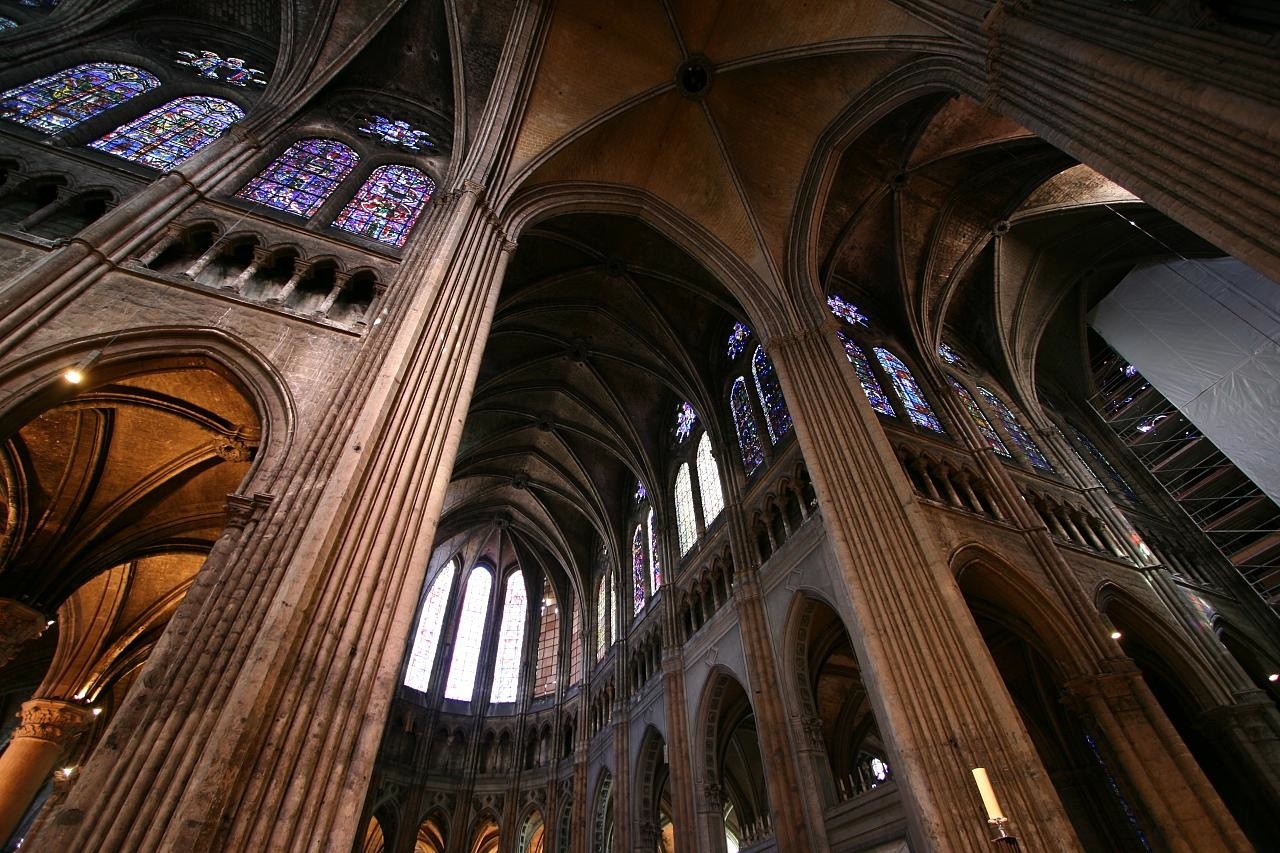
It’s been a week of Marian feasts. Yesterday was the feast of Mary’s name and this past Monday was the feast of her birth. I lucked into doing extremely thematic reading for the week, since this is when I finally got around to reading the copy of Henry Adams’s Mont-Saint-Michel and Chatres that I had on my kindle.
Adams (descended from the presidential Adamses) is also the author of The Education of Henry Adams, which was my favorite part of the curriculum of the “Political Philosophy as Education” class I took in college. He had a fascination with the Virgin Mary in that book, too, and this book is more suited to indulge it. He frequently casts Mary as a Rabelaisian figure, overthrowing and rebuking the established order, whether by appearing to the clergy to demand a proper burial for a man who had offered her a single “Hail Mary” or delighting in a tumbler-turned-monk, who, unable to read and learn prayers, did flips before her altar, to offer what service he could. In my favorite of the stories that Adams collects, when a knight stops by a church on his way to a tourney, and attends a Mass long enough to prevent him from jousting, Mary enters the lists in his stead, and unhorses everyone.
Plenty of what Henry reports is not necessarily orthodox (and certainly isn’t vetted). It’s not so much a theological work as a (slightly speculative) ethnography, filtered through Adams’s own enthusiasm. I read the book quickly, rather than critically, since I liked seeing through Adams’s eyes as naturally as he did, figuring I’d have time to turn over the book later and figure out what fruit it would/should bear in me. I’ll probably come back to it in a year or so and read it again, more slowly, but, for now, it seemed like a good idea to swallow whole and digest.
Here’s a excerpt from the final chapter:
The architects of the twelfth and thirteenth centuries took the Church and the universe for truths, and tried to express them in a structure which should be final. Knowing by an enormous experience precisely where the strains were to come, they enlarged their scale to the utmost point of material endurance, lightening the load and distributing the burden until the gutters and gargoyles that seem mere ornament, and the grotesques that seem rude absurdities, all do work either for the arch or for the eye; and every inch of material, up and down, from crypt to vault, from man to God, from the universe to the atom, had its task, giving support where support was needed or weight where concentration was felt, but always with the condition of showing conspicuously to the eye the great lines which led to unity and the curves which controlled divergence; so that… one idea controlled every line…
Perhaps the best proof of it is their apparent instability. Of all the elaborate symbolism which has been suggested for the Gothic cathedral, the most vital and most perfect may be that the slender nervure, the springing motion of the broken arch, the leap downwards of the flying buttress,–the visible effort to throw off a visible strain,–never let us forget that Faith alone supports it, and that, if Faith fails, Heaven is lost. The equilibrium is visibly delicate beyond the line of safety; danger lurks in every stone. The peril of the heavy tower, of the restless vault, of the vagrant buttress; the uncertainty of logic, the inequalities of the syllogism, the irregularities of the mental mirror,–all these haunting nightmares of the Church are expressed as strongly by the Gothic cathedral as though it had been the cry of human suffering, and as no emotion had ever been expressed before or is likely to find expression again.
P.S. My computer is dead, so, while I wait for the replacement, it may take longer than usual to clear pending posts.
Previous Post
September 12, 2014
7QT: Brutalism and Book Covers
Next Post
September 14, 2014 The Loves We Need From Other People
Browse Our Archives
Select a Category 7 Quick Takes Apologetics Atheism Book Conversion Debate Tactics Debates Epistemology/Philosophy Housekeeping Ideological Turing Test Marriage Morality in Practice Parsing Catholicism Possibly Heretical Radio Reviews/Recommendations Sequence Index Spiritual Practice Uncategorized
Select a Month April 2017 March 2017 January 2017 December 2016 September 2016 August 2016 July 2016 June 2016 May 2016 April 2016 March 2016 February 2016 January 2016 December 2015 November 2015 October 2015 September 2015 August 2015 July 2015 June 2015 May 2015 April 2015 March 2015 February 2015 January 2015 December 2014 November 2014 October 2014 September 2014 August 2014 July 2014 June 2014 May 2014 April 2014 March 2014 February 2014 January 2014 December 2013 November 2013 October 2013 September 2013 August 2013 July 2013 June 2013 May 2013 April 2013 March 2013 February 2013 January 2013 December 2012 November 2012 October 2012 September 2012 August 2012 July 2012 June 2012 May 2012 April 2012 March 2012 February 2012 January 2012 December 2011 November 2011 October 2011 September 2011 August 2011 July 2011 June 2011 May 2011 April 2011 March 2011 February 2011 January 2011 December 2010 November 2010 October 2010 September 2010 August 2010 July 2010 June 2010
Follow Us!
TAKE THE
Religious Wisdom Quiz
True or False: Romans teaches that all Israel will be saved.
Select your answer to see how you score.
TRUE FALSE
Related posts from Unequally Yoked



The Boring, Quiet Rituals That Sustain Us Spiritually

Starving Laypeople of Devotion in Church
TRENDING AT PATHEOS Catholic

The Parable Of The Sower And The Word...
One of Christ’s most famous parables is that of the sower who...

Rejecting Doom: Christian Hope And Human Action
Christianity is a religion of hope. We are to have hope and...

Why I Choose the Eucharist Over the Sermon
Choose the Eucharist, Not the Sermon What are we supposed to get...

5 Design Elements Found in Spiritually Rooted Homes
Putting Spirituality Into Home Decor Our homes are more than our living...

Credo: A Story of God Told with the...
About 10 years ago, I began to imagine a personal "Credo" that...

The Anatomy of Divine Revelation in Catholic Thought
The claim that God has made Himself known to human beings is...
view all Catholic blogs
Ad-Free & Subscriber Log-In Subscription Support
- About Us
- 2026 Calendar
- Videos
- Podcasts
- Library of World Religions
- Faith In Media Tracker
- Advertise With Us
- Write for Us
- Privacy Policy
- Terms of Service
- Do Not Sell My Data
- Contact Us
- Radiant Digital
- Manage Newsletter Subscriptions
- Unsubscribe From Notifications
- Sitemap
Copyright 2008-2026, Patheos. All rights reserved.
Subscription Support Ad-Free & Subscriber Log-In
Follow Patheos