
BuddhistCatholicContemplativeEvangelicalGeneral ChristianHinduJewishLatter-day SaintMuslimNew VisionsProgressive Christian
Beliefs
- Buddhist
- Catholic
- Contemplative
- Evangelical
- General Christian
- Hindu
- Jewish
- Latter-day Saint
- More Voices
- Muslim
- New Visions
- Pagan
- Progressive Christian
Topics
- Religion News
- Food and Religion
- Sports and Religion
- Religious Art
- Religious Music and Entertainment
- Religious Events
- History and Religion
- Style and Religion
- Politics and Religion
- Women in Religion
- Recreation Outdoors and Religion
- Business Finance and Religion
- Careers Workplace and Religion
- Education and Religion
- Family Parenting and Religion
- Health Fitness and Religion
- Home and Religion
- Relationships and Religion
- Technology and Religion
- Travel and Religion
Columnists
- Buddhist Columnists
- Business Finance and Religion Columnists
- Careers Workplace and Religion Columnists
- Catholic Columnists
- Contemplative Columnists
- Education and Religion Columnists
- Evangelists Columnists
- Family Parenting and Religion Columnists
- General Christian Columnists
- Health Fitness and Religion Columnists
- Hindu Columnists
- History and Religion Columnists
- Home and Religion Columnists
- Jewish Columnists
- More Voices Columnists
- Latter Day Columnists
- Muslim Columnists
- New Visions Columnists
- Nonreligious Columnists
- Pagan Columnists
- Politics and Religion Columnists
- Progressive Columnists
- Recreation Outdoors and Religion Columnists
- Relationships and Religion Columnists
- Religion News Columnists
- Religious Art Columnists
- Religious Events Columnists
- Religious Music and Entertainment Columnists
- Sports and Religion Columnists
- Style and Religion Columnists
- Technology and Religion Columnists
- Travel and Religion Columnists
- Women in Religion Columnists
Resource Library
- 2026 Calendar
- Library of World Religions
- The 100 Most Holy Places on Earth
- Patheos Answers
- Podcasts
- Videos
- Faith Leaders Database
- Anglican Episcopalian
- Bahai
- Baptist
- Buddhism
- Christianity
- Confucianism
- Eastern Orthodoxy
- Hinduism
- Holiness and Pentecostal
- ISKCON
- Islam
- Judaism
- Lutheran
- Methodist
- The Church of Jesus Christ of Latter-day Saints
- New Age
- Paganism
- Presbytarian and Reformed
- Protestantism
- Religion Behind the Scenes
- Roman Catholic
- Scientology
- Shia Islam
- Sikhism
- Sufism
- Sunni Islam
- Taoism
- Zen
- See all religions
Research Tools
 Ad-Free & Subscriber Log-In Subscription Support
Ad-Free & Subscriber Log-In Subscription Support
Follow Patheos 

- Trending:
- Forgiveness
- |
- Marriage
- |
- Consciousness
- |
- Death Penalty
- |
- Election
- |
- Halloween
 Unequally Yoked
- Home
- Catholic
- Mind Continuing this Argument in a Counterfactual World?
Mind Continuing this Argument in a Counterfactual World?
Last updated on: September 24, 2014 at 4:20 pm by Leah Libresco
Mind Continuing this Argument in a Counterfactual World? 2014-09-24T16:20:37-04:00 Leah Libresco
Patheos Explore the world's faith through different perspectives on religion and spirituality! Patheos has the views of the prevalent religions and spiritualities of the world.
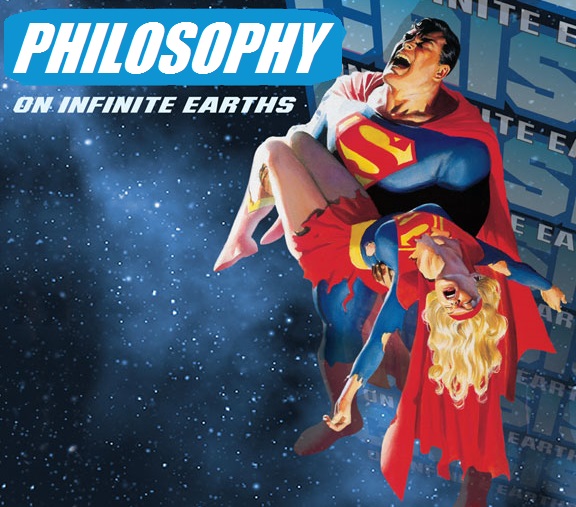
Cass Sunstein is mounting a defense of historical counterfactuals in The New Republic. At their simplest (and, he would argue, most useful), they are baked into the entire historical discipline:
Yet the most fundamental problem is that Evans does not grapple sufficiently with the fact that historians do not only offer narratives; they also offer explanations. They say that some event—the rise of Nazism, the Vietnam war, the election of Ronald Reagan, the attacks of 9 / 11—had particular causes. It is not possible to take a stand on the existence of causes, or on their relative importance, without thinking about what the world would be like if one or another were removed. If we say that the Vietnam war or the passage of the Civil Rights Act of 1964 was “caused” by the Kennedy assassination, we must be imagining a world in which Kennedy was not assassinated, and hence making a claim about what would have happened in that alternative and historically unrealized world. And if so, we are engaging in counterfactual history. As Jon Elster puts it, historians “have been talking counterfactually all the time without knowing it.
Sunstein is careful to distinguish precision targeted counterfactual stories from their more speculative questions.
Still other counterfactuals run into difficulties because they depend on a change that cannot logically be made without simultaneously introducing, or allowing for, other changes which the counterfactualist is attempting to bracket. Once we introduce some changes, all bets are off. Gloria Steinem offered a memorable counter- factual: “If men could get pregnant, abortion would be a sacrament.” But if men could get pregnant, they would not be men, at least not in the same sense, and in a world without men we cannot say much about the legal status of abortion. The most fantastic counterfactual narratives fall in this category. If Nazi Germany had cell phones, Hitler might have won the war—but if Nazi Germany had cell phones, the world would be so unrecognizably different that it is not clear that we can say anything at all. If horses were smarter than people, they might rule the Earth. As Ferguson writes, “No sensible person wishes to know what would have happened in 1948 if the entire population of Paris had suddenly sprouted wings.” (Though come to think of it, that’s a pretty interesting question.)
I tend to like this kind of counterfactual (and the scifi/fantasy genres in which it appears) because it gives us a framework to puzzle out bigger questions than the probability of success for a particular legislative agenda. Sunstein is right that the “if men could get pregnant” tells us very little about what we could/should think about the legality of abortion, but it’s just the right size to try to puzzle out what we think about gender. These wilder counterfactuals make it easier to try to figure out what makes us care about gender as a category: is it the ability to bear children? Is it a useful way to label clusters on the EQ/SQ spectrum? Is it a biological fact about imprinting (not the duckling kind)?
We’ve touched on some of those questions previously on this blog during the lively discussion about what kind of stories you’d tell in C.S. Lewis’s counterfactual world of seven genders. And, in his Orthogonal trilogy, Greg Egan does wind up chronicling a species that alters their reproductive habits and must decide whether their gender divisions remain meaningful.
Sometimes it’s easier to figure out what we believe and why when we pick a possible world that’s far enough from our own that we can’t quickly and easily make judgements about things like the legal status of abortion in our world. Free for a little while from our cached thoughts and hostilities, it’s a little easier to get curious and constructive, and then translate your thoughts back into maxims and actions (if possible) later.
You want to hit a balance of foreign enough to play around with and familiar enough to be relevant. In an essay at Tor, Max Gladstone (author of Three Parts Dead and other Craft Sequence novels) discusses how traditional swords-and-kings fantasy sometimes fails him on that last criterion.
Some days, though, it’s hard for me to connect with all that meaning and power. In dark moments I feel myself drowning in kings and empires and satraps and dukes, in crowns, in magical assassins and MacGuffiny mystic objects and epic destinies and window dressing. “I’ve never lived with a king,” I grump, “and basically nobody else has either. Why read about them?” In dark moments I grow furious with medieval pantomime.
…I want a government terrified for the future, struggling to preserve its power and work with a movement despite massive historical differences. I want an undead overlord who’s slain gods with his bare hands explaining to a citizen council why his rezoning proposal will improve the lives of the very people who protest it. I want a consulting sorcerer torn between her loyalties as talks fail and battle lines are drawn. I want a priest choosing to stand by his family, or by the faithful who look to him for help.
I want people who beat against the walls of history, who are bound by choices others made forty years ago, by the outcomes of old wars. I want good intentions to lead to horrible ends, and vice versa. I want a book of human and inhuman beings trying to do better, and of that trial being—maybe—worth the consequences.
And I want a book with magic.
So I wrote one.
This is exactly why I so enjoy his books. I can get traction on a lot of general human condition problems through fantasy/scifi, but it takes books like Max’s to give me some usefully foreign frameworks to consider philosophy of bankruptcy (and, from there, work out to reevaluate my philosophy of debt and ownership). Gladstone’s necromantic lawyers are pretty much exactly in Sunstein’s “Paris-with-wings” category of implausibility, but I can’t categorize them as irrelevant — these sea-changed histories give me enough distance to have a better view of my homeworld.
P.S. If you like Gladstone’s books or approach, you’ll like this podcast interview he did, where he translates a lot of his political/philosophical ideas back and forth across the reality/fantasy border.
(And I’d bet the converse of the above statement holds, so, if you like the podcast, check out his books)
Today is the second day of a novena to St. Therese of Lisieux, timed to end on her feast day (Oct 1), which is also the One Rose Invitation Day, sponsored by Imagine Sisters
Previous Post

September 23, 2014
If Someone Put Me in Charge of Yenta-ing You All...
Next Post

September 25, 2014 What's Wrong with the Cuddling App?
Browse Our Archives
Select a Category 7 Quick Takes Apologetics Atheism Book Conversion Debate Tactics Debates Epistemology/Philosophy Housekeeping Ideological Turing Test Marriage Morality in Practice Parsing Catholicism Possibly Heretical Radio Reviews/Recommendations Sequence Index Spiritual Practice Uncategorized
Select a Month April 2017 March 2017 January 2017 December 2016 September 2016 August 2016 July 2016 June 2016 May 2016 April 2016 March 2016 February 2016 January 2016 December 2015 November 2015 October 2015 September 2015 August 2015 July 2015 June 2015 May 2015 April 2015 March 2015 February 2015 January 2015 December 2014 November 2014 October 2014 September 2014 August 2014 July 2014 June 2014 May 2014 April 2014 March 2014 February 2014 January 2014 December 2013 November 2013 October 2013 September 2013 August 2013 July 2013 June 2013 May 2013 April 2013 March 2013 February 2013 January 2013 December 2012 November 2012 October 2012 September 2012 August 2012 July 2012 June 2012 May 2012 April 2012 March 2012 February 2012 January 2012 December 2011 November 2011 October 2011 September 2011 August 2011 July 2011 June 2011 May 2011 April 2011 March 2011 February 2011 January 2011 December 2010 November 2010 October 2010 September 2010 August 2010 July 2010 June 2010
Follow Us!
TAKE THE
Religious Wisdom Quiz
What did Moses do after breaking the tablets?
Select your answer to see how you score.
Fasted for 30 days Returned to Sinai for new tablets Left the camp Destroyed the calf
Related posts from Unequally Yoked

Rational Faith: More working hypothesis than logical proof

Life Lessons that Can't be Taught at College's...

Books that Change the Way You Think [Radio...

Your religion... is it bigger than a breadbox?
TRENDING AT PATHEOS Catholic

Rejecting Doom: Christian Hope And Human Action
Christianity is a religion of hope. We are to have hope and...

It’s What Comes From Within Which Matters
One of the most difficult things for us to understand is why...

Why I Choose the Eucharist Over the Sermon
Choose the Eucharist, Not the Sermon What are we supposed to get...

5 Design Elements Found in Spiritually Rooted Homes
Putting Spirituality Into Home Decor Our homes are more than our living...

Credo: A Story of God Told with the...
About 10 years ago, I began to imagine a personal "Credo" that...

The Anatomy of Divine Revelation in Catholic Thought
The claim that God has made Himself known to human beings is...
view all Catholic blogs
Ad-Free & Subscriber Log-In Subscription Support
- About Us
- 2026 Calendar
- Videos
- Podcasts
- Library of World Religions
- Faith In Media Tracker
- Advertise With Us
- Write for Us
- Privacy Policy
- Terms of Service
- Do Not Sell My Data
- Contact Us
- Radiant Digital
- Manage Newsletter Subscriptions
- Unsubscribe From Notifications
- Sitemap
Copyright 2008-2026, Patheos. All rights reserved.
Subscription Support Ad-Free & Subscriber Log-In
Follow Patheos