
BuddhistCatholicContemplativeEvangelicalGeneral ChristianHinduJewishLatter-day SaintMuslimNew VisionsProgressive Christian
Beliefs
- Buddhist
- Catholic
- Contemplative
- Evangelical
- General Christian
- Hindu
- Jewish
- Latter-day Saint
- More Voices
- Muslim
- New Visions
- Pagan
- Progressive Christian
Topics
- Religion News
- Food and Religion
- Sports and Religion
- Religious Art
- Religious Music and Entertainment
- Religious Events
- History and Religion
- Style and Religion
- Politics and Religion
- Women in Religion
- Recreation Outdoors and Religion
- Business Finance and Religion
- Careers Workplace and Religion
- Education and Religion
- Family Parenting and Religion
- Health Fitness and Religion
- Home and Religion
- Relationships and Religion
- Technology and Religion
- Travel and Religion
Columnists
- Buddhist Columnists
- Business Finance and Religion Columnists
- Careers Workplace and Religion Columnists
- Catholic Columnists
- Contemplative Columnists
- Education and Religion Columnists
- Evangelists Columnists
- Family Parenting and Religion Columnists
- General Christian Columnists
- Health Fitness and Religion Columnists
- Hindu Columnists
- History and Religion Columnists
- Home and Religion Columnists
- Jewish Columnists
- More Voices Columnists
- Latter Day Columnists
- Muslim Columnists
- New Visions Columnists
- Nonreligious Columnists
- Pagan Columnists
- Politics and Religion Columnists
- Progressive Columnists
- Recreation Outdoors and Religion Columnists
- Relationships and Religion Columnists
- Religion News Columnists
- Religious Art Columnists
- Religious Events Columnists
- Religious Music and Entertainment Columnists
- Sports and Religion Columnists
- Style and Religion Columnists
- Technology and Religion Columnists
- Travel and Religion Columnists
- Women in Religion Columnists
Resource Library
- 2026 Calendar
- Library of World Religions
- The 100 Most Holy Places on Earth
- Patheos Answers
- Podcasts
- Videos
- Faith Leaders Database
- Anglican Episcopalian
- Bahai
- Baptist
- Buddhism
- Christianity
- Confucianism
- Eastern Orthodoxy
- Hinduism
- Holiness and Pentecostal
- ISKCON
- Islam
- Judaism
- Lutheran
- Methodist
- The Church of Jesus Christ of Latter-day Saints
- New Age
- Paganism
- Presbytarian and Reformed
- Protestantism
- Religion Behind the Scenes
- Roman Catholic
- Scientology
- Shia Islam
- Sikhism
- Sufism
- Sunni Islam
- Taoism
- Zen
- See all religions
Research Tools
 Ad-Free & Subscriber Log-In Subscription Support
Ad-Free & Subscriber Log-In Subscription Support
Follow Patheos 

- Trending:
- Forgiveness
- |
- Marriage
- |
- Consciousness
- |
- Death Penalty
- |
- Election
- |
- Halloween
 Unequally Yoked
- Home
- Catholic
- Mary Asks More than Détente [Pope Francis Bookclub]
Mary Asks More than Détente [Pope Francis Bookclub]
Last updated on: September 29, 2014 at 11:57 am by Leah Libresco
Mary Asks More than Détente [Pope Francis Bookclub] 2014-09-29T11:57:09-04:00 Leah Libresco
Patheos Explore the world's faith through different perspectives on religion and spirituality! Patheos has the views of the prevalent religions and spiritualities of the world.
In 2014, I’m reading and blogging through Pope Francis/Cardinal Bergoglio’s Open Mind, Faithful Heart: Reflections on Following Jesus. Every Monday, I’ll be writing about the next meditation in the book, so you’re welcome to peruse them all and/or read along.
In this week’s selection, Pope Francis discusses the way Moses is developed, morally and spiritually, through prayer, especially through the act of turning away from unworthy petitions.
When God proposes to give Moses a new people to lead, the prophet objects strongly and intercedes for Israel. Here we see Moses’ greatness of soul, for he renounces the dream of every leader; he refuses to have the people made to his own measure. Instead, Moses reminds God of his promise and tells him that the promise is non negotiable: salvation cannot yield to human triumphalism…
What is at work in the book of Exodus is a kind of divine pedagogy by which God makes his servant into an intercessor: by exchanging roles and exaggerating the contradiction, God dissolves the angry reproach of Moses and brings forth the best from his worthy heart. The prophet understands that he should not be ashamed of his own flesh and blood He realizes that by interceding he is not simply performing an obligatory function; rather, he loves his sisters and brothers as himself. He has thrown his lot in with this people, and, in so doing, he is becoming day by day more like God himself: “If we are faithless, he remains faithful–for he cannot deny himself” (2 Tim 2:13).
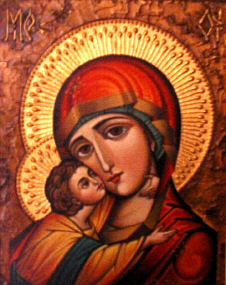
Praying forces me to make my wishes for other people explicit, which gives me the chance to see if I endorse my desires. Like Moses, I might be tempted sometimes to simply wish people away and replaced with people I can do more with, neglecting my obligation to these particular people. This is one reason I appreciate the Catholic focus on Mary as intercessor and as mother.
There are prayers that I might be tempted to offer to God as Great Administrator and General Orderer of Things that I couldn’t imagine asking of a parent. If I have a problem with a sibling, I know my mother would never want only to neutralize the problem — the solution is incomplete if all we do is stop bothering each other without reentering into love of each other. A parent is never satisfied with détente.
Neither is God, but it can be harder to keep that in mind, simply because I have a lot less experience having any sort of relationship with God, and it’s easier to fall into the habit of imagining a maximally convenient God, one made to my measure. It’s easier for me to stay honest by referring back to relationships I know well, and noticing that the petitions I’m offering would never be endorsed by a parent who loves both me and my erstwhile antagonist.
For Moses, it was easier to catch himself in this kind of error, without reference to a mediatrix, since he had personally walked with God, grown up with the history of God’s love for his people, etc. For me, a great deal younger and less experienced in the faith, Mary as model and intercessor helps me avoid running away into abstraction and distance and makes it easier for the act of prayer to wind up pedagogical.
Today is the seventh day of a novena to St. Therese of Lisieux, timed to end on her feast day (Oct 1), which is also the One Rose Invitation Day, sponsored by Imagine Sisters
Previous Post

September 28, 2014
But Who Will I Take Care Of? [Desire of the Everlasting Hills]
Next Post

September 30, 2014 When's the last time I spoke to a *real* adult?
Browse Our Archives
Select a Category 7 Quick Takes Apologetics Atheism Book Conversion Debate Tactics Debates Epistemology/Philosophy Housekeeping Ideological Turing Test Marriage Morality in Practice Parsing Catholicism Possibly Heretical Radio Reviews/Recommendations Sequence Index Spiritual Practice Uncategorized
Select a Month April 2017 March 2017 January 2017 December 2016 September 2016 August 2016 July 2016 June 2016 May 2016 April 2016 March 2016 February 2016 January 2016 December 2015 November 2015 October 2015 September 2015 August 2015 July 2015 June 2015 May 2015 April 2015 March 2015 February 2015 January 2015 December 2014 November 2014 October 2014 September 2014 August 2014 July 2014 June 2014 May 2014 April 2014 March 2014 February 2014 January 2014 December 2013 November 2013 October 2013 September 2013 August 2013 July 2013 June 2013 May 2013 April 2013 March 2013 February 2013 January 2013 December 2012 November 2012 October 2012 September 2012 August 2012 July 2012 June 2012 May 2012 April 2012 March 2012 February 2012 January 2012 December 2011 November 2011 October 2011 September 2011 August 2011 July 2011 June 2011 May 2011 April 2011 March 2011 February 2011 January 2011 December 2010 November 2010 October 2010 September 2010 August 2010 July 2010 June 2010
Follow Us!
TAKE THE
Religious Wisdom Quiz
Which prophet was a shepherd and a sycamore-fig farmer?
Select your answer to see how you score.
Joel Amos Micah Daniel
Related posts from Unequally Yoked

Starving Laypeople of Devotion in Church

Aunt Alberta And Being Right (but the boring...

The Virtues of Sad Songs (a piece for...

The (Extra) Mercy of My Conversion
TRENDING AT PATHEOS Catholic

Rejecting Doom: Christian Hope And Human Action
Christianity is a religion of hope. We are to have hope and...

It’s What Comes From Within Which Matters
One of the most difficult things for us to understand is why...

Why I Choose the Eucharist Over the Sermon
Choose the Eucharist, Not the Sermon What are we supposed to get...

5 Design Elements Found in Spiritually Rooted Homes
Putting Spirituality Into Home Decor Our homes are more than our living...

Credo: A Story of God Told with the...
About 10 years ago, I began to imagine a personal "Credo" that...

The Anatomy of Divine Revelation in Catholic Thought
The claim that God has made Himself known to human beings is...
view all Catholic blogs
Ad-Free & Subscriber Log-In Subscription Support
- About Us
- 2026 Calendar
- Videos
- Podcasts
- Library of World Religions
- Faith In Media Tracker
- Advertise With Us
- Write for Us
- Privacy Policy
- Terms of Service
- Do Not Sell My Data
- Contact Us
- Radiant Digital
- Manage Newsletter Subscriptions
- Unsubscribe From Notifications
- Sitemap
Copyright 2008-2026, Patheos. All rights reserved.
Subscription Support Ad-Free & Subscriber Log-In
Follow Patheos