
BuddhistCatholicContemplativeEvangelicalGeneral ChristianHinduJewishLatter-day SaintMuslimNew VisionsProgressive Christian
Beliefs
- Buddhist
- Catholic
- Contemplative
- Evangelical
- General Christian
- Hindu
- Jewish
- Latter-day Saint
- More Voices
- Muslim
- New Visions
- Pagan
- Progressive Christian
Topics
- Religion News
- Food and Religion
- Sports and Religion
- Religious Art
- Religious Music and Entertainment
- Religious Events
- History and Religion
- Style and Religion
- Politics and Religion
- Women in Religion
- Recreation Outdoors and Religion
- Business Finance and Religion
- Careers Workplace and Religion
- Education and Religion
- Family Parenting and Religion
- Health Fitness and Religion
- Home and Religion
- Relationships and Religion
- Technology and Religion
- Travel and Religion
Columnists
- Buddhist Columnists
- Business Finance and Religion Columnists
- Careers Workplace and Religion Columnists
- Catholic Columnists
- Contemplative Columnists
- Education and Religion Columnists
- Evangelists Columnists
- Family Parenting and Religion Columnists
- General Christian Columnists
- Health Fitness and Religion Columnists
- Hindu Columnists
- History and Religion Columnists
- Home and Religion Columnists
- Jewish Columnists
- More Voices Columnists
- Latter Day Columnists
- Muslim Columnists
- New Visions Columnists
- Nonreligious Columnists
- Pagan Columnists
- Politics and Religion Columnists
- Progressive Columnists
- Recreation Outdoors and Religion Columnists
- Relationships and Religion Columnists
- Religion News Columnists
- Religious Art Columnists
- Religious Events Columnists
- Religious Music and Entertainment Columnists
- Sports and Religion Columnists
- Style and Religion Columnists
- Technology and Religion Columnists
- Travel and Religion Columnists
- Women in Religion Columnists
Resource Library
- 2026 Calendar
- Library of World Religions
- The 100 Most Holy Places on Earth
- Patheos Answers
- Podcasts
- Videos
- Faith Leaders Database
- Anglican Episcopalian
- Bahai
- Baptist
- Buddhism
- Christianity
- Confucianism
- Eastern Orthodoxy
- Hinduism
- Holiness and Pentecostal
- ISKCON
- Islam
- Judaism
- Lutheran
- Methodist
- The Church of Jesus Christ of Latter-day Saints
- New Age
- Paganism
- Presbytarian and Reformed
- Protestantism
- Religion Behind the Scenes
- Roman Catholic
- Scientology
- Shia Islam
- Sikhism
- Sufism
- Sunni Islam
- Taoism
- Zen
- See all religions
Research Tools
 Ad-Free & Subscriber Log-In Subscription Support
Ad-Free & Subscriber Log-In Subscription Support
Follow Patheos 

- Trending:
- Forgiveness
- |
- Marriage
- |
- Consciousness
- |
- Death Penalty
- |
- Election
- |
- Halloween
 Unequally Yoked
- Home
- Catholic
- Going Beyond Commandments of No to Vocations of Yes
Going Beyond Commandments of No to Vocations of Yes
Last updated on: September 7, 2014 at 3:35 pm by Leah Libresco
Going Beyond Commandments of No to Vocations of Yes 2014-09-07T15:35:33-04:00 Leah Libresco
Patheos Explore the world's faith through different perspectives on religion and spirituality! Patheos has the views of the prevalent religions and spiritualities of the world.
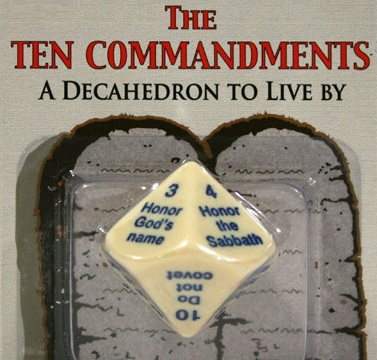
I had the privilege of being the lector for the second reading at Mass today, which is from the Letter to the Romans:
Brothers and sisters:
Owe nothing to anyone, except to love one another;
for the one who loves another has fulfilled the law.
The commandments, “You shall not commit adultery;
you shall not kill; you shall not steal; you shall not covet, ”
and whatever other commandment there may be,
are summed up in this saying, namely,
“You shall love your neighbor as yourself.”
Love does no evil to the neighbor;
hence, love is the fulfillment of the law.
The last two lines are interesting, since we tend to think of moral behavior and moral law as more than just “doing no evil” to others. But the system that looks most like a list of behaviors to be avoided are the enumerated commandments (You shall not… etc). Love your neighbor as yourself satisfies all of these negatively framed commandments, and then goes beyond what they require, past the mere absence of evil to a positive good.
Still, it’s much easier to picture how to follow the first, commandment-based law than the broader, love-based law. Paul’s letter singles out specific actions that are betrayals of love, but, in this chapter, does not provide any examples of how to love the neighbor as yourself, in ways that go beyond refraining from harm.
If we want to learn how to live a richer life than one that simply satisfies the 10 commandments, we can look to the saints for variagated portraits of lives lived in love. We have to turn to the particular, rather than universal axioms, since, although there are many generic ways to violate/harm people in general, the ways of being good to a specific person are often particular to them and their circumstances. (We can generalize some higher order rules, but they don’t get much more specific than “You shall love your neighbor as yourself” or “Don’t treat people as things”).
It’s easy to stick to the easy to articulate list of proscribed actions and to shy away from the responsibility of choosing positive action. And sometimes, we fail at this task at an institutional, church-wide level. As Eve Tushnet wrote in The American Conservative:
Right now gay teens hear a robust “Yes!” from the mainstream media and gay culture. From the Church, they hear only a “No.” And you can’t have a vocation of not-gay-marrying and not-having-sex. You can’t have a vocation of No.
In her new book (out next month!) Gay and Catholic, Eve makes real progress toward articulating vocations of Yes, and, yes, that’s vocations plural. The dichotomy of marriage or monkhood that some Catholic teens and twentysomethings entertain is the result of wanting a vocation of Yes, but only knowing of a limited number of options to say Yes to. When at least one of those is stricken for queer Catholics, the paucity of positive visions for self-gift while single (which applies to heterosexual people, too) becomes a lot more obvious.
Eve’s book is an excellent contribution to the ongoing project of giving “Love thy neighbor as yourself” illustrations that are just as vivid and a good deal more varied than the famous ten “Thou Shalt Nots.”
Previous Post

September 6, 2014
Friendzones and Fairness

Browse Our Archives
Select a Category 7 Quick Takes Apologetics Atheism Book Conversion Debate Tactics Debates Epistemology/Philosophy Housekeeping Ideological Turing Test Marriage Morality in Practice Parsing Catholicism Possibly Heretical Radio Reviews/Recommendations Sequence Index Spiritual Practice Uncategorized
Select a Month April 2017 March 2017 January 2017 December 2016 September 2016 August 2016 July 2016 June 2016 May 2016 April 2016 March 2016 February 2016 January 2016 December 2015 November 2015 October 2015 September 2015 August 2015 July 2015 June 2015 May 2015 April 2015 March 2015 February 2015 January 2015 December 2014 November 2014 October 2014 September 2014 August 2014 July 2014 June 2014 May 2014 April 2014 March 2014 February 2014 January 2014 December 2013 November 2013 October 2013 September 2013 August 2013 July 2013 June 2013 May 2013 April 2013 March 2013 February 2013 January 2013 December 2012 November 2012 October 2012 September 2012 August 2012 July 2012 June 2012 May 2012 April 2012 March 2012 February 2012 January 2012 December 2011 November 2011 October 2011 September 2011 August 2011 July 2011 June 2011 May 2011 April 2011 March 2011 February 2011 January 2011 December 2010 November 2010 October 2010 September 2010 August 2010 July 2010 June 2010
Follow Us!
TAKE THE
Religious Wisdom Quiz
Who was Moses' brother?
Select your answer to see how you score.
Eleazar Caleb Aaron Joshua
Related posts from Unequally Yoked
How To Offer Community Without Communion

It's Hard To Be A Priest In America,...
A Dominican Invitation to Witness [Saints Bookclub]

Running the (Terrible for Catholics) Numbers on Conversion
TRENDING AT PATHEOS Catholic

The Parable Of The Sower And The Word...
One of Christ’s most famous parables is that of the sower who...

Rejecting Doom: Christian Hope And Human Action
Christianity is a religion of hope. We are to have hope and...

Why I Choose the Eucharist Over the Sermon
Choose the Eucharist, Not the Sermon What are we supposed to get...

5 Design Elements Found in Spiritually Rooted Homes
Putting Spirituality Into Home Decor Our homes are more than our living...

Credo: A Story of God Told with the...
About 10 years ago, I began to imagine a personal "Credo" that...

The Anatomy of Divine Revelation in Catholic Thought
The claim that God has made Himself known to human beings is...
view all Catholic blogs
Ad-Free & Subscriber Log-In Subscription Support
- About Us
- 2026 Calendar
- Videos
- Podcasts
- Library of World Religions
- Faith In Media Tracker
- Advertise With Us
- Write for Us
- Privacy Policy
- Terms of Service
- Do Not Sell My Data
- Contact Us
- Radiant Digital
- Manage Newsletter Subscriptions
- Unsubscribe From Notifications
- Sitemap
Copyright 2008-2026, Patheos. All rights reserved.
Subscription Support Ad-Free & Subscriber Log-In
Follow Patheos