
BuddhistCatholicContemplativeEvangelicalGeneral ChristianHinduJewishLatter-day SaintMuslimNew VisionsProgressive Christian
Beliefs
- Buddhist
- Catholic
- Contemplative
- Evangelical
- General Christian
- Hindu
- Jewish
- Latter-day Saint
- More Voices
- Muslim
- New Visions
- Pagan
- Progressive Christian
Topics
- Religion News
- Food and Religion
- Sports and Religion
- Religious Art
- Religious Music and Entertainment
- Religious Events
- History and Religion
- Style and Religion
- Politics and Religion
- Women in Religion
- Recreation Outdoors and Religion
- Business Finance and Religion
- Careers Workplace and Religion
- Education and Religion
- Family Parenting and Religion
- Health Fitness and Religion
- Home and Religion
- Relationships and Religion
- Technology and Religion
- Travel and Religion
Columnists
- Buddhist Columnists
- Business Finance and Religion Columnists
- Careers Workplace and Religion Columnists
- Catholic Columnists
- Contemplative Columnists
- Education and Religion Columnists
- Evangelists Columnists
- Family Parenting and Religion Columnists
- General Christian Columnists
- Health Fitness and Religion Columnists
- Hindu Columnists
- History and Religion Columnists
- Home and Religion Columnists
- Jewish Columnists
- More Voices Columnists
- Latter Day Columnists
- Muslim Columnists
- New Visions Columnists
- Nonreligious Columnists
- Pagan Columnists
- Politics and Religion Columnists
- Progressive Columnists
- Recreation Outdoors and Religion Columnists
- Relationships and Religion Columnists
- Religion News Columnists
- Religious Art Columnists
- Religious Events Columnists
- Religious Music and Entertainment Columnists
- Sports and Religion Columnists
- Style and Religion Columnists
- Technology and Religion Columnists
- Travel and Religion Columnists
- Women in Religion Columnists
Resource Library
- 2026 Calendar
- Library of World Religions
- The 100 Most Holy Places on Earth
- Patheos Answers
- Podcasts
- Videos
- Faith Leaders Database
- Anglican Episcopalian
- Bahai
- Baptist
- Buddhism
- Christianity
- Confucianism
- Eastern Orthodoxy
- Hinduism
- Holiness and Pentecostal
- ISKCON
- Islam
- Judaism
- Lutheran
- Methodist
- The Church of Jesus Christ of Latter-day Saints
- New Age
- Paganism
- Presbytarian and Reformed
- Protestantism
- Religion Behind the Scenes
- Roman Catholic
- Scientology
- Shia Islam
- Sikhism
- Sufism
- Sunni Islam
- Taoism
- Zen
- See all religions
Research Tools
 Ad-Free & Subscriber Log-In Subscription Support
Ad-Free & Subscriber Log-In Subscription Support
Follow Patheos 

- Trending:
- Forgiveness
- |
- Marriage
- |
- Consciousness
- |
- Death Penalty
- |
- Election
- |
- Halloween
 Unequally Yoked
- Home
- Catholic
- Finding Fellowship in Exile [Pope Francis Bookclub]
Finding Fellowship in Exile [Pope Francis Bookclub]
Last updated on: September 23, 2014 at 11:33 am by Leah Libresco
Finding Fellowship in Exile [Pope Francis Bookclub] 2014-09-23T11:33:49-04:00 Leah Libresco
Patheos Explore the world's faith through different perspectives on religion and spirituality! Patheos has the views of the prevalent religions and spiritualities of the world.
In 2014, I’m reading and blogging through Pope Francis/Cardinal Bergoglio’s Open Mind, Faithful Heart: Reflections on Following Jesus. Every Monday, I’ll be writing about the next meditation in the book, so you’re welcome to peruse them all and/or read along.
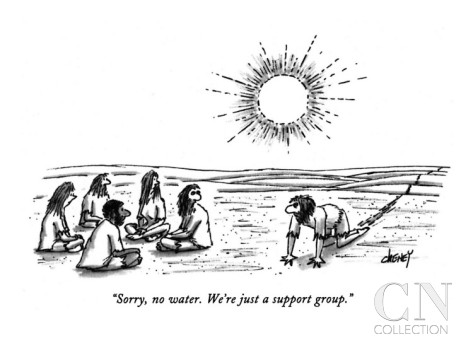
This chapter is called “The Solitude of Prayer” but, as I read Pope Francis’s meditations on exile — the first, individual one, experienced by Adam and Eve, the Babylonian exile endured by the Jews, the state of Christians described in the Letter to the Hebrews, and, finally, back to the individual in prayer, I felt much more connected to others. Pope Francis describes the experience of separation from God as follows:
In its pilgrimage, our flesh feels nostalgia for the homeland, and it voices its longing deliberately and explicitly in prayer, in the presence of the glorious Lord, the Lord of that homeland we yearn for. Meanwhile, our flesh is caught between feelings and numbness, between grace and sin, between deference and rebellion. It feels the oppression of exile and dreads the long road it must walk; it struggles valiantly to defend its hope. The day that our nostalgia dies, our flesh will cease to pray. Seeking release from exile and from wandering in a strange land, it will make this world its homeland. It will tire of seeking after God.
This was a different take on the experience of being alien/foreign in the world that I’m most used to, the one from C.S. Lewis’s Mere Christianity:
Christianity agrees with Dualism that this universe is at war. But it does not think this is a war between independent powers. It thinks it is a civil war, a rebellion, and that we are living in a part of the universe occupied by the rebel.
Enemy-occupied territory-that is what this world is. Christianity is the story of how the rightful king has landed, you might say landed in disguise, and is calling us all to take part in a great campaign of sabotage. When you go to church you are really listening-in to the secret wireless from our friends: that is why the enemy is so anxious to prevent us from going.
I’ve liked the romance and urgency of Lewis’s framing since the first time I’ve seen it, but even though Lewis’s story is explicitly about conspiracy, I’ve tended to think about it as a solitary endeavor. Partially as carry-over from my Stoic-leanings, I prioritize things withing my locus of control — I think of myself as a lone operative, living in secret, focused on what I can do, alone. I don’t think as much about cultivating and maintaining nostalgia and love for the homeland I’m serving (due to Kantian-leanings, I try to work off of duty alone, unless I deliberately reflect). I think less about what to do in community, particularly when it’s something as comforting (which I tend to reinterpret as ‘indulgent’) as reflecting on the home we’re seeking and rejoicing in each other’s love for it.
But Francis’s consideration of exile as a pilgrimage focused my thoughts on the other pilgrims. It’s exhausting to live in exile, and I think I’d do a lot better to think about more of my interactions with others through this framework. When I run into people who are sad or brusque or even cruel, I should do more to remember that I’m interacting with someone who is tired and who encounters far less fellowship than ze thirsts for. I’m meeting someone who has to speak everything in a foreign, clumsy language, which is often frustratingly misunderstood.
But I don’t mean by all of this simply that I should be a bit more patient with people (though it’s not a bad idea!). The person I’m talking to is strained by living in exile, but I don’t have to be content simply accomodating the difficulty; I can ameliorate it. A premise of Christianity is that we are all exiles together, alien to this world, but not to each other (though we may certainly be alienated). I should be welcoming people in a way that makes it feel like they’ve found some connection to home, not just a bit of hospitality from a stranger.
It seems like I should be trying to pull off the same kind of trick that a currently dead blog described in the context of recognizing and collaborating with fellow exiles:
Imagine two Soviet spies in the Cold War US who have to get in contact with one another. The KGB forgot to give them a silly code phrase like “the wombat feeds at midnight” so they’ve got to figure it out on their own. The Americans know these two spies are trying to get in contact, so if one were to just ask random people “Are you a Soviet spy?” the Americans could quickly guess that the asker was a spy and arrest him.
You are one of the two spies, and you spot someone who you’re about 50% sure is your colleague. How do you confirm they are also a spy with the lowest possible risk of getting arrested?
I bet there’s some fancy cryptographic solution here, but my intuitive strategy would be as follows:
Me: Excuse me, sir, do you know any good borscht restaurants around here?
Other Spy: Ah, borscht. I love borscht!
Me: I hear Russian borscht is the best. Have you ever had any?
Other Spy: Yes, I was in Moscow once many years ago, before the war.
Me: Really? Have you ever been to [street the KGB headquarters is on?]
Other Spy: All the time! That’s my favorite street! I used to talk to [name of KGB head] a lot.
Me: I am a Soviet spy. Are you one too?
Other Spy: Yes.You would be immediately under suspicion if you asked patriotic Americans “Are you a Soviet spy?”, since they would then know you were probably the other spy yourself. So instead you lead up with a question that seems innocuous to an American who’s not thinking about spying, but to a Soviet who is specifically looking for another spy is sorta kinda suggestive of Russia. The other spy can’t just say “Ah, I understand your code, I too am a spy” because then he might blow his cover to an American who was just looking for some good borscht. So he says something that slightly escalates the Russianness. You can’t just blow your cover now, because you’re still not sure he’s not just an American who appreciates a good plate of borscht himself, so you escalate the Russianness slightly further. In other words, you start off with a conversation that could happen by coincidence, decrease the chance of coincidence a little bit at each exchange only once you get the signal from the other, and eventually the conversation becomes one that couldn’t possibly happen by coincidence and you know he’s the other spy.
The question is how to welcome people. What are the little marks of fellowship I should cultivate to allow others to feel comfortable reaching out to me, to test if they’ve found someone from home? Kindness, sure, and patience. But the attitude that this framing makes me consider is one of “recognition/relief.” What can I do to welcome other people with a sense of “Finally! I’ve been waiting” and have it be true?
Previous Post

September 20, 2014
Fumbling (sometimes productively) with Prayer
Next Post

September 23, 2014 If Someone Put Me in Charge of Yenta-ing You All...
Browse Our Archives
Select a Category 7 Quick Takes Apologetics Atheism Book Conversion Debate Tactics Debates Epistemology/Philosophy Housekeeping Ideological Turing Test Marriage Morality in Practice Parsing Catholicism Possibly Heretical Radio Reviews/Recommendations Sequence Index Spiritual Practice Uncategorized
Select a Month April 2017 March 2017 January 2017 December 2016 September 2016 August 2016 July 2016 June 2016 May 2016 April 2016 March 2016 February 2016 January 2016 December 2015 November 2015 October 2015 September 2015 August 2015 July 2015 June 2015 May 2015 April 2015 March 2015 February 2015 January 2015 December 2014 November 2014 October 2014 September 2014 August 2014 July 2014 June 2014 May 2014 April 2014 March 2014 February 2014 January 2014 December 2013 November 2013 October 2013 September 2013 August 2013 July 2013 June 2013 May 2013 April 2013 March 2013 February 2013 January 2013 December 2012 November 2012 October 2012 September 2012 August 2012 July 2012 June 2012 May 2012 April 2012 March 2012 February 2012 January 2012 December 2011 November 2011 October 2011 September 2011 August 2011 July 2011 June 2011 May 2011 April 2011 March 2011 February 2011 January 2011 December 2010 November 2010 October 2010 September 2010 August 2010 July 2010 June 2010
Follow Us!
TAKE THE
Religious Wisdom Quiz
How did Jesus provide for the temple tax?
Select your answer to see how you score.
Found in a tree A coin in a fish's mouth He borrowed from Judas He multiplied bread
Related posts from Unequally Yoked

How do you throw a fasting and silence...

Starving Laypeople of Devotion in Church

The Tony-Winning Guide To Temptation And Grace

Aunt Alberta And Being Right (but the boring...
TRENDING AT PATHEOS Catholic

The Parable Of The Sower And The Word...
One of Christ’s most famous parables is that of the sower who...

Rejecting Doom: Christian Hope And Human Action
Christianity is a religion of hope. We are to have hope and...

Why I Choose the Eucharist Over the Sermon
Choose the Eucharist, Not the Sermon What are we supposed to get...

5 Design Elements Found in Spiritually Rooted Homes
Putting Spirituality Into Home Decor Our homes are more than our living...

Credo: A Story of God Told with the...
About 10 years ago, I began to imagine a personal "Credo" that...

The Anatomy of Divine Revelation in Catholic Thought
The claim that God has made Himself known to human beings is...
view all Catholic blogs
Ad-Free & Subscriber Log-In Subscription Support
- About Us
- 2026 Calendar
- Videos
- Podcasts
- Library of World Religions
- Faith In Media Tracker
- Advertise With Us
- Write for Us
- Privacy Policy
- Terms of Service
- Do Not Sell My Data
- Contact Us
- Radiant Digital
- Manage Newsletter Subscriptions
- Unsubscribe From Notifications
- Sitemap
Copyright 2008-2026, Patheos. All rights reserved.
Subscription Support Ad-Free & Subscriber Log-In
Follow Patheos