
BuddhistCatholicContemplativeEvangelicalGeneral ChristianHinduJewishLatter-day SaintMuslimNew VisionsProgressive Christian
Beliefs
- Buddhist
- Catholic
- Contemplative
- Evangelical
- General Christian
- Hindu
- Jewish
- Latter-day Saint
- More Voices
- Muslim
- New Visions
- Pagan
- Progressive Christian
Topics
- Religion News
- Food and Religion
- Sports and Religion
- Religious Art
- Religious Music and Entertainment
- Religious Events
- History and Religion
- Style and Religion
- Politics and Religion
- Women in Religion
- Recreation Outdoors and Religion
- Business Finance and Religion
- Careers Workplace and Religion
- Education and Religion
- Family Parenting and Religion
- Health Fitness and Religion
- Home and Religion
- Relationships and Religion
- Technology and Religion
- Travel and Religion
Columnists
- Buddhist Columnists
- Business Finance and Religion Columnists
- Careers Workplace and Religion Columnists
- Catholic Columnists
- Contemplative Columnists
- Education and Religion Columnists
- Evangelists Columnists
- Family Parenting and Religion Columnists
- General Christian Columnists
- Health Fitness and Religion Columnists
- Hindu Columnists
- History and Religion Columnists
- Home and Religion Columnists
- Jewish Columnists
- More Voices Columnists
- Latter Day Columnists
- Muslim Columnists
- New Visions Columnists
- Nonreligious Columnists
- Pagan Columnists
- Politics and Religion Columnists
- Progressive Columnists
- Recreation Outdoors and Religion Columnists
- Relationships and Religion Columnists
- Religion News Columnists
- Religious Art Columnists
- Religious Events Columnists
- Religious Music and Entertainment Columnists
- Sports and Religion Columnists
- Style and Religion Columnists
- Technology and Religion Columnists
- Travel and Religion Columnists
- Women in Religion Columnists
Resource Library
- 2026 Calendar
- Library of World Religions
- The 100 Most Holy Places on Earth
- Patheos Answers
- Podcasts
- Videos
- Faith Leaders Database
- Anglican Episcopalian
- Bahai
- Baptist
- Buddhism
- Christianity
- Confucianism
- Eastern Orthodoxy
- Hinduism
- Holiness and Pentecostal
- ISKCON
- Islam
- Judaism
- Lutheran
- Methodist
- The Church of Jesus Christ of Latter-day Saints
- New Age
- Paganism
- Presbytarian and Reformed
- Protestantism
- Religion Behind the Scenes
- Roman Catholic
- Scientology
- Shia Islam
- Sikhism
- Sufism
- Sunni Islam
- Taoism
- Zen
- See all religions
Research Tools
 Ad-Free & Subscriber Log-In Subscription Support
Ad-Free & Subscriber Log-In Subscription Support
Follow Patheos 

- Trending:
- Forgiveness
- |
- Marriage
- |
- Consciousness
- |
- Death Penalty
- |
- Election
- |
- Halloween
 Unequally Yoked
- Home
- Catholic
- Solving a Problem vs Being with a Person [Pope Francis Bookclub]
Solving a Problem vs Being with a Person [Pope Francis Bookclub]
Last updated on: August 25, 2014 at 1:52 pm by Leah Libresco
Solving a Problem vs Being with a Person [Pope Francis Bookclub] 2014-08-25T13:52:36-04:00 Leah Libresco
Patheos Explore the world's faith through different perspectives on religion and spirituality! Patheos has the views of the prevalent religions and spiritualities of the world.
In 2014, I’m reading and blogging through Pope Francis/Cardinal Bergoglio’s Open Mind, Faithful Heart: Reflections on Following Jesus. Every Monday, I’ll be writing about the next meditation in the book, so you’re welcome to peruse them all and/or read along.
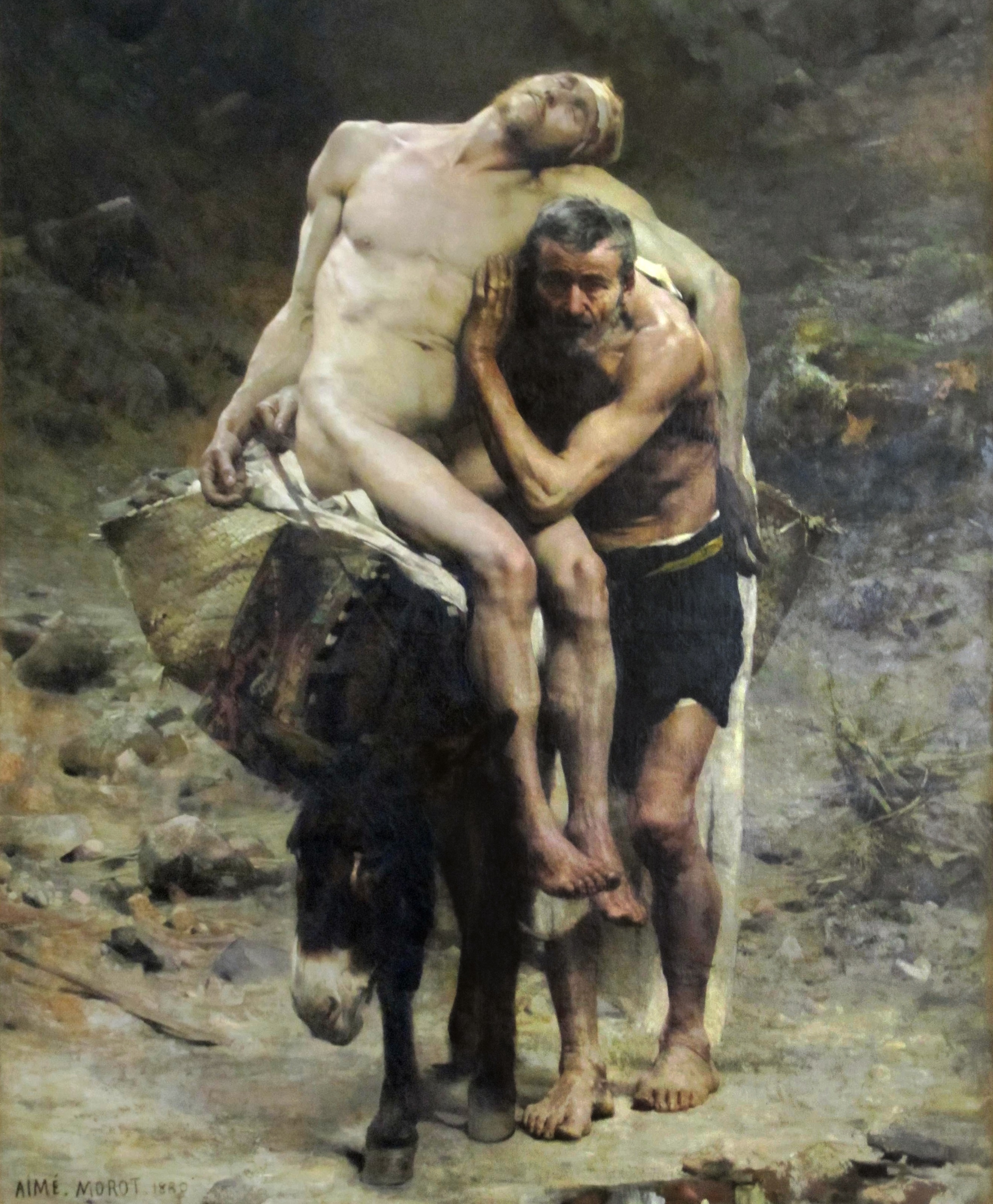
In this week’s chapter, Pope Francis uses the parable of the Good Samaritan to shed light on exactly what criteria Christ will use to sift the weeds from the wheat:
In the end, we will all be judged on whether we have “become neighbors” of all flesh, on whether we have drawn close to suffering flesh.
Many do not draw near at all; they keep a distance, like the Levite and the priest in the parable [of the Good Samaritan]. Others draw close by intellectualizing the pain or taking reference in platitudes (“life’s like that”).
I am, as you may expect, very very bad at this. I’m prone to intellectualize all things in the first place, and, in the second (somewhat related) place, I spent a lot of time as a kid-through-college-student practicing Stoicism. So though I may be useful to suffering flesh, I am seldom, if ever, close to it.
When I was a little kid, I wound up finding and reading my parents’ copy of You Just Don’t Understand! Women and Men in Conversation by Deborah Tannen. Tannen wrote that, in general, when a friend had a problem, women were more likely to discuss how the friend felt (“That’s awful” “You must be so frustrated” etc) while men were more likely to try to solve the problem.
I instantly recognized myself in the latter category. Sitting around and talking about feelings seemed to me like trying to scrub blood off a floor before you applied a tourniquet to your friend’s wound. The unhappiness was a response to some outside source, and it seemed only prudent to me to manage the problem first and then cheer people up after, if any jollying was even necessary at that point.
One of the guys I dated even recommended me to a friend as a problem solver saying, “That sounds pretty hard. You should talk to Leah about it. She doesn’t have any feelings, so she’ll be really helpful.” The mutual friend of me and the then-boyfriend assumed “she has no feelings” was perjorative and tried (completely unnecessarily) to convince my then-boyfriend to patch up whatever fight we were in. My petit ami was forced to clarify that he meant “Leah has no feelings that will distract her from solving your problem.”
I’ve come up with better ways to offer something for my friends’ emotional needs in moments of crisis, but it still feels pretty Chinese room-y to me. To me, the repetition of “There, there” “I’m so sorry” and all that feels generic, more like a stochastic process, the kind of thing it would be easy to write a chatbot (or a chatbot/baby harp seal!) to do, even though my kind of “help” is probably also fairly algorithmizable.
Are there things you commenters do to be better disposed to be the Good Samaritan to others, rather than the good troubleshooting dialogue box?
Previous Post

August 24, 2014
They Eat Horses, Don't They?
Next Post

August 26, 2014 On Writing (and thus on Wizardry)
Browse Our Archives
Select a Category 7 Quick Takes Apologetics Atheism Book Conversion Debate Tactics Debates Epistemology/Philosophy Housekeeping Ideological Turing Test Marriage Morality in Practice Parsing Catholicism Possibly Heretical Radio Reviews/Recommendations Sequence Index Spiritual Practice Uncategorized
Select a Month April 2017 March 2017 January 2017 December 2016 September 2016 August 2016 July 2016 June 2016 May 2016 April 2016 March 2016 February 2016 January 2016 December 2015 November 2015 October 2015 September 2015 August 2015 July 2015 June 2015 May 2015 April 2015 March 2015 February 2015 January 2015 December 2014 November 2014 October 2014 September 2014 August 2014 July 2014 June 2014 May 2014 April 2014 March 2014 February 2014 January 2014 December 2013 November 2013 October 2013 September 2013 August 2013 July 2013 June 2013 May 2013 April 2013 March 2013 February 2013 January 2013 December 2012 November 2012 October 2012 September 2012 August 2012 July 2012 June 2012 May 2012 April 2012 March 2012 February 2012 January 2012 December 2011 November 2011 October 2011 September 2011 August 2011 July 2011 June 2011 May 2011 April 2011 March 2011 February 2011 January 2011 December 2010 November 2010 October 2010 September 2010 August 2010 July 2010 June 2010
Follow Us!
TAKE THE
Religious Wisdom Quiz
Which Gospel was written by a doctor?
Select your answer to see how you score.
Mark Luke John Matthew
Related posts from Unequally Yoked

Catching the Joy of Others [Pope Francis Bookclub]
Christ is an Outlier and Should Have Been...

Filing Down the Sharp Edges of Failure [Pope...

Is Your Christianity Ever Mistaken for Criminality? [Pope...
TRENDING AT PATHEOS Catholic

The Parable Of The Sower And The Word...
One of Christ’s most famous parables is that of the sower who...

Rejecting Doom: Christian Hope And Human Action
Christianity is a religion of hope. We are to have hope and...

Why I Choose the Eucharist Over the Sermon
Choose the Eucharist, Not the Sermon What are we supposed to get...

5 Design Elements Found in Spiritually Rooted Homes
Putting Spirituality Into Home Decor Our homes are more than our living...

Credo: A Story of God Told with the...
About 10 years ago, I began to imagine a personal "Credo" that...

The Anatomy of Divine Revelation in Catholic Thought
The claim that God has made Himself known to human beings is...
view all Catholic blogs
Ad-Free & Subscriber Log-In Subscription Support
- About Us
- 2026 Calendar
- Videos
- Podcasts
- Library of World Religions
- Faith In Media Tracker
- Advertise With Us
- Write for Us
- Privacy Policy
- Terms of Service
- Do Not Sell My Data
- Contact Us
- Radiant Digital
- Manage Newsletter Subscriptions
- Unsubscribe From Notifications
- Sitemap
Copyright 2008-2026, Patheos. All rights reserved.
Subscription Support Ad-Free & Subscriber Log-In
Follow Patheos