
BuddhistCatholicContemplativeEvangelicalGeneral ChristianHinduJewishLatter-day SaintMuslimNew VisionsProgressive Christian
Beliefs
- Buddhist
- Catholic
- Contemplative
- Evangelical
- General Christian
- Hindu
- Jewish
- Latter-day Saint
- More Voices
- Muslim
- New Visions
- Pagan
- Progressive Christian
Topics
- Religion News
- Food and Religion
- Sports and Religion
- Religious Art
- Religious Music and Entertainment
- Religious Events
- History and Religion
- Style and Religion
- Politics and Religion
- Women in Religion
- Recreation Outdoors and Religion
- Business Finance and Religion
- Careers Workplace and Religion
- Education and Religion
- Family Parenting and Religion
- Health Fitness and Religion
- Home and Religion
- Relationships and Religion
- Technology and Religion
- Travel and Religion
Columnists
- Buddhist Columnists
- Business Finance and Religion Columnists
- Careers Workplace and Religion Columnists
- Catholic Columnists
- Contemplative Columnists
- Education and Religion Columnists
- Evangelists Columnists
- Family Parenting and Religion Columnists
- General Christian Columnists
- Health Fitness and Religion Columnists
- Hindu Columnists
- History and Religion Columnists
- Home and Religion Columnists
- Jewish Columnists
- More Voices Columnists
- Latter Day Columnists
- Muslim Columnists
- New Visions Columnists
- Nonreligious Columnists
- Pagan Columnists
- Politics and Religion Columnists
- Progressive Columnists
- Recreation Outdoors and Religion Columnists
- Relationships and Religion Columnists
- Religion News Columnists
- Religious Art Columnists
- Religious Events Columnists
- Religious Music and Entertainment Columnists
- Sports and Religion Columnists
- Style and Religion Columnists
- Technology and Religion Columnists
- Travel and Religion Columnists
- Women in Religion Columnists
Resource Library
- 2026 Calendar
- Library of World Religions
- The 100 Most Holy Places on Earth
- Patheos Answers
- Podcasts
- Videos
- Faith Leaders Database
- Anglican Episcopalian
- Bahai
- Baptist
- Buddhism
- Christianity
- Confucianism
- Eastern Orthodoxy
- Hinduism
- Holiness and Pentecostal
- ISKCON
- Islam
- Judaism
- Lutheran
- Methodist
- The Church of Jesus Christ of Latter-day Saints
- New Age
- Paganism
- Presbytarian and Reformed
- Protestantism
- Religion Behind the Scenes
- Roman Catholic
- Scientology
- Shia Islam
- Sikhism
- Sufism
- Sunni Islam
- Taoism
- Zen
- See all religions
Research Tools
 Ad-Free & Subscriber Log-In Subscription Support
Ad-Free & Subscriber Log-In Subscription Support
Follow Patheos 

- Trending:
- Forgiveness
- |
- Marriage
- |
- Consciousness
- |
- Death Penalty
- |
- Election
- |
- Halloween
 Unequally Yoked
- Home
- Catholic
- Of Metals and (God-)Men [Pope Francis Bookclub]
Of Metals and (God-)Men [Pope Francis Bookclub]
Last updated on: July 29, 2014 at 11:38 am by Leah Libresco
Of Metals and (God-)Men [Pope Francis Bookclub] 2014-07-29T11:38:45-04:00 Leah Libresco
Patheos Explore the world's faith through different perspectives on religion and spirituality! Patheos has the views of the prevalent religions and spiritualities of the world.
In 2014, I’m reading and blogging through Pope Francis/Cardinal Bergoglio’s Open Mind, Faithful Heart: Reflections on Following Jesus. Every Monday, I’ll be writing about the next meditation in the book, so you’re welcome to peruse them all and/or read along.
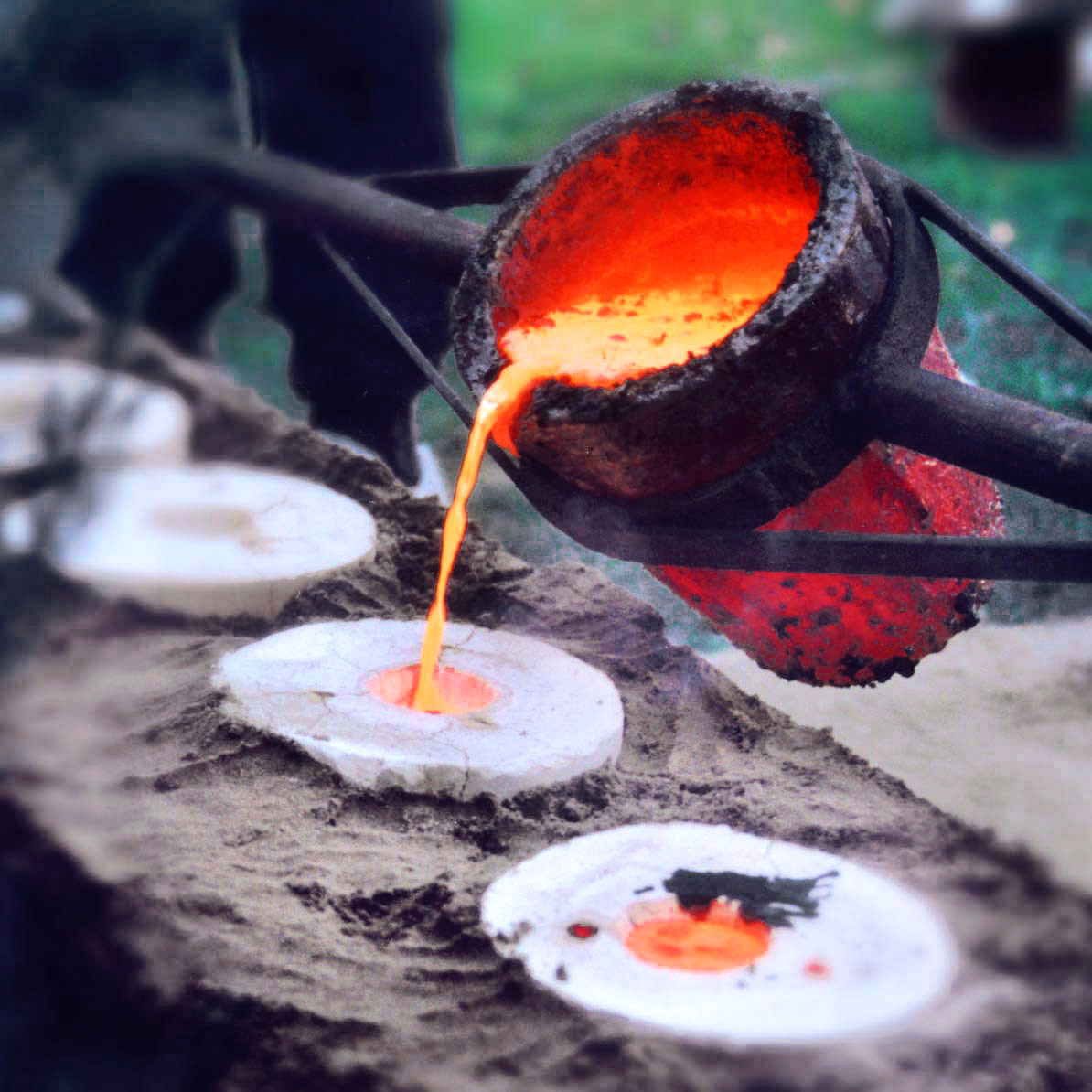
Just a small note from this week’s chapter. In this selection, Pope Francis contrasts the dream of Nebuchadnezzar in the Book of Daniel with the vision of God granted to John in Revelation. Francis writes:
The burnished bronze feet of the Son of God recall the statue of Nebuchadnezzar’s dream, it’s feet made partly of clay and partly of iron, a sign of fragility and division (Dan 2:41-43. Unlike the statues alloyed feet, the “works of the Lord” must be kept undivided, and to those who faithfully keep them so the Lord “will give authority over the nations, to rule them with an iron rod, as when clay pots are shattered” (Apoc 2:27)
And, for reference, here are the two passages cited.
You were looking, O king, and lo! there was a great statue. This statue was huge, its brilliance extraordinary; it was standing before you, and its appearance was frightening. 32 The head of that statue was of fine gold, its chest and arms of silver, its middle and thighs of bronze, 33 its legs of iron, its feet partly of iron and partly of clay. 34 As you looked on, a stone was cut out, not by human hands, and it struck the statue on its feet of iron and clay and broke them in pieces. 35 Then the iron, the clay, the bronze, the silver, and the gold, were all broken in pieces and became like the chaff of the summer threshing floors; and the wind carried them away, so that not a trace of them could be found. But the stone that struck the statue became a great mountain and filled the whole earth.
… As you saw the feet and toes partly of potter’s clay and partly of iron, it shall be a divided kingdom; but some of the strength of iron shall be in it, as you saw the iron mixed with the clay. 42 As the toes of the feet were part iron and part clay, so the kingdom shall be partly strong and partly brittle. 43 As you saw the iron mixed with clay, so will they mix with one another in marriage,[c] but they will not hold together, just as iron does not mix with clay. (Dan 2:31-35,41-43)
Then I turned to see whose voice it was that spoke to me, and on turning I saw seven golden lampstands, and in the midst of the lampstands I saw one like the Son of Man, clothed with a long robe and with a golden sash across his chest. His head and his hair were white as white wool, white as snow; his eyes were like a flame of fire, his feet were like burnished bronze, refined as in a furnace, and his voice was like the sound of many waters. (Rev 1:12-15)
I know a couple commenters are reading copies of Open Mind, Faithful Heart not in English (and that my own English copy is a work in translation, so I’m curious how your translators handled the word ‘alloyed’ in my text. My translator calls the statue’s feet “alloyed” and contrasts them with bronze, which is a literal alloy, one of copper and usually tin, sometimes arsenic (per wikipedia).
Once alloys are made, they usually are treated as one substance, not a melange of the things that made them — that’s why the subcomponents of the bronze feet aren’t expected to shatter and separate the way that the iron and clay feet are. Christianity has something akin to an alloy at the heart of the salvation story — Christ himself. His nature is fully divine and fully human, which caused a great deal of bickering among theologians. Does He wear His humanity like a coat, able to doff it as needed? Is He fundamentally divided? Is He a strange mix, like the feet of the statue?
Ultimately, theologians had to invent a new piece of jargon, to make some sort of sense of this mystery. Christ’s human and divine natures are bound in a hypostatic union. These two different natures are made one. Calling it an alloy would probably elide some of the technical details of both metallurgy and theology, so I don’t mean to push the metaphor too far, but a great deal of Catholic worship and sacraments are a kind of asking to be alloyed.
We receive Christ in the hopes that He’ll renew and remake us by uniting us to himself, so that we are strengthened and tempered by the change. We don’t mean to simply mix in and remain as we were; we need to be more than we are at present to endure.
Previous Post

July 28, 2014
A Poisonous Portrait of Partnership
Next Post

July 31, 2014 Must We Reclaim Lydia Bennett?
Browse Our Archives
Select a Category 7 Quick Takes Apologetics Atheism Book Conversion Debate Tactics Debates Epistemology/Philosophy Housekeeping Ideological Turing Test Marriage Morality in Practice Parsing Catholicism Possibly Heretical Radio Reviews/Recommendations Sequence Index Spiritual Practice Uncategorized
Select a Month April 2017 March 2017 January 2017 December 2016 September 2016 August 2016 July 2016 June 2016 May 2016 April 2016 March 2016 February 2016 January 2016 December 2015 November 2015 October 2015 September 2015 August 2015 July 2015 June 2015 May 2015 April 2015 March 2015 February 2015 January 2015 December 2014 November 2014 October 2014 September 2014 August 2014 July 2014 June 2014 May 2014 April 2014 March 2014 February 2014 January 2014 December 2013 November 2013 October 2013 September 2013 August 2013 July 2013 June 2013 May 2013 April 2013 March 2013 February 2013 January 2013 December 2012 November 2012 October 2012 September 2012 August 2012 July 2012 June 2012 May 2012 April 2012 March 2012 February 2012 January 2012 December 2011 November 2011 October 2011 September 2011 August 2011 July 2011 June 2011 May 2011 April 2011 March 2011 February 2011 January 2011 December 2010 November 2010 October 2010 September 2010 August 2010 July 2010 June 2010
Follow Us!
TAKE THE
Religious Wisdom Quiz
How does Isaiah describe the suffering servant's reaction to unjust treatment?
Select your answer to see how you score.
Weeping loudly Silent as a sheep Roaring like a lion Fleeing to Egypt
Related posts from Unequally Yoked

Catching the Joy of Others [Pope Francis Bookclub]
Christ is an Outlier and Should Have Been...
Filing Down the Sharp Edges of Failure [Pope...
Is Your Christianity Ever Mistaken for Criminality? [Pope...
TRENDING AT PATHEOS Catholic

Creation, Preservation, and Teleology in Catholic Theology
As I write this, it is very early Monday morning. Like millions...

The Parable Of The Sower And The Word...
One of Christ’s most famous parables is that of the sower who...

Rejecting Doom: Christian Hope And Human Action
Christianity is a religion of hope. We are to have hope and...

Why I Choose the Eucharist Over the Sermon
Choose the Eucharist, Not the Sermon What are we supposed to get...

5 Design Elements Found in Spiritually Rooted Homes
Putting Spirituality Into Home Decor Our homes are more than our living...

Credo: A Story of God Told with the...
About 10 years ago, I began to imagine a personal "Credo" that...
view all Catholic blogs
Ad-Free & Subscriber Log-In Subscription Support
- About Us
- 2026 Calendar
- Videos
- Podcasts
- Library of World Religions
- Faith In Media Tracker
- Advertise With Us
- Write for Us
- Privacy Policy
- Terms of Service
- Do Not Sell My Data
- Contact Us
- Radiant Digital
- Manage Newsletter Subscriptions
- Unsubscribe From Notifications
- Sitemap
Copyright 2008-2026, Patheos. All rights reserved.
Subscription Support Ad-Free & Subscriber Log-In
Follow Patheos