
BuddhistCatholicContemplativeEvangelicalGeneral ChristianHinduJewishLatter-day SaintMuslimNew VisionsProgressive Christian
Beliefs
- Buddhist
- Catholic
- Contemplative
- Evangelical
- General Christian
- Hindu
- Jewish
- Latter-day Saint
- More Voices
- Muslim
- New Visions
- Pagan
- Progressive Christian
Topics
- Religion News
- Food and Religion
- Sports and Religion
- Religious Art
- Religious Music and Entertainment
- Religious Events
- History and Religion
- Style and Religion
- Politics and Religion
- Women in Religion
- Recreation Outdoors and Religion
- Business Finance and Religion
- Careers Workplace and Religion
- Education and Religion
- Family Parenting and Religion
- Health Fitness and Religion
- Home and Religion
- Relationships and Religion
- Technology and Religion
- Travel and Religion
Columnists
- Buddhist Columnists
- Business Finance and Religion Columnists
- Careers Workplace and Religion Columnists
- Catholic Columnists
- Contemplative Columnists
- Education and Religion Columnists
- Evangelists Columnists
- Family Parenting and Religion Columnists
- General Christian Columnists
- Health Fitness and Religion Columnists
- Hindu Columnists
- History and Religion Columnists
- Home and Religion Columnists
- Jewish Columnists
- More Voices Columnists
- Latter Day Columnists
- Muslim Columnists
- New Visions Columnists
- Nonreligious Columnists
- Pagan Columnists
- Politics and Religion Columnists
- Progressive Columnists
- Recreation Outdoors and Religion Columnists
- Relationships and Religion Columnists
- Religion News Columnists
- Religious Art Columnists
- Religious Events Columnists
- Religious Music and Entertainment Columnists
- Sports and Religion Columnists
- Style and Religion Columnists
- Technology and Religion Columnists
- Travel and Religion Columnists
- Women in Religion Columnists
Resource Library
- 2026 Calendar
- Library of World Religions
- The 100 Most Holy Places on Earth
- Patheos Answers
- Podcasts
- Videos
- Faith Leaders Database
- Anglican Episcopalian
- Bahai
- Baptist
- Buddhism
- Christianity
- Confucianism
- Eastern Orthodoxy
- Hinduism
- Holiness and Pentecostal
- ISKCON
- Islam
- Judaism
- Lutheran
- Methodist
- The Church of Jesus Christ of Latter-day Saints
- New Age
- Paganism
- Presbytarian and Reformed
- Protestantism
- Religion Behind the Scenes
- Roman Catholic
- Scientology
- Shia Islam
- Sikhism
- Sufism
- Sunni Islam
- Taoism
- Zen
- See all religions
Research Tools
 Ad-Free & Subscriber Log-In Subscription Support
Ad-Free & Subscriber Log-In Subscription Support
Follow Patheos 

- Trending:
- Forgiveness
- |
- Marriage
- |
- Consciousness
- |
- Death Penalty
- |
- Election
- |
- Halloween
 Unequally Yoked
- Home
- Catholic
- Universal Salvation without Undue Coercion
Universal Salvation without Undue Coercion
Last updated on: June 26, 2014 at 12:32 pm by Leah Libresco
Universal Salvation without Undue Coercion 2014-06-26T12:32:09-04:00 Leah Libresco
Patheos Explore the world's faith through different perspectives on religion and spirituality! Patheos has the views of the prevalent religions and spiritualities of the world.
Richard Beck has a great post up today explaining how we can believe that, ultimately, everyone will be reconciled to God and join him in Heaven without casting God as the Great Brainwasher in the Sky, merrily crushing our ability to resist. I’m excerpting the post below, but I recommend reading the whole thing.
For a lot of Christians salvation is basically the process of posing an ultimatum to the human will: Choose Christ and live or deny Christ and go to hell. Basically, evangelism is a threat with a choice. An ultimatum. …
I think most people are fully aware of the problems with this view of salvation. So I don’t want to get into all that here. Suffice it to say I see salvation as less an ultimatum posed to the human will than Incarnational practices aimed at the acquisition of virtue. Moral education if you will. Salvation is about becoming Christ-like. …
[I]t might be helpful to float an idea or two to expand our our theological imaginations. So, two quick ideas. First, when working with hard cases God’s moral education could be direct and aggressive. Think of The Christmas Carol and Scrooge’s experiences with Jacob Marley and the Three Spirits of Christmas. Scrooge wasn’t forced into repentance, volitionally speaking. He was simply allowed to see things that helped him connect the dots, morally speaking.
But if the aggressive approach in The Christmas Carol is too in your face, think of something more slow and subtle like what we see in the movie Groundhog Day. In the movie Bill Murray’s character is able to reach the same conclusions as did Ebenezer Scrooge, only more slowly. Murray’s character was given the time to follow every moral path toward its inevitable outcome. Finally, at the end of this process, simple natural consequences bring about repentance, change, and virtue. Again, no force is used. All that is needed is time.
I like Beck using the framing of education, because it seems to me that truth, generally, has the same kind of coercive power that people fear in God. I can willfully try to deny the Pythagorean theorem or the basic goodness of someone against whom I am holding a grudge, but I’ll end up crying out “How all occasions do inform against me!”
In order to hold on to a falsehood, I’d have to relinquish the whole rest of the world, to prevent it from correcting my error. It’s hard to believe, given enough time, I wouldn’t eventually crack. But, again, crack isn’t quite the right word, since it implies destruction. I really mean something more like “relax” or “uncramp my fingers and allow them to move again, instead of contorting them into claws.”
When you get into the mathematics of credence and probability, there’s a fun result called Aumann’s Agreement Theorem which says that, ultimately, two people using Bayesian reasoning, and sharing all their evidence with each other aren’t free to agree to disagree. If they’re reasoning honestly, they’ll eventually come to consensus (not necessarily in the middle).
Usually, people don’t see Aumann as an assault on the will. If I don’t stay on the path that the theorem leads me down, then I’m not free, I’m just lost. But, once we head into moral matters, rather than disputes about numbers and physical data, the compulsion to come to agreement feels weirder. Personally, it feels natural to me to wind up yielding to reality on questions of ethics, just as I would on questions of physics.
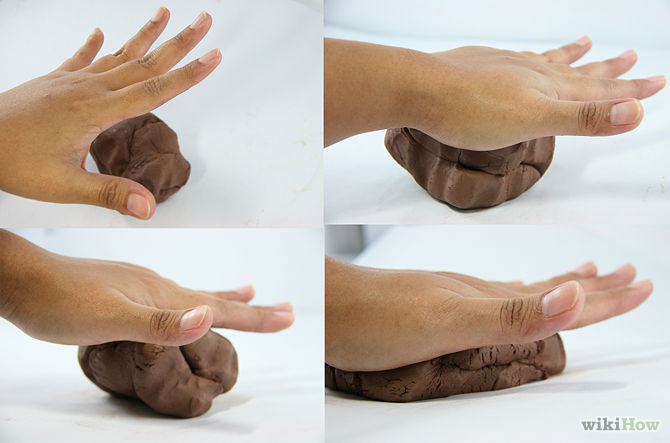
The entire process of having errors slowly (or not so slowly) worn away reminds me a little of the aphorism “Gutta cavat lapidem non vi, sed saepe cadendo” (which I learned in Latin class and then taught to all the middle schoolers in the ceramics class I TA’d, so they could say it while they were wedging). The phrase means “The water hollows the stone, not by force, but by often falling.”
That still sounds a little bit like a story of domination and destruction, since it’s not really necessary to the telos of the stone to be hollowed. But it is part of our being to be hallowed, so I think the adage works very well if you change “hollows” to “transfigures.” That’s one reason I liked using the phrase to set my rhythm for wedging, where, by kneading the clay, I worked all of the air bubbles out, until the clay was an undivided whole that could be shaped and fired without danger of explosions.
In fact, I like the wedging metaphor beginning to end. (I don’t want my moral imperfections to shatter me and throw off shrapnel in the direction of everyone else). The homogenization/reformation process of wedging isn’t an end in itself. but prepares the clay to receive more delicate, complex, and beautiful shapes. Without submitting to transfiguration, clay can’t become a pot (like mine below) and people can’t become saints.

Note: The Catholic Church neither teaches nor condemns universalism. It falls into the category of things we don’t know definitively, and theologians have taken different positions, both in the present day and over time. So, when I say I favor universalism, I don’t mean that it follows as inexorably from Catholic dogma as the Pythagorean Theorem does from Euclid, but that, were I placing a bet, it’s where I’d put my money.
Previous Post

June 25, 2014
Anti-Homeless Laws with Teeth
Next Post

June 27, 2014 Strange Cricket Pairings and Invisible Classes
Browse Our Archives
Select a Category 7 Quick Takes Apologetics Atheism Book Conversion Debate Tactics Debates Epistemology/Philosophy Housekeeping Ideological Turing Test Marriage Morality in Practice Parsing Catholicism Possibly Heretical Radio Reviews/Recommendations Sequence Index Spiritual Practice Uncategorized
Select a Month April 2017 March 2017 January 2017 December 2016 September 2016 August 2016 July 2016 June 2016 May 2016 April 2016 March 2016 February 2016 January 2016 December 2015 November 2015 October 2015 September 2015 August 2015 July 2015 June 2015 May 2015 April 2015 March 2015 February 2015 January 2015 December 2014 November 2014 October 2014 September 2014 August 2014 July 2014 June 2014 May 2014 April 2014 March 2014 February 2014 January 2014 December 2013 November 2013 October 2013 September 2013 August 2013 July 2013 June 2013 May 2013 April 2013 March 2013 February 2013 January 2013 December 2012 November 2012 October 2012 September 2012 August 2012 July 2012 June 2012 May 2012 April 2012 March 2012 February 2012 January 2012 December 2011 November 2011 October 2011 September 2011 August 2011 July 2011 June 2011 May 2011 April 2011 March 2011 February 2011 January 2011 December 2010 November 2010 October 2010 September 2010 August 2010 July 2010 June 2010
Follow Us!
TAKE THE
Religious Wisdom Quiz
What does "Selah" (found in Psalms) most likely mean?
Select your answer to see how you score.
Pause/Reflect Hallelujah Amen Sing
Related posts from Unequally Yoked
How To Offer Community Without Communion

It's Hard To Be A Priest In America,...
A Dominican Invitation to Witness [Saints Bookclub]
Running the (Terrible for Catholics) Numbers on Conversion
TRENDING AT PATHEOS Catholic

Rejecting Doom: Christian Hope And Human Action
Christianity is a religion of hope. We are to have hope and...

It’s What Comes From Within Which Matters
One of the most difficult things for us to understand is why...

Why I Choose the Eucharist Over the Sermon
Choose the Eucharist, Not the Sermon What are we supposed to get...

5 Design Elements Found in Spiritually Rooted Homes
Putting Spirituality Into Home Decor Our homes are more than our living...

Credo: A Story of God Told with the...
About 10 years ago, I began to imagine a personal "Credo" that...

The Anatomy of Divine Revelation in Catholic Thought
The claim that God has made Himself known to human beings is...
view all Catholic blogs
Ad-Free & Subscriber Log-In Subscription Support
- About Us
- 2026 Calendar
- Videos
- Podcasts
- Library of World Religions
- Faith In Media Tracker
- Advertise With Us
- Write for Us
- Privacy Policy
- Terms of Service
- Do Not Sell My Data
- Contact Us
- Radiant Digital
- Manage Newsletter Subscriptions
- Unsubscribe From Notifications
- Sitemap
Copyright 2008-2026, Patheos. All rights reserved.
Subscription Support Ad-Free & Subscriber Log-In
Follow Patheos