
BuddhistCatholicContemplativeEvangelicalGeneral ChristianHinduJewishLatter-day SaintMuslimNew VisionsProgressive Christian
Beliefs
- Buddhist
- Catholic
- Contemplative
- Evangelical
- General Christian
- Hindu
- Jewish
- Latter-day Saint
- More Voices
- Muslim
- New Visions
- Pagan
- Progressive Christian
Topics
- Religion News
- Food and Religion
- Sports and Religion
- Religious Art
- Religious Music and Entertainment
- Religious Events
- History and Religion
- Style and Religion
- Politics and Religion
- Women in Religion
- Recreation Outdoors and Religion
- Business Finance and Religion
- Careers Workplace and Religion
- Education and Religion
- Family Parenting and Religion
- Health Fitness and Religion
- Home and Religion
- Relationships and Religion
- Technology and Religion
- Travel and Religion
Columnists
- Buddhist Columnists
- Business Finance and Religion Columnists
- Careers Workplace and Religion Columnists
- Catholic Columnists
- Contemplative Columnists
- Education and Religion Columnists
- Evangelists Columnists
- Family Parenting and Religion Columnists
- General Christian Columnists
- Health Fitness and Religion Columnists
- Hindu Columnists
- History and Religion Columnists
- Home and Religion Columnists
- Jewish Columnists
- More Voices Columnists
- Latter Day Columnists
- Muslim Columnists
- New Visions Columnists
- Nonreligious Columnists
- Pagan Columnists
- Politics and Religion Columnists
- Progressive Columnists
- Recreation Outdoors and Religion Columnists
- Relationships and Religion Columnists
- Religion News Columnists
- Religious Art Columnists
- Religious Events Columnists
- Religious Music and Entertainment Columnists
- Sports and Religion Columnists
- Style and Religion Columnists
- Technology and Religion Columnists
- Travel and Religion Columnists
- Women in Religion Columnists
Resource Library
- 2026 Calendar
- Library of World Religions
- The 100 Most Holy Places on Earth
- Patheos Answers
- Podcasts
- Videos
- Faith Leaders Database
- Anglican Episcopalian
- Bahai
- Baptist
- Buddhism
- Christianity
- Confucianism
- Eastern Orthodoxy
- Hinduism
- Holiness and Pentecostal
- ISKCON
- Islam
- Judaism
- Lutheran
- Methodist
- The Church of Jesus Christ of Latter-day Saints
- New Age
- Paganism
- Presbytarian and Reformed
- Protestantism
- Religion Behind the Scenes
- Roman Catholic
- Scientology
- Shia Islam
- Sikhism
- Sufism
- Sunni Islam
- Taoism
- Zen
- See all religions
Research Tools
 Ad-Free & Subscriber Log-In Subscription Support
Ad-Free & Subscriber Log-In Subscription Support
Follow Patheos 

- Trending:
- Forgiveness
- |
- Marriage
- |
- Consciousness
- |
- Death Penalty
- |
- Election
- |
- Halloween
 Unequally Yoked
- Home
- Catholic
- Trigger Warnings and Coal Mine Canaries
Trigger Warnings and Coal Mine Canaries
Last updated on: June 19, 2014 at 2:49 pm by Leah Libresco
Trigger Warnings and Coal Mine Canaries 2014-06-19T14:49:33-04:00 Leah Libresco
Patheos Explore the world's faith through different perspectives on religion and spirituality! Patheos has the views of the prevalent religions and spiritualities of the world.
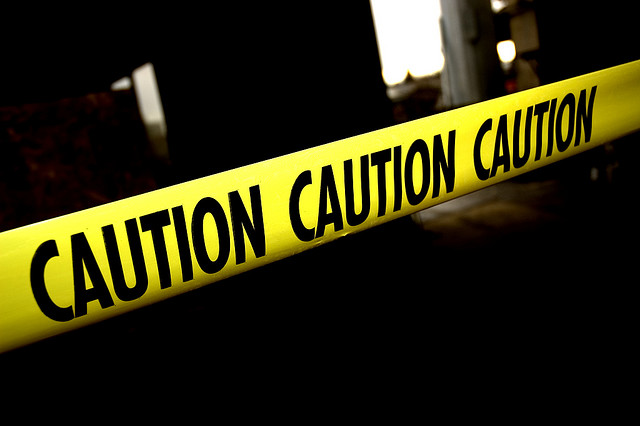 In discussion of trigger warnings (particularly when requested by college students), I’ve seen a fair amount of think pieces suggest that this is more evidence that young’uns have gone soft. It’s not quite “When I was your age, I walked uphill both ways, five miles, through a sea of graphically dismembered bodies marked with racial slurs, and it made me stronger!” but there’s a certain family resemblance. There just seems to be a suspicion that attaches itself to people complaining that the status quo is painful — if we can endure it, why can’t they?
Acting in Solidarity for Others
There are two important rejoinders that have occurred to me. First of all, some people are agitating on behalf of others, who are in more-than-usual danger. When I work at a CFAR workshop, my voice is usually the loudest one warning people not to transfer serving utensils between platters, even though I’m not allergic to anything. I just have excellent projection, so I’m good at getting everyone’s attention, and my making the announcement preserves the anonymity of the people with life-threatening allergies, so that vulnerability to shellfish is not the thing everyone else learns about them first.
Trigger warnings, especially as used on feminist sites, were primarily intended for the safety of people with PTSD or at risk of panic attacks. You don’t want to be scrolling through your feedly and run across a rape-related case that’s so similar to your own rape that it gives you flashbacks and has you hyperventilating at work any more than I want to be reading my disease-related blogs and seeing (without warning) an image so graphic and disgusting that I retch (or worse) at my desk.
There’s plenty of patience for any accommodation I need (the NYT blacks out graphic news photos unless you click to reveal them, epidemiology blogs stash graphic images under a cut), even though my danger is smaller. Trigger warnings can probably only be reasonably accommodated so far down the long tail (just as people frequently mark “contains nuts” by default, but rely on those who are allergic to strawberries to speak up and ask), but we could probably go farther down the tail than we do at present without too many ill effects (or we could try, and then pull back as needed).
Here, the major things that’s changed is our ability to hear and help people farther down the tail. The internet has catalyzed the speech equivalent of foundations for orphan diseases.
The world changed, not the people
But the other useful reply to “We never needed trigger warnings before” might just be, “Huh, I wonder if anything’s changed?”
The correct response to repetitive strain injury would not have been “Eh, we never needed ergonomics when I was young” but a bit of curiosity about how people’s work setups had changes and whether there were useful interventions. Looking into carpal tunnel and other peculiarly modern problems helped us identify some of the downsides of recent innovations and patch them moderately well.
Just as we now all spend much more time in front of a computer than before, we spend much more time reading and watching superstimulatory things online than previously. In a recent New Yorker review of Fargo, Emily Nussbaum expressed some discomfort with the antihero arms race of television, quoting critic James Poniewozik, “TV’s not a chili-pepper-eating contest.” There’s more viciousness to consume, if we choose to, and it’s a lot more vivid than it’s always been.
Additionally, for some people (disproportionately women), they don’t face all this intensity as a consumer, but as a target. The ease of communicating over twitter and email (and physical contact, for people who don’t deliberately hide their address) puts plenty of writers at risk. I’ve had blogs disappear from my feedreader because they received so many threats that it didn’t seem safe for the author to keep writing. A friend of mine was drawn, over the past week, into a twitter fight than involved plenty of strangers casting aspersions on her character and talking unpleasantly graphically about what she would be like to have sex with.
The prevalence of this kind of behavior means that some people are enduring horrendous harassment daily, but, also, for many others, it’s likely enough to cause day to day tsuris or prompt precautions. I’m low profile enough to have never been harassed online in this way, but my escape feels more arbitrary than the result of my own tactics, which leaves future harassment out of my control.
I don’t know whether living in a world where rape jokes and threats of violence are taken for granted in non-curated comment sections has anything to do with a new focus on trigger warnings, but it does seem like it could fray people’s patience and resilience, to the point where a provocation our parents might have let passed really is pretty hard to bear.
Thinking about whether anything has changed, and whether it should be addressed gives us the chance to stumble on solutions that don’t just help the most vulnerable (people with panic attacks, who need trigger warnings), but might reduce unpleasantness in day to day life that isn’t debilitating to most people, but isn’t helpful to anyone.
This is sometimes referred to as the curb-cut effect, where an accommodation for the disabled (curving the curb down to meet the street, for ease of wheelchair use), turns out to be a helpful change for a broader class of people than the one it was intended for (bikers, parents with strollers, etc).
The push for trigger warnings is still in its early, exploratory stages, which is a great time to ask questions about what kind of harm is being prevented and to keep brainstorming the best ways to address it. But to start, it helps to treat “Why are you all so sensitive?” as an honest, curious question, rather than a dismissal.
Previous Post
June 18, 2014
False Friends and Tone Policing
Next Post
June 20, 2014 Suspicious Hermits, Gruesome Creativity, and Just Enough E Coli
Browse Our Archives
Select a Category 7 Quick Takes Apologetics Atheism Book Conversion Debate Tactics Debates Epistemology/Philosophy Housekeeping Ideological Turing Test Marriage Morality in Practice Parsing Catholicism Possibly Heretical Radio Reviews/Recommendations Sequence Index Spiritual Practice Uncategorized
Select a Month April 2017 March 2017 January 2017 December 2016 September 2016 August 2016 July 2016 June 2016 May 2016 April 2016 March 2016 February 2016 January 2016 December 2015 November 2015 October 2015 September 2015 August 2015 July 2015 June 2015 May 2015 April 2015 March 2015 February 2015 January 2015 December 2014 November 2014 October 2014 September 2014 August 2014 July 2014 June 2014 May 2014 April 2014 March 2014 February 2014 January 2014 December 2013 November 2013 October 2013 September 2013 August 2013 July 2013 June 2013 May 2013 April 2013 March 2013 February 2013 January 2013 December 2012 November 2012 October 2012 September 2012 August 2012 July 2012 June 2012 May 2012 April 2012 March 2012 February 2012 January 2012 December 2011 November 2011 October 2011 September 2011 August 2011 July 2011 June 2011 May 2011 April 2011 March 2011 February 2011 January 2011 December 2010 November 2010 October 2010 September 2010 August 2010 July 2010 June 2010
Follow Us!
TAKE THE
Religious Wisdom Quiz
Who wrote the Book of Acts?
Select your answer to see how you score.
Luke Peter Paul Mark
Related posts from Unequally Yoked

Starting Conversations During Francis's Visit

Desiring Abundance of Life, Not Just Absence of...
Why Not Refer to ISIS by an Epithet?

Life Lessons that Can't be Taught at College's...
TRENDING AT PATHEOS Catholic

Rejecting Doom: Christian Hope And Human Action
Christianity is a religion of hope. We are to have hope and...

It’s What Comes From Within Which Matters
One of the most difficult things for us to understand is why...

Why I Choose the Eucharist Over the Sermon
Choose the Eucharist, Not the Sermon What are we supposed to get...

5 Design Elements Found in Spiritually Rooted Homes
Putting Spirituality Into Home Decor Our homes are more than our living...

Credo: A Story of God Told with the...
About 10 years ago, I began to imagine a personal "Credo" that...

The Anatomy of Divine Revelation in Catholic Thought
The claim that God has made Himself known to human beings is...
view all Catholic blogs
Ad-Free & Subscriber Log-In Subscription Support
- About Us
- 2026 Calendar
- Videos
- Podcasts
- Library of World Religions
- Faith In Media Tracker
- Advertise With Us
- Write for Us
- Privacy Policy
- Terms of Service
- Do Not Sell My Data
- Contact Us
- Radiant Digital
- Manage Newsletter Subscriptions
- Unsubscribe From Notifications
- Sitemap
Copyright 2008-2026, Patheos. All rights reserved.
Subscription Support Ad-Free & Subscriber Log-In
Follow Patheos