
BuddhistCatholicContemplativeEvangelicalGeneral ChristianHinduJewishLatter-day SaintMuslimNew VisionsProgressive Christian
Beliefs
- Buddhist
- Catholic
- Contemplative
- Evangelical
- General Christian
- Hindu
- Jewish
- Latter-day Saint
- More Voices
- Muslim
- New Visions
- Pagan
- Progressive Christian
Topics
- Religion News
- Food and Religion
- Sports and Religion
- Religious Art
- Religious Music and Entertainment
- Religious Events
- History and Religion
- Style and Religion
- Politics and Religion
- Women in Religion
- Recreation Outdoors and Religion
- Business Finance and Religion
- Careers Workplace and Religion
- Education and Religion
- Family Parenting and Religion
- Health Fitness and Religion
- Home and Religion
- Relationships and Religion
- Technology and Religion
- Travel and Religion
Columnists
- Buddhist Columnists
- Business Finance and Religion Columnists
- Careers Workplace and Religion Columnists
- Catholic Columnists
- Contemplative Columnists
- Education and Religion Columnists
- Evangelists Columnists
- Family Parenting and Religion Columnists
- General Christian Columnists
- Health Fitness and Religion Columnists
- Hindu Columnists
- History and Religion Columnists
- Home and Religion Columnists
- Jewish Columnists
- More Voices Columnists
- Latter Day Columnists
- Muslim Columnists
- New Visions Columnists
- Nonreligious Columnists
- Pagan Columnists
- Politics and Religion Columnists
- Progressive Columnists
- Recreation Outdoors and Religion Columnists
- Relationships and Religion Columnists
- Religion News Columnists
- Religious Art Columnists
- Religious Events Columnists
- Religious Music and Entertainment Columnists
- Sports and Religion Columnists
- Style and Religion Columnists
- Technology and Religion Columnists
- Travel and Religion Columnists
- Women in Religion Columnists
Resource Library
- 2026 Calendar
- Library of World Religions
- The 100 Most Holy Places on Earth
- Patheos Answers
- Podcasts
- Videos
- Faith Leaders Database
- Anglican Episcopalian
- Bahai
- Baptist
- Buddhism
- Christianity
- Confucianism
- Eastern Orthodoxy
- Hinduism
- Holiness and Pentecostal
- ISKCON
- Islam
- Judaism
- Lutheran
- Methodist
- The Church of Jesus Christ of Latter-day Saints
- New Age
- Paganism
- Presbytarian and Reformed
- Protestantism
- Religion Behind the Scenes
- Roman Catholic
- Scientology
- Shia Islam
- Sikhism
- Sufism
- Sunni Islam
- Taoism
- Zen
- See all religions
Research Tools
 Ad-Free & Subscriber Log-In Subscription Support
Ad-Free & Subscriber Log-In Subscription Support
Follow Patheos 

- Trending:
- Forgiveness
- |
- Marriage
- |
- Consciousness
- |
- Death Penalty
- |
- Election
- |
- Halloween
 Unequally Yoked
- Home
- Catholic
- Out, Dusty Spot! Out! Hell is Murky [Pope Francis Bookclub]
Out, Dusty Spot! Out! Hell is Murky [Pope Francis Bookclub]
Last updated on: April 22, 2014 at 10:30 am by Leah Libresco
Out, Dusty Spot! Out! Hell is Murky [Pope Francis Bookclub] 2014-04-22T10:30:49-04:00 Leah Libresco
Patheos Explore the world's faith through different perspectives on religion and spirituality! Patheos has the views of the prevalent religions and spiritualities of the world.
In 2014, I’m reading and blogging through Pope Francis/Cardinal Bergoglio’s Open Mind, Faithful Heart: Reflections on Following Jesus. Every Monday, I’ll be writing about the next meditation in the book, so you’re welcome to peruse them all and/or read along.
Pope Francis narrates the presentation of Christ at the temple, and the prophesies and joy of Simeon and Anna. And then he says:
There is radiance in the temple because the Light is entering into it: “a light for revelation to the Gentiles and for glory to your people Israel” (Luke 2:32). It is Candlemas day, the day of the candles that will become the paschal candle on the night of Passover and a dazzling sun at the end of history. A hymn for the feast of the Epiphany tells us that the Magi are the just ones “who seek the Light with the help of the light”: lumen requirunt lumine. Today in the temple, the final epiphany is foreshadowed.
All these citations reminded me of a line from Psalm 36, which sometimes turns up in Divine Office: “For with you is the fountain of life; in your light we see light.” In order to see it more clearly, Pope Francis moves from a discussion of Epiphany to a discussion of the Ignatian Spiritual Exercises, a way of preparing yourself to see and seek more clearly.
I’ve just finished reading Jen Fulwiler’s memoir, Something Other than God, and, as she stumbles through the spiritual exercises she creates for herself as an agnostic, there’s a C.S. Lewis quote she keeps returning to:
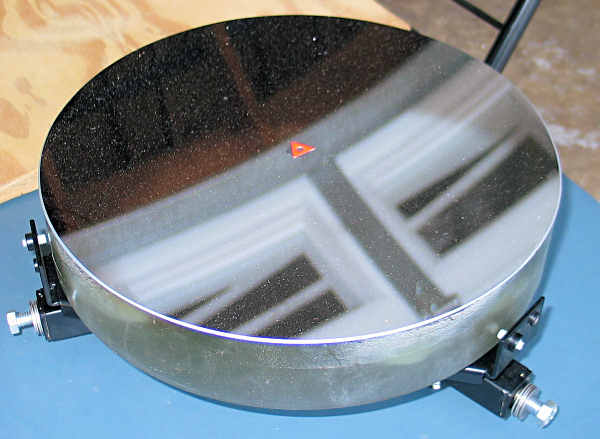
He shows much more of Himself to some people than to others—not because He has favourites, but because it is impossible for Him to show Himself to a man whose whole mind and character are in the wrong condition. Just as sunlight, though it has no favourites, cannot be reflected in a dusty mirror as clearly as in a clean one.
You can put this another way by saying that while in other sciences the instruments you use are things external to yourself (things like microscopes and telescopes), the instrument through which you see God is your whole self. And if a man’s self is not kept clean and bright, his glimpse of God will be blurred—like the Moon seen through a dirty telescope.
Simeon and Anna had been long polishing their mirrors with prayer and service, so, when the Christ-child came before them, they were able to be dazzled by His light, reflected in their souls. One way to cultivate that brightness in ourselves is just to tackle individual blemishes as we find them.
For instance, I am terrible about saying, “You’re welcome” when people thank me for something. I tend to brush thanks off with a “Don’t be silly” or “No, no, it’s hardly altruistic for me to come to your concert, your singing was lovely!” I don’t like debt, and I assume (probably falsely) that having to thank me for things makes the other person feel uncomfortable, so I try to dispel their gratitude instead of acknowledging it.
This is almost certainly not the worst thing I do on a day to day basis, but it is one of the faults I’ve noticed, so I ought to address it, if only to have the habit of promptly pulling out my dustrag whenever I notice a spiritual smear. But another way to notice the dust, in order to clear it away, is to do things that require more light.
Perhaps my dustiness isn’t a problem is day to day life, but, if I try to use my mirror to spy out something lovely, but fainter, like God in lectio divina or the proper way to be kind to a friend in distress, I might become aware of the blurriness and insufficiency of my instrument, now that I’m asking more of it.
In order to discover the imperfections, I need to move beyond by current comfort zone and habitual kludges to see what I’m actually working with, and where my caritas needs to be better developed.
Previous Post

April 21, 2014
Debating Brendan Eich's Resignation
Next Post

April 23, 2014 Logismoi, Vampires, and Other Intrusive Thoughts
Browse Our Archives
Select a Category 7 Quick Takes Apologetics Atheism Book Conversion Debate Tactics Debates Epistemology/Philosophy Housekeeping Ideological Turing Test Marriage Morality in Practice Parsing Catholicism Possibly Heretical Radio Reviews/Recommendations Sequence Index Spiritual Practice Uncategorized
Select a Month April 2017 March 2017 January 2017 December 2016 September 2016 August 2016 July 2016 June 2016 May 2016 April 2016 March 2016 February 2016 January 2016 December 2015 November 2015 October 2015 September 2015 August 2015 July 2015 June 2015 May 2015 April 2015 March 2015 February 2015 January 2015 December 2014 November 2014 October 2014 September 2014 August 2014 July 2014 June 2014 May 2014 April 2014 March 2014 February 2014 January 2014 December 2013 November 2013 October 2013 September 2013 August 2013 July 2013 June 2013 May 2013 April 2013 March 2013 February 2013 January 2013 December 2012 November 2012 October 2012 September 2012 August 2012 July 2012 June 2012 May 2012 April 2012 March 2012 February 2012 January 2012 December 2011 November 2011 October 2011 September 2011 August 2011 July 2011 June 2011 May 2011 April 2011 March 2011 February 2011 January 2011 December 2010 November 2010 October 2010 September 2010 August 2010 July 2010 June 2010
Follow Us!
TAKE THE
Religious Wisdom Quiz
In which city did David reign seven years before becoming king over all Israel?
Select your answer to see how you score.
Shechem Hebron Bethlehem Jerusalem
Related posts from Unequally Yoked

Starving Laypeople of Devotion in Church

Aunt Alberta And Being Right (but the boring...

The Virtues of Sad Songs (a piece for...

The (Extra) Mercy of My Conversion
TRENDING AT PATHEOS Catholic

The Parable Of The Sower And The Word...
One of Christ’s most famous parables is that of the sower who...

Rejecting Doom: Christian Hope And Human Action
Christianity is a religion of hope. We are to have hope and...

Why I Choose the Eucharist Over the Sermon
Choose the Eucharist, Not the Sermon What are we supposed to get...

5 Design Elements Found in Spiritually Rooted Homes
Putting Spirituality Into Home Decor Our homes are more than our living...

Credo: A Story of God Told with the...
About 10 years ago, I began to imagine a personal "Credo" that...

The Anatomy of Divine Revelation in Catholic Thought
The claim that God has made Himself known to human beings is...
view all Catholic blogs
Ad-Free & Subscriber Log-In Subscription Support
- About Us
- 2026 Calendar
- Videos
- Podcasts
- Library of World Religions
- Faith In Media Tracker
- Advertise With Us
- Write for Us
- Privacy Policy
- Terms of Service
- Do Not Sell My Data
- Contact Us
- Radiant Digital
- Manage Newsletter Subscriptions
- Unsubscribe From Notifications
- Sitemap
Copyright 2008-2026, Patheos. All rights reserved.
Subscription Support Ad-Free & Subscriber Log-In
Follow Patheos