
BuddhistCatholicContemplativeEvangelicalGeneral ChristianHinduJewishLatter-day SaintMuslimNew VisionsProgressive Christian
Beliefs
- Buddhist
- Catholic
- Contemplative
- Evangelical
- General Christian
- Hindu
- Jewish
- Latter-day Saint
- More Voices
- Muslim
- New Visions
- Pagan
- Progressive Christian
Topics
- Religion News
- Food and Religion
- Sports and Religion
- Religious Art
- Religious Music and Entertainment
- Religious Events
- History and Religion
- Style and Religion
- Politics and Religion
- Women in Religion
- Recreation Outdoors and Religion
- Business Finance and Religion
- Careers Workplace and Religion
- Education and Religion
- Family Parenting and Religion
- Health Fitness and Religion
- Home and Religion
- Relationships and Religion
- Technology and Religion
- Travel and Religion
Columnists
- Buddhist Columnists
- Business Finance and Religion Columnists
- Careers Workplace and Religion Columnists
- Catholic Columnists
- Contemplative Columnists
- Education and Religion Columnists
- Evangelists Columnists
- Family Parenting and Religion Columnists
- General Christian Columnists
- Health Fitness and Religion Columnists
- Hindu Columnists
- History and Religion Columnists
- Home and Religion Columnists
- Jewish Columnists
- More Voices Columnists
- Latter Day Columnists
- Muslim Columnists
- New Visions Columnists
- Nonreligious Columnists
- Pagan Columnists
- Politics and Religion Columnists
- Progressive Columnists
- Recreation Outdoors and Religion Columnists
- Relationships and Religion Columnists
- Religion News Columnists
- Religious Art Columnists
- Religious Events Columnists
- Religious Music and Entertainment Columnists
- Sports and Religion Columnists
- Style and Religion Columnists
- Technology and Religion Columnists
- Travel and Religion Columnists
- Women in Religion Columnists
Resource Library
- 2026 Calendar
- Library of World Religions
- The 100 Most Holy Places on Earth
- Patheos Answers
- Podcasts
- Videos
- Faith Leaders Database
- Anglican Episcopalian
- Bahai
- Baptist
- Buddhism
- Christianity
- Confucianism
- Eastern Orthodoxy
- Hinduism
- Holiness and Pentecostal
- ISKCON
- Islam
- Judaism
- Lutheran
- Methodist
- The Church of Jesus Christ of Latter-day Saints
- New Age
- Paganism
- Presbytarian and Reformed
- Protestantism
- Religion Behind the Scenes
- Roman Catholic
- Scientology
- Shia Islam
- Sikhism
- Sufism
- Sunni Islam
- Taoism
- Zen
- See all religions
Research Tools
 Ad-Free & Subscriber Log-In Subscription Support
Ad-Free & Subscriber Log-In Subscription Support
Follow Patheos 

- Trending:
- Forgiveness
- |
- Marriage
- |
- Consciousness
- |
- Death Penalty
- |
- Election
- |
- Halloween
 Unequally Yoked
- Home
- Catholic
- 7 Quick Takes (4/11/14)
7 Quick Takes (4/11/14)
Last updated on: April 11, 2014 at 2:39 am by Leah Libresco
7 Quick Takes (4/11/14) 2014-04-11T02:39:03-04:00 Leah Libresco
Patheos Explore the world's faith through different perspectives on religion and spirituality! Patheos has the views of the prevalent religions and spiritualities of the world.

— 1 —
This week, the theme for the links is experimentation and innovation. First off, Josiah Neeley of The Federalist has a great example of the joys of exploring empiricism, even at very small scales. Frustrated by traffic, and the endless temptation to switch lanes (even though they mysteriously slow), he starts theorizing:
Just as the Efficient Market Hypothesis says that you can’t beat the market, the Efficient Traffic Hypothesis says that you can’t beat the traffic. If you see a lane that’s moving faster than the one you’re in, chances are lots of other people have noticed the same thing, so it won’t be long before that lane slows to accommodate all the lane switchers. If it seems like whatever lane you’re in is always the slowest, that’s probably just a statistical illusion.
And then he put his theory to the test:
Every morning before leaving for work I flip a coin to determine whether that morning’s group will be in the “control group” (where I trying to reduce my commute time by switching lanes when it seems advantageous) or the “left group” (where I stay in the leftmost lane for as much of my commute as possible). I then record the time at the beginning and end of the commute, along with any unusual features of the day (e.g. was it raining?)
The hardest part of the experiment is just sticking to it. When it’s a left hand lane only day, it’s often quite difficult to keep to the plan when my lane is going forward at a crawl. But then I remind myself that this is for Science, and I soldier on.
For the final results, you’ll have to click through.
— 2 —
I also saw coverage of a much more expensive randomized trial this week. A bunch of violinists had the opportunity to play Stradivarii and also nice, but new, violins. It turned out that they couldn’t tell the difference.
— 3 —
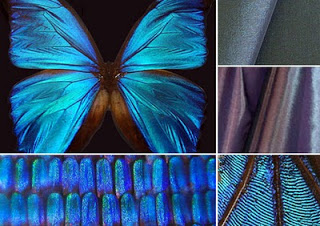
Over at Nautilus, there’s a fascinating read on the difficulty of reproducing the iridescence of butterfly wings and soap bubbles in paintings or photos. The author does a nice job walking you through the mechanics of this phenomenon in nature, before turning to a determined painter:
Commercially available paints billed as iridescent showed only pale, faintly metallic colors, not nature’s vividly shimmering hues. Then she obtained top-of-the line iridescent materials that were supposed to display shimmering purple, gold, and red. Drab grey powders, they were unlike any pigment she had seen before. They consisted of minuscule flakes made of silica coated with several metal-oxide layers. It took a year of experimentation to understand how to turn the powder into a spreadable paint and mix it without destroying its optical qualities.
Then she had to learn how to blend her iridescent paints into a palette of colors. “It was counterintuitive,” she says. “With traditional pigmentary colors, you mix a yellow and a blue and you get a green.” The paints she’d created, however, use so-called additive color rules, which describe what happens when you mix light, rather than pigment. “If you mix a gold and a metallic blue you get white…I had to forget all I had learned in color theory.”
— 4 —
Of course, experimentation has it’s dangers. In the video below, three scientists discuss the most dangerous chemicals that they’ve worked with. (h/t TYWKIWDBI)
For the record, I’m pretty sure mine is ethidium bromide, which I used to prep gels when I worked in a genetics lab. Not at all as bad as the ones in the video, but my supervisor did tell me not to breath while I had the bottle open or poured the gels.
— 5 —
Luckily, no hazardous chemicals were deployed (to my knowledge) to produce the erroneous but highly efficient fork that David Malki of Wondermark ran across. Delightfully, this prompts him to go trawling through the patent records for fork-relevant innovations. Some of them are surprisingly ebullient:
The serrated fork brings these two together, the butter knife and the fork. I have seen children and adults alike licking a butter knife; this serrated fork will need the help of those skilled in the art to craft a perfect unity between the butter knife and the fork to create a masterful vision of the serrated fork which can be lick able**.** I can envision a serrated fork in every home! I can picture us cutting easily into a thick piece of Cod with just a wiggle of the wrist as we handle the serrated fork.
— 6 —
Also from the annals of small but useful improvements (arguably more useful than the serrated fork) is the new font that’s intended to reduce distracted driving, especially as screens and heads-up displays become more common in cars. The Washington Post article does a nice job breaking down the small changes and giving you side by side comparisons.
This of course reminds me of the NYT Magazine article from 2007 on highway fonts, which has made me much fonder of signage.
— 7 —
Finally, although the proliferation of different kinds of stock bets can cause confusion (which savvy players can exploit), I liked this feature on the usefulness of options. (It’s a little jargon-heavy, but I think it’s worth googling and soldiering on).
So what are options good for? Options allow you to say more, and to say it more precisely than you ever could with stocks or futures alone. Everyone implicitly thinks in terms of options. For example, a stock trader who decides that an asset trading at $50 today is something he will buy if it trades at $40 in the next two months is implicitly willing to sell a two-month put struck at $40. An investor who owns a stock at $50 and sets a sell stop at $60 is implicitly short the 60 call. So one of the benefits of executing trades with options instead of just stock alone is that options allow you to say all the things you wanted to say already, but couldn’t.
Another benefit is the Marshall McLuhan effect: the medium of options actually changes the kinds of messages it occurs to you to express. This is really the reason why I think options are so interesting and valuable. If the only three words in my financial vocabulary were buy, short, or hold, I might not bother thinking my way to a thesis that could only be expressed with optionality.
For more Quick Takes, visit Conversion Diary!
Previous Post

April 10, 2014
What "Normal Stress" Conceals
Next Post

April 12, 2014 Just War, Culture War, Cyber... frackup
Browse Our Archives
Select a Category 7 Quick Takes Apologetics Atheism Book Conversion Debate Tactics Debates Epistemology/Philosophy Housekeeping Ideological Turing Test Marriage Morality in Practice Parsing Catholicism Possibly Heretical Radio Reviews/Recommendations Sequence Index Spiritual Practice Uncategorized
Select a Month April 2017 March 2017 January 2017 December 2016 September 2016 August 2016 July 2016 June 2016 May 2016 April 2016 March 2016 February 2016 January 2016 December 2015 November 2015 October 2015 September 2015 August 2015 July 2015 June 2015 May 2015 April 2015 March 2015 February 2015 January 2015 December 2014 November 2014 October 2014 September 2014 August 2014 July 2014 June 2014 May 2014 April 2014 March 2014 February 2014 January 2014 December 2013 November 2013 October 2013 September 2013 August 2013 July 2013 June 2013 May 2013 April 2013 March 2013 February 2013 January 2013 December 2012 November 2012 October 2012 September 2012 August 2012 July 2012 June 2012 May 2012 April 2012 March 2012 February 2012 January 2012 December 2011 November 2011 October 2011 September 2011 August 2011 July 2011 June 2011 May 2011 April 2011 March 2011 February 2011 January 2011 December 2010 November 2010 October 2010 September 2010 August 2010 July 2010 June 2010
Follow Us!
TAKE THE
Religious Wisdom Quiz
Who was struck dead for lying about money in the early church?
Select your answer to see how you score.
Ananias and Sapphira Simon the Sorcerer Nicodemus Demas
Related posts from Unequally Yoked

7QT: Fake Bears, Faker Weapons, and Austen

7QT: Moms, Pacifist Pilots, and other superheroes

7QT: Remixes, Underwear, & Fake Fingers

7QT: The Peculiar Virtues of Daredevil, Pool Table...
TRENDING AT PATHEOS Catholic

The Parable Of The Sower And The Word...
One of Christ’s most famous parables is that of the sower who...

Rejecting Doom: Christian Hope And Human Action
Christianity is a religion of hope. We are to have hope and...

Why I Choose the Eucharist Over the Sermon
Choose the Eucharist, Not the Sermon What are we supposed to get...

5 Design Elements Found in Spiritually Rooted Homes
Putting Spirituality Into Home Decor Our homes are more than our living...

Credo: A Story of God Told with the...
About 10 years ago, I began to imagine a personal "Credo" that...

The Anatomy of Divine Revelation in Catholic Thought
The claim that God has made Himself known to human beings is...
view all Catholic blogs
Ad-Free & Subscriber Log-In Subscription Support
- About Us
- 2026 Calendar
- Videos
- Podcasts
- Library of World Religions
- Faith In Media Tracker
- Advertise With Us
- Write for Us
- Privacy Policy
- Terms of Service
- Do Not Sell My Data
- Contact Us
- Radiant Digital
- Manage Newsletter Subscriptions
- Unsubscribe From Notifications
- Sitemap
Copyright 2008-2026, Patheos. All rights reserved.
Subscription Support Ad-Free & Subscriber Log-In
Follow Patheos