
BuddhistCatholicContemplativeEvangelicalGeneral ChristianHinduJewishLatter-day SaintMuslimNew VisionsProgressive Christian
Beliefs
- Buddhist
- Catholic
- Contemplative
- Evangelical
- General Christian
- Hindu
- Jewish
- Latter-day Saint
- More Voices
- Muslim
- New Visions
- Pagan
- Progressive Christian
Topics
- Religion News
- Food and Religion
- Sports and Religion
- Religious Art
- Religious Music and Entertainment
- Religious Events
- History and Religion
- Style and Religion
- Politics and Religion
- Women in Religion
- Recreation Outdoors and Religion
- Business Finance and Religion
- Careers Workplace and Religion
- Education and Religion
- Family Parenting and Religion
- Health Fitness and Religion
- Home and Religion
- Relationships and Religion
- Technology and Religion
- Travel and Religion
Columnists
- Buddhist Columnists
- Business Finance and Religion Columnists
- Careers Workplace and Religion Columnists
- Catholic Columnists
- Contemplative Columnists
- Education and Religion Columnists
- Evangelists Columnists
- Family Parenting and Religion Columnists
- General Christian Columnists
- Health Fitness and Religion Columnists
- Hindu Columnists
- History and Religion Columnists
- Home and Religion Columnists
- Jewish Columnists
- More Voices Columnists
- Latter Day Columnists
- Muslim Columnists
- New Visions Columnists
- Nonreligious Columnists
- Pagan Columnists
- Politics and Religion Columnists
- Progressive Columnists
- Recreation Outdoors and Religion Columnists
- Relationships and Religion Columnists
- Religion News Columnists
- Religious Art Columnists
- Religious Events Columnists
- Religious Music and Entertainment Columnists
- Sports and Religion Columnists
- Style and Religion Columnists
- Technology and Religion Columnists
- Travel and Religion Columnists
- Women in Religion Columnists
Resource Library
- 2026 Calendar
- Library of World Religions
- The 100 Most Holy Places on Earth
- Patheos Answers
- Podcasts
- Videos
- Faith Leaders Database
- Anglican Episcopalian
- Bahai
- Baptist
- Buddhism
- Christianity
- Confucianism
- Eastern Orthodoxy
- Hinduism
- Holiness and Pentecostal
- ISKCON
- Islam
- Judaism
- Lutheran
- Methodist
- The Church of Jesus Christ of Latter-day Saints
- New Age
- Paganism
- Presbytarian and Reformed
- Protestantism
- Religion Behind the Scenes
- Roman Catholic
- Scientology
- Shia Islam
- Sikhism
- Sufism
- Sunni Islam
- Taoism
- Zen
- See all religions
Research Tools
 Ad-Free & Subscriber Log-In Subscription Support
Ad-Free & Subscriber Log-In Subscription Support
Follow Patheos 

- Trending:
- Forgiveness
- |
- Marriage
- |
- Consciousness
- |
- Death Penalty
- |
- Election
- |
- Halloween
 Unequally Yoked
- Home
- Catholic
- Peter’s Errors Make Him My Favorite
Peter’s Errors Make Him My Favorite
Last updated on: March 18, 2014 at 3:45 pm by Leah Libresco
Peter’s Errors Make Him My Favorite 2014-03-18T15:45:17-04:00 Leah Libresco
Patheos Explore the world's faith through different perspectives on religion and spirituality! Patheos has the views of the prevalent religions and spiritualities of the world.
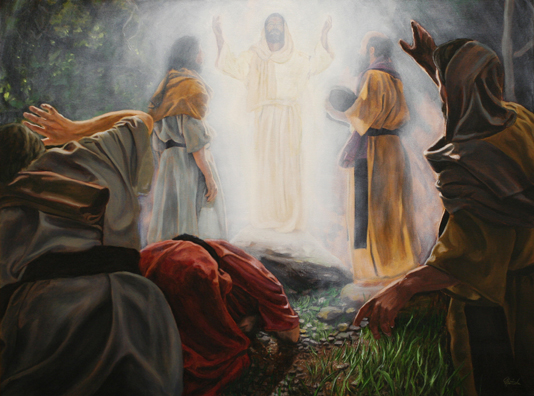
During the homily this past Sunday on the Transfiguration of Christ, I thought the priest was being a little unfair to the disciples on the mountain. Here’s the part of the story the priest was explaining:
Six days later, Jesus took with him Peter and James and his brother John and led them up a high mountain, by themselves. And he was transfigured before them, and his face shone like the sun, and his clothes became dazzling white. Suddenly there appeared to them Moses and Elijah, talking with him.
Then Peter said to Jesus, “Lord, it is good for us to be here; if you wish, I will make three dwellings here, one for you, one for Moses, and one for Elijah.”
While he was still speaking, suddenly a bright cloud overshadowed them, and from the cloud a voice said, “This is my Son, the Beloved; with him I am well pleased; listen to him!”
When the disciples heard this, they fell to the ground and were overcome by fear. But Jesus came and touched them, saying, “Get up and do not be afraid.” And when they looked up, they saw no one except Jesus himself alone.
After we heard the Gospel reading, the priest said that the three tents that Peter offered to raise would really be tabernacles — enclosures for holy things. The priest said (as best I can remember), “The disciples wanted to build temples, so that everyone could come and visit. They knew that fame and money were guaranteed to anyone who controlled such an extraordinary spot, and they wanted to start building immediately.”
I made a small face in my seat, since I thought he was slandering the disciples. I assume that the priest was looking for the reason for the fear the text describes, and the shame one might infer from their prostration, and he guessed that it had its root in worldly greed.
When I’ve heard exegesis of this passage before, I’ve heard other homilists say that the real problem is that the disciples were grasping the grace offered to them too roughly. The God who had come down to met them would no longer be contained within a temple, and the disciples were wrong to try to place Jesus and the prophets within tents. By trying to plan for the moment after the moment he was in, Peter was missing the full revelation of God’s grace and majesty that was happening now.
I’ll admit, I’m not sure the disciples did anything wrong in this passage at all. Our errors can be honest, not always the product of sin. But an honest error still requires correction.
I have an intense fondness for Peter, who frequently goes out on a limb trying to please God, only to discover he’s doing it in the wrong way. He offers tents on the mountain, he tries to reassure Jesus by denying his mission, he cuts off someone’s ear in an attempt at defense that Jesus rebukes, and he falls into the water and flails around when he tries to walk out to Christ. Peter is always trying to offer something, even though the events around him are perplexing and his teacher is difficult to understand.
In school, it’s easier for a student to learn when they present some answer to the teacher, so the teacher has a chance of untangling their reasoning, walking them back to their error, and then correcting it. By extending himself beyond his understanding, again and again, Peter keeps having the opportunity to be taught by Jesus. And he doesn’t let his struggles or Jesus’s corrections cow him. He keeps stoking his burning desire to serve, and lets Christ reshape it, and temper it into something appropriate.
When he sees Christ transfigured, Peter has an intense desire to offer something in love or reverence. Christ requires nothing from Peter, so any gift he could offer would be superfluous. Nonetheless, when Peter moves to give, God is ready to continue giving, providing Peter with a better way to show his well-intentioned love. It seems all right that Peter’s first attempt at a gift was wrong, too possessive of grace to be accepted, since he’s willing to loosen his grip when corrected.
Previous Post

March 17, 2014
The Odd Contempt of Impatience
Next Post

March 19, 2014 What Are Shakespeare's Lovers Talking About?
Browse Our Archives
Select a Category 7 Quick Takes Apologetics Atheism Book Conversion Debate Tactics Debates Epistemology/Philosophy Housekeeping Ideological Turing Test Marriage Morality in Practice Parsing Catholicism Possibly Heretical Radio Reviews/Recommendations Sequence Index Spiritual Practice Uncategorized
Select a Month April 2017 March 2017 January 2017 December 2016 September 2016 August 2016 July 2016 June 2016 May 2016 April 2016 March 2016 February 2016 January 2016 December 2015 November 2015 October 2015 September 2015 August 2015 July 2015 June 2015 May 2015 April 2015 March 2015 February 2015 January 2015 December 2014 November 2014 October 2014 September 2014 August 2014 July 2014 June 2014 May 2014 April 2014 March 2014 February 2014 January 2014 December 2013 November 2013 October 2013 September 2013 August 2013 July 2013 June 2013 May 2013 April 2013 March 2013 February 2013 January 2013 December 2012 November 2012 October 2012 September 2012 August 2012 July 2012 June 2012 May 2012 April 2012 March 2012 February 2012 January 2012 December 2011 November 2011 October 2011 September 2011 August 2011 July 2011 June 2011 May 2011 April 2011 March 2011 February 2011 January 2011 December 2010 November 2010 October 2010 September 2010 August 2010 July 2010 June 2010
Follow Us!
TAKE THE
Religious Wisdom Quiz
Which letter has the "armor of God" passage?
Select your answer to see how you score.
Ephesians 2 Timothy Colossians Philippians
Related posts from Unequally Yoked
How To Offer Community Without Communion

It's Hard To Be A Priest In America,...
A Dominican Invitation to Witness [Saints Bookclub]
Running the (Terrible for Catholics) Numbers on Conversion
TRENDING AT PATHEOS Catholic

Rejecting Doom: Christian Hope And Human Action
Christianity is a religion of hope. We are to have hope and...

It’s What Comes From Within Which Matters
One of the most difficult things for us to understand is why...

Why I Choose the Eucharist Over the Sermon
Choose the Eucharist, Not the Sermon What are we supposed to get...

5 Design Elements Found in Spiritually Rooted Homes
Putting Spirituality Into Home Decor Our homes are more than our living...

Credo: A Story of God Told with the...
About 10 years ago, I began to imagine a personal "Credo" that...

The Anatomy of Divine Revelation in Catholic Thought
The claim that God has made Himself known to human beings is...
view all Catholic blogs
Ad-Free & Subscriber Log-In Subscription Support
- About Us
- 2026 Calendar
- Videos
- Podcasts
- Library of World Religions
- Faith In Media Tracker
- Advertise With Us
- Write for Us
- Privacy Policy
- Terms of Service
- Do Not Sell My Data
- Contact Us
- Radiant Digital
- Manage Newsletter Subscriptions
- Unsubscribe From Notifications
- Sitemap
Copyright 2008-2026, Patheos. All rights reserved.
Subscription Support Ad-Free & Subscriber Log-In
Follow Patheos